Lescudjack Hill Fort: An Iron Age Settlement in Cornwall
Site at a Glance
- Rating
- 3.8
- Popularity
- Very Low
- Country
- United Kingdom
- Primary era
- Iron Age
- External website
- Open
- Eras represented
- Iron Age
- Civilizations
- Celtic
- Site type
- Military
- Remains
- Fort
History
Lescudjack Hill Fort is an unexcavated Iron Age settlement in Penzance, United Kingdom, built during the later prehistoric period when iron tools and weapons became widespread in Britain, before and during the Roman conquest. The settlement occupied the summit of a steep hill and was enclosed by an earthwork fortification.
The site was traditionally called a castle, a name that gave Castle Road its name. Several Cornish origins have been proposed for “Lescudjack”, including meanings connected with a shielded enclosure, a wooded valley, and a possible beacon place associated with nearby Leskinnick Terrace. These interpretations remain uncertain. A small lead-copper mine was reportedly located outside the fort’s ramparts.
Over time, the hill fort suffered damage and parts of it came to include allotments and open land. After local campaigns, including one involving Lescudjack Infants School, Penwith District Council and Penzance Town Council purchased the land in 2004. Cornwall County Council’s Historic Environment Service was carrying out a full archaeological survey, while the two councils established a joint management plan.
The fort was formally handed over for public use on 21 December 2007 during the Montol Festival, a Penzance midwinter festival incorporating local traditional and cultural practices. The name Lescudjack has also been applied to nearby roads, two schools, and a local Sure Start service.
Remains
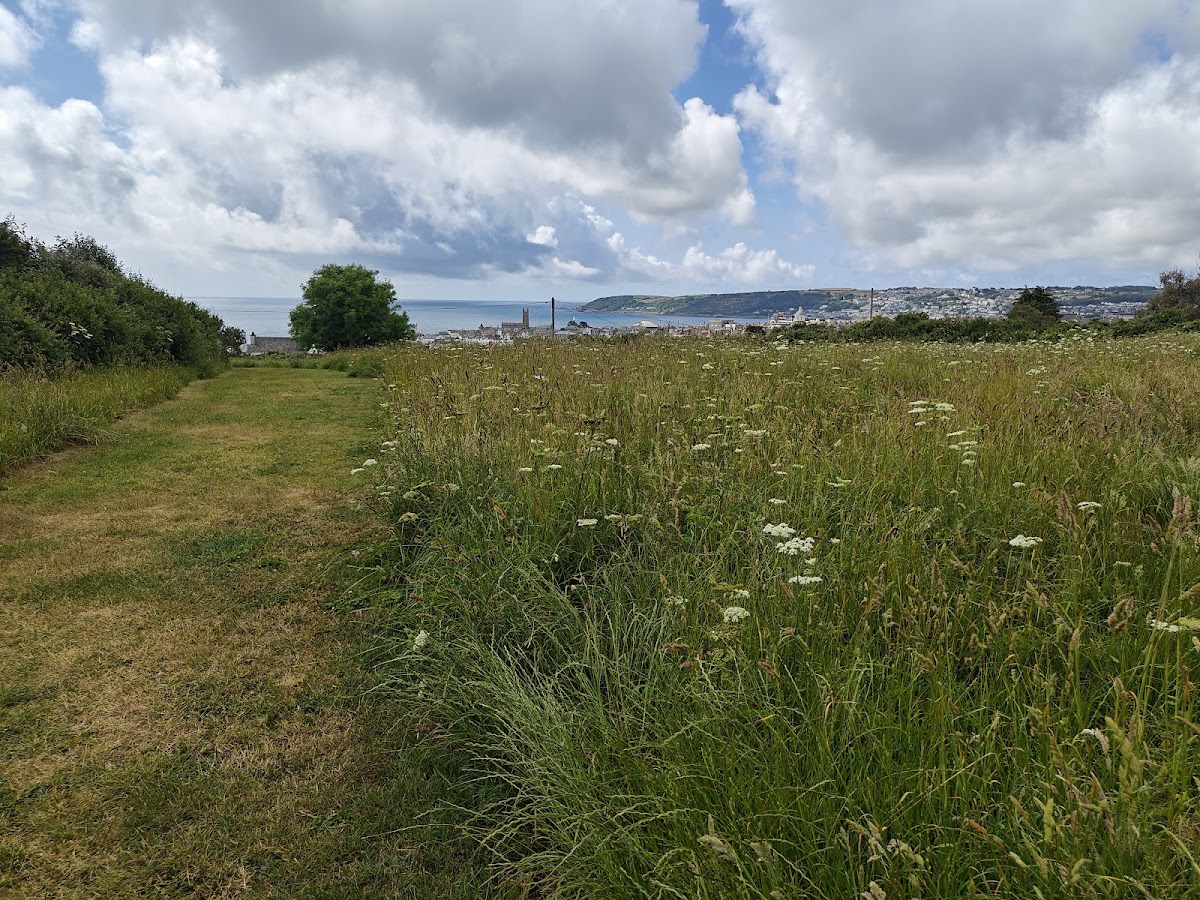
The settlement covers approximately 3 acres, or 12,000 square metres, on the summit of a steep hill in eastern Penzance. A single rampart, an earthwork bank forming part of an enclosure, surrounds the site. Its surviving area includes allotments and open ground, together with land recently cleared of dense undergrowth. A small lead-copper mine was reportedly situated immediately outside the rampart.
Nearby sites