Boskednan Stone Circle: A Prehistoric Monument in Cornwall
Site at a Glance
- Popularity
- Medium
- Country
- United Kingdom
- Primary era
- Bronze Age
- Eras represented
- Stone Age, Bronze Age
- Civilizations
- Unclassified
- Site type
- Religious
- Remains
- Sanctuary
On this page6 sections
History
Prehistoric origins
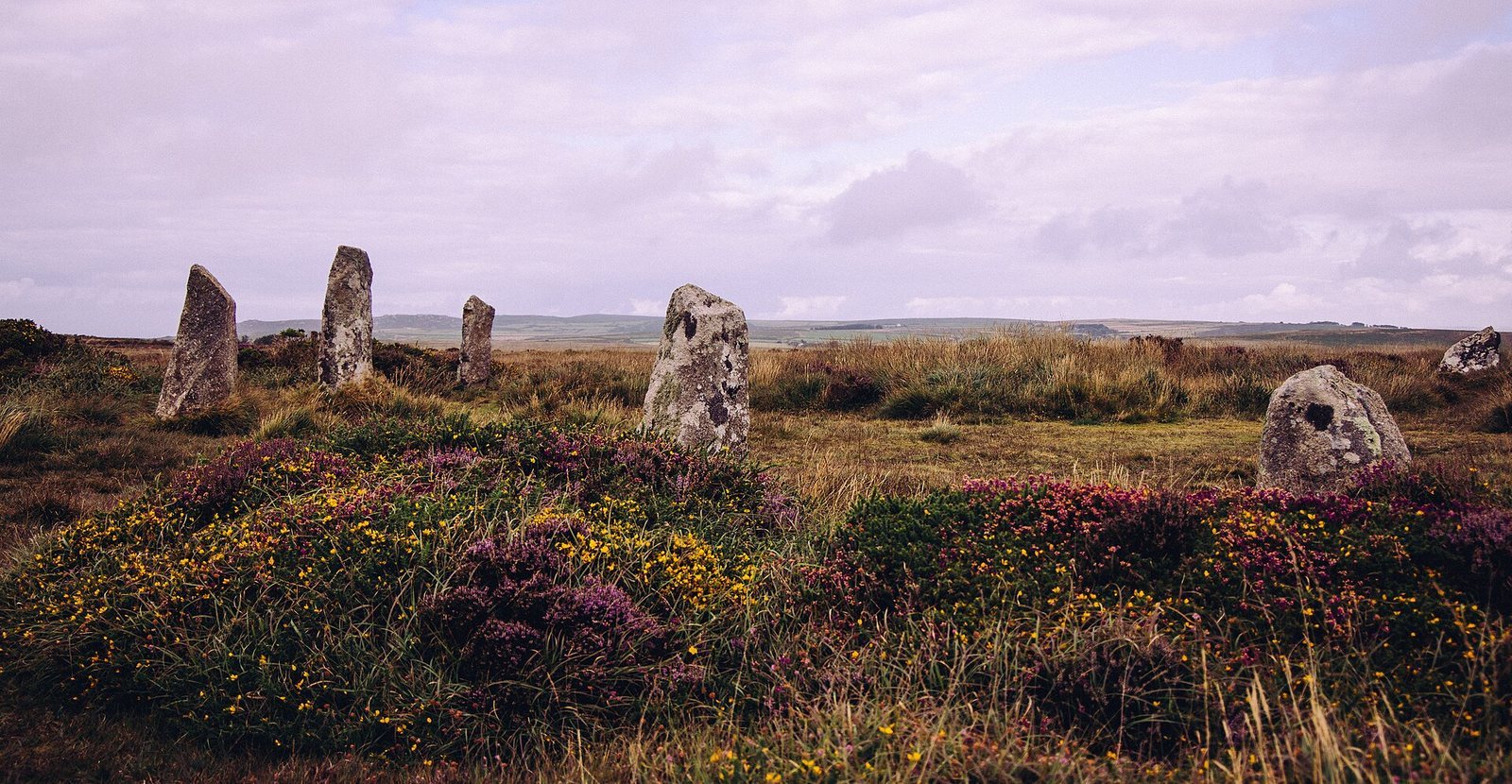
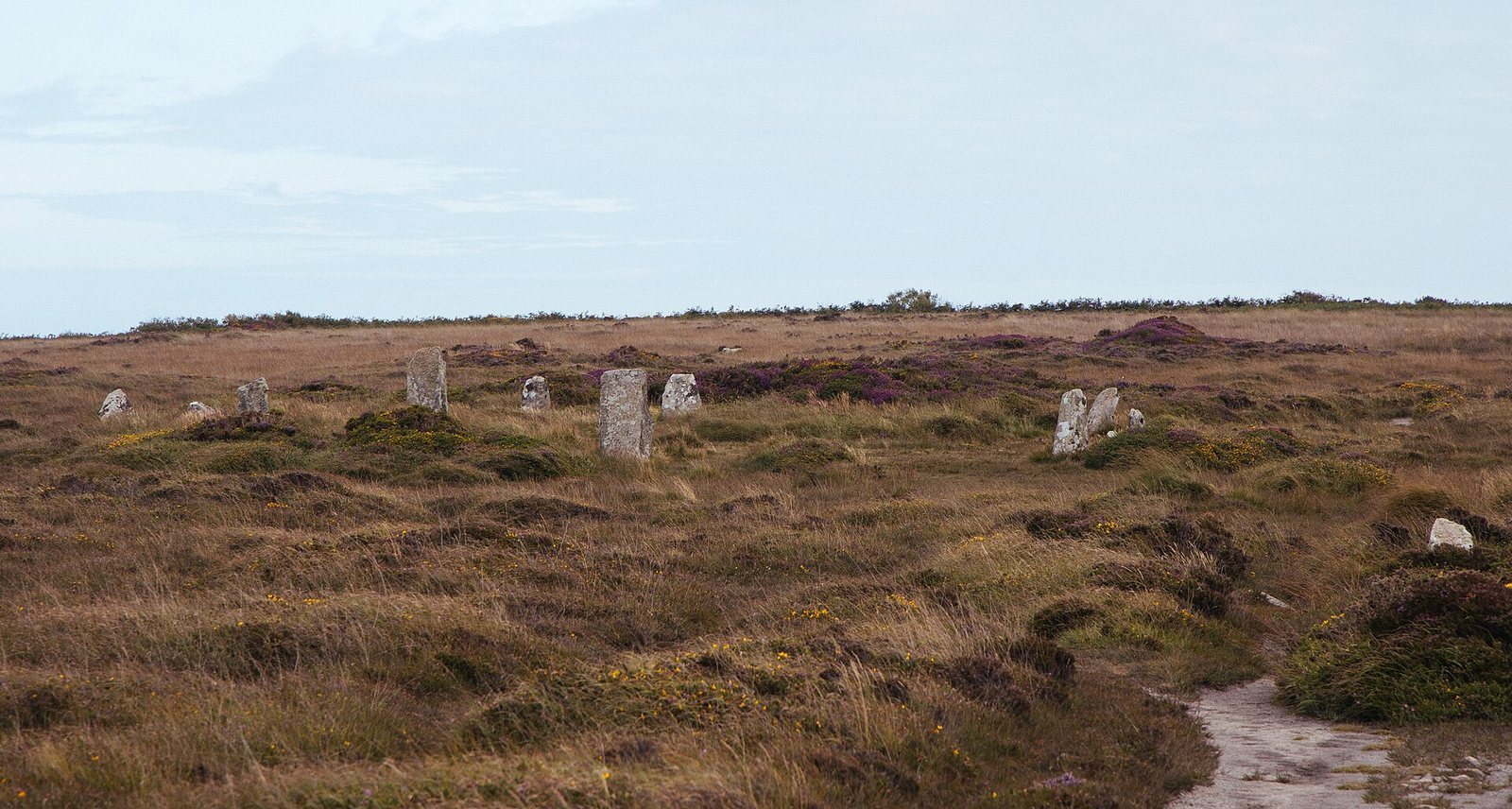
Boskednan stone circle is a prehistoric stone ring in Madron, southwest Cornwall, United Kingdom. It was erected during the late Neolithic or early Bronze Age and is attributed to Megalithic communities, prehistoric groups associated with large-stone monuments. Traditionally called the Nine Maidens or the Nine Stones of Boskednan, the circle may originally have contained about 22 stones.
Antiquarian records and protection
William Borlase made the first modern record of the circle in 1754, counting 19 upright stones. He described it in Antiquities, Historical and Monumental, of the County of Cornwall. Later, William Copeland Borlase excavated nearby and found a stone-built burial container, known as a cist, and an Early Bronze Age funerary urn. He published an account of these finds in Naenia Cornubiae (1872), a study of Cornwall’s prehistoric monuments.
The circle has undergone partial restoration. On 30 November 1926, it was designated a Scheduled Monument, a site given legal protection because of its historical importance.
Remains
The stone ring
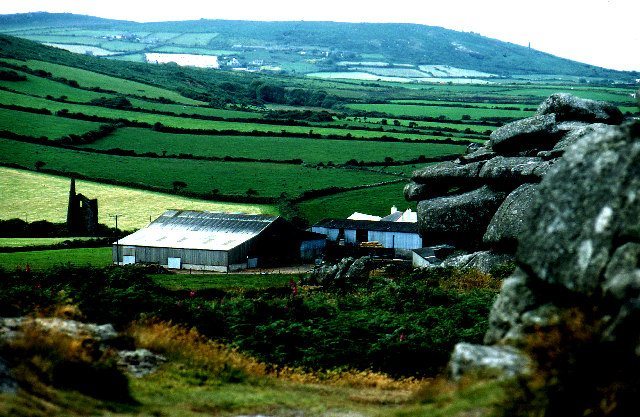
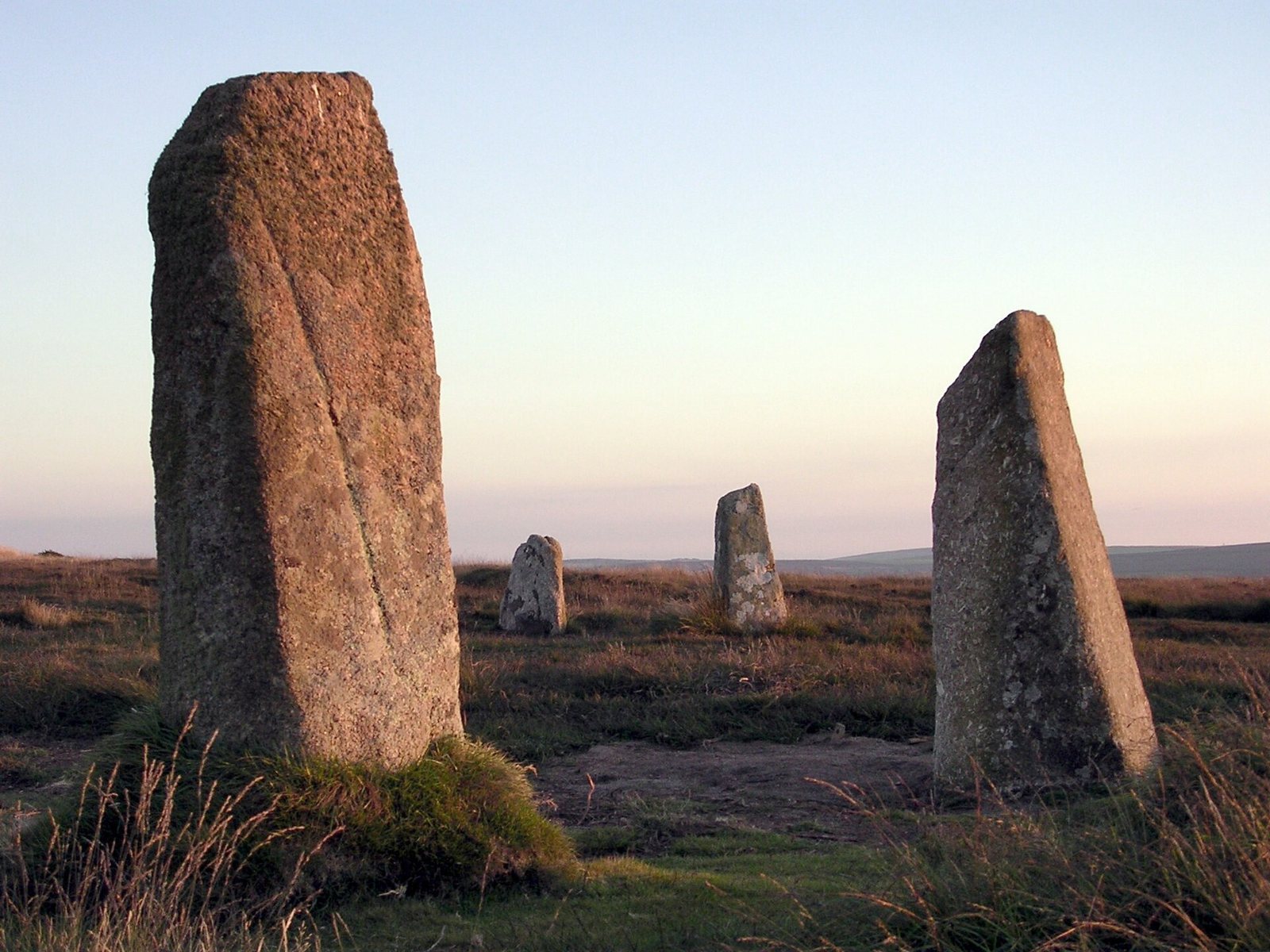
The roughly circular ring stands in open upland countryside in southwest Cornwall, north of the road from Madron to Morvah. It lies about 1 km northwest of Boskednan village and 6–6.4 km northwest of Penzance. The ring is approximately 22 m across, with a perimeter of about 69 m. Ten stones survive: six are upright, one is partly buried, and three have fallen. Most are around 1 m high; the tallest, on the northern edge, is nearly 2 m. They are natural pieces of local granite rather than carefully shaped blocks. Their irregular spacing may reflect the original arrangement or later loss and movement. The circle has been partially restored.
Nearby prehistoric features
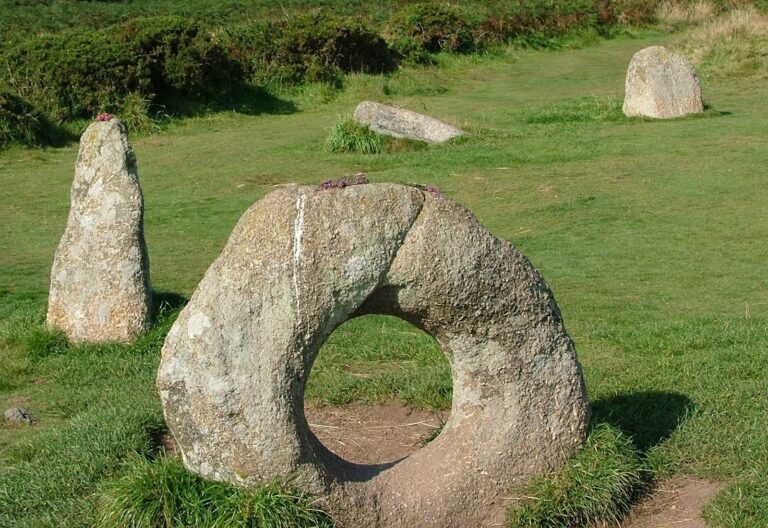
A round cairn, a mound made of stones, lies near the circle and may have belonged to the same ceremonial complex. The Mên-an-Tol stones are less than 1 km to the southwest and may themselves be the remains of a stone circle.