Tourbillon Castle: A Medieval Fortress in Sion, Switzerland
Visitor Information
Google Rating: 4.7
Popularity: Medium
Official Website: www.tourbillon.ch
Country: Switzerland
Civilization: Medieval European, Modern
Site type: Military
Remains: Castle
History
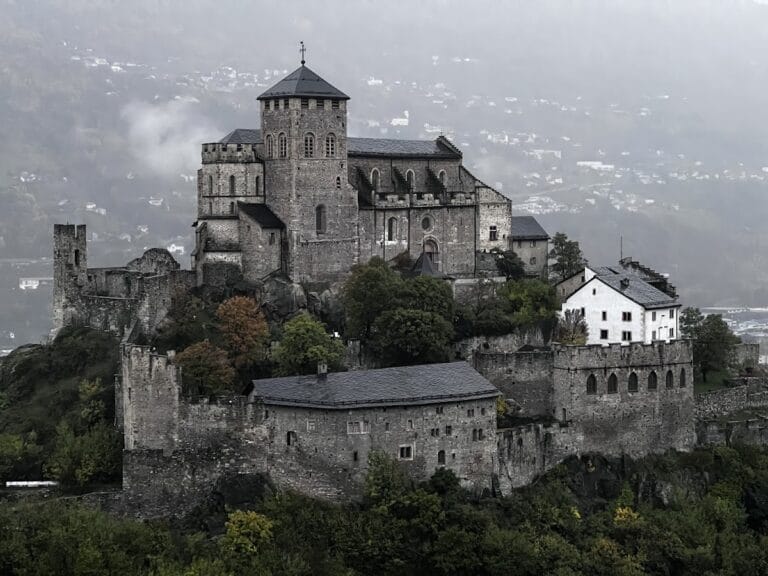
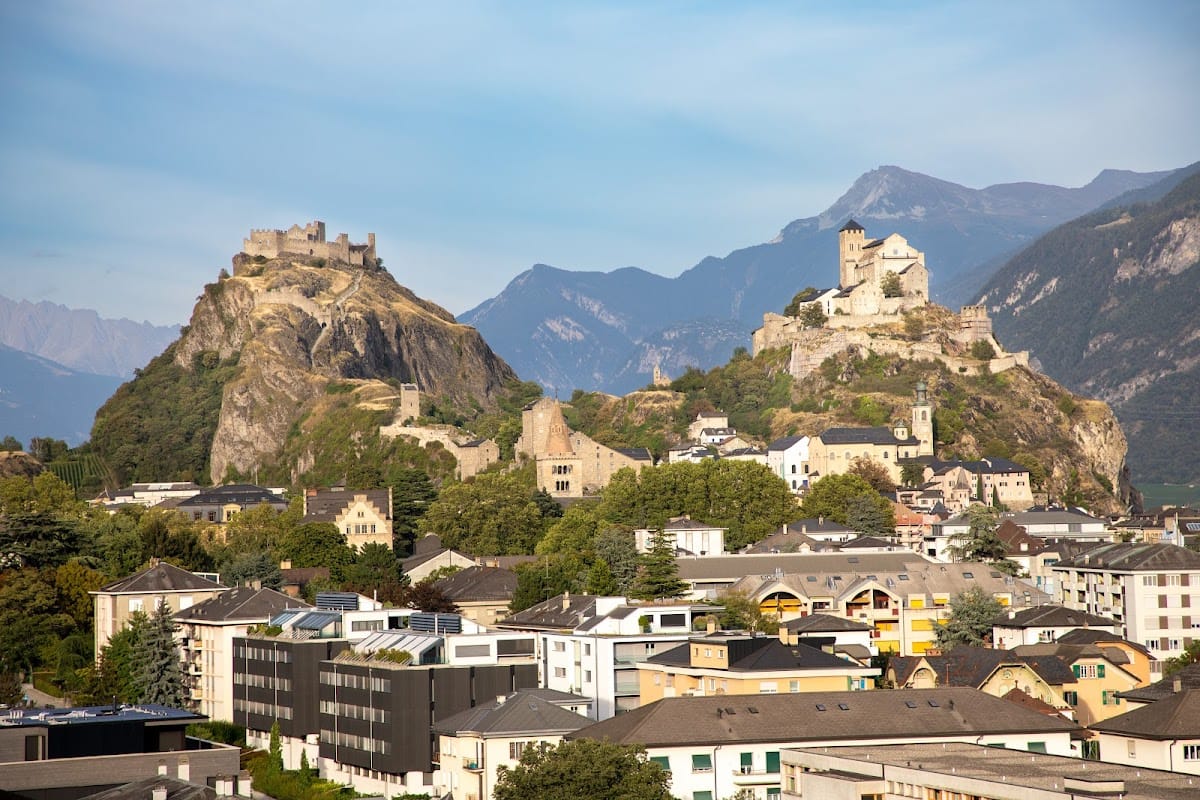
Tourbillon Castle is a medieval fortress perched atop a rocky hill in Sion, Switzerland. It was constructed by the local ecclesiastical authorities at the end of the 13th century, serving as the stronghold and residence of the bishops of Sion.
Construction of the castle began around 1297 under Bishop Boniface de Challant, a member of the influential Challant family with roots tracing back to the Viscounts of Aosta. After Boniface’s death in 1308, his successor and cousin, Aymon de Châtillon, completed the building efforts. For several decades, the castle functioned as the main episcopal residence, symbolizing the Church’s authority in the region.
By the late 14th century, the bishops started favoring other homes over Tourbillon, notably under Bishop Guichard Tavelli. While it ceased to be their primary dwelling, the castle maintained its military role and was occasionally inhabited by the clergy. Throughout the 14th and early 15th centuries, the fortress was a key site in recurring conflicts between the bishops and local groups, especially the citizens of Sion and noble families like the de la Tour and Raron clans. These disputes escalated to sieges and battles, prompting intervention from Amadeus VI, the Count of Savoy. He appointed a vice-bailiff to administer the area from Tourbillon, underscoring its strategic importance.
In 1417, during the so-called Raron affair—a local war between the people of Sion and the Raron family—the castle was seized by the townsfolk and deliberately set on fire. The damage was severe, destroying roofs and interior spaces and rendering the fortress uninhabitable.
Restoration took place between 1440 and 1450 under Bishop William III of Raron, who was related to William II of the same family. The reconstruction repaired the castle, which then continued to serve both defensive and residential purposes into the 17th century with little alteration.
During the 18th century, advances in military technology and the castle’s difficult location led to its decline as a fortress and home. Eventually it was abandoned and left without guardianship. A devastating fire on May 24, 1788, originating near the nearby Notre-Dame cathedral, engulfed Tourbillon’s wooden structures, including roofs, floors, and furnishings. Among the lost treasures was a gallery containing portraits of all the bishops of Sion. Following this event, the castle was not rebuilt.
In the 19th century, stones and materials from the ruins were salvaged for other constructions locally. Later in that century, efforts began to preserve the remaining structure as a historic monument. During the 20th century, further restoration and stabilization work were carried out, with major activities between 1993 and 1999. Since 2009, the castle’s chapel has undergone careful restoration to maintain its heritage.
Remains
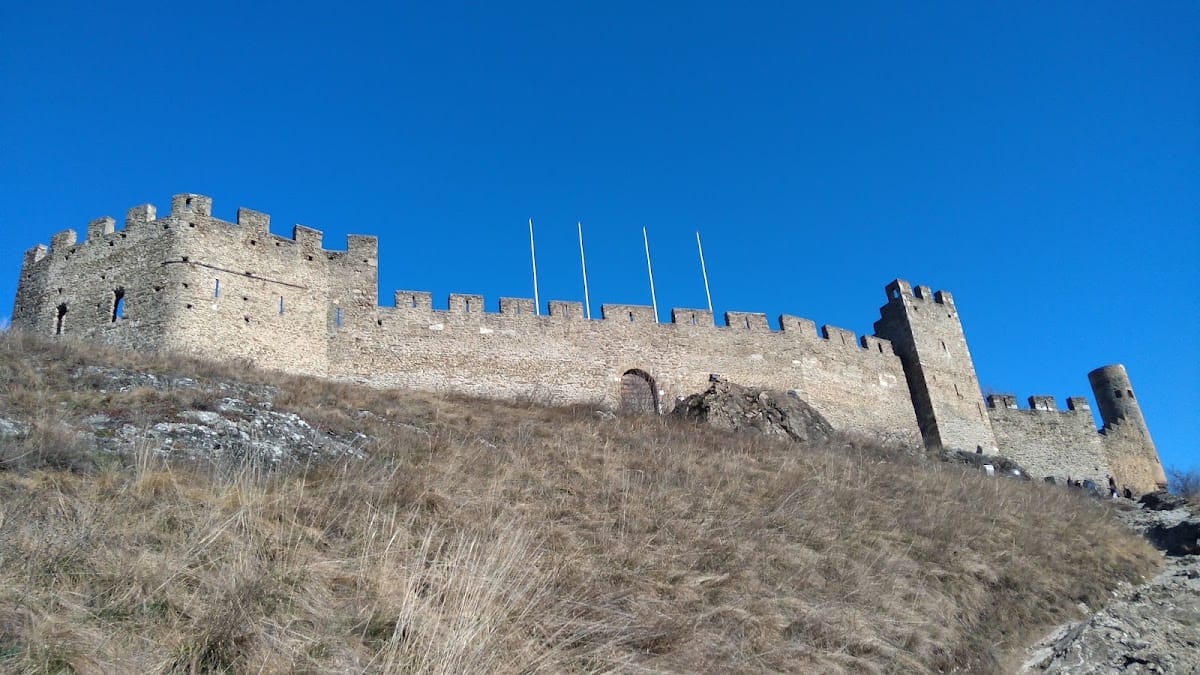
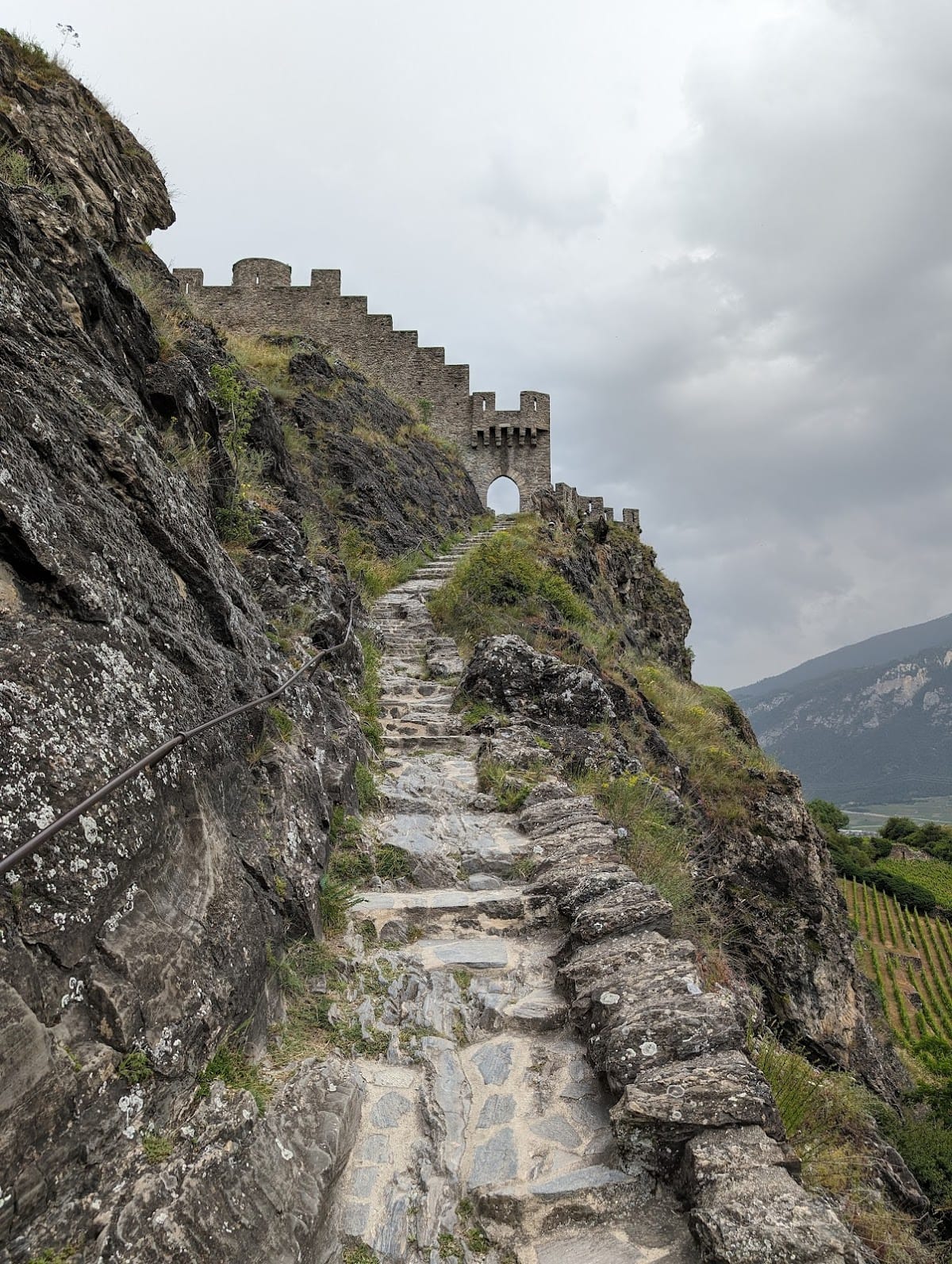
Tourbillon Castle occupies the western end of a natural, elongated plateau atop Tourbillon hill, which rises roughly 180 meters above the town of Sion. The plateau itself is about 200 meters long and up to 50 meters wide, composed of layered sedimentary rocks including marly phyllites and calcareous shales. Access to the site is restricted by steep terrain, with entrances only from the east or west.
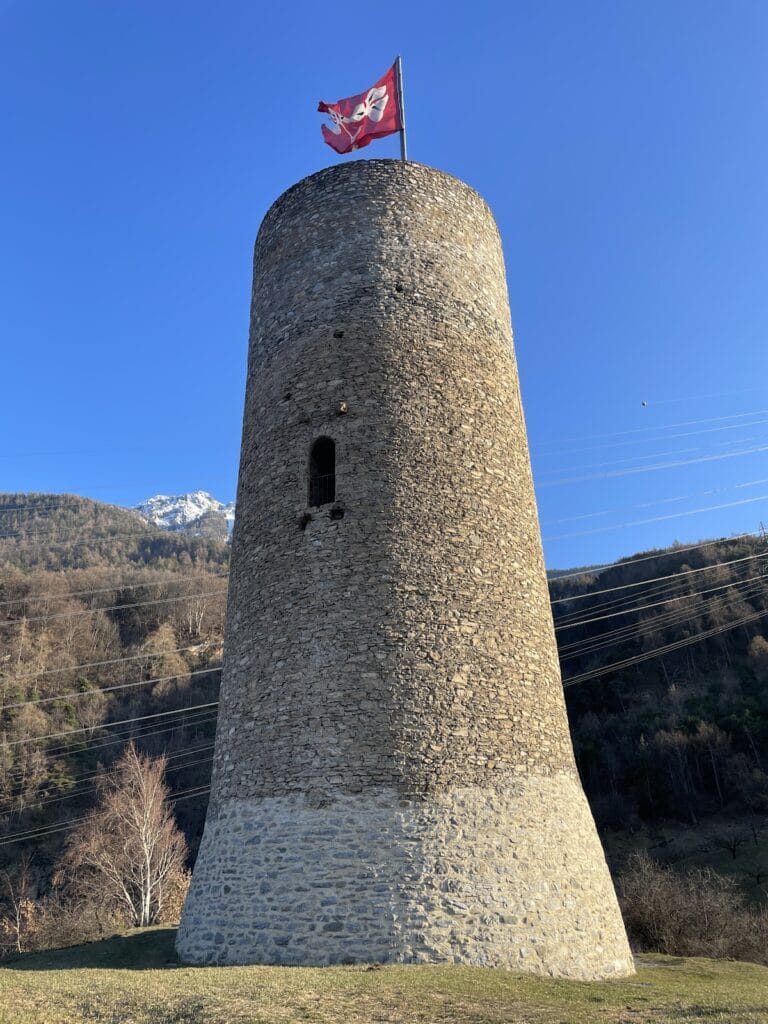
The western approach features a defensive stone wall with a gate, which was probably once topped with a machicolated gallery—an opening in the parapet used for dropping projectiles on attackers. Adjacent to this gate on the north side is a semi-circular watchtower integrated into the curtain wall. On the eastern side, only remnants of fortified walls equipped with narrow arrow slits survive, indicating it was once similarly defended.
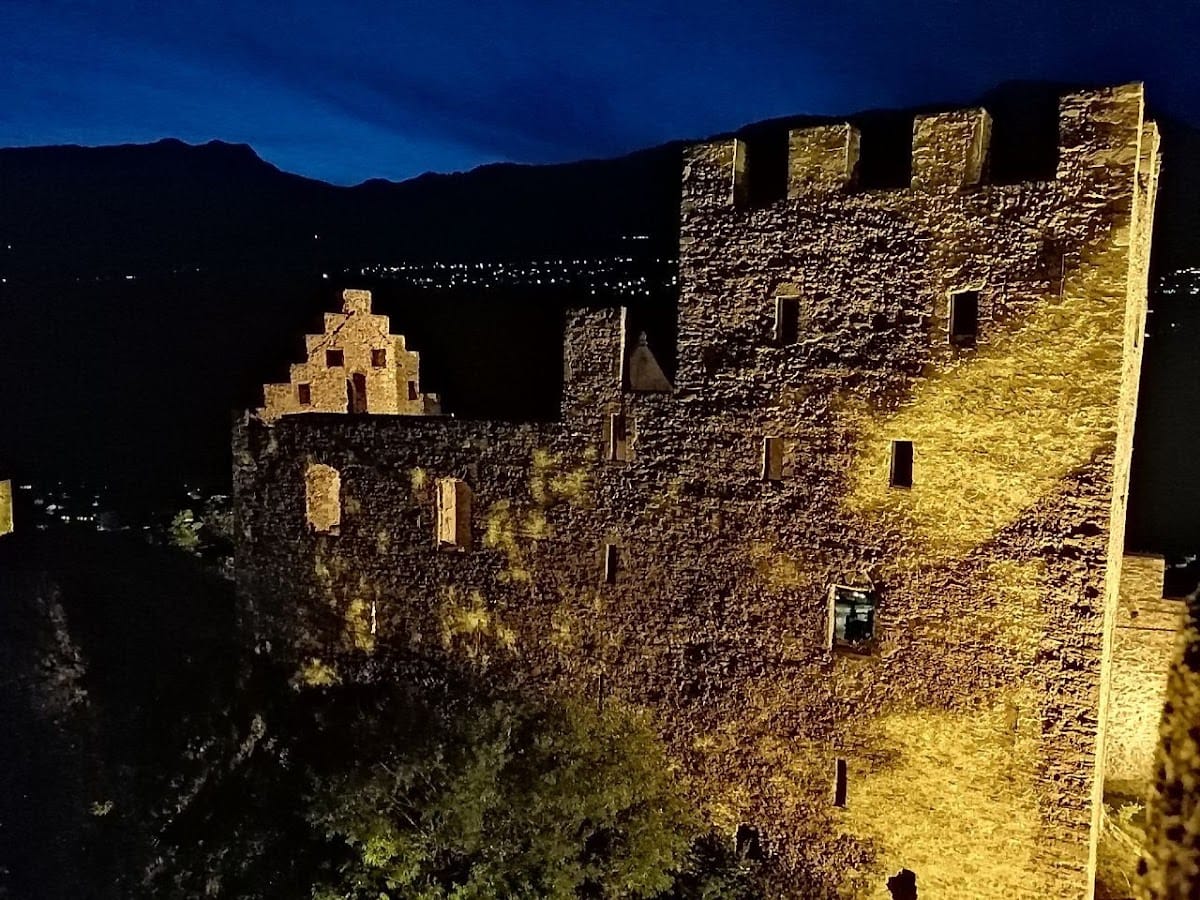
At the heart of the castle lies a spacious courtyard enclosed by high, crenellated walls with battlements. Most of the castle’s buildings date to the original 13th-century construction, except the large keep or main tower, which was altered during the 15th century. This tower rests on a small rocky prominence near the center of the plateau and is internally divided into two sections: the bishop’s private living quarters on the east and a reception hall on the west. Modifications added an additional floor and shifted the main entrance from the north to the south side. The reception hall features large, gently arched windows reminiscent of those in Chillon Castle, including a large western window that replaced two earlier smaller openings.
The western side of the courtyard contained the garrison’s quarters, while on the southern edge stand a corner tower. The southeastern side includes the castle chapel dedicated to Saint George, along with its sacristy (a room for storing liturgical objects) and another corner tower. On the northern side, a cistern carved directly into the rock provided water storage to sustain defenders during sieges.
The chapel is composed of two main sections. The northern bay, originally covered by a wooden ceiling later replaced with a vaulted stone roof, served as the nave where worshippers gathered. The choir area features a vaulted ceiling supported by ogives—pointed arches typical in Gothic architecture—decoration includes two tori, or rounded moldings, resting on columns. The chapel’s south wall originally had a single circular window called an oculus; later, three more openings were added, causing the original oculus to appear off-center. The sacristy includes lancet windows—tall, narrow openings with pointed arches—and an oculus. One lancet window is situated at a low height, suggesting a dual function including defense. A stone basin used for ritual washing, known as a piscina, remains in the sacristy’s south wall.
Fortifications on the western side include machicolations and merlons, the high solid sections of battlements that provided cover for defenders. A narrow walkway once ran along the top of the walls for sentries to patrol.
Inside the chapel, two series of mural paintings survive from the 14th and 15th centuries. They depict biblical scenes such as the Annunciation, the Crucifixion, and Saint George slaying a dragon, alongside images of various saints including Saint Sebastian, Saint Apollina, Saint Fabian, and Saint Catherine. The paintings also feature heraldic symbols associated with the Raron family, reflecting their involvement with the castle.
Today, the castle stands as a carefully consolidated ruin. Walls and towers have been stabilized and partially reconstructed through restoration efforts spanning the 19th and 20th centuries. Excavations carried out in 1994 east of the castle uncovered remains of Neolithic dwellings dating to the 5th millennium BCE and dry stone walls, revealing the site’s prehistoric occupation. No confirmed Roman structures have been identified; what were previously thought to be Roman foundations have been shown to originate from medieval construction. The chapel continues to receive specialized restoration to conserve its historic fabric.
Nearby sites