Ushijima Shrine: A Historic Shinto Guardian Shrine in Tokyo


Site at a Glance
- Rating
- 4.3
- Popularity
- Medium
- Country
- Japan
- Primary era
- Unclassified
- External website
- Open
- Eras represented
- Unclassified
- Civilizations
- Unclassified
- Site type
- Religious
- Remains
- Sanctuary
On this page9 sections
History
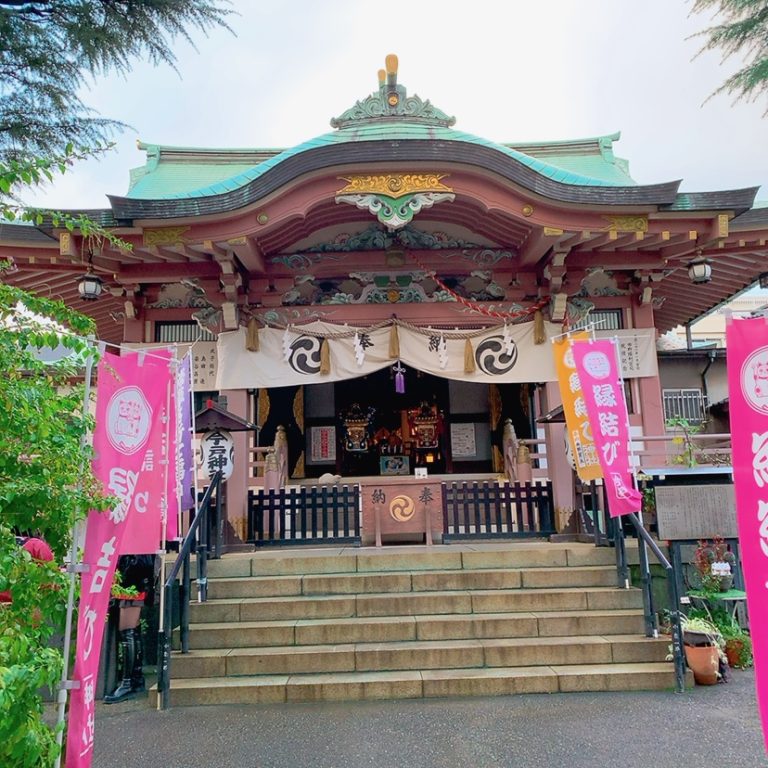
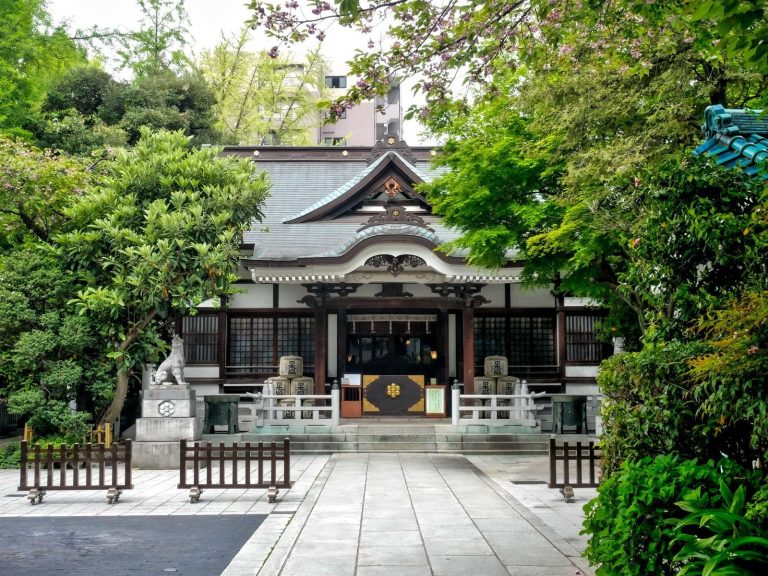
Ushijima Shrine is a Shinto shrine in Japan, located in Tokyo’s Sumida City. It was founded during the Jōgan era, approximately 859–879, and tradition attributes its establishment to Ennin, the prominent ninth-century Buddhist monk of the Tendai tradition, also known as Jikaku Daishi. According to the shrine’s foundation tradition, Ennin received an oracle from an old man understood to be an incarnation of Susanoo-no-Mikoto, a Shinto sacred being associated with the imperial mythological tradition.
Foundation and local guardianship
Before the Meiji period, the shrine was known as Ushi Gozen Shrine. It served as the principal guardian shrine of Honjo, fulfilling the role of a local protective institution. The shrine enshrines Susanoo-no-Mikoto, Ame-no-Hohi-no-Mikoto, and Prince Sadatatsu as its principal deities. Ame-no-Hohi-no-Mikoto belongs to the same Shinto mythological tradition, while Prince Sadatatsu is a named Shinto-associated deity whose title indicates an imperial prince.
Ushijima Shrine later became associated with the Chiba clan. Tradition connects this association with an episode involving Chiba Tsunetane, a medieval military leader who supported Minamoto no Yoritomo. While Yoritomo’s army was crossing the Sumida River on its march toward Kamakura, Tsunetane is said to have prayed at the shrine. The army then crossed the river safely. Yoritomo went on to establish the Kamakura shogunate.
Earthquake and relocation
The shrine was damaged in the Great Kanto Earthquake of 1923. The subsequent expansion of the Sumida Embankment required a further change to its location. In 1932, Ushijima Shrine was moved approximately 500 metres north from its former site near Kofukuji, in the vicinity of the present Sakurabashi area, to its current grounds in Mukojima, Sumida.
The shrine is classified as a former village shrine, a historical category used before Japan’s modern system of shrine classifications was abolished. It also serves as the tutelary shrine of Tokyo Skytree, meaning that it is regarded as the guardian shrine associated with that landmark. Wakamiya Ushijima Shrine, a subsidiary shrine in Wakamiya Park in Honjo 2-chome, serves as the shrine’s otabisho, a place where a deity’s portable sanctuary may stop during a festival procession.
Remains
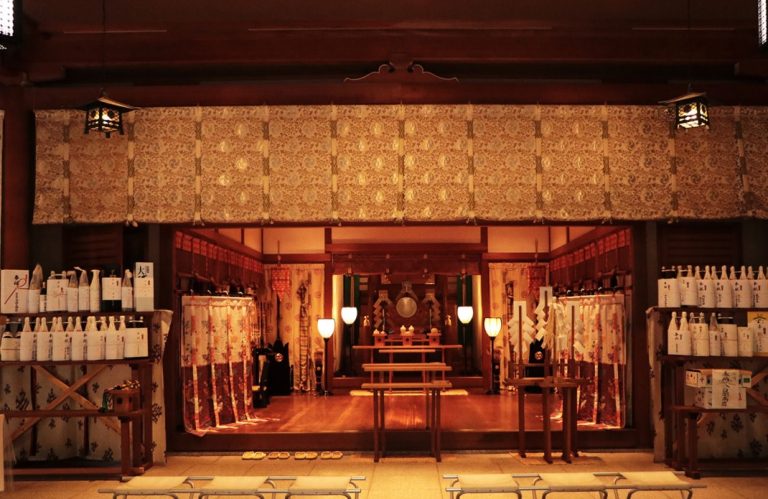
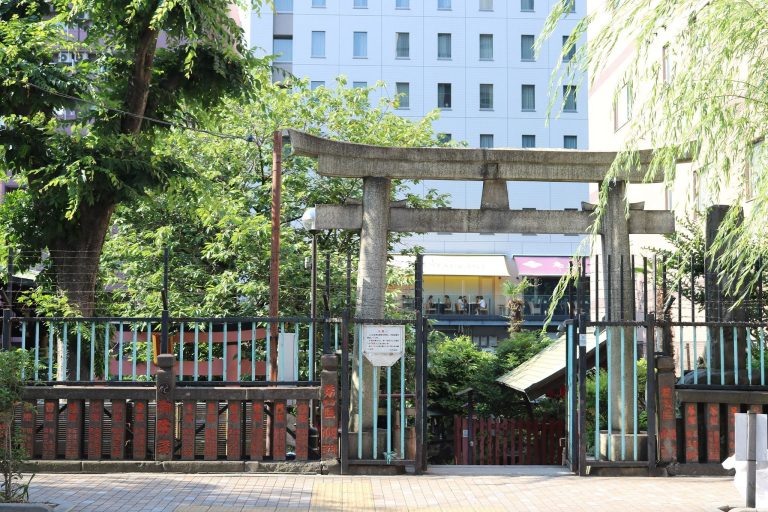
Ushijima Shrine stands within Sumida Park at its post-1932 location in Mukojima. The precinct includes the honden, or main sanctuary where the enshrined deity is symbolically housed, and a relatively uncommon Mitsu-torii at the approach. A Mitsu-torii is a triple gateway formed from three interconnected torii, the gateways that mark entry into a Shinto sacred precinct.
Sacred features
Mitsu-torii and main sanctuary
The Mitsu-torii stands in front of the honden and gives the entrance its distinctive form. Together, the gateway and sanctuary remain central physical elements of the present shrine, which occupies the grounds to which it was transferred in 1932.
Nade-ushi
The grounds contain a stone sacred ox known as the Nade-ushi, or “rubbing ox.” Tradition holds that rubbing the part of the statue corresponding to an afflicted part of the body cures illness. The shrine’s other stone cultural-property objects include pairs of guardian dogs dated 1729 and 1827, along with a group of strength stones.
Votive image of Susanoo
Tablet and photographic record
A large votive tablet titled Susanoo-no-Mikoto Driving Away the God of Calamity was dedicated in 1845. The original was destroyed by fire during the 1923 earthquake, but a life-size black-and-white photograph of it is displayed inside the honden. An estimated color reconstruction was produced in 2016 and exhibited at the Sumida Hokusai Museum.