Imado Shrine: A Shinto Shrine and Hachiman Tradition in Tokyo


Site at a Glance
- Rating
- 4.2
- Popularity
- Medium
- Country
- Japan
- Primary era
- Modern
- External website
- Open
- Eras represented
- Modern
- Civilizations
- Japanese
- Site type
- Religious
- Remains
- Sanctuary
On this page7 sections
History
Imado Shrine is a Shinto shrine in Japan, located in Imado, Tokyo, with a traditional foundation dated to 1063 and roots in the Hachiman religious tradition. It is also known as Imado Hachiman and formerly held the status of a village shrine.
Traditional foundation and Hachiman worship
The shrine’s traditional origin is linked to Minamoto no Yoriyoshi and his son Minamoto no Yoshiie, members of the Minamoto military house who led campaigns in northern Japan during the eleventh century. In 1063, they are said to have invited the worship of Iwashimizu Hachimangu, a prominent Hachiman shrine in Kyoto, and prayed at the site during their campaign.
Another tradition places the two men at Imado again in 1081, during a campaign against Kiyohara Takehira and Kiyohara Iehira. They are said to have prayed there for victory. Hachiman is a major Japanese shrine tradition associated with martial protection and historically connected with Emperor Ojin, one of the deities enshrined at Imado.
Imado Shrine also enshrines Izanagi and Izanami, primordial kami presented in Shinto mythology as a divine pair associated with creation and marital union, together with Fukurokuju. Fukurokuju, a deity associated with longevity, wisdom, and good fortune, represents the shrine among the Asakusa Seven Lucky Gods. Imado is also associated with the Shitamachi Eight Lucky Gods.
Merger, destruction, and rebuilding
Hakusan Shrine, located beside Imado Hachiman, was merged with it in 1937. The institution then became known as Imado Shrine. This change incorporated the worship of Izanagi and Izanami into the shrine’s religious identity and contributed to its later association with matchmaking.
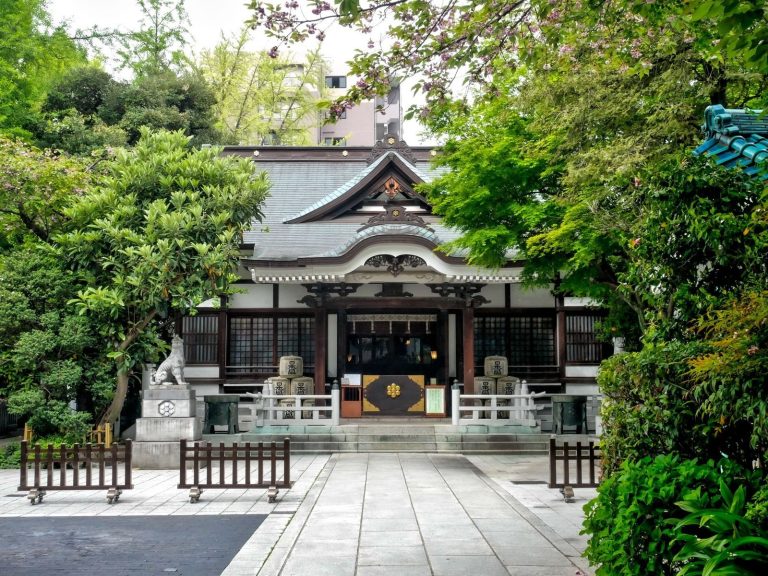
Warfare and fires repeatedly damaged the shrine. Among the disasters were the Great Kanto Earthquake of 1923 and the Tokyo air raid of March 10, 1945. The shrine was rebuilt after each catastrophe, and the present shrine building dates from 1971. A kindergarten once operated within the precincts under the direction of the chief priest. Although it later closed, its main gate remains.
Traditions of beckoning cats and Okita Soji
Imado Shrine presents itself as one of the birthplaces of the beckoning-cat figure, alongside Sensoji, Asakusa Shrine, and Gotokuji. The claim became prominent during the Heisei-period boom in beckoning cats and matchmaking sites. Nineteenth-century records connected with the origin story, however, associate it with Sensoji and Asakusa Shrine rather than with Imado Shrine.
The shrine also preserves a tradition that Okita Soji, one of the best-known swordsmen and commanders of the Shinsengumi, spent his final days there. The Shinsengumi was a special police force supporting the Tokugawa shogunate during the political conflicts before the Meiji Restoration. The tradition derives from the physician Matsumoto Ryōjun, who treated Okita and was said to have been temporarily residing at Imado Hachiman, and from Nagakura Shinpachi’s statement that Okita died at Matsumoto’s residence.
Nagakura was not in Edo at the time, so his account is regarded as an inference or hearsay. The prevailing historical interpretation places Okita’s death at a shed belonging to the nursery gardener Shibata Heigoro in Sendagaya, where Matsumoto helped conceal him while lodging at Imado Hachiman. Imado Shrine nevertheless maintains the tradition with a commemorative stone monument.
Since 2008, the shrine has periodically held a matchmaking gathering as part of its religious activities, following requests from local parishioners seeking help in finding suitable partners.
Remains
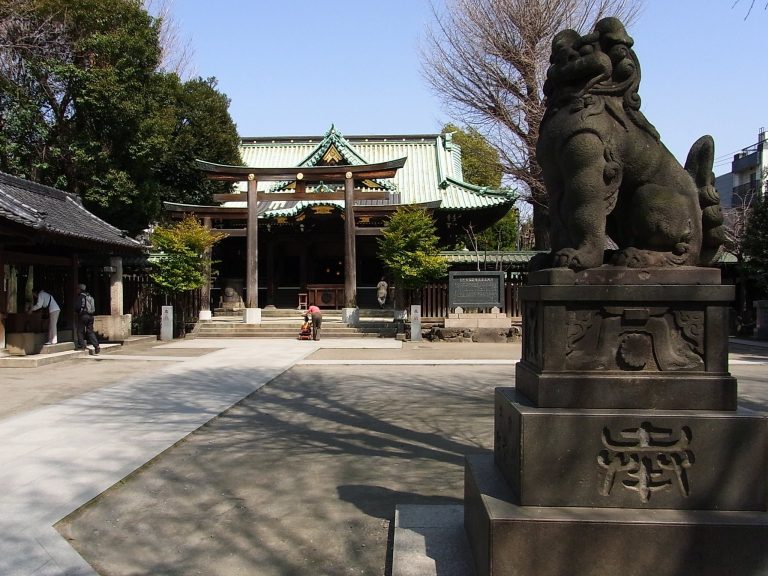
Imado Shrine’s precinct contains a torii, the main shrine building, the surviving gate of the former Imado Kindergarten, and a stone monument associated with the Okita Soji tradition. The present shrine building was constructed in 1971 after repeated rebuilding caused by disasters. These elements preserve both the shrine’s continuing religious use and traces of its former institutional role.
Votive plaques and shrine figures
The shrine uses circular votive plaques. Their shape creates a wordplay between en, meaning “circle,” and en, meaning “relationship” or “connection.” The design gives physical expression to the shrine’s matchmaking association, while retaining the function of an ema, a wooden plaque on which worshippers write prayers or wishes.
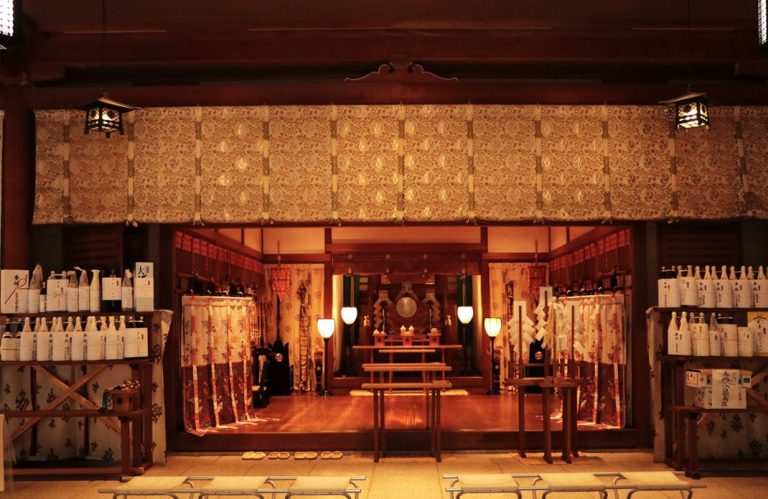
Numerous beckoning-cat figures are enshrined at Imado. A large figure stands in the main hall, while earthenware and porcelain figures are distributed by the shrine office. Their forms are considered to derive from postwar Tokoname beckoning-cat designs rather than from traditional Edo- or Meiji-period Imado ware.
The Imado ware origin tradition
The nineteenth-century origin story concerns an impoverished woman from Asakusa’s Hanakawado district who gave up her cat. After the cat appeared to her in a dream and promised good fortune if its likeness were made into a figure, the image was produced in Imado ware.
The figures were sold beside the torii of Sanja Gongen, now Asakusa Shrine, within the grounds of Sensoji, and quickly became popular. This account explains the connection between Imado pottery and the beckoning-cat tradition while distinguishing the older story from the shrine’s later presentation of itself as one of the figure’s birthplaces.