Tōko Yasaka Shrine: A Shinto Sanctuary in Katagami, Japan

Site at a Glance
- Rating
- 3.9
- Popularity
- Very Low
- Country
- Japan
- Primary era
- Early Modern
- External website
- Open
- Eras represented
- Early Modern, Modern
- Civilizations
- Japanese, Tokugawa
- Site type
- Religious
- Remains
- Sanctuary
On this page9 sections
History
Foundation and relocation
Tōko Yasaka Shrine is a Shinto shrine in Japan, now located in Tenno, Katagami, Akita Prefecture. Shrine tradition places its foundation in 801, when Sakanoue no Tamuramaro, an early ninth-century imperial military commander, enshrined the storm-associated kami Susanoo after completing his third campaign against the Emishi, communities in northeastern Japan that resisted the expansion of the early Japanese state. The tradition presents the foundation as an act of gratitude for divine assistance, but it cannot be independently confirmed.
Before 1060, the shrine was reportedly moved four times because of flooding. The earliest surviving evidence connected with its present location dates to 1060, when the sanctuary was invited and transferred there. A record from the following year, 1061, refers to ritual activity at the site. At that time, the shrine stood in the former Tenno Village of Akita District, in the historical province of Dewa and within Kubota Domain.
Names and religious transformation
The sanctuary acquired several names over time, including the Shrine of the Sacred Garment and Treasured Sword, Tōko Sanctuary, Soegawa Shrine, Gozu Tennō Shrine, Tennō Sanctuary, Tennō Hall, and Tōko Shrine. The name Tennō was closely associated with the surrounding settlement, which was historically known as Tenno Village.
Susanoo is now the shrine’s sole deity. During the period of shinbutsu-shūgō, the historical blending of Buddhist and Shinto beliefs and institutions, Gozu Tennō was enshrined as the Buddhist manifestation of Susanoo. Gozu Tennō was a Buddhist-influenced deity associated with averting disease, and worship of this figure became dominant during the Edo period. The sanctuary was then most commonly called Gozu Tennō Shrine.
The surviving Spider Dance and ox-riding ritual are interpreted as expressions of the rough and gentle spirits of wind, waves, and thunder. They also preserve an older agricultural tradition associated with rice fields, suggesting that Susanoo may have been incorporated into an earlier agricultural cult.
Domain patronage and the Meiji period
During the middle of the Edo period, the Satake lords of Kubota Domain became patrons of the shrine. Under the name Gozu Tennō Shrine, it was included among the Akita Twelve Shrines, a group of twelve sanctuaries revered by the domain. This status dates to the early eighteenth century and continued until the end of the Edo period.
The Meiji government’s policy of separating Buddhism and Shinto formally dismantled many combined religious practices. Official recognition of Gozu Tennō worship ended, and the shrine was reorganized as a Susanoo shrine. The name Gozu Tennō Shrine was abolished, while Tōko Shrine and Tōko Yasaka Shrine emerged as names for the restructured sanctuary.
The surrounding settlement also underwent changes. In late 1870 or early 1871, authorities forcibly changed Tenno Village to Mukō-Funakoshi because they considered the original name too reverential toward the emperor. Residents soon received permission to use another name that preserved the former pronunciation, and Tenno Village was restored on April 1, 1889. The settlement later became Tenno Town and is now part of Katagami. The shrine was classified as a prefectural shrine in 1881 and formally adopted the name Tōko Yasaka Shrine in 1884.
Ritual heritage
The Tōko Yasaka Shrine Festival Tōnin ritual received designation as a National Important Intangible Folk Cultural Property on January 14, 1986. A tōnin is a person responsible for organizing or leading a communal ritual, so the designation recognizes a ceremonial observance structured through that responsibility. The annual festival takes place on July 7.
Remains
Surviving shrine features
Main hall
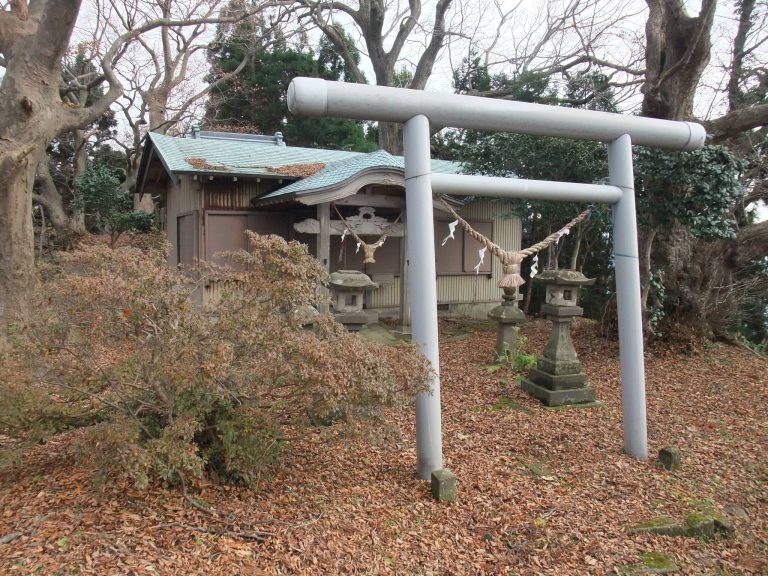
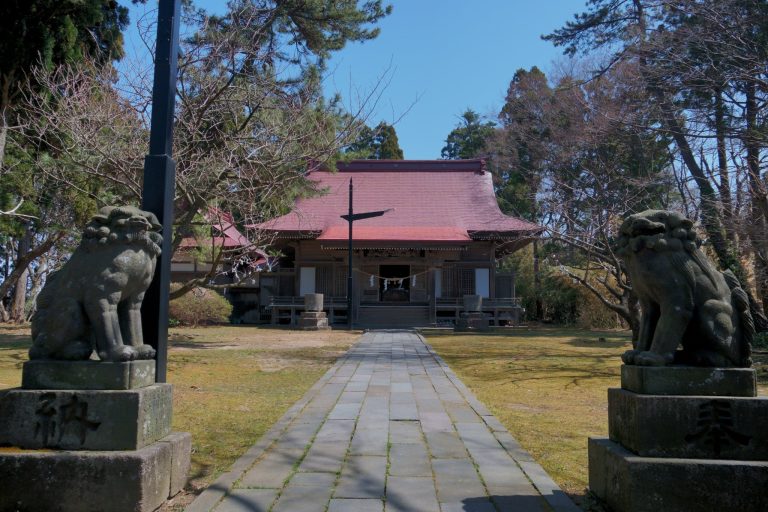
The main hall follows the nagare-zukuri, or flowing-style, form. This Shinto architectural style has a roof that projects farther over the front than over the rear, creating a prominent covered entrance. The hall represents the shrine’s surviving architectural form within the wider history of its changing names and religious affiliations.
Guardian figures
Three komainu, paired guardian figures usually placed near a Shinto shrine approach, survive at Tōko Yasaka Shrine. The oldest is a slender, tall figure erected around July 1845. A second, made on July 29, 1865, has a strongly muscular body, heavy bones, and a flattened face. The third was erected on October 7, 1933. Together, the figures preserve material evidence from the late Edo period and the modern era.