Koshiō Shrine: A Historic Shinto Shrine of Akita’s Northern Frontier


Site at a Glance
- Rating
- 4.3
- Popularity
- Very Low
- Country
- Japan
- Primary era
- Unclassified
- External website
- Open
- Eras represented
- Unclassified
- Civilizations
- Unclassified
- Site type
- Religious
- Remains
- Sanctuary
On this page10 sections
History
Koshiō Shrine is a Shinto shrine in Akita, Japan, whose foundation tradition dates to 658, during the reign of Emperor Saimei. The shrine stands on elevated ground beside the Ushu Kaidō and venerates Ōhiko no Mikoto and Takemikazuchi, sacred figures associated with military authority and protection of the northern frontier. Its history is closely connected with the ancient Japanese state’s campaigns in northeastern Japan and with the nearby Dewa Stockade and Akita Castle.
Early traditions and the 658 foundation
Shrine tradition reaches back to the reign of Emperor Sujin, when Ōhiko was sent along the Hokuriku route to subdue the Emishi. These communities lived in northeastern Japan and were regarded by the ancient court as frontier peoples subject to campaigns of expansion and pacification. Takemikazuchi was also revered as a deity protecting the northern border.
A separate tradition places the shrine’s establishment in 658. During an Emishi campaign, Abe no Hirafu is said to have arrived at Akita Bay with 180 ships. The local chief explained that the bow he carried was used for hunting, which was customary, and then swore loyalty in the name of the deity of Akita Bay. Abe no Hirafu subsequently enshrined Ōhiko, whom he regarded as his ancestor, together with Takemikazuchi.
The name Koshiō is an honorific for Ōhiko connected with his rule over Koshi. Shrines bearing related names are especially distributed from northern Niigata through Yamagata and Akita, as well as across parts of the Hokuriku and Tōhoku regions.
The Dewa frontier and Buddhist-Shinto practice
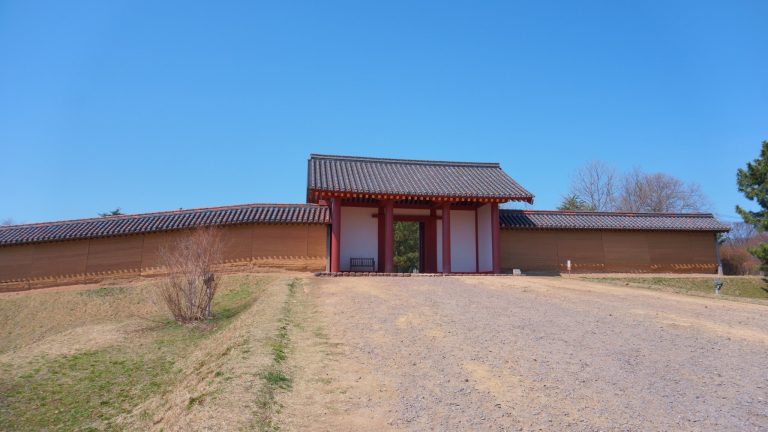
In 733, the Dewa Stockade was moved to Takashimizu Hill, the elevated site later associated with Akita Castle. The stockade and castle were frontier military and administrative installations supporting the ancient state’s control of northern Honshu. Koshiō Shrine became associated with the castle’s Shitennōji, a Buddhist institution connected with the Four Heavenly Kings, protective figures in Buddhist tradition. Through Buddhist-Shinto syncretism, the long-standing practice of combining Buddhist institutions and Shinto sacred powers, the shrine became a guardian of the castle.
Sakanoue no Tamuramaro is traditionally said to have prayed at Koshiō Shrine for victory during the Emishi campaigns and to have succeeded militarily. The shrine was consequently revitalized during the Enryaku era, a period lasting from 782 to 806. Another tradition places Tamuramaro’s victory prayer in 802. These associations strengthened the shrine’s identity as a protector of the northern frontier.
A record from 865 refers to a deity elevated to Junior Fifth Rank, Lower Grade under the name “High Spring Deity.” The scholar Sugae Masumi identified this deity with Koshiō Shrine, although that identification has also been considered difficult to accept. During the medieval period, the shrine was revered as Koshiō Great Gongen. A gongen was a Buddhist-Shinto manifestation of a buddha or bodhisattva appearing as a kami. The Andō clan provided donations, and under the Satake clan’s rule in the Edo period, the shrine’s endowed estate eventually reached 60 koku, a measure of rice-based land revenue.
Worship, reorganization, and modern recognition
During the Edo period, local devotion extended beyond the shrine’s role as a war deity associated with northern protection. Worshippers also regarded it as effective for good harvests and eye diseases. Koshiō Shrine served as the twenty-fourth station of the Akita Six Districts Thirty-Three Kannon pilgrimage, a Buddhist devotional circuit centered on Kannon, a bodhisattva associated with compassion.
Before the Meiji government’s 1868 policy separating Buddhism and Shinto, the institution was known as Koshiōji or Koshiō Gongen and was associated with Shitennōji and Tōmon’in. In 1870 it adopted the name Koshiō Shrine, while a Tamura Shrine dedicated to Sakanoue no Tamuramaro was established within the precinct. The shrine was first classified as a village shrine, a status cancelled in January 1873 and restored in October of that year. It became a prefectural shrine on February 24, 1876, and a Kokuhei Shōsha on April 29, 1882. This was the highest rank for a nationally supported shrine in Akita Prefecture. It is also classified as a Beppyo shrine, a separately recognized category administered under the Association of Shinto Shrines.
A fire in 1886 destroyed the shrine buildings and treasures. The former Buddhist connections were formally separated under the Meiji policy, although a Buddhist dharma-wheel emblem remains part of the shrine crest. This emblem is said to reflect an earlier association with Shugendō, a Japanese mountain-ascetic religious tradition, through Shōgoin, a Buddhist temple historically connected with the administration of one major Shugendō lineage.
Several observances preserve the shrine’s older religious traditions. The festival on January 8 was formerly preceded by seven days of abstinence and ritual purification beginning on New Year’s Day. During that period, children did not attend New Year’s worship or return to school until January 8, white rice cakes were avoided, women wore hats outdoors, and visitors were not offered charcoal fires. The Ship-Spirit Festival, held on the sixteenth day of the third lunar month, recalls Ōhiko’s reputed instruction in boatbuilding. Rice balls coated with soybean flour and salted smartweed are placed on an altar set on a boat, reflecting the tradition that Ōhiko was entertained aboard one.
The annual festival on May 8 includes a procession carrying a portable shrine through the town. It also features the Rice-Divination Rite, in which a glue-coated pole about three metres long is tipped with water-mixed glutinous rice flour. The way the flour adheres and falls is used to predict the year’s harvest. The shrine appeared in an illustrated account in Kyokutei Bakin’s 1818 essay collection Gendō Hōgen. In 1891, Prince Fushimi Sadanaru presented it with a calligraphic horizontal plaque.
Remains
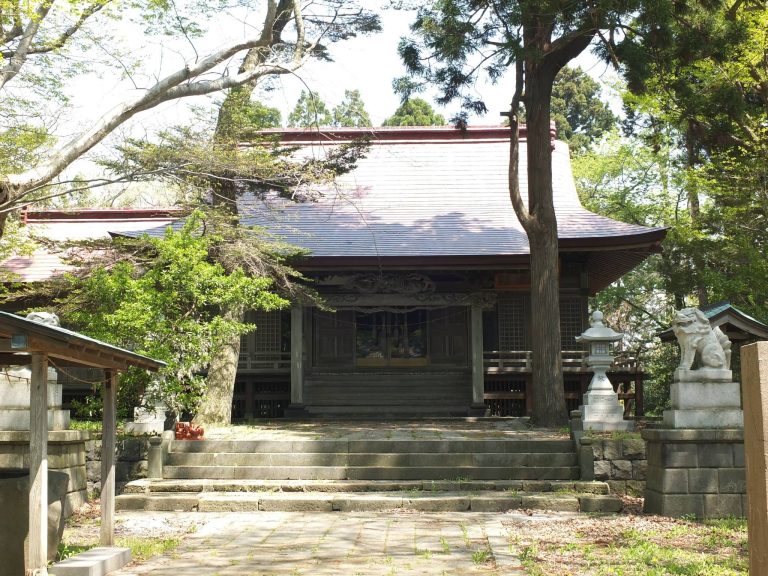
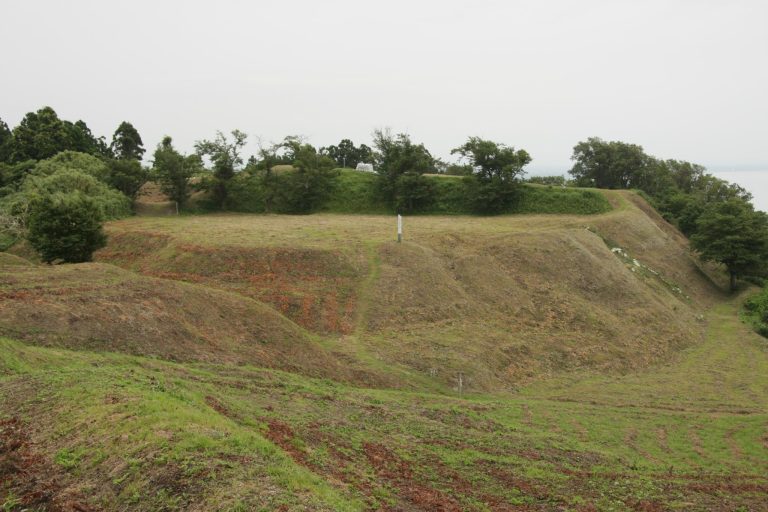
Koshiō Shrine occupies a hilltop precinct historically known as Takashimizu Hill or Kozakura Heights. Its elevated position beside the Ushu Kaidō is associated with the former location of the Dewa Stockade and with the nearby site of Akita Castle. Inventories give the precinct an area of approximately 15,000 tsubo, or approximately 49,587 square metres, while another figure is approximately 16,777 tsubo, equivalent to about 55,461 square metres.
Principal shrine buildings
Main sanctuary
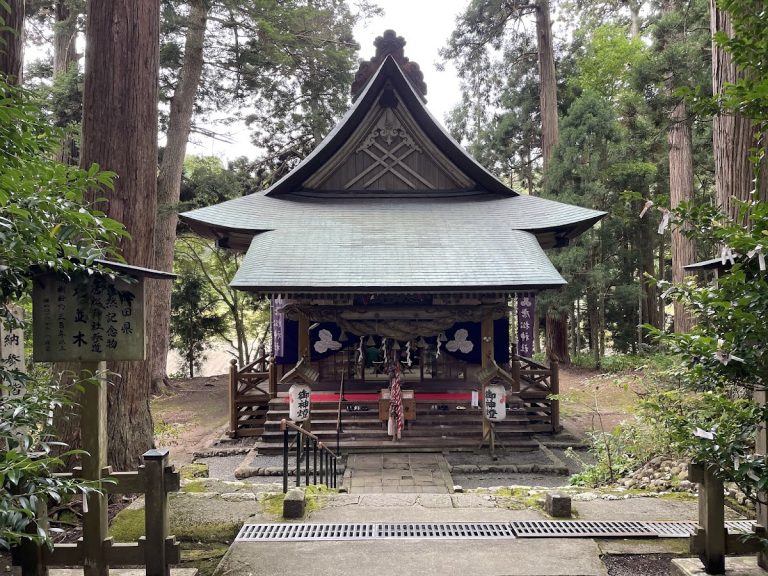
The main sanctuary is an irimoya-style building occupying approximately 10 tsubo, or 33.06 square metres. This roof form combines a central gable with sloping hipped sections and was widely used for major religious and institutional buildings in Japan.
Worship hall
The worship hall is also irimoya-style and occupies approximately 92 tsubo, or 304.13 square metres. It forms the largest recorded building in the shrine’s architectural inventory.
Supporting buildings
Other recorded structures include a food-offering hall of approximately 16 tsubo, or 52.89 square metres, and a retreat building of approximately 19 tsubo, or 62.81 square metres. The precinct also contains an office measuring approximately 64 tsubo, or 211.57 square metres, and a portable-shrine storehouse of approximately 4 tsubo, or 13.22 square metres.
Subsidiary shrines
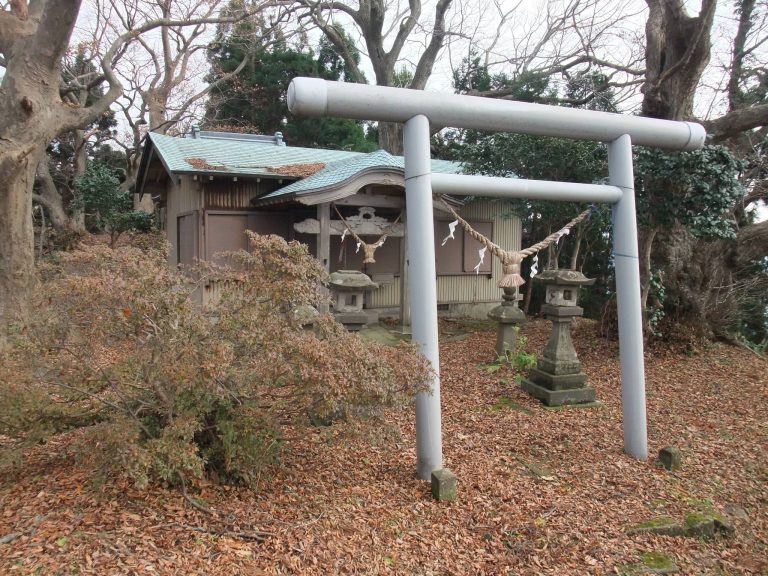
Tamura Shrine, dedicated to Sakanoue no Tamuramaro, stands within the precinct alongside Iwato Shrine and Shinmei Shrine. Together these subsidiary shrines form part of the surviving religious organization of the hilltop complex.