Wakimoto Castle: A Medieval Japanese Mountain Fortress


Site at a Glance
- Rating
- 4.1
- Popularity
- Low
- Country
- Japan
- Primary era
- Medieval
- External website
- Open
- Eras represented
- Medieval, Early Modern
- Civilizations
- Unclassified
- Site type
- Military
- Remains
- Castle
On this page18 sections
History
Wakimoto Castle is a medieval Japanese mountain castle in Oga, Japan, developed as an earthen fortress and made the principal residence of the Ando clan. It became one of the clan’s three major strongholds, alongside Hiyama Castle and Minato Castle, during the period of prolonged warfare among regional powers known as the Sengoku period.
Origins and the Ando Clan
The castle’s foundation date and founder remain uncertain. One tradition attributes its construction to an early leader of the Ando clan, while another dates its foundation to 1334, when warriors aligned with the Kamakura Hojo faction are said to have established it. Its construction or substantial development is also placed in the fifteenth century. The site was known by several names, including Oihana Castle and Taihei Castle.
In 1456, Ando Masasue entered the Oga area and used Wakimoto Castle as his base. The Ando were a maritime power with commercial and fishing interests along the northern Sea of Japan coast. Their branches had earlier been based at Tosaminato in present-day Aomori Prefecture and Tsuchizaki Port in present-day Akita, linking Wakimoto to a wider network of coastal activity.
Chikasue’s Reconstruction
Ando Chikasue unified the Hiyama and Minato branches of the clan and began a large reconstruction of an earlier fortification at Wakimoto in 1577. He formally transferred leadership to his eldest son, Ando Tsugisue, and planned to use Wakimoto as a retirement residence, but the castle became Chikasue’s working seat.
Chikasue pledged allegiance first to Oda Nobunaga and later to Toyotomi Hideyoshi, successive leaders who helped consolidate political authority in sixteenth-century Japan. He was confirmed in control of holdings covering about two-thirds of Dewa Province, a historical province corresponding broadly to much of present-day Akita and Yamagata Prefectures. Chikasue also changed the clan surname from Ando to Akita.
Chikasue died at Wakimoto Castle on 2 October 1587 during the Battle of Mount Karatsuyama, a conflict against the Tozawa and Onodera clans. His son, Akita Sanesue, succeeded him as head of the clan.
The Minato Disturbance and Abandonment
In 1589, the Minato Disturbance, an internal conflict among rival branches and supporters of the Ando clan, broke out when Ando Michisue attacked Sanesue. Fighting spread to the area around the Funakoshi River near Wakimoto Castle.
Another tradition names Ando Tomosue, lord of Minato Castle, as the attacker and identifies Wakimoto lord Wakamoto Goro Nobusue as his guardian. In this version, Nobusue encouraged the rebellion, was killed, and was buried at Keigenji Temple east of the castle. The identity of Wakimoto’s lord during the conflict remains uncertain. Records from 1730 call Wakimoto Goro Tomosue the lord, while another military chronicle identifies Nobusue as both lord and Tomosue’s guardian.
In 1591, Sanesue founded Sugawara Shrine south of the castle. He later moved his seat to Minato Castle, and Wakimoto fell into ruin. The castle was abandoned sometime between Toyotomi Hideyoshi’s administrative reorganization of northern Japan in 1590 and the Satake clan’s construction of Kubota Castle in 1602. Oga authorities place the abandonment in the early Edo period, while another date given for the event is 1603. The Akita clan later continued as daimyo, or major territorial lords, of Miharu Domain until the end of the Tokugawa shogunate.
Rediscovery and Protection
The antiquarian Sugae Masumi visited the ruins in 1804. A local Wakimoto Castle discussion group formed in 1987, and systematic investigation began in 1993. Parts of the site became cultural property of Oga City in 1995 and Akita Prefecture in 1997, with the municipal designation expanded in 2000. Wakimoto Castle became a National Historic Site of Japan in 2004 and was selected as site number 106 in the Continued Top 100 Japanese Castles in 2017.
Remains
Wakimoto Castle occupied a flat-topped hill about 100 metres high on the southern side of the Oga Peninsula, near the edge of the Akita Plain and the former mouth of Lake Hachirogata. The Sea of Japan lay to the south, with Mount Chokai visible across the water, while the mountains of the Oga Peninsula stood to the west and Wakimoto Port lay below the hill. Lake Hachirogata, once beside the castle, later disappeared through land reclamation.
The castle covered about 150 hectares, or approximately 1.5 million square metres. Its principal fortified area extended roughly 1,000 metres from east to west and 1,500 metres from north to south. The wider site included the Kabutozaki, Uchizaki, Umanoriba, Temple, Uchidate, castle-town, and Nendo districts, with the main groups of enclosures concentrated in the eastern, central, and Uchidate areas.
Central and Summit Enclosures
Uchidate Compound
Uchidate, the district nearest the Sea of Japan, formed the central compound. Its square enclosures, each measuring several tens of metres on a side, were arranged in terraces and surrounded by clay ramparts, or earthen defensive walls. Well remains survive within this area.
Summit Enclosures
The summit held a group of square enclosures that probably contained the residence and may represent the original castle. During the reconstruction begun in 1577, an adjacent peak facing the sea was incorporated into the fortress. Ridges divided the eastern and southern sectors, creating a larger defensive arrangement around the earlier summit area.
Eastern Ridge Defenses
Inner Bailey
At the end of the eastern ridge, the reconstructed castle included an inner bailey, an enclosed area used for residence, administration, defense, or storage. It measured approximately 100 metres square and was enclosed by a clay rampart about five metres high. Several smaller enclosures surrounded it.
Retainer Enclosures
Two tiers of enclosures for senior retainers occupied the southern ridge. Much of this ridge later collapsed into the sea through erosion and earthquake damage, altering the form of this part of the fortress.
Routes and Outer Areas
Road and Central Defenses
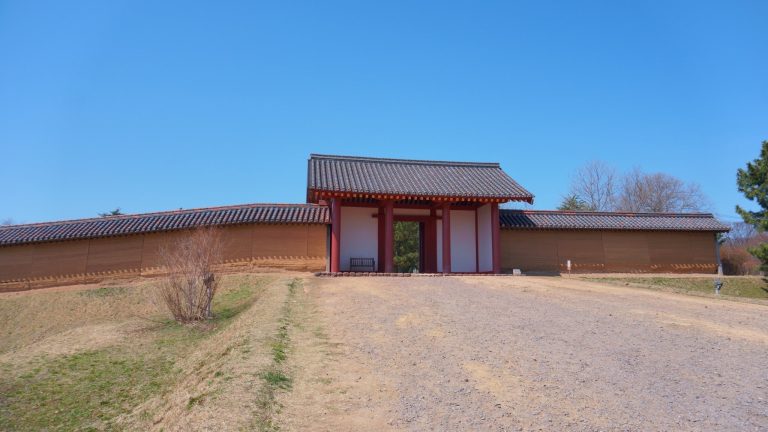
A road connecting the older and newer castle compounds was guarded by a clay wall approximately 300 metres long. The central route, historically called the Tenka Road, crossed the castle area between enclosures. Vertical moats, dry moats, clay ramparts, and controlled entrances regulated movement through the central district.
Castle Town
The castle town on the eastern hillside is known as the Wakimoto archaeological site. It extended for about one kilometre along the coast and was protected by an outer barrier. Together with the fortified hill, it formed part of the settlement associated with the castle.
Religious Sites and Archaeological Evidence
Temples and Shrine
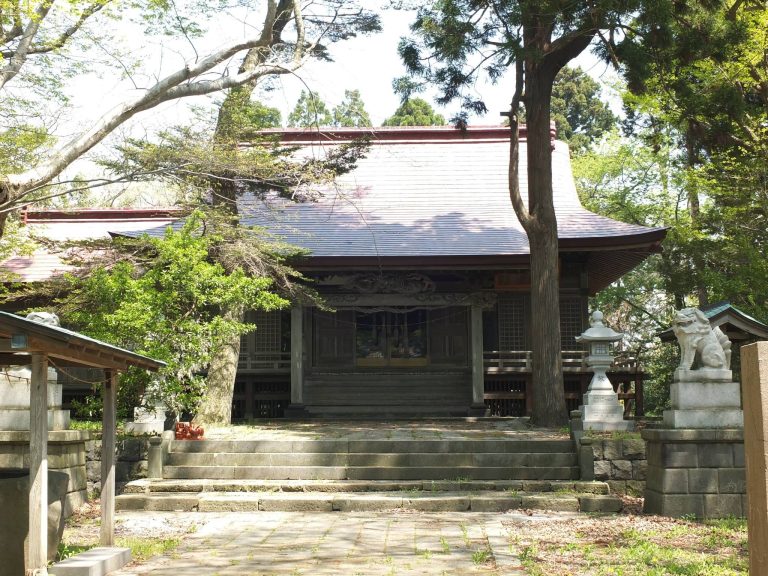
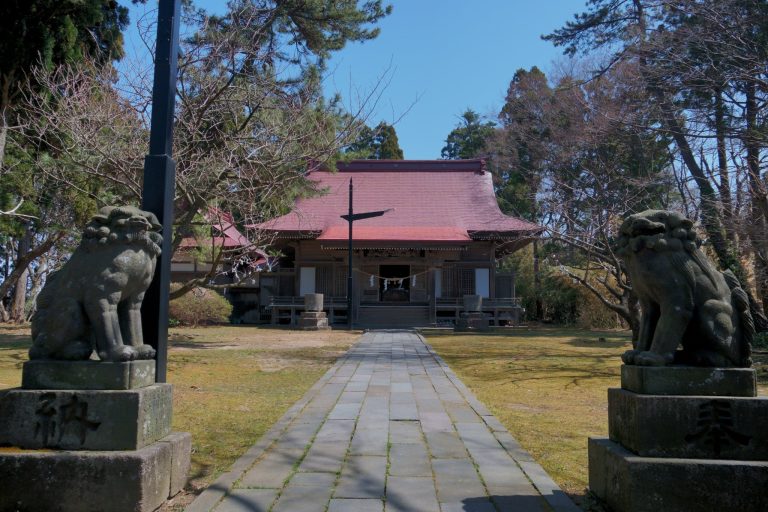
The Temple district contains Mangyoji and Honmyoji. Mangyoji stands on the site of Hozoji, traditionally regarded as the location of Ando Chikasue’s grave. Chikasue’s brothers founded Honmyoji. Sugawara Shrine, established by Sanesue in 1591, and the two temples remain within the wider castle site.
Earthworks and Finds
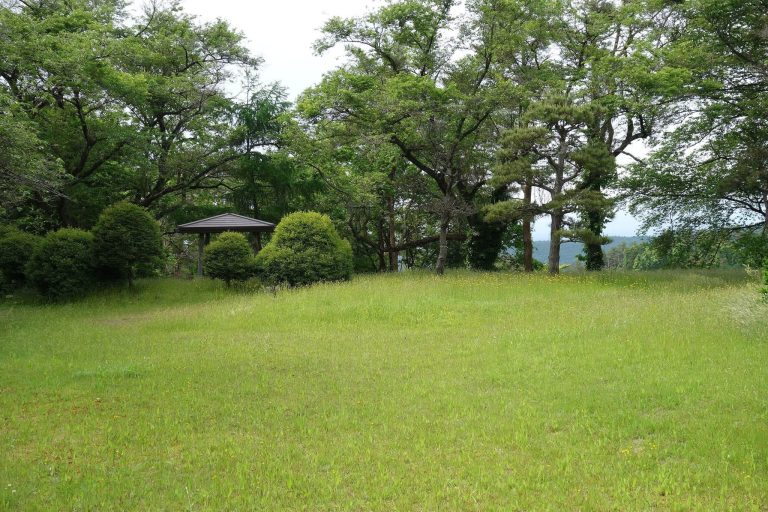
Wakimoto was built as an earthen mountain fortress, without stone walls, and no original castle buildings survive. Its physical remains consist of numerous baileys, terraced enclosures, clay ramparts, dry and vertical moats, entrances, roads, and wells. Archaeological investigations have recovered ceramics used during the castle’s occupation. The site is now in ruins, while vegetation clearance by local volunteers has exposed the surviving earthworks.