Tōhoku-in Temple: A Heian Buddhist Foundation in Kyoto

Site at a Glance
- Rating
- 4.3
- Popularity
- Very Low
- Country
- Japan
- Primary era
- Unclassified
- External website
- Open
- Eras represented
- Unclassified
- Civilizations
- Unclassified
- Site type
- Religious
- Remains
- Temple
On this page10 sections
History
Tōhoku-in Temple is a Buddhist temple in Kyoto, Japan, established in the Heian period as a Tendai Jōgyō-zanmai hall in 1030. Its formal name is Unsuisan Tōhoku-in. The temple was founded in the northeastern part of Hōjōji, the temple established by the powerful court noble Fujiwara no Michinaga, and its history remains closely connected with Michinaga’s family and the imperial court.
Foundation within Hōjōji
After Michinaga’s death, his daughter Jōtōmon’in, also known as Empress Shōshi, commissioned Tōhoku-in as a Jōgyō-zanmai hall. This form of Buddhist practice involved continuous circumambulation and recitation around an image of Amitabha. Construction was completed in 1030, followed by a large Buddhist dedication ceremony on 21 August that year. The ceremony was treated as a national religious event.
The name Tōhoku-in referred to the hall’s position northeast of Hōjōji. It also distinguished the institution from Seihoku-in, another Jōgyō-zanmai hall established northwest of Hōjōji by Jōtōmon’in’s mother, Minamoto no Rinshi. During the construction of Tōhoku-in, Jōtōmon’in also had Seishin-in built in the same area in 1027 for a nun identified with the poet Izumi Shikibu. Jōtōmon’in later lived at Tōhoku-in in her old age, a circumstance that also contributed to the temple’s name.
Rebuilding and relocation in the Heian period
A fire at Hōjōji in 1058 completely destroyed Tōhoku-in. The temple was then moved to new land north of Hōjōji and rebuilt. A dedication ceremony for the reconstructed institution took place in 1061. The relocated site is identified with an area near present-day Kitanobe-chō in Kamigyo Ward. Jōtōmon’in continued to be associated with the temple, and her grandson Emperor Go-Reizei visited her there in 1050. He made a second visit in 1064, after the rebuilding.
Another fire in 1171 destroyed almost the entire temple. The Goma Hall, used for Buddhist fire rituals, and the facility for continuous sutra recitation survived. Statues and scriptures removed immediately before the fire were placed at Seihoku-in. Tōhoku-in was rebuilt later in the same year, and a nenbutsu gathering held there from September 1174 became a well-known feature of medieval Kyoto. Nenbutsu is the recitation of Amitabha’s name.
Medieval religious and cultural life
In 1214, craftsmen who had gathered for the temple’s nenbutsu meeting held a poetry contest. Their activity is traditionally represented in the Tōhoku-in Artisans’ Poetry Contest Picture Scroll, which is preserved by the Tokyo National Museum and designated an Important Cultural Property.
During the Muromachi period, devotion to Tōhoku-in’s Benzaiten image expanded alongside belief in the Seven Lucky Gods. Benzaiten is a Buddhist and Shinto deity associated with music, eloquence, learning, and prosperity. The temple was burned again during the Ōnin War, a fifteenth-century civil conflict that caused widespread destruction in Kyoto, and subsequently fell into severe decline. Some facilities remained, including the Senju Hall.
Adoption of the Ji-shu identity
In 1559, a monk of the Ji-shu, or Ji school, rebuilt the institution as a Ji-shu temple. The Ji school was a medieval Japanese Pure Land movement associated with itinerant nenbutsu practice. The surviving Benzaiten image became the principal object of worship. Tōhoku-in burned again during the warfare of 1570 and is said to have been rebuilt by imperial order, although details of this phase remain uncertain. A Ji-shu register from 1633 lists Tōhoku-in as a subordinate temple of Seijōkōji, showing that the temple was affiliated with the Ji-shu school by the early Edo period.
Move to the present site
Another fire destroyed Tōhoku-in in 1692. The temple was then ordered to move, together with Shinnyodo and other institutions, to its present grounds in Sakyo Ward. During the Kanbun-era confirmation of temple holdings, Tōhoku-in was also recorded as holding six koku of temple land in Ichijoji village outside Kyoto. The present temple therefore represents the third location in its history, following its original position within Hōjōji and its later site north of that complex.
Remains
Main hall and religious images
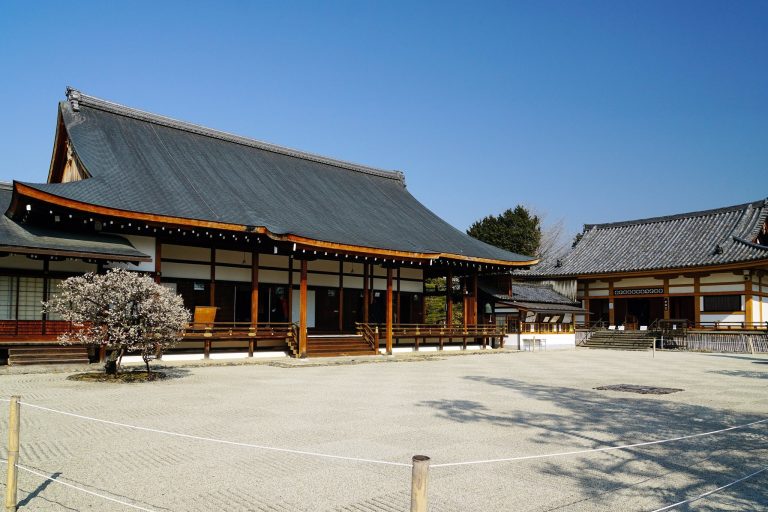
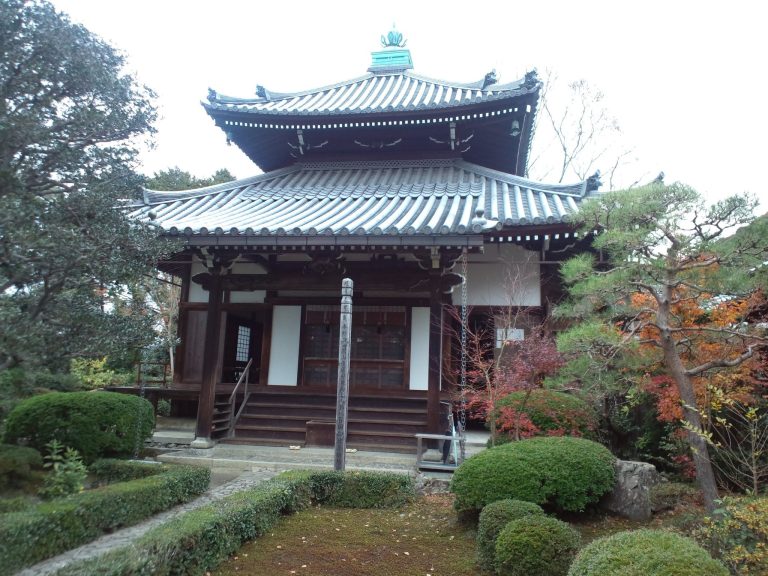
The main hall contains the principal Benzaiten image, which remains the central object of worship at Tōhoku-in. A plaque in the hall was written in the hand of Emperor Go-Sai. The building also houses a statue of Fujiwara no Michinaga in court dress, linking the present religious setting with the founder of Hōjōji and the temple’s earliest institutional history.
The Benzaiten image was described during the Muromachi period as measuring 2 shaku 3 sun. Tradition attributes its creation to Saichō during the reign of Emperor Kanmu. Saichō was the monk who founded the Tendai school in Japan, but this attribution is preserved as a traditional account rather than a confirmed historical fact.
Plum tree and literary traditions
The grounds contain a plum tree regarded as the successor of the “eaves-end plum” traditionally said to have been planted at Tōhoku-in by Izumi Shikibu when the temple stood within Hōjōji. Because Tōhoku-in was relocated twice, the present tree is not considered the original. The tradition nevertheless connects the current grounds with the temple’s first setting and with the literary culture associated with its early history.
The plum story is preserved in the Noh play Tōhoku. Tōhoku-in also transmits the texts The Tale of Ippen Shōnin and Izumi Shikibu and The Origin Legend of Tōhoku-in’s Benzaiten. Together, these traditions preserve religious and literary associations connected with the temple’s past.
Surviving buildings and setting
The Goma Hall and the facility for continuous sutra recitation are remembered as the buildings that survived the destructive fire of 1171. The Senju Hall was among the facilities retained after the temple’s destruction during the Ōnin War. These surviving building traditions reflect the repeated rebuilding that shaped Tōhoku-in through the medieval period.
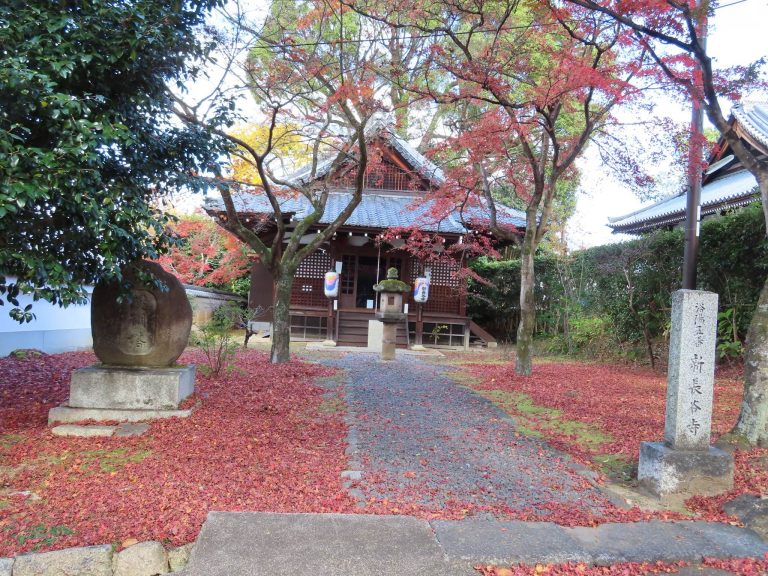
Tōhoku-in now stands in front of the mausoleum of Emperor Go-Ichijo. Its present grounds preserve the temple’s Ji-shu identity while also embodying its earlier connections with Tendai practice, the Hōjōji complex, Jōtōmon’in, and the imperial court.