Konkaikōmyō-ji Temple: A Jōdo Buddhist Head Temple in Kyoto


Site at a Glance
- Rating
- 4.3
- Popularity
- Medium
- Country
- Japan
- Primary era
- Early Modern
- External website
- Open
- Eras represented
- Early Modern, Modern
- Civilizations
- Japanese, Tokugawa, Toyotomi regime
- Site type
- Religious
- Remains
- Monastery
On this page19 sections
History
Konkaikōmyō-ji Temple is a major Jōdo school head temple in Kyoto, Japan, whose origins are traditionally placed in spring 1175, when the Buddhist teacher Hōnen established a hermitage in the Kurodani area. The Jōdo school emphasizes devotion to Amitābha, the central Buddha of Pure Land Buddhism, and recitation of the nenbutsu, or invocation of Amitābha’s name. Konkaikōmyō-ji is one of the school’s seven head temples and one of Kyoto’s four principal Jōdo head temples. Its principal image is Amitābha, and the temple is also known as Kurodani and the Shirakawa Hermitage.
Hōnen and the Kurodani Hermitage
Hōnen is traditionally said to have descended from Kurodani on Mount Hiei and founded a hermitage at the site. A foundation tradition relates that he sat on a large stone, saw purple clouds and golden light, and dreamed of meeting Shandao, a Chinese Pure Land Buddhist master whose writings strongly influenced him. The experience strengthened Hōnen’s resolve to establish the Jōdo school. The hermitage is therefore regarded as the beginning of the temple and, in some traditions, as the first Jōdo temple.
The site was known as the Shirakawa Hermitage and originally belonged to Mount Hiei. Fujiwara no Akitoshi, a devotee of Hōnen’s teacher Eikū, donated his villa to Eikū, who established the hermitage there. When Eikū died, the Mount Hiei Kurodani headquarters and the Shirakawa Hermitage passed to Hōnen. Hōnen later gave them to Shinku, who made the site a base for the Shirakawa religious lineage.
The Mount Hiei location became known as Old Kurodani, while the Shirakawa site was called New Kurodani and eventually simply Kurodani. The Mount Hiei location continues to bear the name Kurodani. During the tenure of the fifth abbot, Egi, the temple halls were organized and the name Shiunzan Kōmyō-ji was adopted, referring to Hōnen’s vision of purple clouds and golden light. The eighth abbot, Unkū, bestowed the Buddhist precepts on Emperor Go-Kōgon and received the characters “Kinkai,” after which the temple became known as Konkaikōmyō-ji.
Imperial Recognition and Early Modern Reconstruction
Emperor Go-Komatsu granted the temple a plaque reading “First Gate of the Pure Land School.” The wording refers to the tradition that Hōnen first preached the Jōdo teaching at the site. In this historical context, “Pure Land School” means the Jōdo school and does not refer to the separate Jōdo Shinshū tradition.
Toyotomi Hideyori rebuilt the Amida Hall in 1605. During the early Edo period, the Tokugawa government remodeled Konkaikōmyō-ji together with Chion-in in a castle-like defensive style. In 1633, Toyonaga Kensai built the three-story pagoda as a memorial monument for Tokugawa Hidetada.
Headquarters of the Kyoto Shugoshoku
On 24 September 1862, Matsudaira Katamori, lord of the Aizu domain, assumed the office of Kyoto Shugoshoku, the late Edo-period military post responsible for maintaining the shogunate’s authority and public order in Kyoto. Konkaikōmyō-ji became his headquarters, and approximately 1,000 Aizu retainers were stationed in Kyoto, rotating every year.
The Aizu forces could not maintain public order alone, so the Shinsengumi was organized under the authority of the Kyoto Shugoshoku. This shogunate-affiliated policing force carried out duties in Kyoto during the final years of the Edo period. The office of Kyoto Shugoshoku was abolished on 3 January 1868, about six years after its establishment, after the Restoration of Imperial Rule enabled the Satsuma and Chōshū domains to establish control of Kyoto. The temple’s later memorial landscape preserves the memory of the Aizu forces and of the Battle of Toba–Fushimi, an early major conflict in the civil war accompanying the collapse of the Tokugawa shogunate.
Modern Institutional History
The temple’s main hall, the Mieidō, burned in 1934 and was rebuilt in 1944. The Daikujō, or Great Abbot’s Quarters, was also rebuilt in 1944 after the same fire. In 1946, Konkaikōmyō-ji became independent as the Kurotani Jōdo branch. It reunited with the Jōdo school in 1977 and has since formed one of that school’s seven head temples. Its chief abbot serves as the resident head and is selected by the head of the Jōdo school and the chief-abbot selection committee rather than through hereditary succession.
Konkaikōmyō-ji is associated with the Rakuyō Thirty-Three Kannon pilgrimage as stop 6 and with the Hōnen Twenty-Five Sacred Sites pilgrimage as stop 24. Its hilltop cemetery includes the Aizu Domain Martyrs’ Cemetery, where civilians are also commemorated, and a memorial stele erected in March 1907 for Aizu retainers who died during the protectorate period and the Battle of Toba–Fushimi.
Remains
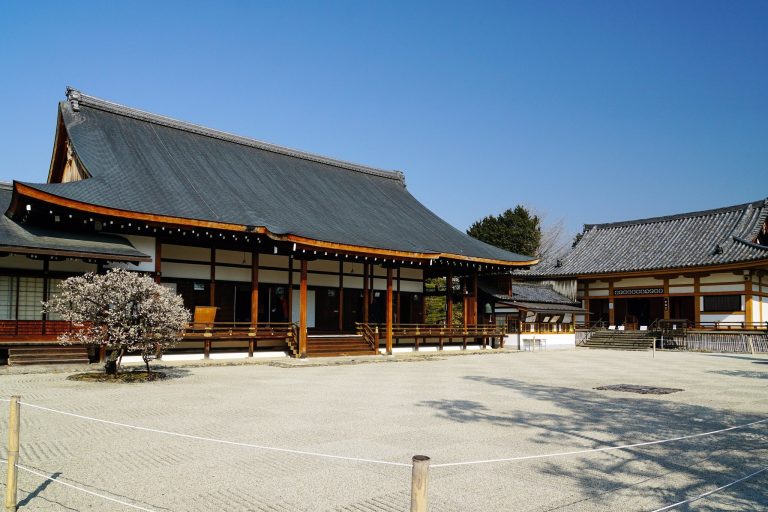
The complex is organized around the Mieidō, with halls, gates, a pagoda, gardens, religious buildings, springs, graves, and memorial monuments distributed through the temple grounds. Its surviving buildings combine the religious spaces associated with Hōnen’s lineage with structures rebuilt or altered during the early modern and modern periods.
Main Halls and Religious Buildings
Mieidō and Daikujō
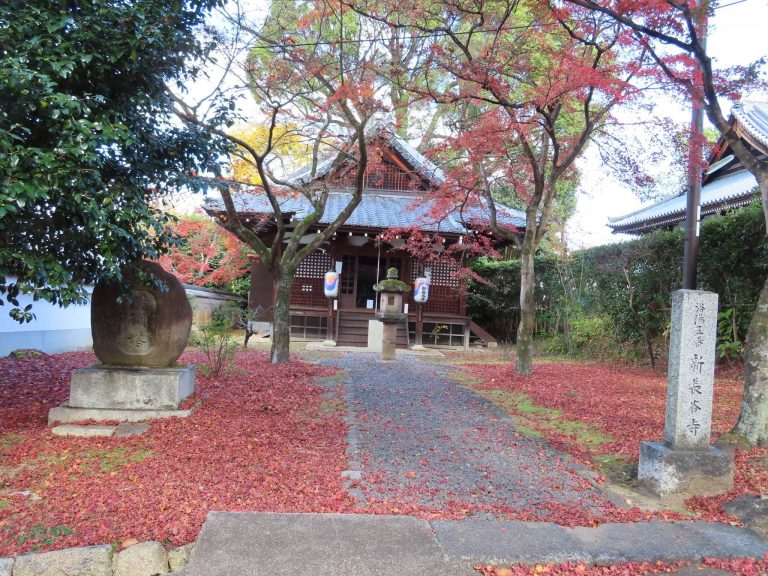
The Mieidō, also called the main hall or Great Hall, contains a seated portrait of Hōnen at age 75, a seated image of Amitābha, Nakayama Monju, and Kibi Kannon. Kibi Kannon is a wooden standing image of Thousand-Armed Kannon and the principal image of the Rakuyō Thirty-Three Kannon pilgrimage. The hall was rebuilt in 1944 after the 1934 fire. The Daikujō, or Great Abbot’s Quarters, was rebuilt at the same time. Its sliding-door paintings include a tiger by Kubota Kinsen and pine trees by Imao Keishō.
Amida Hall
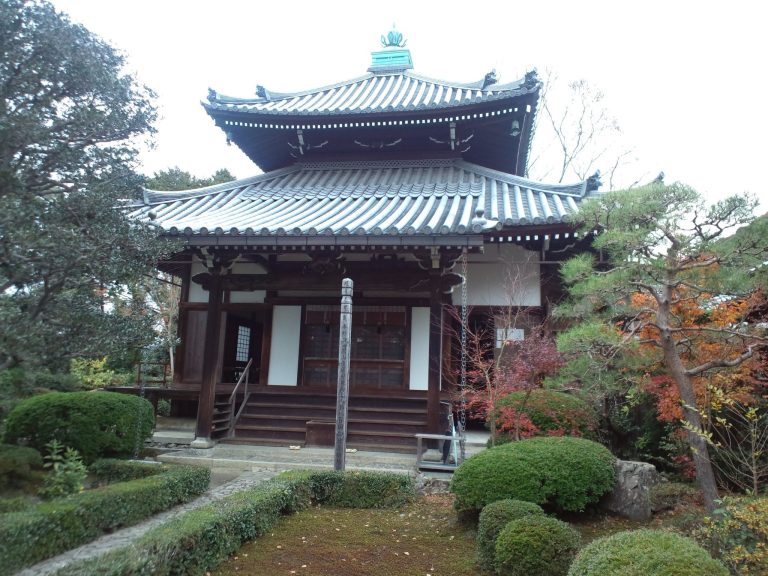
The Amida Hall was rebuilt by Toyotomi Hideyori in 1605. It houses an Amitābha image associated with Eshin Sōzu Genshin. Tradition holds that the carving tool used to make Buddhist images was sealed inside the statue, after which Genshin stopped sculpting Buddhist images. The image is consequently known as the Tool-Sealed Buddha or the Stopping Buddha.
Seiwaden and Shin-Seiwaden
Seiwaden was built in 1779. Shin-Seiwaden was moved to the temple in 1964 from the rainy-weather gymnasium of Kyoto Municipal Nisshō Elementary School. The complex also includes the Shiun Garden, the Shiun-tei pavilion, and the temple administrative office.
Gates, Pagoda, and Bell Tower
Sanmon and Other Gates
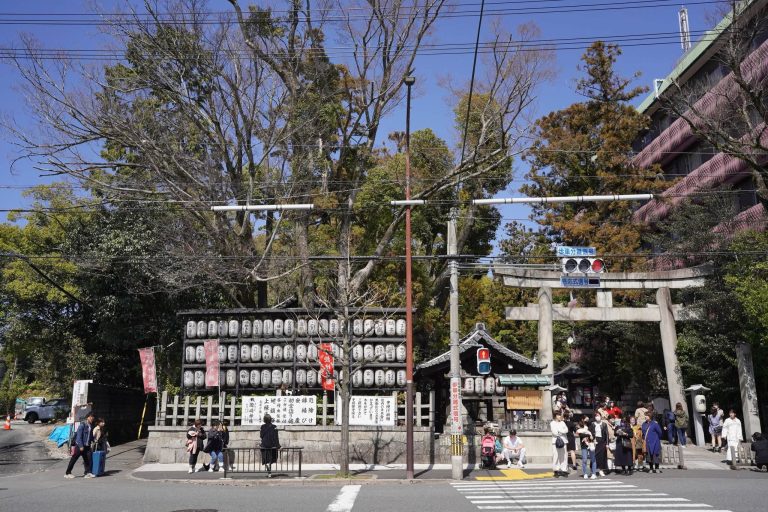
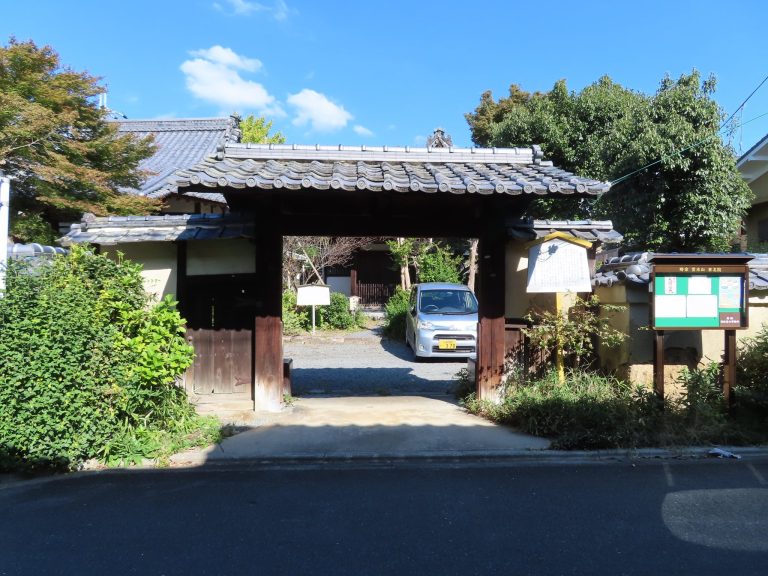
The Sanmon, or tower gate, was destroyed during the Ōnin War and rebuilt in 1860. Its plaque bears the words “First Gate of the Pure Land School” in the handwriting of Emperor Go-Komatsu. The grounds also contain the South Gate and the Kōraimon, identified as the main gate. The Daikujō Gate, the entrance, and the Mieidō and Daikujō are registered tangible cultural properties, a form of Japanese legal heritage protection for culturally significant buildings.
Monju Tower
The three-story pagoda, known as the Monju Tower, was built in 1633 by Toyotaga Kensai as a memorial monument for Tokugawa Hidetada. It is an Important Cultural Property. Images of Monju, the bodhisattva associated with wisdom, and its attendant figures were housed there until relatively recently and are now kept in the Mieidō. They are traditionally attributed to Unkei, although their actual artist is unknown.
The Bell Tower is a designated Kyoto Prefecture tangible cultural property. To the left of the stairs leading to the Monju Tower stands a stone image of Amitābha associated with five kalpas of contemplation. A kalpa is an extraordinarily long period in Buddhist cosmology, and the image represents Amitābha in prolonged contemplation. Its distinctive hairstyle has given it the popular nickname “Afro Amitābha.”
Repository, Images, and Associated Features
Sutra Repository and Ossuary
The Sutra Repository is a registered tangible cultural property. The Ossuary occupies the former Sutra Repository, which was rebuilt in 1689. It contains a seated Amitābha image made from cremated remains deposited at the temple, known as a bone Buddha.
Hōnen Mausoleum and Historical Documents
The Hōnen Mausoleum is a hall enshrining Hōnen’s remains and stands above Renchū-in. The temple preserves the document known as the Ichimai Kishōmon, traditionally regarded as Hōnen’s authentic hand. It is said to have been written on 23 January 1212 at the request of Genchi as a memorial statement of Hōnen’s teaching. The document is displayed during the Hōnen memorial observances on 15 and 16 April. A portrait painting of Hōnen known as the Mirror Portrait is a designated Kyoto Prefecture tangible cultural property and is made available during the annual Hōnen memorial service on 25 April.
Paintings and Natural Features
The temple preserves a silk painting of Amitābha descending over a mountain and another silk painting depicting hell and paradise. Both are Important Cultural Properties. The spring called Kurodani Myōjōsui was used for tea by members of the imperial family and court nobility. The grounds are also described as a place from which the red sunset can be viewed over the Kyoto Basin around the middle day of the equinoctial observance.
Ponds, Trees, and Warrior Traditions
The Lotus Pond is also called the Helmet Pond because Kumagai Naozane is said to have placed his helmet there. Nearby, the statue known as the Armor-Hanging Pine is traditionally associated with Naozane, who is said to have washed his armor and hung it on the tree. The original tree died, and its successor was designated a Kyoto city-preserved tree in 2003. That tree died in 2013 and was replaced by a third tree in 2014.
The grounds contain the cremation mound of Emperor Seiwa, although his remains were later buried at Mizuo Imperial Mausoleum. They also include a cemetery of the Kumagai family and a memorial monument to Kumagai Naozane, who is also known as the monk Renjō. Opposite Naozane’s monument stands a memorial to Taira no Atsumori, whom Naozane is traditionally identified as having killed.
Cemeteries and Memorial Monuments
The Aizu Domain Martyrs’ Cemetery contains the graves of 352 Aizu retainers. Graves of men from the Aizu and Kuwana domains who died at Toba–Fushimi are also associated with the temple. The cemetery landscape includes the 1907 memorial stele for Aizu retainers and commemorates civilians as well.
Other graves and monuments honor Yatsuhashi Kengyō, an early Edo-period musician; Yamazaki Ansai, a Confucian, Zhu Xi scholar, Shinto thinker, and philosopher; Sōgen’in, daughter of Azai Nagamasa, wife of Tokugawa Hidetada, and mother of Tokugawa Iemitsu; Kasuga no Tsubone, wet nurse of Iemitsu; and Tokugawa Tadanaga, Hidetada’s third son and Iemitsu’s younger brother. Memorials also commemorate Miyagi Yorihisa, father of Miyagi Toyotsugu, the first lord of Kiyotomi, and Yamanaka Shikanosuke, a retainer of the Amago family whose monument is a five-element stupa, a Buddhist memorial structure composed of forms symbolizing the five elements.
The grounds further contain a memorial grave for a sister of Kuroda Yoshitaka, the wife of Ichiyanagi Naosue, built by her descendant, a lord of Ono Domain. Other graves include those of Kinoshita Hiroji, the first president of Kyoto Imperial University; Nakabayashi Jin’ichirō, founder of the Kyoto Bussankan and Marubutsu department-store business; and Akamatsu Kōsaburō, a late Edo-period military scholar and political thinker who was assassinated by Nakamura Hanjiro and Tashiro Gorōzaemon.