Shōgo-in Temple: Head Temple of the Honzan Shugendō Tradition


Site at a Glance
- Rating
- 4.2
- Popularity
- Low
- Country
- Japan
- Primary era
- Early Modern
- External website
- Open
- Eras represented
- Early Modern
- Civilizations
- Tokugawa
- Site type
- Religious
On this page13 sections
History
Shōgo-in Temple is a Buddhist temple in Kyoto, Japan, whose institutional origins are associated with the reorganization of an earlier religious establishment in 1090. It is the head temple of the Honzan branch of Shugendō, a Japanese tradition centered on ascetic training, pilgrimage, mountain practice, and ritual. The temple’s principal image is Fudō Myōō, and it governs regional Kasumi organizations, which historically supervised Shugendō practitioners in different parts of Japan.
Origins and the Kumano connection
The temple preserves a tradition of an earlier institution called Jōkō-in, believed to have been founded in the ninth century by the Tendai monk Enchin. Another tradition associated Jōkō-in with En no Gyōja, the religious figure regarded within Shugendō as an important early practitioner. In 1090, the monk Zōyo guided retired Emperor Shirakawa on a pilgrimage to Kumano. Zōyo was then appointed superintendent of the Kumano Sanzan, the three major sacred sites of the Kumano region, and received Jōkō-in.
Zōyo reorganized or relocated the institution and established Shōgo-in near Kyoto’s Kumano Shrine, becoming its founding superior. The name Shōgo-in appears in written records only after Zōyo’s lifetime. During the time of Zōyo and his successor Zōchi, the institution was called Shirakawa-bō. Its institutional beginnings and lasting connection with its present location are nevertheless associated with the events of 1090, while the older ninth-century tradition remained part of its history. After later fires and relocations, the temple returned to its present site in 1676.
Zōyo and his successors served as guides for retired emperors who undertook pilgrimages to Kumano. These journeys flourished during the Heian period and strengthened Shōgo-in’s religious standing and association with the sacred region. The entry of Imperial Prince Shizue, a son of retired Emperor Go-Shirakawa, further deepened the temple’s connection with the imperial house.
Monzeki status and institutional authority
Shōgo-in became a monzeki temple, a Buddhist institution whose abbots traditionally came from the imperial family or the aristocratic regent families. Before the Meiji period, 37 abbots held the position. Twenty-five came from the imperial family and twelve from the regent family, giving the temple a sustained relationship with the court and the highest aristocratic houses.
Imperial Prince Kakusuke held the monzeki position for about 70 years. During this period he also served as abbot of Onjō-ji, head priest of Tsurugaoka Hachiman-gū, and superintendent of the Kumano Sanzan. His tenure helped consolidate Shōgo-in’s institutional position. After his death, succession disputes became entangled with the rivalry between the Southern and Northern Courts, and the Muromachi shogunate later intervened.
A further crisis followed the sudden death of Imperial Prince Kakuzō in 1390. Ryōyu, an abbot of Jōjū-in at Onjō-ji and superintendent of the Kumano Sanzan, recommended his disciple and grandnephew Dōi, the son of Nijō Yoshimoto. Ryōyu also transferred the superintendency of the Kumano Sanzan to Dōi. Shōgo-in subsequently assumed that office from Jōjū-in.
Under Dōi and his successor Man’i, Shōgo-in brought the Kumano Shugendō organizations together more closely. At the height of this system, the institution was said to control more than 120 Shugendō mountains and 25,000 branch temples. The separation of Buddhism and Shinto and the abolition of Shugendō in the early Meiji period transformed this network. Many Shugendō mountains were incorporated into shrines, and the number of temples devoted exclusively to Shugendō fell to approximately 130.
War, relocation, and reconstruction
Shōgo-in was burned during the Ōnin War, the fifteenth-century conflict that devastated much of Kyoto through a succession struggle and warfare between rival military factions. Its abbot Dōkō, whose friendship with Ashikaga Yoshimi led to suspicion that he was communicating with the Western Army, fled to Mino Province. After the war he received a pardon, moved the temple to Hase in northern Kyoto, and began efforts to restore it.
The buildings at Hase were destroyed by arson in April 1487. During the Sengoku period, abbots from the Konoe family generally succeeded one another and acted as intermediaries between the Ashikaga shogunate and regional daimyō. Toyotomi Hideyoshi later ordered the temple’s relocation to Karasuma-Imadegawa. A Kyoto fire in 1676 destroyed that establishment, after which Shōgo-in was rebuilt at its original location. The present temple complex developed there in the following centuries.
Imperial residence and modern religious continuity
Shōgo-in’s courtly connections remained active into the late Edo period. After the Tenmei Fire of 1788, Emperor Kōkaku used the temple as a temporary palace. Emperor Kōmei did the same after the Kyoto Imperial Palace burned in 1854. Shōgo-in therefore served twice as a temporary imperial residence, a role that later shaped the interpretation and protection of its precincts.
In February 1864, the Kyoto Shugoshoku established a military training ground in Shōgo-in Village, which lay within the temple’s lands. Shōgo-in later joined the Kyoto Shugoshoku and Shinsengumi Pilgrimage Association because of this historical connection. On 8 January 1868, the temple’s abbot, Imperial Prince Yūjin, returned to secular life, took the name Prince Yoshikoto, and became commander-in-chief of the navy. After his death, his half-brother Prince Tomonari, who had also entered Shōgo-in, inherited the title Shōgo-in-no-miya. The princely house was later renamed Kitashirakawa.
The 1868 separation of Buddhism and Shinto forced major changes at Shōgo-in, and the 1872 abolition of Shugendō required the temple to enter the Tendai Jimon school. In 1946 it established an independent Shugen-shū, later known as Honzan Shugen-shū; the formal establishment of Honzan Shugen-shū is also dated to 1957. Repairs carried out over several years were completed in 2000 to commemorate the 1,300th anniversary of En no Gyōja’s death. Shōgo-in remains an active center for Shugendō teaching and pilgrimage.
The temple continues the Honzan branch’s pilgrimage tradition to Kumano. In August, yamabushi, the ascetic practitioners of Shugendō, gather at Shōgo-in before undertaking the Ōmine entry pilgrimage to Kumano. The present training route extends for about 100 kilometers over five days, while an earlier form lasted 55 days and included additional practices at Mount Yoshino and Mount Katsuragi. During Kyoto’s Gion Festival, Shōgo-in conducts a saitō goma fire ritual at the En no Gyōja Mountain procession. A yamabushi officiant throws prayer sticks into a fire altar, continuing the temple’s association with mountain practice and ritual.
The precincts were designated a National Historic Site in 1937 as the former temporary imperial palace of Shōgo-in. This status reflects the temple’s use as a temporary imperial residence during the late Edo period.
Remains
Precinct and surviving buildings
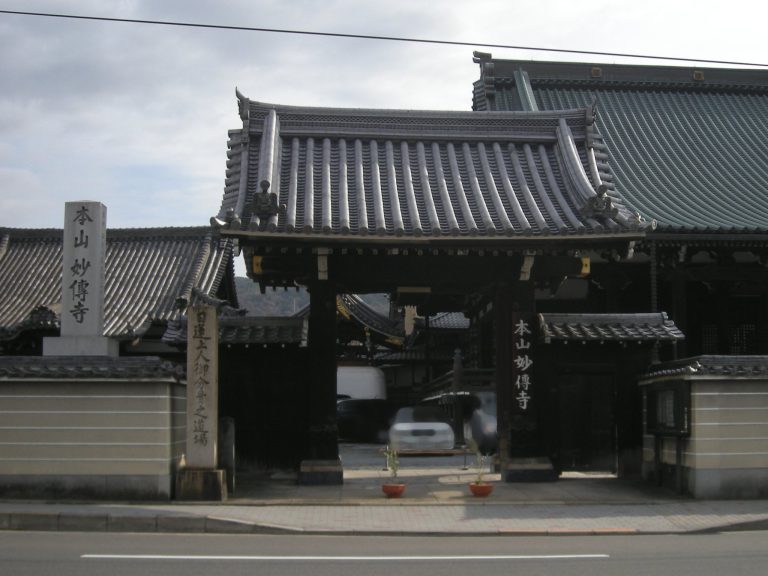
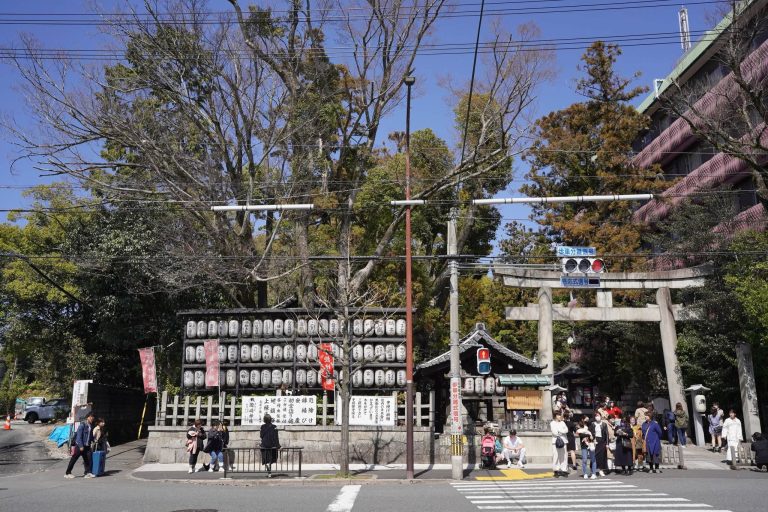
Shōgo-in stands in Shōgo-in-Nakamachi, in Kyoto’s Sakyō Ward. It has no mountain title and was once situated within Shōgo-in Forest, an area that extended westward from Shōgo-in Village toward the Kamo River. The former forest was also called Kinrin because of its autumn foliage. Mori Goten, meaning “forest palace,” was another historical name for the temple, and local residents have continued to use “Goten” informally. Kumano Shrine lies to the southwest and was regarded as the guardian shrine of the former forest. The shrine was destroyed during the Ōnin War and rebuilt in 1666 by Imperial Prince Dōkan.
Main Hall
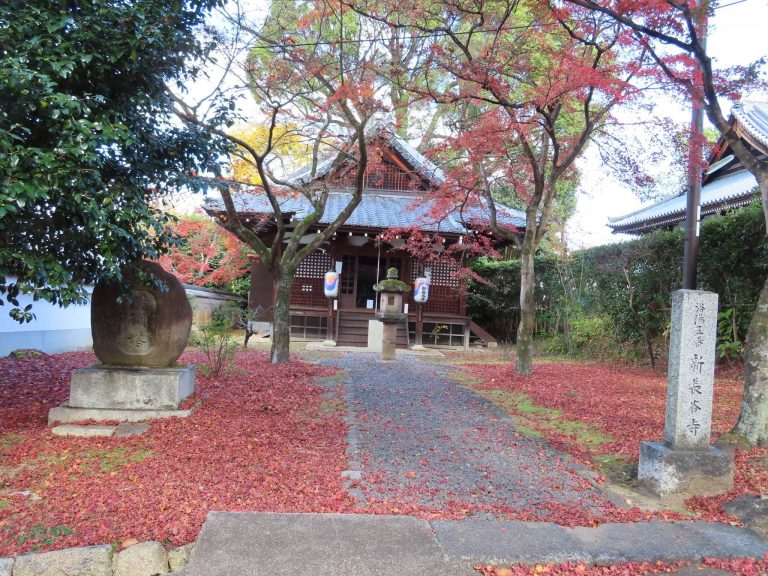
The Main Hall was reconstructed in 1968. It is one of the principal spaces for the temple’s daily services, which are conducted there and in Fudō Hall before the image of Fudō Myōō. The historical arrangement included worship in a rear hall, while current daily services use the front of the Main Hall. The daily sequence proceeds through the Buddhist room, Shinden Palace, and Main Hall.
Shinden Palace and shoin
The Shinden Palace is a mid-Edo-period structure. A shoin, a traditional reception or study building associated with elite residential and religious architecture, was relocated to Shōgo-in from the Kyoto Imperial Palace. Together, these buildings preserve the temple’s connection with courtly residence and its later use as a temporary imperial palace.
Images and ritual practice
Kumano Mandala
Among the temple’s preserved religious works is a Kumano Mandala painted in color on silk. It is regarded as one of Japan’s most valuable Kumano mandalas and reflects Shōgo-in’s long association with pilgrimage to the Kumano region.
Wooden statue of Chishō Daishi
Shōgo-in also possesses a seated wooden statue of Chishō Daishi dated to 1143. The image belongs to the temple’s religious inheritance and represents the continuity of Buddhist learning within an institution whose later identity became closely associated with Shugendō.
Liturgical and ascetic traditions
Shōgo-in’s services include recitations of the Lotus Sutra, Fudō Sutra, Prajñāpāramitā Sutra, Shakujo Sutra, and Kannon Sutra, along with praises of Amida and Shaka, mantras, the Five Great Powers, dhāraṇīs, Shugendō penitential rites, and several other Buddhist scriptures. Prayers are also offered for protection of the state and for the safety and peace of the reigning emperor.
Influenced by Tendai practice, the temple performs shikan meditation, including Lotus penitential rites and regular liturgical observances. Its practice also includes purification rites, the Ōharae, and the fourfold preparatory practice. Shugendō teaching at Shōgo-in treats all phenomena as manifestations of the Dharma body and therefore understands the whole phenomenal world as scripture. Yamabushi goma fire rites and mountain-entry training remain central forms of religious practice.