Tōgūsan Kofun: A Sixth-Century Burial Mound in Ehime, Japan
Site at a Glance
- Rating
- 4.3
- Popularity
- Very Low
- Country
- Japan
- Primary era
- Medieval
- Eras represented
- Medieval, Modern
- Civilizations
- Yamato
- Site type
- Burial
- Remains
- Burial Mound
On this page9 sections
History
A chiefly tomb in the late Kofun period
Tōgūsan Kofun is a sixth-century Japanese burial mound in eastern Ehime, Japan, built during the late Kofun period, an era of monumental Japanese burial mounds. It is assigned to the MT85 phase, an archaeological classification used to date the site. The mound is regarded as the tomb of a locally powerful chief and helps researchers study the succession of chiefly burials in the Uma Plain, alongside another tomb from about the same time. The identity of the person buried here is unknown.
The tradition of Kinashi no Karu
Local tradition identifies the tomb as that of Prince Kinashi no Karu, a son of Emperor Ingyō in early Japanese imperial tradition. The Nihon Shoki and Kojiki, early chronicles preserving court traditions, tell different versions of Kinashi no Karu’s fate, but neither names his burial place. The Engishiki, a compilation of court rules and procedures, and its Bureau of Imperial Mausolea, the court office responsible for imperial tombs, also give no location.
According to the Nihon Shoki, Kinashi no Karu, Ingyō’s eldest son, became crown prince in the twenty-third year of his father’s reign. When his affair with his younger sister Karu no Ōiratsume was discovered, she was sent into exile in Iyo, an ancient province corresponding roughly to present-day Ehime. Kinashi no Karu was initially spared because he was crown prince. After Ingyō’s death, however, he lost a contest for succession to his younger brother Anaho, later Emperor Ankō. One version says he killed himself at the home of a member of the influential Mononobe clan; another says he was exiled to Iyo.
The Kojiki offers a different account. After losing his position, Kinashi no Karu fled to a man’s house, was captured, and was exiled to the hot springs of Iyo. The chronicle says he later died by suicide with his sister, who had followed him there. A separate local tradition places the siblings’ graves together at a shrine in Himebara, Matsuyama.
Investigation and identification
In 1874, following an instruction to investigate imperial mausoleums, the priest of a shrine north of the mound reported the local tradition linking it to Kinashi no Karu. Local residents excavated the burial chamber in 1894, apparently seeking evidence for that identification. The Ministry of the Imperial Household designated the site a mausoleum reference site in 1895. Such a designation treats a place as a possible imperial burial location, but does not confirm who is buried there. Tōgūsan remains listed at Mendori, with Kinashi no Karu named as a candidate occupant.
The burial chamber was surveyed in 1959 in connection with its closure, and the mound’s outer form was surveyed in 2013.
Remains
Mound and setting
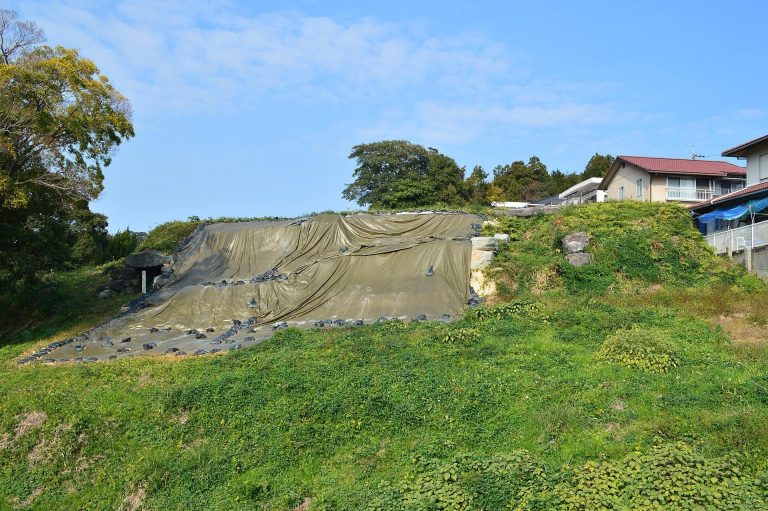
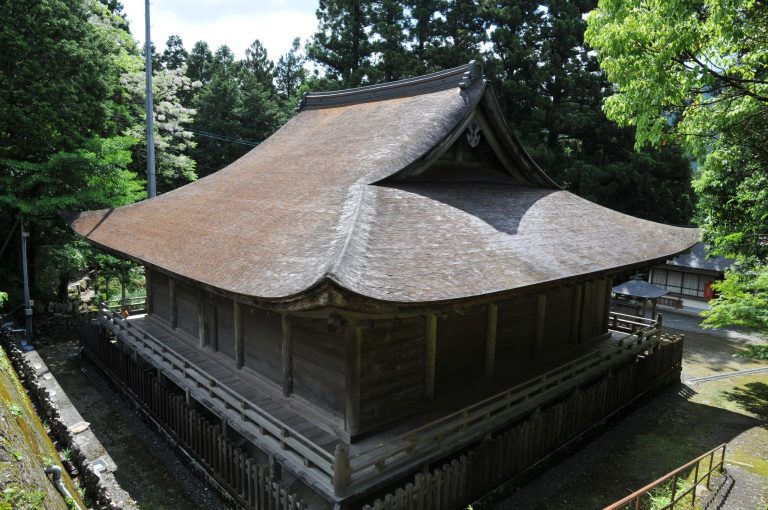
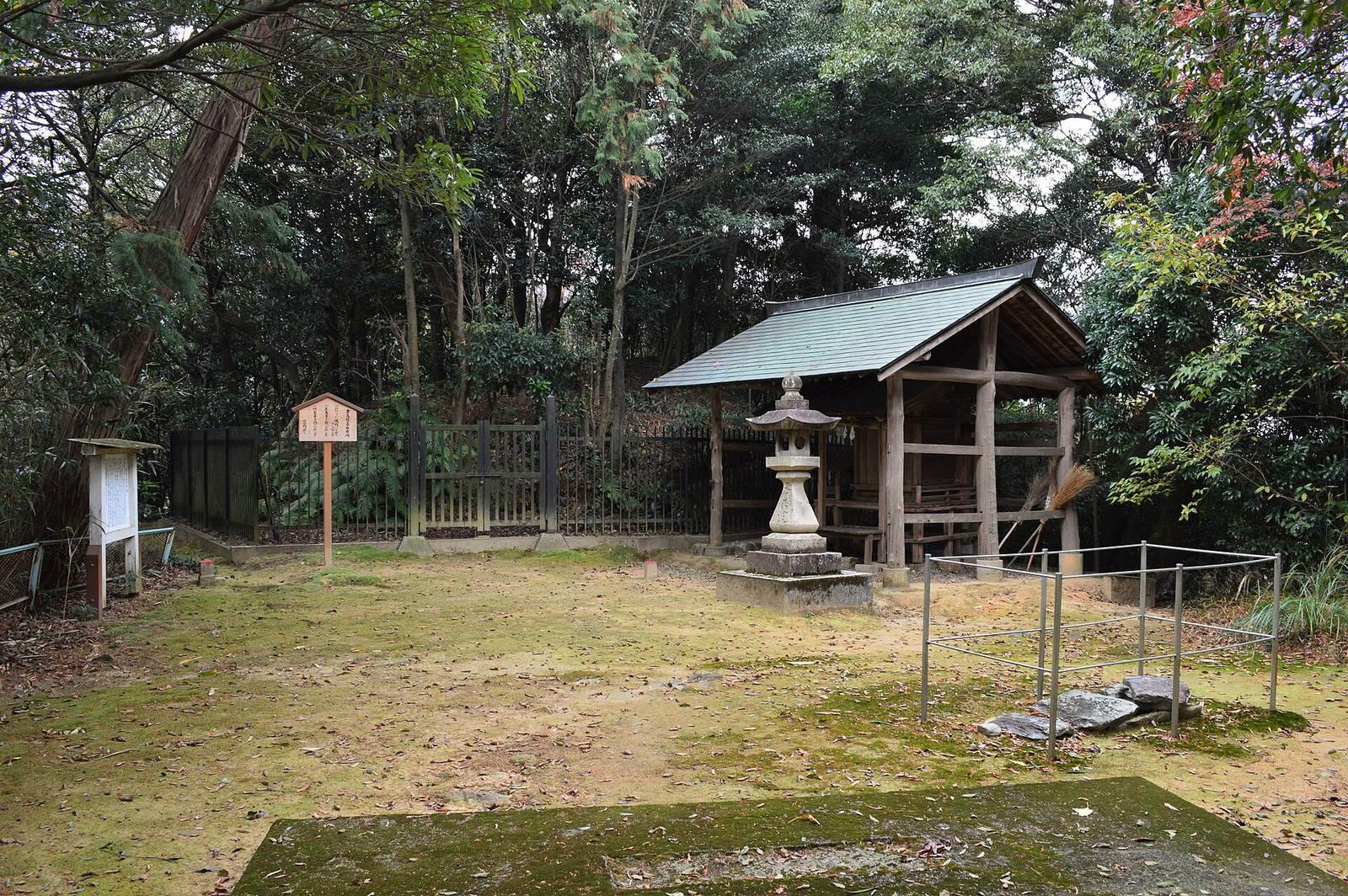
The mound lies near the summit of an isolated hill on the Inland Sea-facing slope of the Hōō Mountains in eastern Ehime. A shrine stands to its north. Its present outline is oval, with a maximum diameter of 14.6 metres and a height of 3.3 metres. The ground around its foot has been cut away, so the mound may originally have been larger. Descriptions classify it as either circular or keyhole-shaped. Its gentle northeastern slope has prompted the possibility that it once had a keyhole plan, with the projecting forepart facing northeast.
Burial chamber
The stone burial chamber was entered horizontally and had projecting walls on both sides of its entrance, which faced northwest. It is now buried. The chamber and passage together measure more than 5.5 metres in length. The main chamber is 4.17 metres long; its width narrows from 1.96 metres at floor level to 0.99 metres at the top of the rear wall, and from 1.86 metres to 1.05 metres at the entrance. Its height is 1.73 metres at the rear and 1.49 metres at the entrance. The entrance passage is over one metre long, 0.59 metres wide at its base, and 1.2 metres high.
Stone coffins
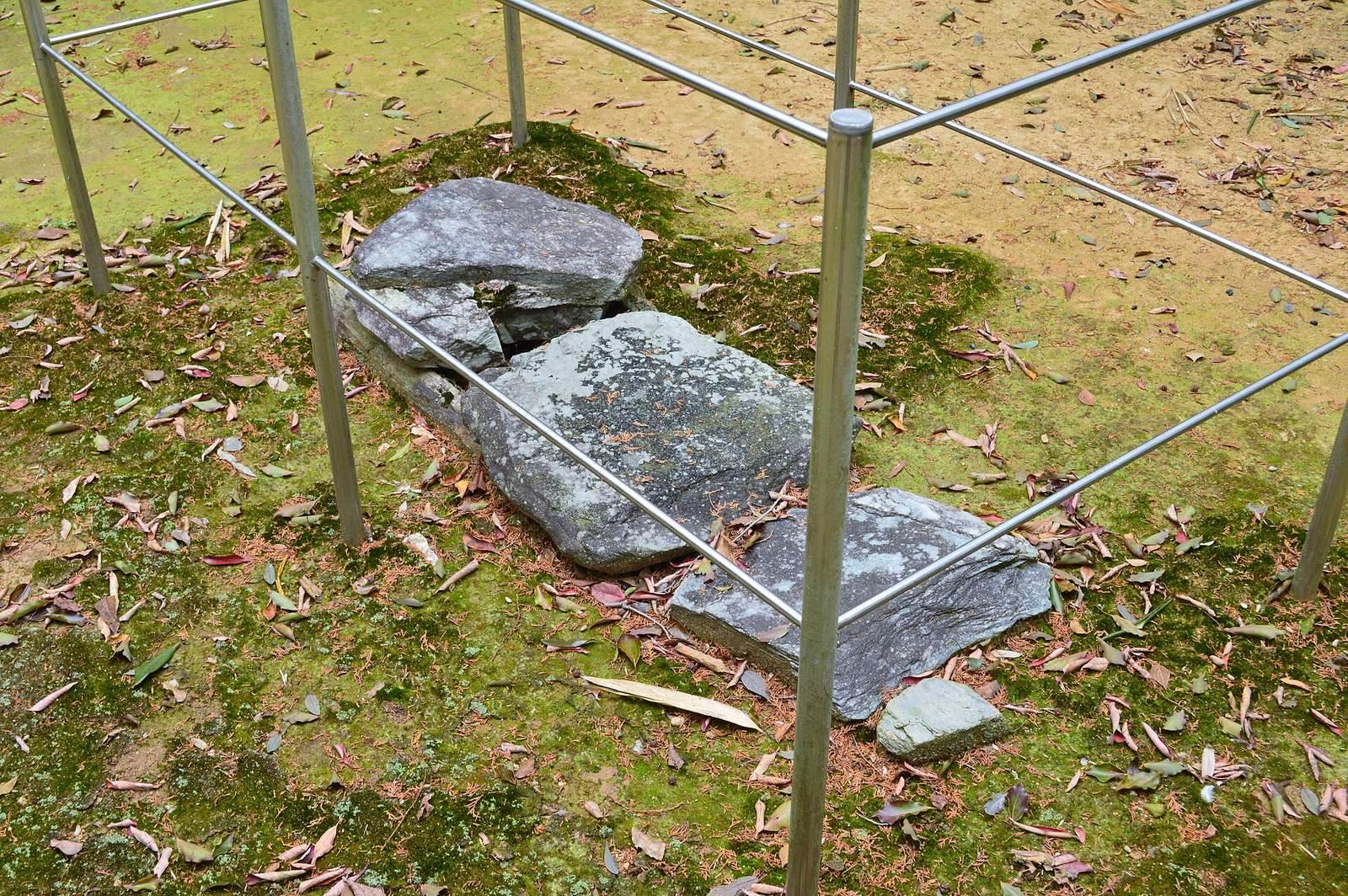
A box-shaped coffin made from green schist slabs stands on the mound’s summit. It was moved there between 1855 and 1860 from level ground nearby. A second box-shaped coffin remains in the centre of the open area north of the mound. A bronze spear from the earlier Yayoi period is said to have been found inside the coffin on the summit.
Grave goods
The chamber excavation yielded numerous grave goods, including a mirror decorated with inward-facing floral patterns and a crown with a broad band and two peaks. These objects are now held by the Imperial Household Agency’s Archives and Mausolea Department.