Buraku-ji Temple: A Historic Yakushi Temple in Kōchi, Japan


Site at a Glance
- Rating
- 4.2
- Popularity
- Low
- Country
- Japan
- Primary era
- Medieval
- External website
- Open
- Eras represented
- Medieval, Early Modern
- Civilizations
- Tokugawa
- Site type
- Religious
- Remains
- Temple
On this page7 sections
History
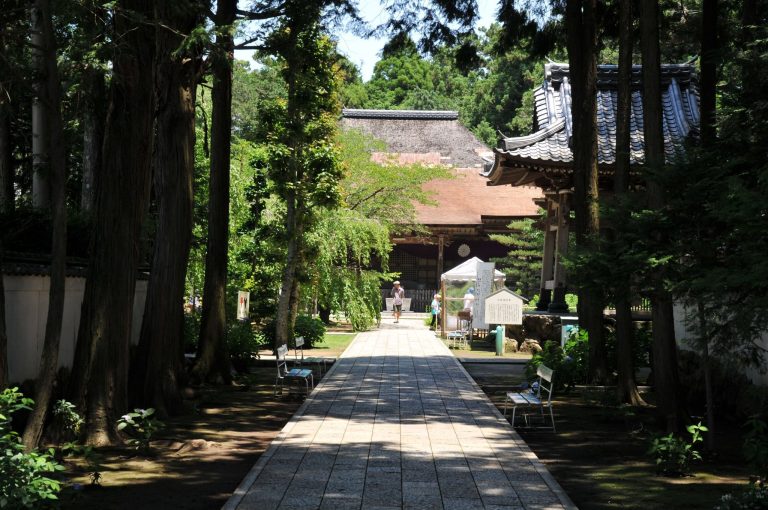
Buraku-ji Temple is a Buddhist temple in Ōtoyo, Kōchi Prefecture, Japan, traditionally founded in 724 during the Nara period. Its Yakushi Hall was built around the transition from the late Heian period to the early Kamakura period and is now a National Treasure. The temple stands on a steep hill on the northern bank of the Yoshino River and belongs to the Chizan branch of Shingon Buddhism, an esoteric Buddhist tradition introduced to Japan in the early ninth century. Its principal image is Yakushi Nyorai, the Buddha associated with healing and protection from illness.
Foundation and Religious Tradition
Temple tradition attributes Buraku-ji’s foundation to the priest Gyōki, a prominent Nara-period Buddhist known for religious activity and temple foundations. It was established as an imperial prayer temple of Emperor Shōmu, the eighth-century sovereign who sponsored major Buddhist institutions and religious projects. The name Buraku-ji is traditionally connected with a passage in a scripture describing Yakushi’s vows, abundant resources, and peace of body and mind.
Buraku-ji is also known as Shibiori Yakushi and is traditionally counted among Japan’s three major Yakushi temples. The other two in this traditional grouping are Hōrai-ji in Shinshiro, Aichi Prefecture, and Jōfuku-ji in Iwaki, Fukushima Prefecture. This association reflects the temple’s long-standing identity as a center of devotion to Yakushi Nyorai.
Repairs and Protection
The Yakushi Hall underwent repair during the sixteenth century on the orders of Chōsokabe Motochika, the warlord who consolidated power in Tosa Province. It was repaired again during the seventeenth century on the orders of Yamauchi Tadayoshi, the second head of the clan that ruled Tosa. This later work added a one-bay porch to the center of the front façade.
In 1910, the entire hall was dismantled and renewed. The hall received National Treasure designation in 1952. Buraku-ji’s principal Buddhist images and associated sculpture group are also designated Important Cultural Properties of Japan, preserving the temple’s importance as both a place of worship and a repository of early Buddhist sculpture.
Remains
Yakushi Hall
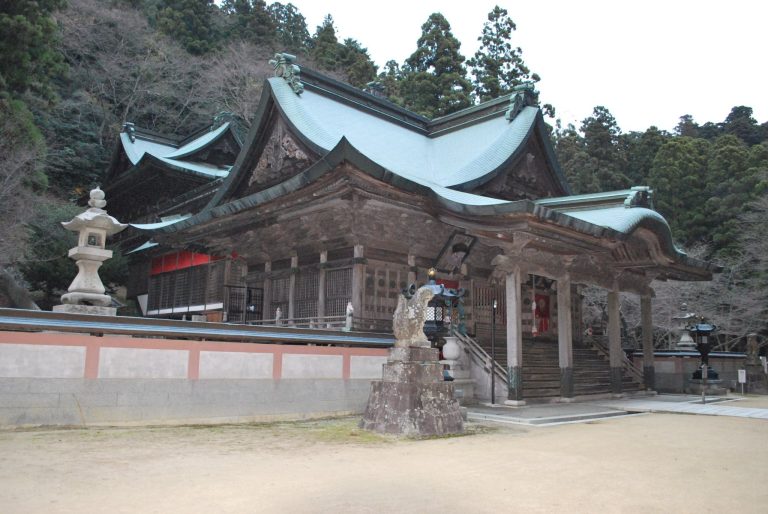
The Yakushi Hall, or Yakushidō, is among the oldest surviving buildings in Shikoku. Architectural analysis places its construction no earlier than the late Heian period and probably in the early Kamakura period. An inscription inside the central Yakushi image is dated 1151 and refers to the construction of a five-bay, four-sided hall for Yakushi. The building has a single-story plan of five bays by five bays. It measures approximately 11.41 meters across the front and 11.17 meters in depth, forming an almost square plan with a slightly longer façade.
The hall has an irimoya roof, which combines a hipped lower section with gabled ends, covered in thin wooden shingles. A veranda with a balustrade surrounds the building. Three central bays on the front contain paired wooden doors opening from the middle, while the outer bays have lattice windows and horizontal plank walls. Wooden doors occupy the frontmost bays on the sides. The remaining side walls and the entire rear wall use horizontal planks.
Boat-shaped bracket arms support widely spaced rafters, with transverse members forming an exposed roof structure. The construction is relatively plain, while the outer sanctuary is unusually broad. Inside it, a square three-bay inner sanctuary is set toward the rear rather than at the center. Its column lines do not correspond with those of the outer perimeter, leaving an extremely narrow space between the inner sanctuary and the rear wall.
Buddhist Sculpture
Three seated Buddhist images are enshrined in the inner sanctuary. At the center is a wooden seated Yakushi Nyorai, 131.5 centimeters high and dating from the late Heian period. On the viewer’s right is another wooden seated Yakushi Nyorai, measuring 133.5 centimeters. Temple tradition identifies this figure as Shaka Nyorai, the Japanese name for Shakyamuni, the historical Buddha. An inscription inside the statue shows that it was originally made as a Yakushi image in 1151 and was probably the hall’s original principal image.
The accompanying attendants and two standing Heavenly Kings, guardian figures in Buddhist iconography, belong to the same sculpture group. The attendants and Heavenly Kings received additional designation in 2010. On the viewer’s left is a wooden seated Amida Nyorai, the Buddha of the Pure Land tradition. It is 131.5 centimeters high and dates from the late Heian period. The three principal seated images are made of Japanese cypress.
Sunlight and Moonlight Bodhisattvas stand between the three principal images. These enlightened beings, who assist others, are approximately contemporary with the former Yakushi image. They are designated Important Cultural Properties of Kōchi Prefecture.
Upper Temple Buildings
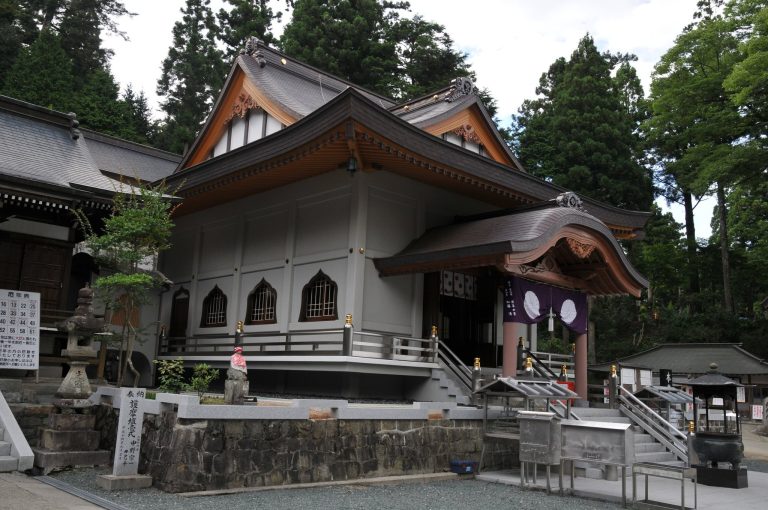
The Jibutsudō and Taishidō stand above the parking area. The Jibutsudō houses Buddhist figures that include Fudō-son and Bishamonten, extending the temple’s surviving religious features beyond the National Treasure Yakushi Hall.