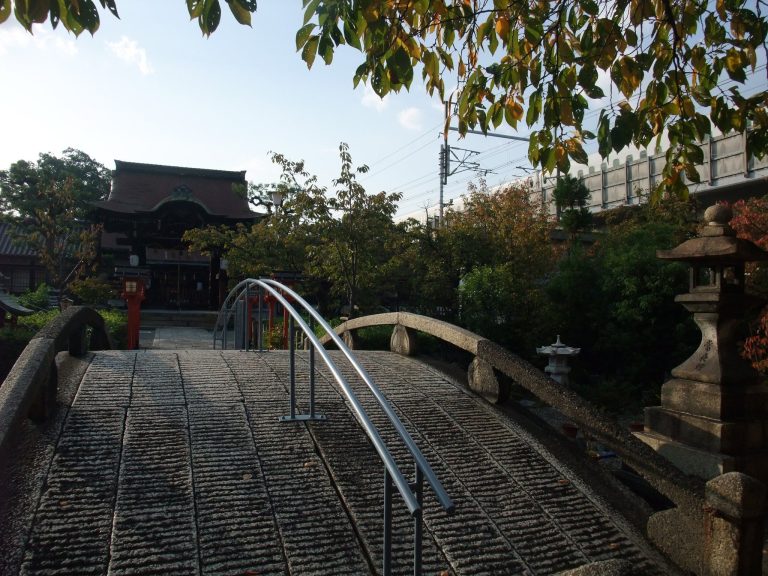
Toba Imperial Villa: A Retired-Emperor Residence in Kyoto, Japan
Site at a Glance
- Rating
- 3.5
- Popularity
- Low
- Country
- Japan
- Primary era
- Medieval
- Eras represented
- Medieval
- Civilizations
- Unclassified
- Site type
- Domestic
- Remains
- Palace
On this page15 sections
History
Toba Imperial Villa, also called Toba Palace and Jonan Detached Palace, was an imperial residential and religious complex in Kyoto, Japan, used by successive retired emperors from approximately the twelfth through fourteenth centuries. It developed south of Heian-kyo, the capital, near the meeting of the Kamo and Katsura rivers and along the Sanyo Road. The extension of Suzaku Avenue, known as Toba Road, reached the area and helped make Toba an important transport hub, while aristocratic villas, a market, and hunting grounds made it an attractive setting for court life.
Shirakawa’s Expansion
In the eleventh century, Fujiwara no Suetsuna, a close courtier of the retired Emperor Shirakawa, presented his villa at Toba to the former ruler. Shirakawa then undertook a major expansion, including the South Palace, completed in 1087. His initial plan appears to have assigned religious complexes to Shirakawa and a residence for his post-abdication court to Toba. Imperial residences were later also established at Shirakawa, so the distinction between the two complexes became less clear.
Shokongo-in was founded as the religious complex attached to the South Palace. Toba and Shirakawa primarily served as private residences for retired emperors. Political meetings took place at Toba Palace late in the life of Retired Emperor Toba, but most decisions were made at imperial residences within the capital. The Tendai monk Kakuyu lived at Shokongo-in and became known as the Toba High Priest.
Expansion and Imperial Mausoleums
The East Palace and other compounds were added later, together with Anrakuju-in, a temple centered on a three-story pagoda that served as a mausoleum complex. During Retired Emperor Toba’s reign in the twelfth century, repeated construction included the Izumi Palace. Court officials appointed as provincial governors carried out these projects through assigned divisions. The resulting complex included the South, Izumi, North, Baba, East, and Tanaka Palaces, each with an attached religious hall.
Retired Emperor Toba built two pagodas at Anrakuju-in. The Main Pagoda was intended as his mausoleum, while the New Pagoda was initially planned for Bifukumon-in, his consort and the adoptive mother of Emperor Nijo. She ordered that her remains be placed on Mount Koya instead. In 1163, at Emperor Nijo’s request, the remains of Emperor Konoe were transferred from Chisoku-in and reburied in the New Pagoda.
This reburial has been interpreted in relation to Nijo’s identity as Bifukumon-in’s adopted son and Konoe’s younger brother-in-law, rather than as the biological son of Retired Emperor Go-Shirakawa. The arrangement took place during an ongoing struggle over control of retired-emperor government, a system in which an abdicated emperor continued to direct political affairs from a separate court and residence. After Nijo’s sudden death allowed Go-Shirakawa to secure that authority, he is said to have avoided Toba Imperial Villa.
Political Conflict and Decline
Toba nevertheless became directly involved in the political crisis of 1179. Taira no Kiyomori, a leading military and political figure of the late Heian period, suspended Go-Shirakawa’s retired-emperor government and confined him at Toba. Many of the villa’s buildings were later destroyed during warfare in the Nanboku-cho period, a period of conflict between rival imperial courts. The complex then deteriorated rapidly.
Archaeological Investigation
Excavations from 1977 to 1991 recovered 324 objects from Kongoshin-in. The group was designated collectively as a Kyoto City Tangible Cultural Property. Wooden seated images of Amitabha, a Buddhist buddha associated with the Pure Land tradition, from Anrakuju-in and other related cultural properties have also received Important Cultural Property status.
Remains
Toba Imperial Villa occupied an estimated area about 1.7 kilometers from east to west and 1.1 kilometers from north to south. Its western boundary is uncertain because the present course of the Kamo River occupies that area. The complex extended across the vicinity of Kamitoba in Minami Ward and Shimotoba, Takeda, and Nakajima in Fushimi Ward. Its landscape was associated with the Kamo and Katsura rivers, although some interpretations hold that the villa’s ponds were physically separate from both waterways.
Palace Compounds
South Palace
The South Palace was the later name of the principal residence expanded by Shirakawa and completed in 1087. Shokongo-in formed its attached religious complex. The palace belonged to the group of private residences used by retired emperors and was part of the larger arrangement of courts, religious buildings, and landscaped spaces at Toba.
Izumi, North, Baba, East, and Tanaka Palaces
The Izumi, North, Baba, East, and Tanaka Palaces formed additional residential compounds within the villa. Each had an attached religious hall. The East Palace and Izumi Palace were later additions, reflecting the continued enlargement of the imperial complex during the twelfth century.
Religious and Mortuary Buildings
Anrakuju-in
Anrakuju-in was centered on a three-story pagoda and functioned as a mausoleum complex. Its Main Pagoda was designated as Retired Emperor Toba’s tomb. The New Pagoda became the burial place of Emperor Konoe’s remains in 1163, after Bifukumon-in’s instructions placed her own burial on Mount Koya. Wooden seated images of Amitabha associated with Anrakuju-in are among the related cultural properties that hold Important Cultural Property status.
Shirakawa Mausoleum
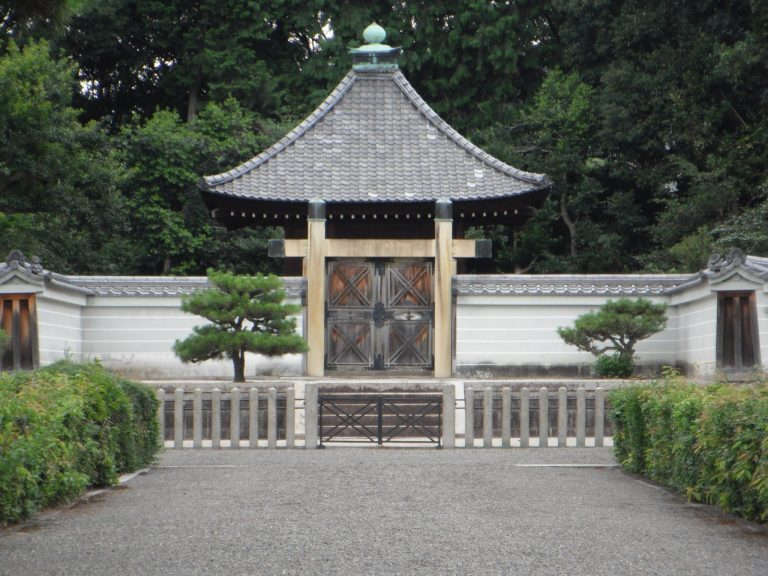
The site includes the mausoleum of Emperor Shirakawa, also called the Jobodai-in Mausoleum. Archaeological investigation around the mausoleum identified a ditch approximately 6 meters wide, adding evidence for the physical enclosure of the mortuary area.
Earthworks and Excavated Objects
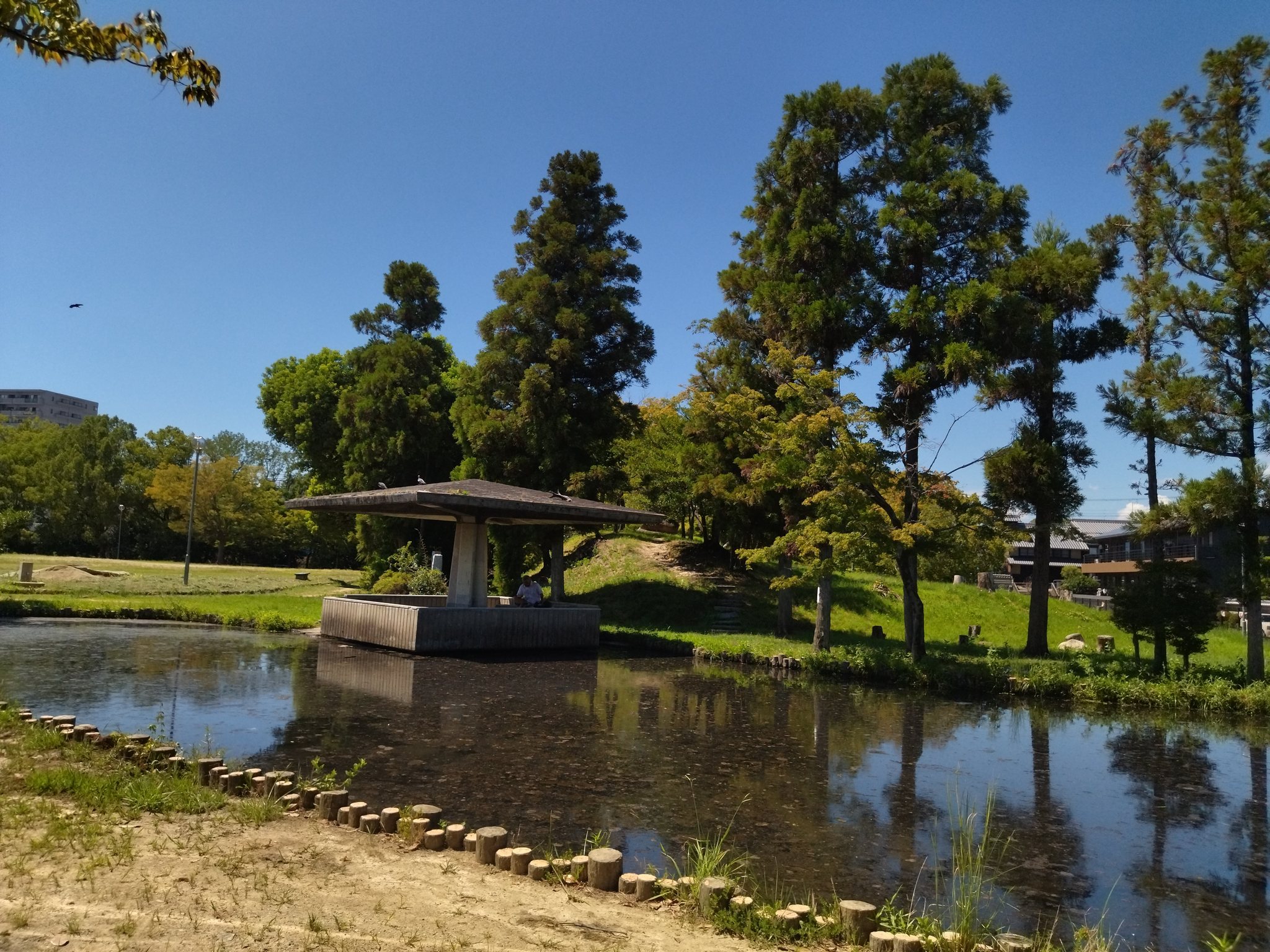
Akinoyama
Akinoyama, within Toba Imperial Villa Ruins Park, preserves an earthwork mound dating from the period of the villa. It is distinct from the Spring Hill at Jonangu, which was constructed later.
Kongoshin-in Finds
The archaeological area of Kongoshin-in produced 324 recovered objects during excavations carried out between 1977 and 1991. These finds were designated together as a Kyoto City Tangible Cultural Property, providing material evidence for the religious and architectural history of the villa.