The Howff: A Historic Cemetery in Dundee
Site at a Glance
- Popularity
- Medium
- Country
- United Kingdom
- Primary era
- Early Modern
- Eras represented
- Early Modern, Modern
- Civilizations
- British, Kingdom of Scotland
- Site type
- Burial
- Remains
- Necropolis
On this page9 sections
History
The Howff is a historic cemetery in central Dundee, Scotland, in the United Kingdom. A Franciscan monastery, belonging to a Catholic order founded by Francis of Assisi, occupied the site from the Middle Ages until the Scottish Reformation, the sixteenth-century transformation that established Protestantism in Scotland and brought about the dissolution of monasteries.
From monastery to burial ground
In 1564, Mary, Queen of Scots, who ruled from 1542 to 1567, granted the former monastic land to Dundee for use as a burial ground. The cemetery’s name comes from a Scots word for an enclosed open space or yard. It is probably related to Dutch or German hof, meaning an enclosed space or courtyard.
The Dundee Incorporated Trades, an organization representing the town’s craft trades, also held meetings at the site. These gatherings ended in 1776.
Burials and records
Parish-register entries for burials begin in the late eighteenth century, while mortcloth-hire records provide evidence from 1655. Mortcloths were rented to cover bodies or coffins before burial. Around 80,000 people were buried at The Howff. About 3 percent were classified as foreign, often because they had been born at sea, a reflection of Dundee’s maritime connections. Roughly 10 percent were specifically recorded as Irish burials, many involving labourers in the early nineteenth century.
Those buried here include surgeon Alexander Bell (1776–1852), town architect Samuel Bell (1739–1813), and several provosts, senior civic officers in a Scottish burgh: Thomas Bell (1759–1844), John Pitcairn (died 1800), Alexander Riddoch (1744–1822), who served eight times, and John Scrymsour (1611–1657). Other burials include printer and bookseller James Chalmers (1782–1853), credited with inventing the adhesive postage stamp; Sir Alexander Douglas of Glenbervie (1738–1812); and George Forrester (1635–1675), a Dean of Guild, an officer involved in guild and civic administration. The cemetery also holds the grave of clergyman John Glas (1695–1773), founder of the Glasite movement, a Scottish Protestant tradition associated with congregational independence, and those of social hostess and author Clementina Stirling Graham (1782–1877). Marmalade makers James and Janet Keiller (1737–1813) are buried there, as is Baron Jhone Kynnier, also identified as John Kinnear (1511–1584).
David Lindsay, 1st Earl of Crawford (c. 1360–1407), was interred in the pre-Reformation Greyfriars church at the site, which has since been destroyed. George Duncan (1791–1878), a politician, was the last person buried at The Howff, in 1878.
The New Howff and later history
A separate cemetery, known as the New Howff, opened in 1834 on the lower slopes of Dundee Law, then at the northern edge of Dundee. Its design was influenced by Glasgow Necropolis, a nineteenth-century monumental cemetery. Later building work largely destroyed the New Howff: an inner ring road cut through it in the 1960s, and a multistorey car park covered its southern end.
The Howff was placed in Category A, Scotland’s highest listed-building category, in 1963.
Remains
The cemetery occupies a roughly square plot between Meadowside, Barrack Street, Bank Street, and Reform Street. A high wall encloses the grounds, and most graves face due east. Within the enclosure are gravestones and tomb monuments dating from the sixteenth to nineteenth centuries.
Enclosure and entrance
The enclosing wall is built mainly of rubble masonry, with dressed sandstone blocks along the western side. The west wall dates to 1601, when a blind arcade, a row of arch-shaped forms without openings, was added. Its sculpted capitals remain, and the arcade may originally have been open. David Neave rebuilt the north wall in 1828. The western entrance on Barrack Street is a tall, double-leaf cast-iron gate designed by James Black and made in 1833.
Graves and memorials
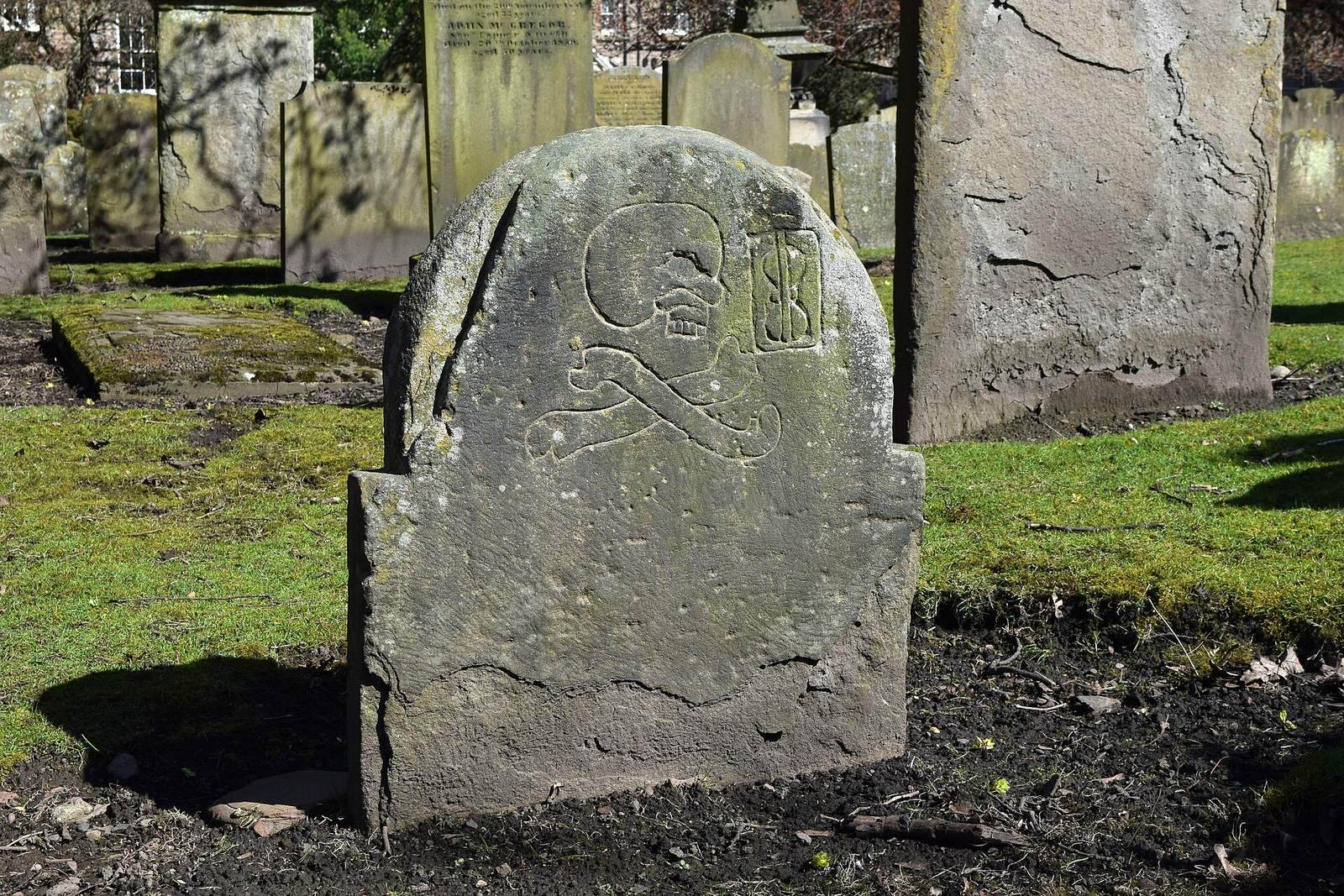
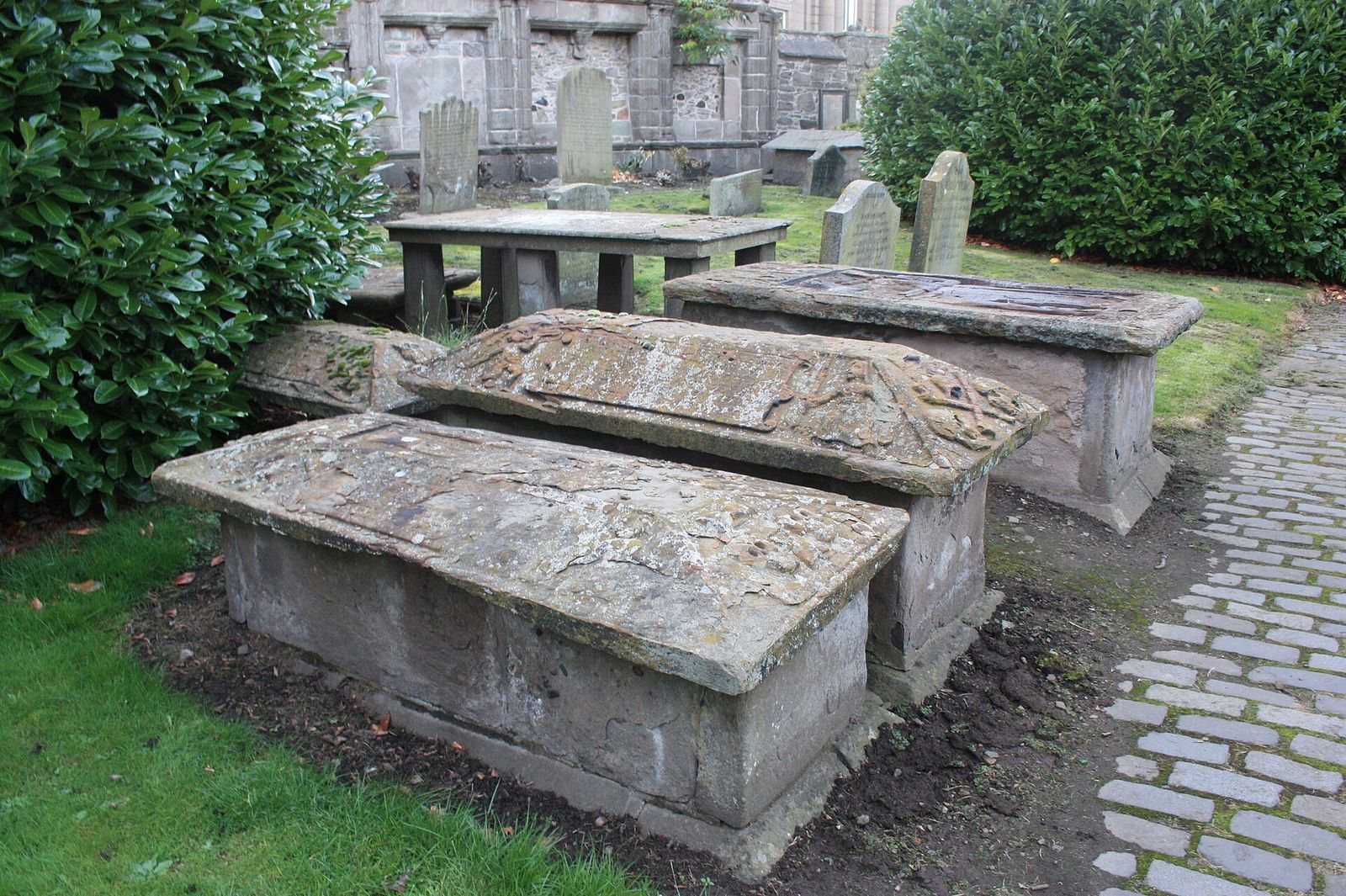
The cemetery’s gravestones and tomb monuments form one of Scotland’s most important collections. Its richly ornamented tombs are surpassed in Scotland only by those at Greyfriars Kirkyard in Edinburgh. Many are raised, chest-shaped monuments with recessed panels, in a Roman style. Their inscriptions often reflect on death rather than recounting the lives of the deceased. Botanist John Lyon (1765–1814), who was not buried here, is commemorated by a memorial. Multiple graves belong to the Wedderburn and Ogilvy-Wedderburn baronets of Balindean.
Wedderburn burial vault
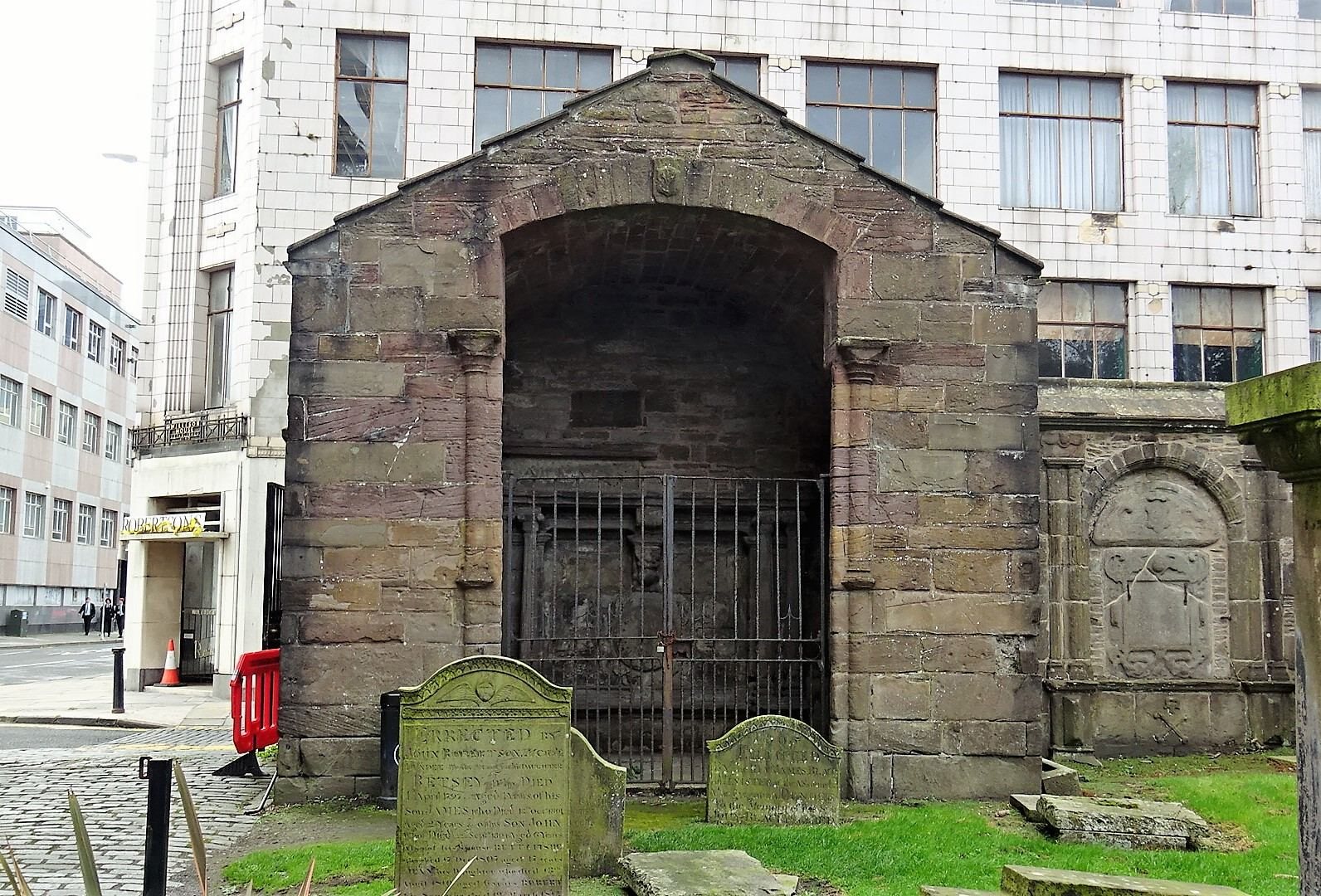
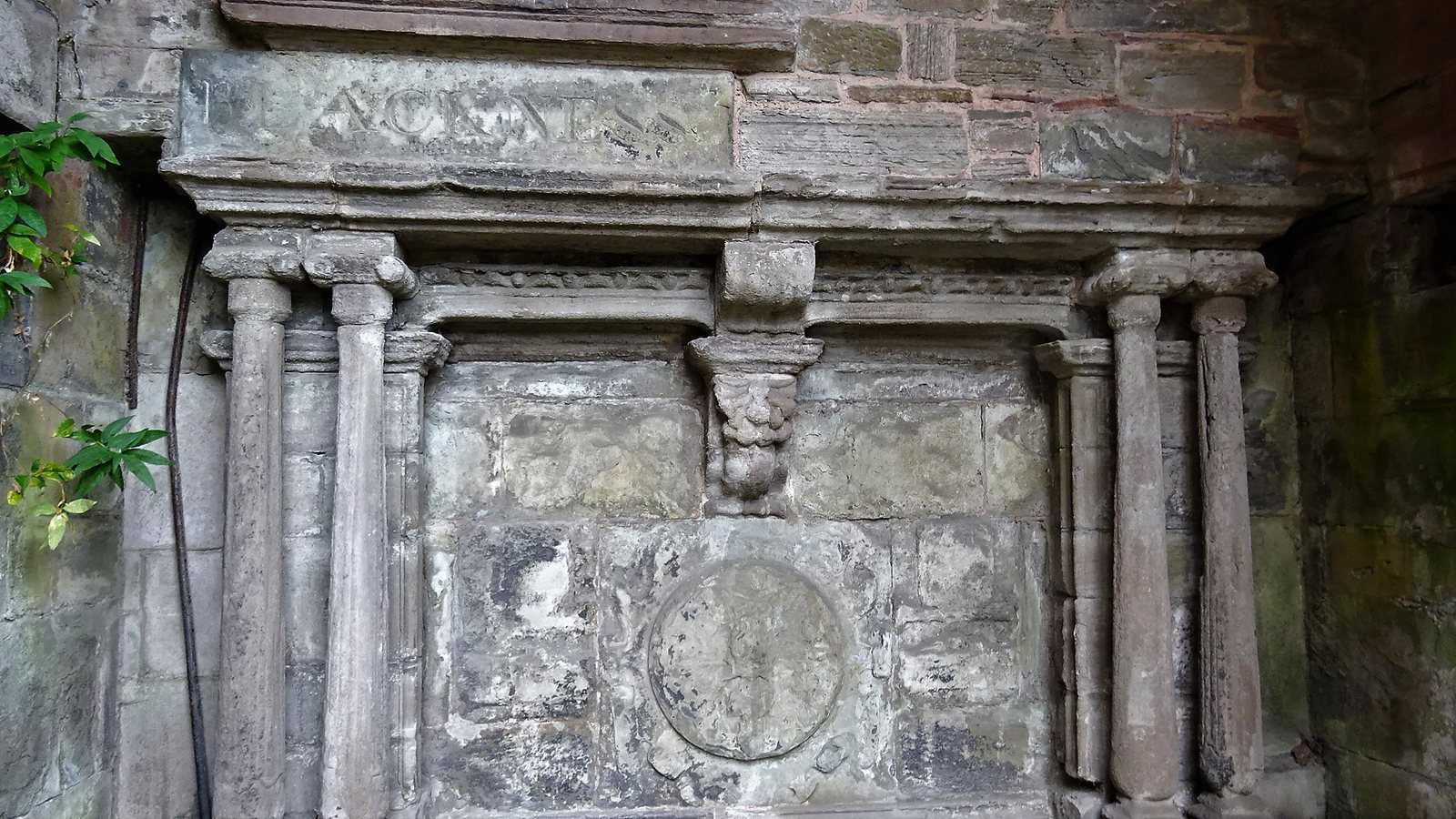
At the cemetery’s extreme southwest stands the burial vault of the Wedderburns of Blackness House. The interior bears the word Blackness. A sealed window on the outside suggests that the structure may have served as a watch-house or formed part of an earlier meeting house before it became a burial vault around 1630.
Stones from the New Howff
Some gravestones from the New Howff were salvaged and placed against The Howff’s western wall, which formerly marked the boundary between the cemetery and the Dundee and Newtyle Railway.