Temple of Venus at Pompeii: A Roman Sanctuary to Venus Pompeiana
Site at a Glance
- Popularity
- Medium
- Country
- Italy
- Primary era
- Classical
- Eras represented
- Classical
- Civilizations
- Roman
- Site type
- Religious
- Remains
- Temple
On this page10 sections
History
The Temple of Venus was a Roman sanctuary at Pompeii, Italy, established around 80 BCE, soon after the city became a Roman colony following Lucius Cornelius Sulla’s conquest. A Roman colony was a settlement organized under Roman civic and legal institutions, often including Roman citizens.
Foundation and the civic cult
Venus became Pompeii’s protective goddess, a role reflected in the colony’s name, Colonia Cornelia Veneria Pompeianorum. The cult also drew on earlier worship of Venus Fisica, associated in Pompeii with the protection of agreements and contracts. Her identity has been linked either to Aphrodite, the Greek goddess commonly identified with Venus, or to Astarte, a major goddess of the ancient Near East.
Earthquake, rebuilding, and destruction
The earthquake of 62 CE badly damaged the nearly completed marble temple and its colonnades. Worship continued in a small shrine while repairs proceeded, and a larger temple was then begun. Work remained unfinished when the eruption of Vesuvius buried Pompeii in 79 CE. Marble was later taken from the ruins, and the temple’s furnishings had been plundered before archaeological exploration began.
Excavation and heritage
Excavations took place in 1852, 1869, 1872, 1898, 1937, 1952, and 1984. The Venus Pompeiana Project has investigated the temple since 2017. The sanctuary forms part of the archaeological areas of Pompeii, Herculaneum, and Torre Annunziata, inscribed together on the UNESCO World Heritage List in 1997.
Remains
Setting and court
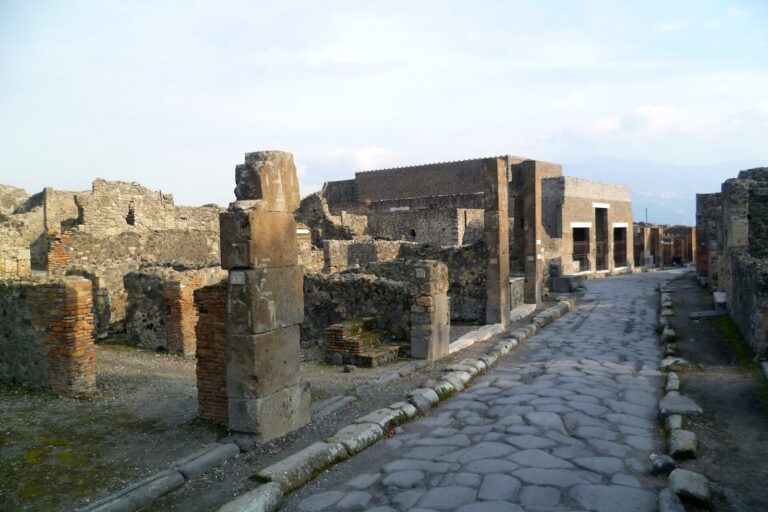
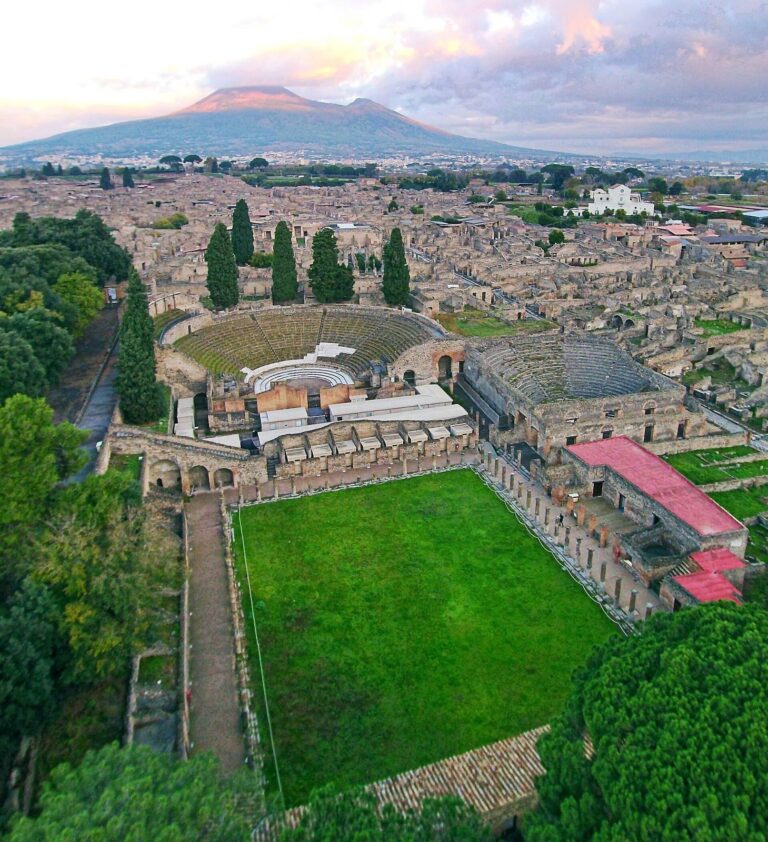
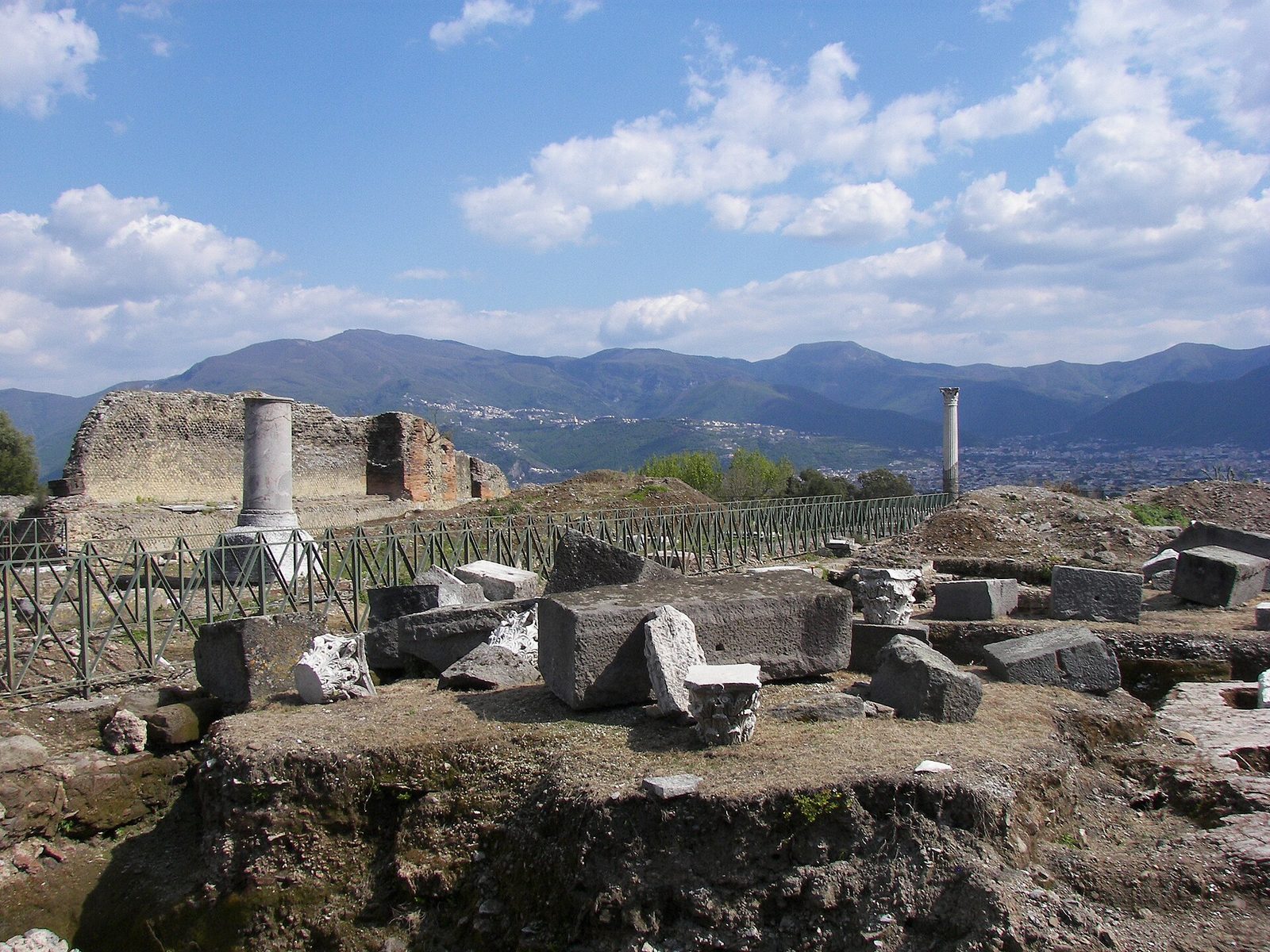
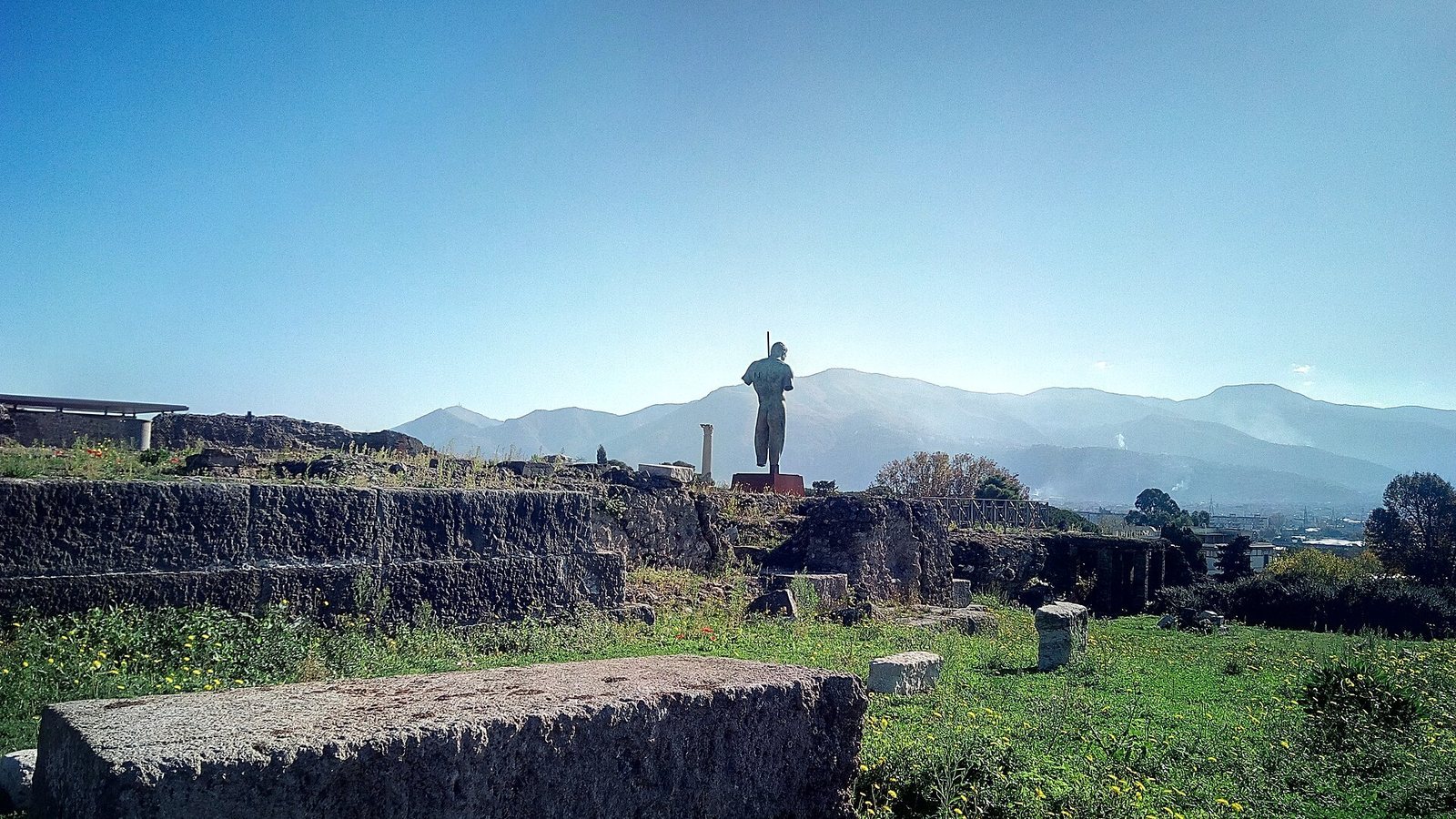
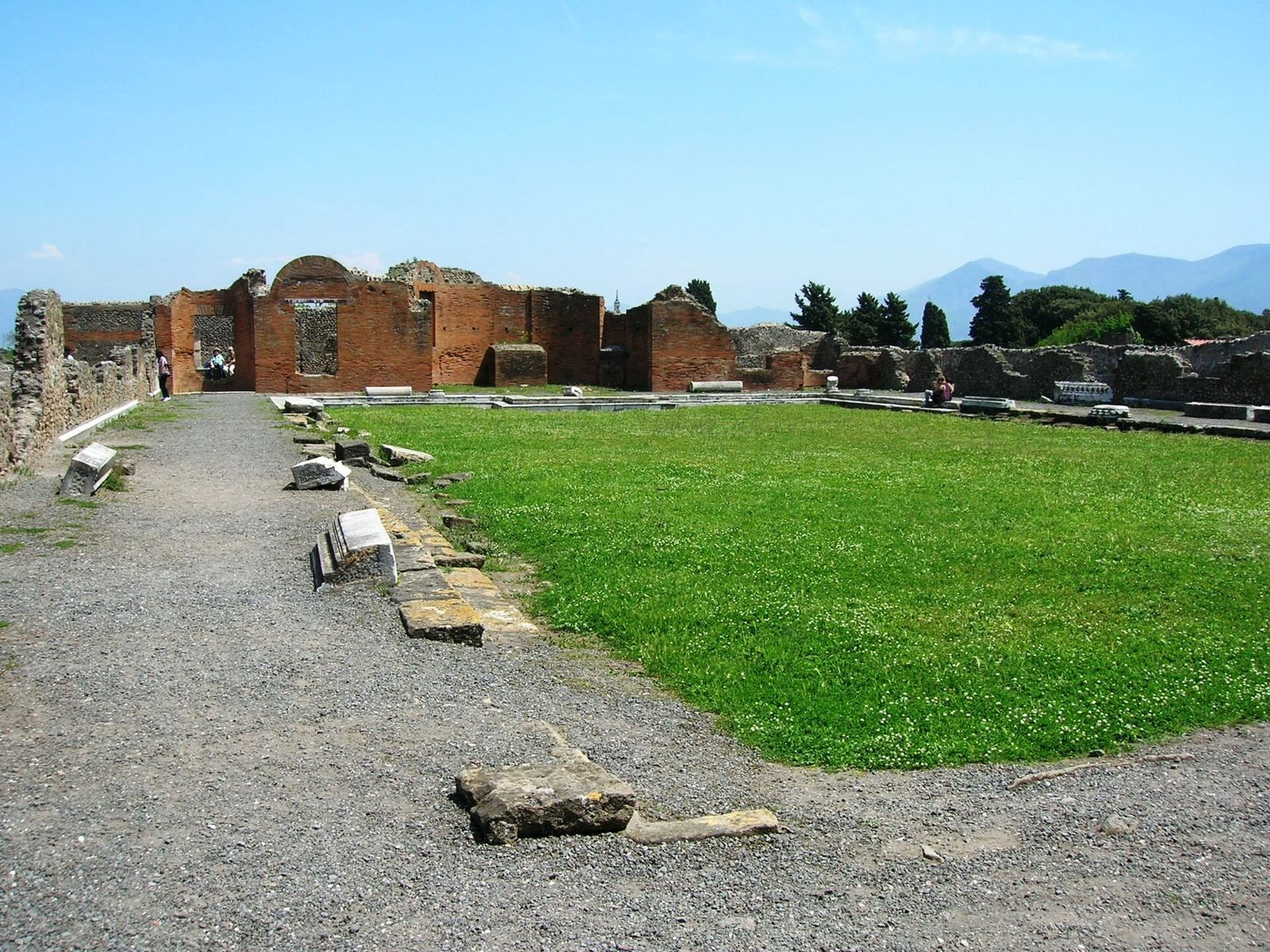
The sanctuary comprised a raised temple and a colonnaded court enclosed by high perimeter walls. It stood in Pompeii’s southwestern old town, west of the Basilica and between that public hall and Porta Marina. Aligned approximately north to south, the temple had a view toward the sea, the surrounding plain, and the Gulf of Naples. The enclosure was enlarged during the Julio-Claudian period, the early imperial dynasty from Augustus to Nero. One entrance stood at the northeast corner, opening from Via Marina, and a second was on the eastern side. Double rows of columns lined the east and west sides of the court, with a single row to the north. A colonnade built during Sulla’s period included channels to carry away rainwater.
Temple and podium
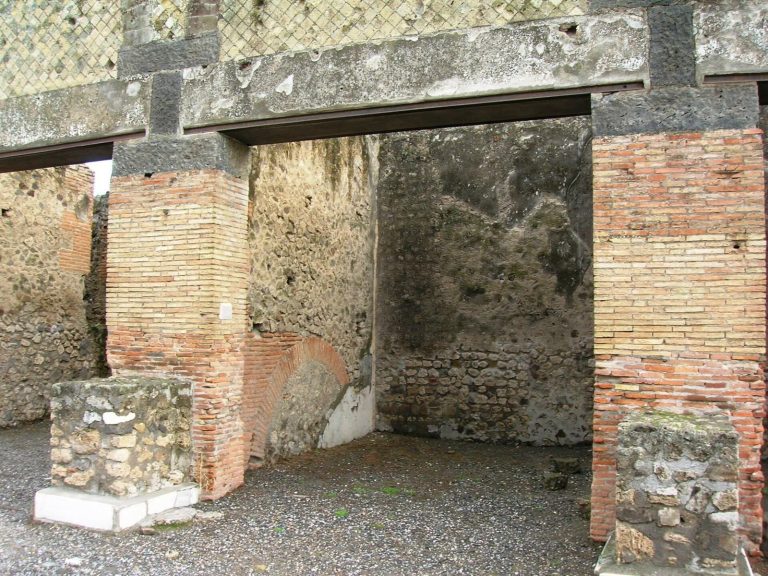
The earliest temple probably used modest materials and stucco; its remains are represented by the inner part of the podium beneath later construction. In the second phase, the podium measured about 30 by 15 metres and was made of concrete and lava. The temple had an inner sanctuary and an entrance porch, with six columns across the front and four along each side. A statue of Venus stood at the rear of the sanctuary. Marble richly decorated the building, and the temple together with its court formed Pompeii’s largest sanctuary and one of its most sumptuous buildings. In a later rebuilding, the podium was enlarged, the earlier stairs removed, and basalt foundations laid. At the eruption, five basalt courses, about four feet high, had been completed, and unfinished blocks remained at the site. A basalt wall may have formed the outer wall of the inner sanctuary.
Pavement and decoration
Surviving parts of the second phase include the podium, part of the inner sanctuary floor, the base for the statue of Venus, and fragments of columns and roof structure. The pavement had an outer band of white tessellated paving, made from small pieces set into the surface, and a middle area of coloured marble. Small remnants of the marble decoration include fragments of the horizontal beam above the columns, columns, and the triangular front of the roof.
Altar and associated features
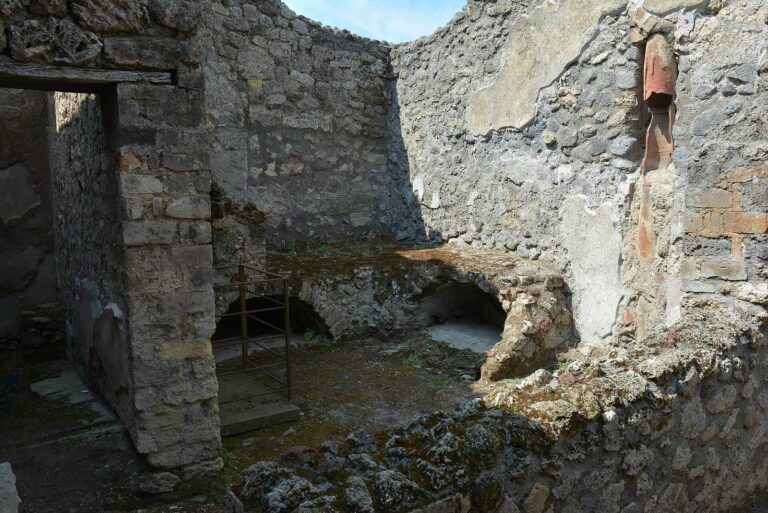
A travertine altar stood south of the temple, in front of its stairs. Two pedestals served as bases for equestrian statues. A staircase led through an underground passage to dwellings on a nearby slope.
Votive offerings
Two votive offerings, objects dedicated to a deity as acts of devotion or in fulfilment of a vow, help identify the temple’s dedication to Venus Pompeiana, Pompeii’s cult form of Venus. One is a small figure of Venus preparing to bathe. The other is a bronze rudder, an attribute of the goddess also represented in paintings.