Roman Forum of Augusta Emerita: Civic Center of Roman Lusitania
Site at a Glance
- Popularity
- Medium
- Country
- Spain
- Primary era
- Classical
- Eras represented
- Classical
- Civilizations
- Roman
- Site type
- Civic
- Remains
- Forum
On this page10 sections
History
The Roman Forum of Augusta Emerita was the ancient city’s principal public precinct in present-day Mérida, Spain.
Foundation and municipal role
Augustus, Rome’s first emperor, founded Augusta Emerita in 25 BC as a colony for honorably discharged veterans of two legions, Legio V Alaudae and Legio X Gemina. They had fought in the Cantabrian Wars, Rome’s campaigns to conquer northern Iberia. The city’s name referred to the Latin word emeritus, meaning retired, in connection with the veterans’ honorable service. The municipal forum is tentatively dated to the late first century BC. Its buildings served the city’s civil, administrative, judicial, and religious life, as well as the province of Lusitania, of which Augusta Emerita became the capital. Lusitania encompassed most of present-day Portugal and parts of Spain.
A proposed provincial forum
Whether Augusta Emerita had a second forum remains unsettled. A provincial forum was proposed in 1976, and the discovery of part of an imperial-cult temple corner on Holguín Street in 1983 strengthened that interpretation. The proposed complex is dated to AD 50 and linked to the program of Tiberius, Augustus’s successor and Rome’s second emperor. The imperial cult involved religious honors for the emperor, who could be treated as divine. An alternative interpretation identifies the planned site as a porticoed public square for imperial worship, without administrative or legislative buildings. Several city blocks were demolished to make way for the complex.
Political role and later status
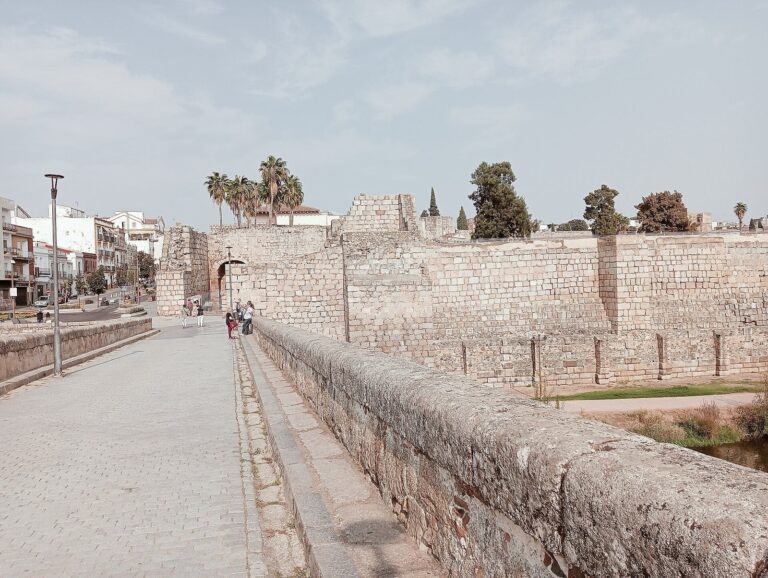
Successive ruling groups, including the Goths, Vandals, Alans, Suebi, Visigoths, and North African peoples, used the forum precinct as a political center from which to govern their territories and control the city. This role ended when Abd al-Rahman II dismantled the city and shifted power to the Alcazaba, a fortified citadel.
The Archaeological Ensemble of Mérida, which includes the Roman Forum, was inscribed on the UNESCO World Heritage List in 1993.
Remains
The municipal forum occupied the city’s highest ground, between present-day San José and Los Maestros streets on one side, and the Temple of Diana and Viñeros Street on the other. Its elevated position and arrangement followed a plan common in western Roman cities during the early imperial period, the first phase of rule by Roman emperors. The forum was the starting point of the Cardo Maximus and Decumanus Maximus, the town’s principal streets.
Buildings of the municipal forum
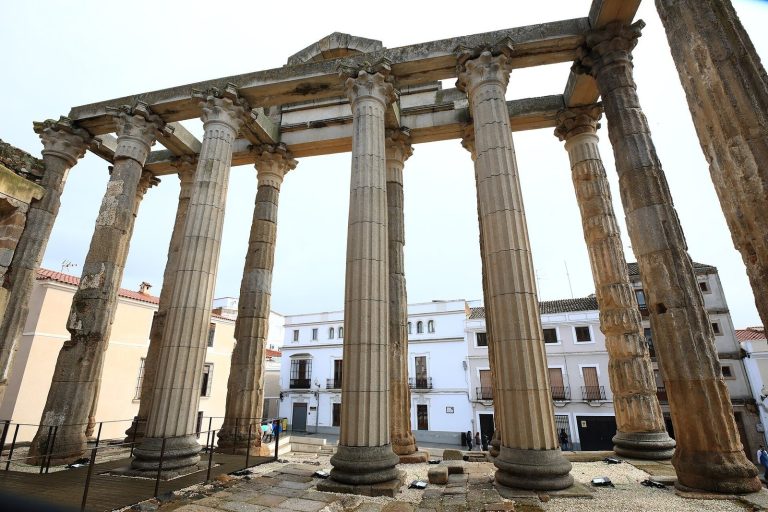
Temple of Diana
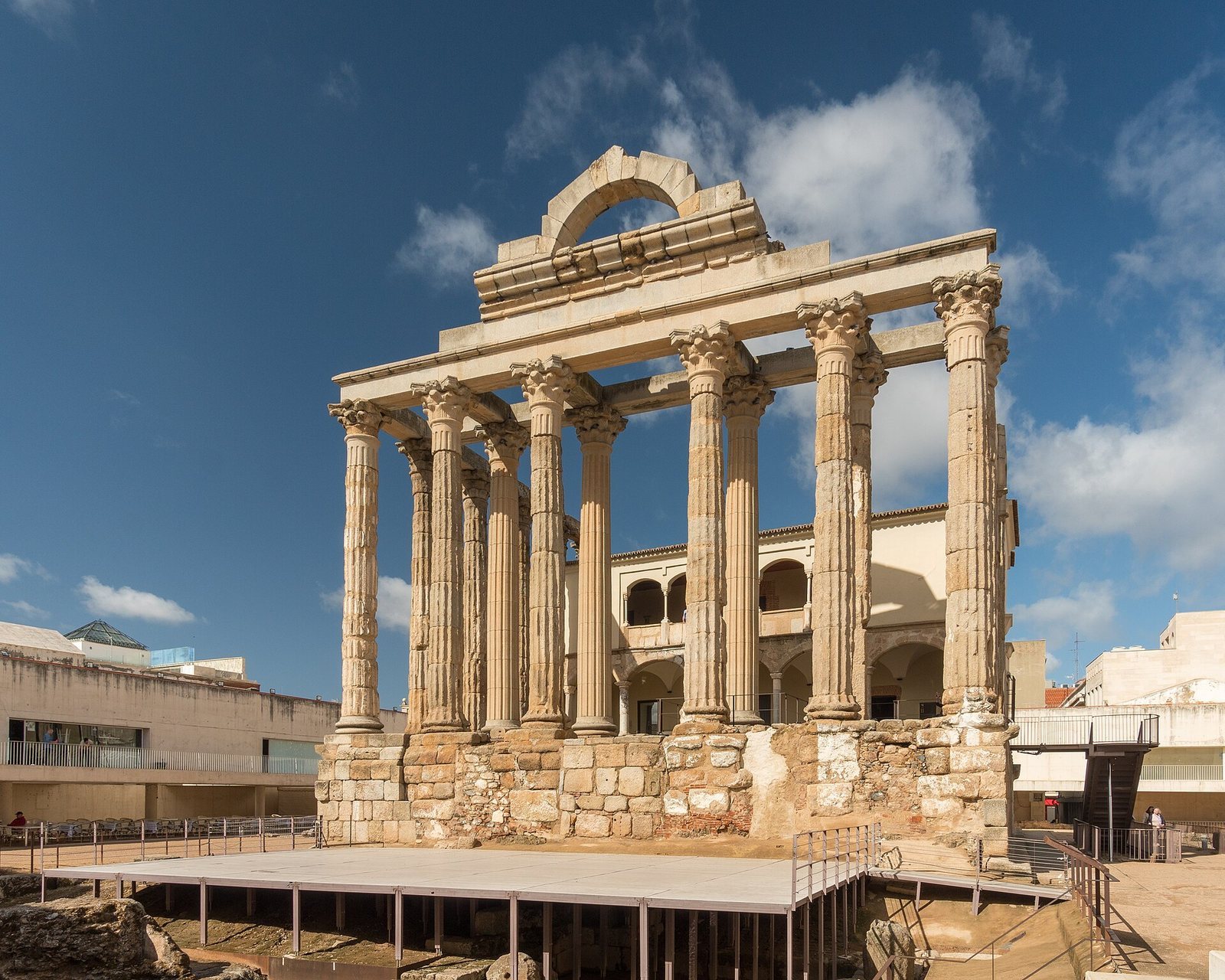
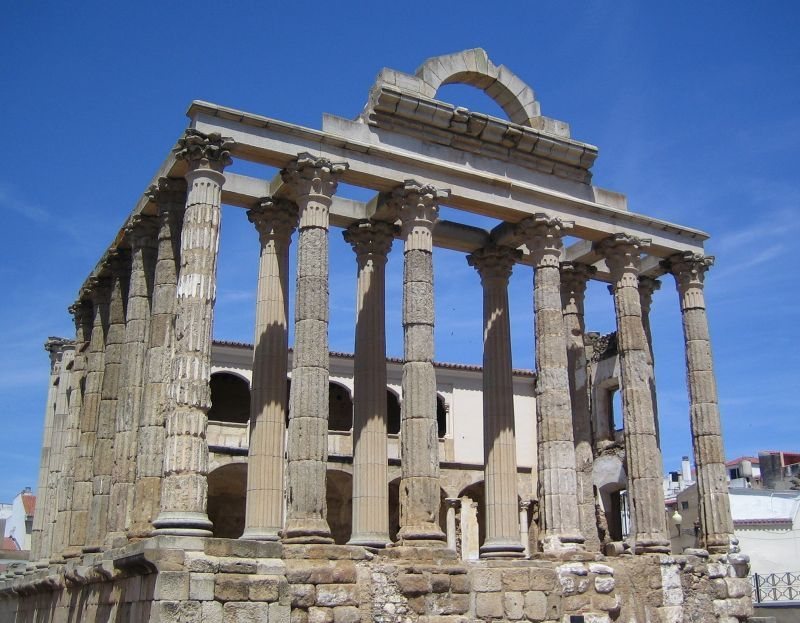
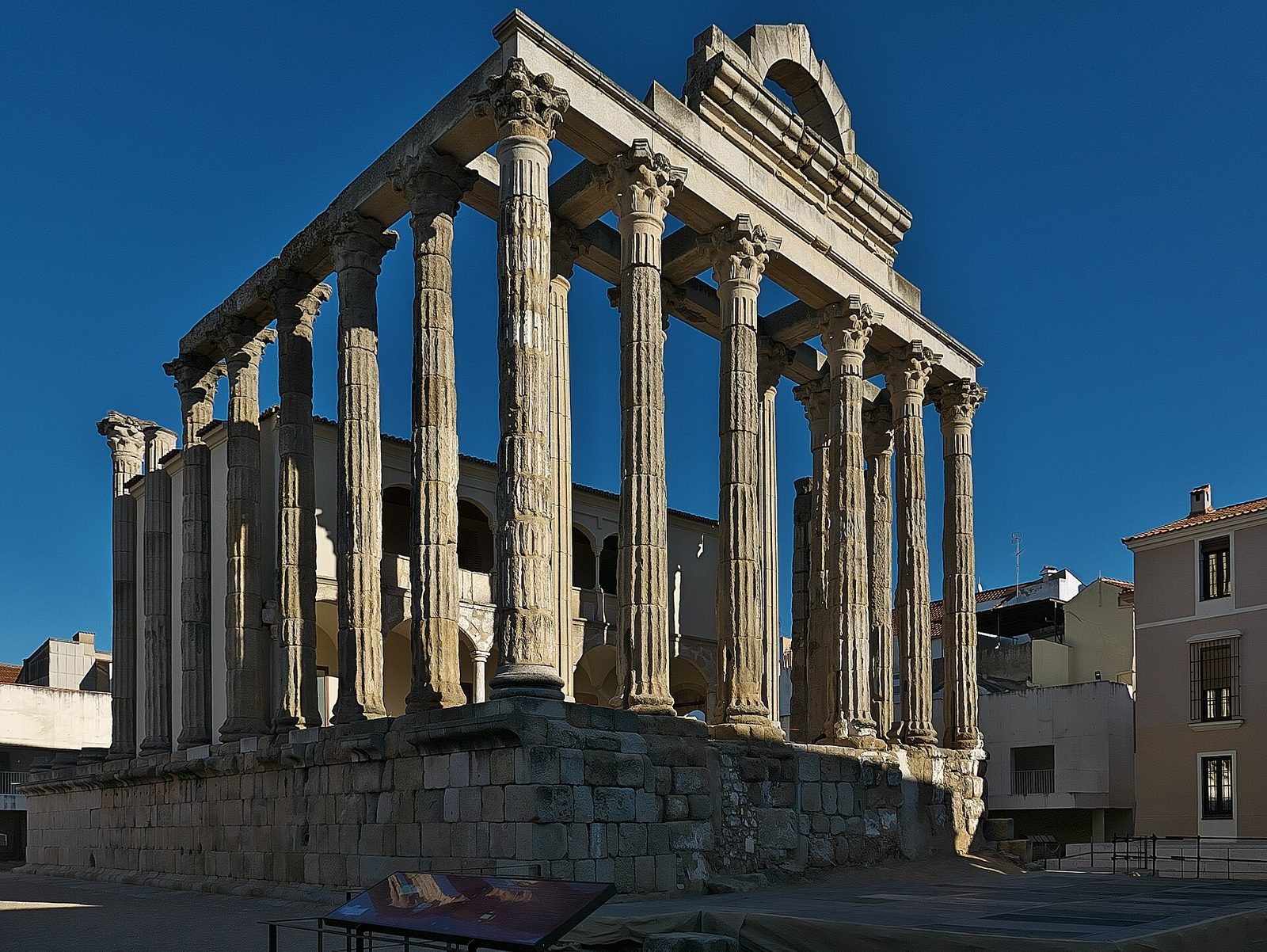
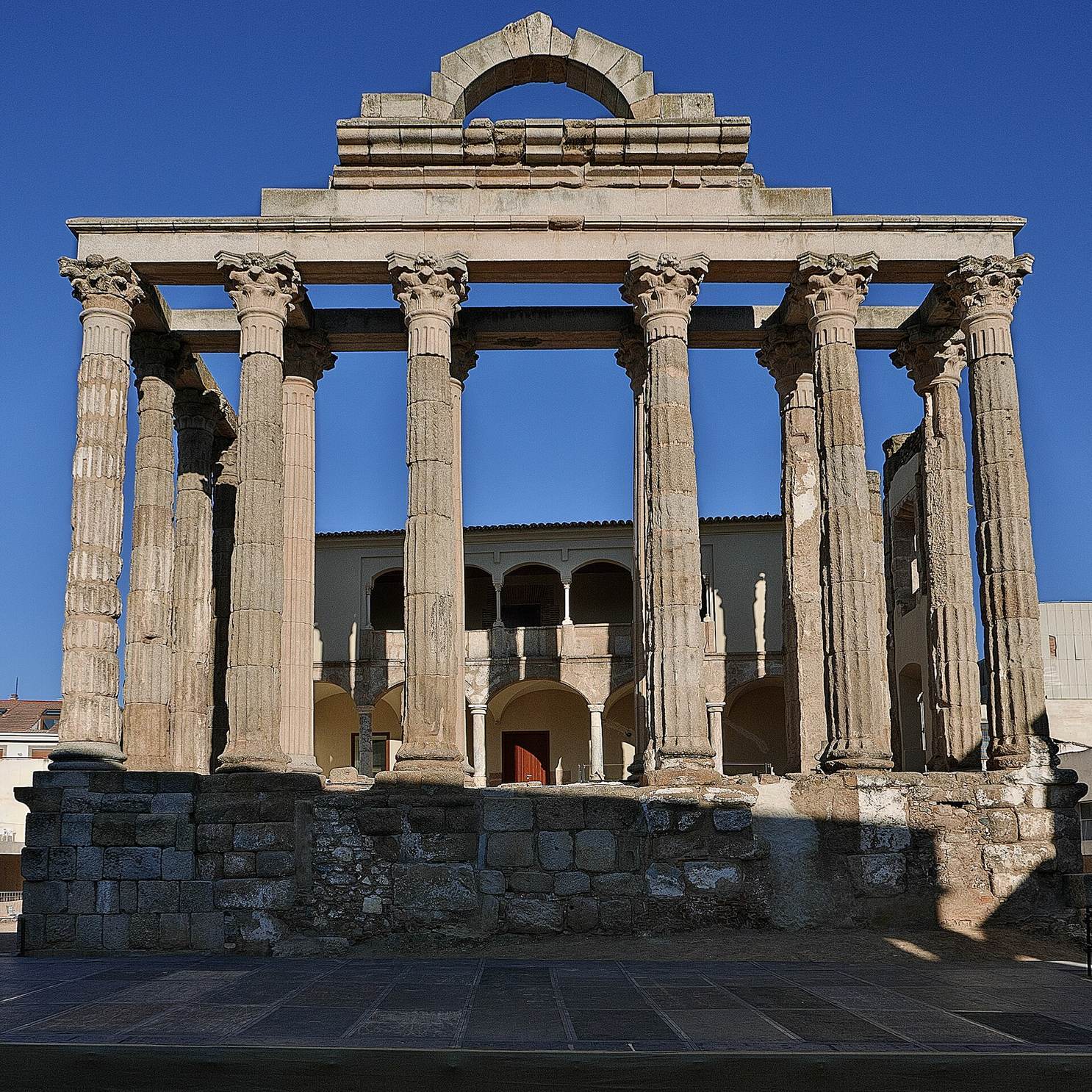
Despite its name, the Temple of Diana was dedicated to the imperial cult rather than Diana, the Roman goddess of the hunt. Built from local granite during Augustus’s reign, it is the forum’s best-preserved structure and its only surviving building. Part of the temple was later incorporated into the palace of the Count of Corbos, a noble title broadly comparable to an earl’s.
Temple of Mars, basilica, and baths
The Temple of Mars was also dedicated to the imperial cult, rather than Mars, the Roman god of war. A basilica, a public hall used for civic and legal activities, stood opposite the Temple of Diana. Baths were also part of the forum complex.
Forum Portico
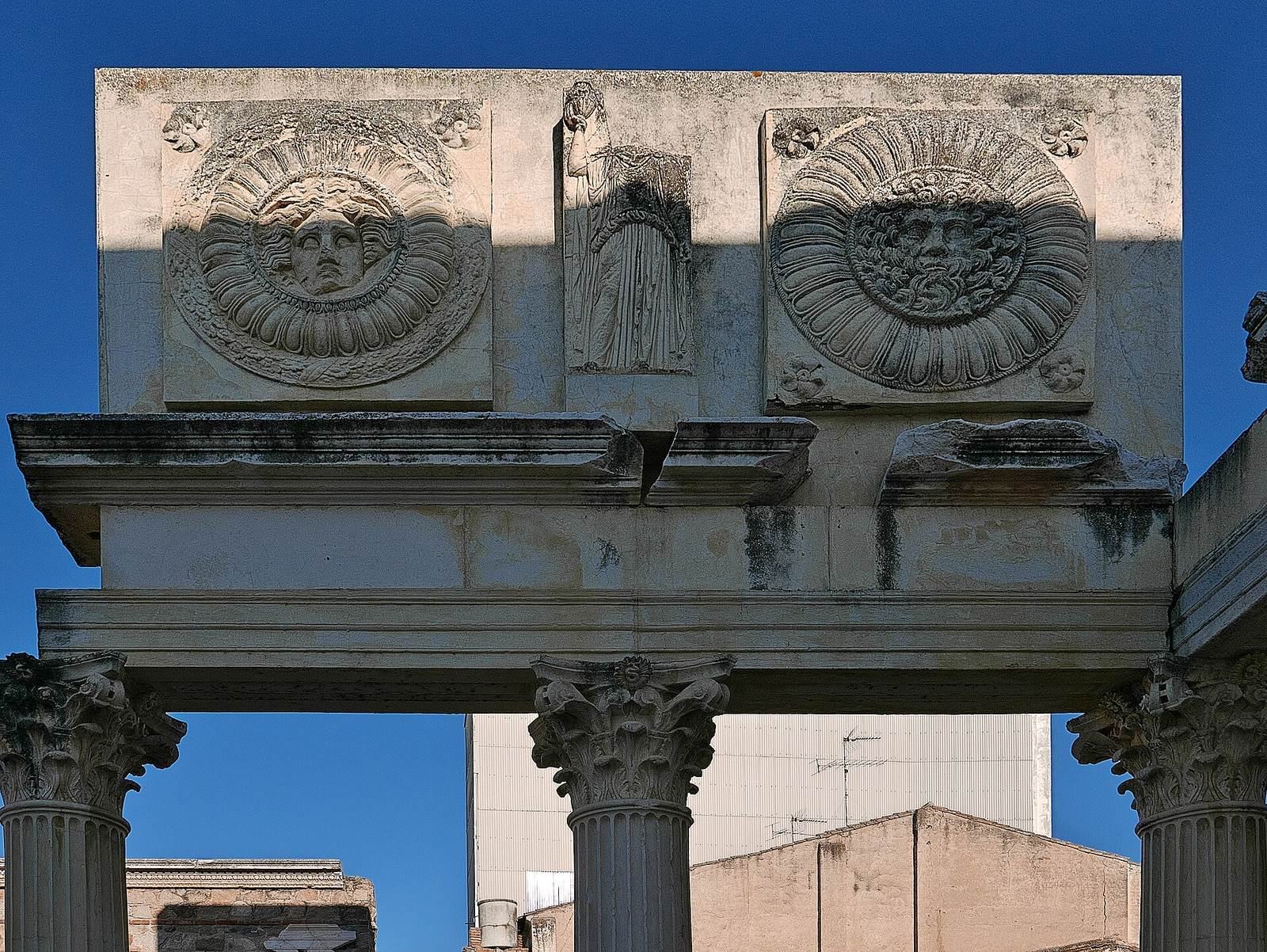
Near the Temple of Diana, the Forum Portico was built in the first century AD and restored in the twentieth century. Its porticoed building had a wall with several niches for statues. Statues were found at the site, and remains from the area are displayed at Mérida’s National Museum of Roman Art.
Proposed provincial precinct
The proposed provincial complex was planned as a porticoed square with a monumental entrance misleadingly called the Arch of Trajan and a temple dedicated to the emperor. Part of a corner of the temple survives on Holguín Street. Given the temple’s size, its remains may also extend into adjoining streets.