Taima-dera Temple: A Buddhist Temple of the Taima Mandala in Japan


Site at a Glance
- Rating
- 4.3
- Popularity
- Medium
- Country
- Japan
- Primary era
- Medieval
- External website
- Open
- Eras represented
- Classical, Medieval, Early Modern
- Civilizations
- Yamato
- Site type
- Religious
- Remains
- Monastery
On this page24 sections
History
Taima-dera Temple is a Buddhist temple in Japan, located at Taima in Katsuragi on the western edge of the Nara Basin. Its surviving works and archaeological remains point to a foundation around the late seventh century, during the reign of Emperor Tenmu, when it served as the clan temple of the Taima clan, a branch of the powerful Katsuragi clan. The temple later became closely associated with the Taima Mandala, devotion to Amida Buddha’s Western Pure Land, and the legend of Princess Chūjō.
Origins in the Tenmu period
Taima stood in an important transportation and military zone on routes linking Yamato and Kawachi. These routes also carried goods from Tang China and the Korean peninsula from the port of Naniwa toward the capital. This setting helped make the area an appropriate location for a major Buddhist institution connected with a powerful local clan.
Tradition attributes the temple’s foundation in 612 to Prince Maroko, the half-brother of Prince Shōtoku, and gives its religious name as Zenrin-ji. The circumstances of the foundation are not preserved in the temple’s official histories, and archaeological evidence instead indicates a late-seventh-century origin. Medieval accounts describe an earlier institution founded by Prince Maroko in Kawachi Province and transferred to the present site during the reign of Emperor Tenmu. They place the move variously in 680, 681, or 692, while another tradition assigns construction to 685 to 687. The earlier temple has been located either at Ajisoji south of Taima-dera or at Yamada in Kawachi. These traditions preserve a broad memory of an earlier institution being moved, although the full sequence may have been elaborated later to give the temple a more ancient history.
The earliest principal image was traditionally identified as Maitreya, the Buddha expected to appear in the future. Surviving statues, the temple bell, stone lanterns, excavated brick Buddhas, and old roof tiles all retain styles associated with the late seventh century.
From Sanron to Shingon and Jōdo
Taima-dera was originally associated with the Sanron tradition, an early Japanese Buddhist school based on three Indian Madhyamaka treatises. A tradition states that Kūkai visited the temple in 823 and worshipped the Taima Mandala, after which the institution became connected with Shingon, an esoteric Buddhist tradition emphasizing ritual practice, mandalas, and teachings attributed to Kūkai. Another account credits the change to Jitsuben, abbot of the Middle Cloister, after he received instruction from Kūkai. Taima-dera is now maintained jointly by Shingon and Jōdo institutions, with Jōdo Buddhism understood as a Pure Land tradition centered on devotion to Amida and rebirth in the Western Pure Land.
The temple’s later religious identity developed around the Taima Mandala, a diagrammatic Buddhist image representing Amida’s Pure Land through the teachings of the Contemplation Sutra and the interpretation of the Chinese Buddhist teacher Shandao. The mandala was traditionally said to have been created in 763, although its transmission is not documented in surviving Heian-period records. Its associated legend took shape during the Kamakura period.
In 1005, the Pure Land monk Genshin, who came from the Taima area, conducted a welcoming procession for Amida at the temple. This practice developed into the Shōjū Raigō Neri-Kuyō Eshiki, a Buddhist rite in which masked and costumed participants representing bodhisattvas enact the welcoming of a devotee into Amida’s Pure Land. As belief in Mappō, the Buddhist doctrine of a later age when attaining enlightenment was thought to be especially difficult, spread during the Heian period, Taima-dera became an important center of devotion to the mandala. At its greatest recorded extent, the temple had more than forty monastic quarters.
War, rebuilding, and medieval expansion
On January 15, 1181, during the Genpei War, Taira no Shigehira’s attack on southern Nara caused severe damage at Taima-dera. The temple had close connections with Kōfuku-ji, which was involved in the conflict. The lecture hall burned completely and the Kondō, the temple’s principal hall, was badly damaged, while the East and West Pagodas survived.
The Kondō underwent major repairs in 1184. Donations associated with Minamoto no Yoritomo and others supported repairs to the Taima Mandala shrine and the construction of a new altar platform in 1242 and 1243. The lecture hall was rebuilt in 1303, and the Kondō received further major repairs in 1326.
Devotion to the mandala also spread through the work of Shoku, founder of the Seizan branch of the Jōdo tradition. In 1223 he wrote a commentary on the Taima Mandala and produced more than ten copies, which were installed in different provinces. In 1370, Seia Fukan, the twelfth abbot of Chion-in in Kyoto, founded Ōjō-in within the precincts. The sub-temple is now called Oku-in, and from this period Taima-dera served as a center for both Shingon and Jōdo study and practice.
Princess Chūjō and continuing ritual life
The tradition of Princess Chūjō tells how she became a nun at Taima-dera and wove the Taima Mandala from five-colored lotus thread in a single night. It further relates that Amida and twenty-five bodhisattvas appeared to her before she departed for the Western Pure Land at the age of twenty-nine. The story was developed from the medieval period onward and became the subject of Noh, jōruri, and Kabuki works.
The annual Shōjū Raigō Neri-Kuyō Eshiki commemorates Princess Chūjō and reenacts passage from the human world to the Pure Land. It has been held on April 14 since 2019, having previously taken place on May 14. Participants wearing masks and costumes representing bodhisattvas cross and dance along a long bridge understood in the rite as the link between the human world and the Pure Land.
During the Hōreki era, from 1751 to 1764, Jōdo monks were permitted to participate in the mandala service, which had previously been restricted to Shingon monks. Services in the Kondō and lecture hall continued to be conducted by Shingon sub-temples. The temple then had thirty-one sub-temples; thirteen remain, including five Kōyasan Shingon sub-temples and eight Jōdo sub-temples. Oku-in and Gonen-in participate in the temple’s maintenance and administration.
Taima-dera continues to be associated with Pure Land Buddhism, the Taima Mandala, Princess Chūjō, and its peonies. Its heritage includes National Treasure designations for the East Pagoda, West Pagoda, Mandala Hall, Maitreya statue, Taima Mandala shrine, original woven mandala, and temple bell. The Naka-no-bō garden is also recognized as both a National Historic Site and a Place of Scenic Beauty.
Remains
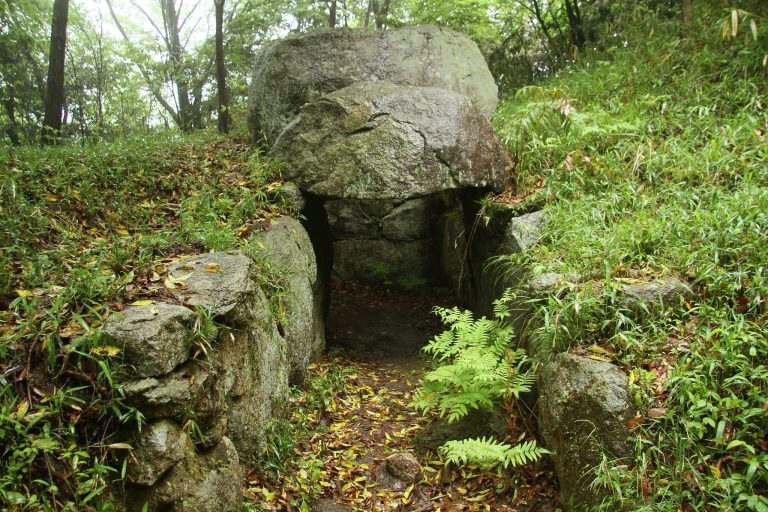
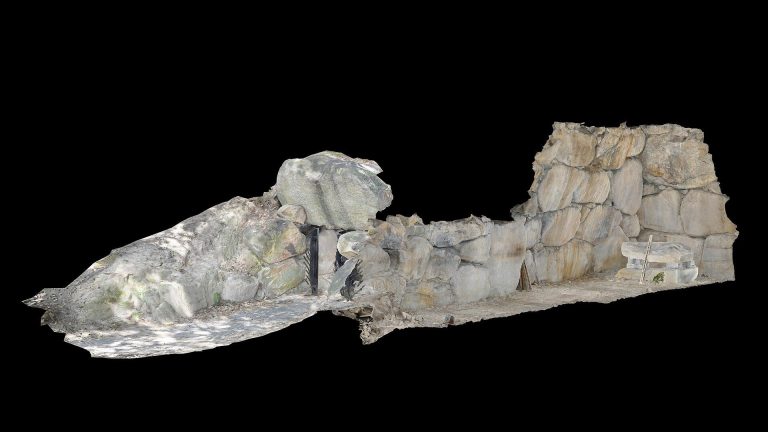
The precinct is organized around a central complex with the south-facing Kondō and lecture hall aligned north to south. The Mandala Hall stands to their west and faces east, while the East Great Gate at the eastern edge serves as the main entrance. South of the central buildings, the East and West Pagodas stand on the edge of a plateau six to seven meters higher than the ground occupied by the Kondō and lecture hall. Their positions are not exactly symmetrical around the central axis. An ancient burial chamber beneath the Mandala Hall links the temple site with land associated with the ancestors of the Taima clan.
Central halls
Mandala Hall
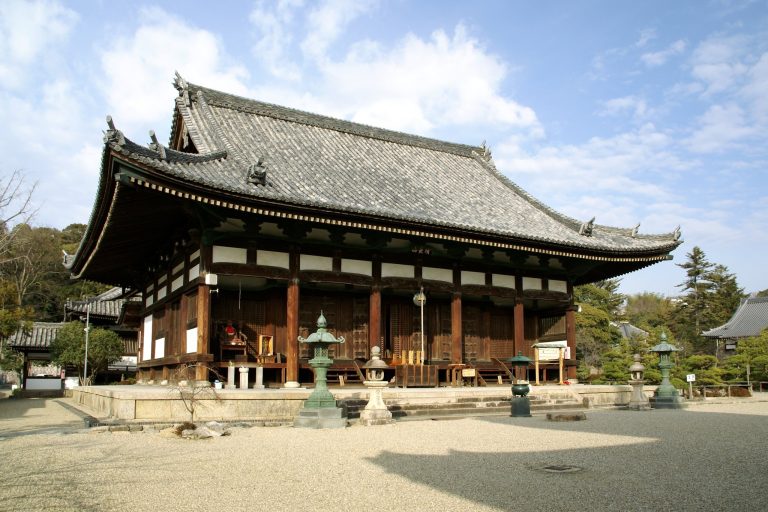
The Mandala Hall, also called the Main Hall or Hondō, is a seven-by-six-bay building facing east. A bay is the space between structural pillars. The hall has a hipped roof, with the rear three bays forming the inner sanctuary and the front three bays forming the worship space. Small rooms occupy the side bays, including a northwestern room that houses a standing Eleven-Headed Kannon traditionally known as Ori-dono Kannon.
The inner sanctuary contains a large shrine for the Taima Mandala on a stepped platform. The shrine is approximately five meters high, while an altar shelf occupies the northern rear bays. The present hall was built in 1161, according to ink writing on its ridgepole. Dismantling and repairs carried out from 1957 to 1960 revealed reused materials from an earlier Nara-period building. The first predecessor was a seven-by-four-bay, gabled structure with pillars set directly in the ground, and materials from at least two such buildings were incorporated into later construction.
In the early Heian period, the predecessor was remodeled as a seven-by-four-bay hall with a hipped roof, probably to house the Taima Mandala. Its roof used cypress bark or planks rather than tiles. A large front eave was added later, and the hall reached its present seven-by-six-bay form in 1262. A roof repair in 1268 brought further changes, including a rear ledge, a coffered ceiling in the outer sanctuary, and small rooms beneath the north and south eaves. Numerous wooden haloes for Buddhist statues, probably made between the ninth and eleventh centuries, were found in the attic.
Kondō
The Kondō was the temple’s principal hall when the institution was founded, before that role shifted to the Mandala Hall. It is a five-by-four-bay building with a hipped-and-gabled roof, a high stone foundation, and an interior with a dirt floor. Its central three bays across and two bays deep form a plastered inner sanctuary. A raised altar within it supports the clay seated Maitreya and the Four Heavenly Kings.
The hall is thought to preserve approximately the scale of the original clan-temple building. Its first roof used thick planks covered with wooden tiles. An inscription recording a land donation in 1268 appears on the front-left sanctuary pillar and indicates that the hall had been rebuilt in 1184. Fire traces on the pedestal of the principal image are associated with the destruction of 1181, while the lecture hall retains a burnt layer beneath its floor from the same event.
A stone lantern stands before the Kondō. Dating from the Asuka period, it is regarded as the oldest known Japanese stone lantern and is an Important Cultural Property.
Lecture hall
The lecture hall, or Kōdō, faces the Kondō and is a seven-by-four-bay structure. A wooden floor surrounds its central two bays. Its original roof used thick planks covered with wooden tiles. Buddhist statues dating from the ninth to twelfth centuries remain inside, including seated and standing images of Amida, Myōdō Bosatsu, and Jizō Bosatsu. Rafters record its reconstruction in 1303, and the burnt layer below the floor relates to the fire of 1181.
Pagodas and bell
East Pagoda
The East Pagoda is a three-story structure 24.4 meters high, including its finial, the spire-like element above the roof. It is generally dated to the end of the Nara period. The first story has three bays, while the second and third have two bays, with a pillar occupying the center of each side. Its finial has eight rings rather than the usual nine, and its water-smoke ornaments have an unusual fishbone-like design. The pagoda is made of hinoki cypress.
West Pagoda
The West Pagoda rises 25.2 meters and is slightly taller than the East Pagoda. Its architectural style places its construction in the early Heian period, although the date of its reliquary points to an earlier Asuka-period origin followed by rebuilding. All three stories have three bays. The finial has eight rings and a water-smoke design different from that of the East Pagoda. The structure is made of zelkova, an unusual hardwood choice for architecture of its period.
Traces of paintings of three thousand Buddhas and a Pure Land Mandala survive around the central pillar. Repairs from 1911 to 1914 revealed a reliquary at the top of the pillar, composed of nested gold, silver, and gilt-bronze containers. Documents state that it was installed during repairs in 1219.
Temple bell
The temple bell hangs in the upper story of the bell tower. It has no inscription and is considered one of Japan’s earliest bells. Its two striking bosses have different numbers of lotus petals, ten on one side and eleven on the other, a feature associated with an early stage in the formal development of Japanese bells.
Taima Mandala and Buddhist sculpture
Root Mandala
The original Taima Mandala, known as the Root Mandala, is a severely damaged woven hanging measuring 394.8 by 396.8 centimeters. It represents Amida’s Pure Land according to Shandao’s interpretation of the Contemplation Sutra. The central field shows Amida with thirty-four bodhisattvas, making thirty-seven figures in all, together with jeweled pools and pavilions. Other sections present the story of Queen Vaidehī, thirteen of the sixteen visualizations of the Pure Land, and the nine grades of rebirth.
The textile is woven from pre-dyed silk threads combined with flat and twisted gold threads. Scientific examination beginning in 1939 established its woven construction and supported the view that it was probably produced in Tang China. Its materials differ from the lotus-fiber textile described in the legend of Princess Chūjō.
The mandala was originally hung inside the shrine in the Mandala Hall. Deterioration led to its mounting on boards during the medieval period, and it returned to hanging form in 1677. At that time, surviving fragments were mounted on new silk and damaged areas were filled with painted reconstruction. About forty percent of the original woven design survives, while the lower section has suffered especially extensive loss. The former board surface, called the Back-Board Mandala, preserves an impression of the design, and a paper transfer made during its removal is partly preserved at Saikō-ji in Kyoto.
The Root Mandala is normally kept from display because of its condition, although it has appeared in museum exhibitions, including exhibitions at the Nara National Museum in 2013 and 2018. Later painted copies include the Bunki Mandala, completed in 1502 and dedicated in 1505, and the Jōkyō Mandala, dated by an inscription to 1685. One of these copies hangs in the Mandala Hall shrine.
Mandala shrine
The shrine that houses the mandala dates from the late eighth or early ninth century, although some interpretations place its construction in the 760s. It is a shallow, flattened hexagonal structure approximately 5.01 meters high, designed for a mandala rather than a statue. Its raised platform has shell inlay and wood-grain lacquer and bears an inscription dated 1243. The doors carry a 1242 inscription.
Hidden structural members preserve early decorative techniques, including gold-and-silver painting and gold-inlay patterns. The decoration includes birds, peacocks, heavenly beings, floral scrolls, flying clouds, flower-eating birds, mountains, butterflies, and solar disks. Ten wooden-and-dry-lacquer lions decorate the structure. The doors renewed in 1242 have black lacquer grounds with gold-sprinkled lotus-pond imagery and the names of more than two thousand people who formed religious connections. These doors are deposited at the Nara National Museum.
Maitreya and the Guardian Kings
The seated Maitreya in the Kondō is a clay sculpture 219.7 centimeters high and one of Japan’s oldest surviving works of its type. The figure sits cross-legged on a box-shaped draped pedestal. It is made from clay covered with cloth, coated with lacquer, and gilded. Much of the surface gilding is thought to date after the fire of 1181. Sun-dried bricks inside the pedestal bear fire marks associated with that conflagration.
The statue has undergone many repairs. Wooden replacements form the right forearm and left hand, and much of the hair curls has also been replaced in wood. Other repairs affect the limbs and drapery, while extensive work was carried out during the Meiji period. A wooden halo dates from the late Heian or early Kamakura period. The identification of the image as Maitreya first appears in a Kamakura-period pilgrimage record, and its form has been compared with Buddhist sculpture from Sui China and Silla Korea.
Four dry-lacquer Guardian Kings stand at the corners of the Kondō altar. A dry-lacquer statue is formed from lacquered layers over a core or armature. Three figures, Jikokuten, Zōchōten, and Kōmokuten, are among Japan’s oldest dry-lacquer statues. Their upright poses and foreign-looking facial features differ from the more animated forms of later guardian images. Many parts have been restored, and the Tamonten figure is largely a late-Kamakura wooden replacement.
Sub-temples and gardens
Oku-in
Oku-in occupies the western end of the precinct. Originally called Ōjō-in, it was founded in 1370 and contains a Jōdo Garden representing the paradise shown in the Taima Mandala. The garden is described as the largest of this type at Taima-dera and includes peonies, autumn foliage, lotus, and other seasonal plants.
Sainan-in
Sainan-in was originally built as a guardian temple near a rear gate. Its main hall enshrines three Kannon images, and its rear garden was created in the early Edo period.
Naka-no-bō
Naka-no-bō is the oldest surviving sub-temple of Taima-dera and belongs to the Kōyasan Shingon school. Tradition connects it with Princess Chūjō’s ordination and her teacher Jitsuga, while another tradition associates its foundation with En no Gyōja, a semi-legendary religious figure linked with mountain asceticism. Its grounds include a garden, a tea house, and a garden known for spring peonies. The garden was laid out in the early Edo period. In 2011, the collapse of an old maple damaged nearby roof tiles, an earthen boundary wall, and the Kara-do gate.
Gonen-in
Gonen-in is traditionally identified as Princess Chūjō’s residence. It preserves masks and costumes used in the Neri-Kuyō Eshiki, including twenty-four bodhisattva masks, two monk-form masks, and two heavenly-child masks. During the procession, participants use these objects while crossing and dancing along the symbolic bridge toward the Pure Land.
Other precinct features include the Nio-mon gate, the Yakushi Hall, the Oku-in Bell Tower Gate, the Oku-in Main Hall, and the Daishi Hall. The temple also preserves a wooden standing Amida, a fragmentary Nara-period copper repoussé Buddha, a medieval-to-early-modern group of ritual procession masks, a Kamakura-period portrait of Princess Chūjō, a painted Taima Mandala from 1674, a medieval bell dated 1354, and an embroidered portrait of Shandao.
Preserved guardian figures
Two wooden standing Kongō Rikishi figures are preserved at Taima-dera. The inner head of the Agyō figure contained a nest of Japanese honeybees that had remained there for about thirty years. The head was separated so that the bees could be protected while the deteriorating statue underwent repairs.