Yashikiyama Kofun: A Kofun-Period Burial Mound in Katsuragi, Japan
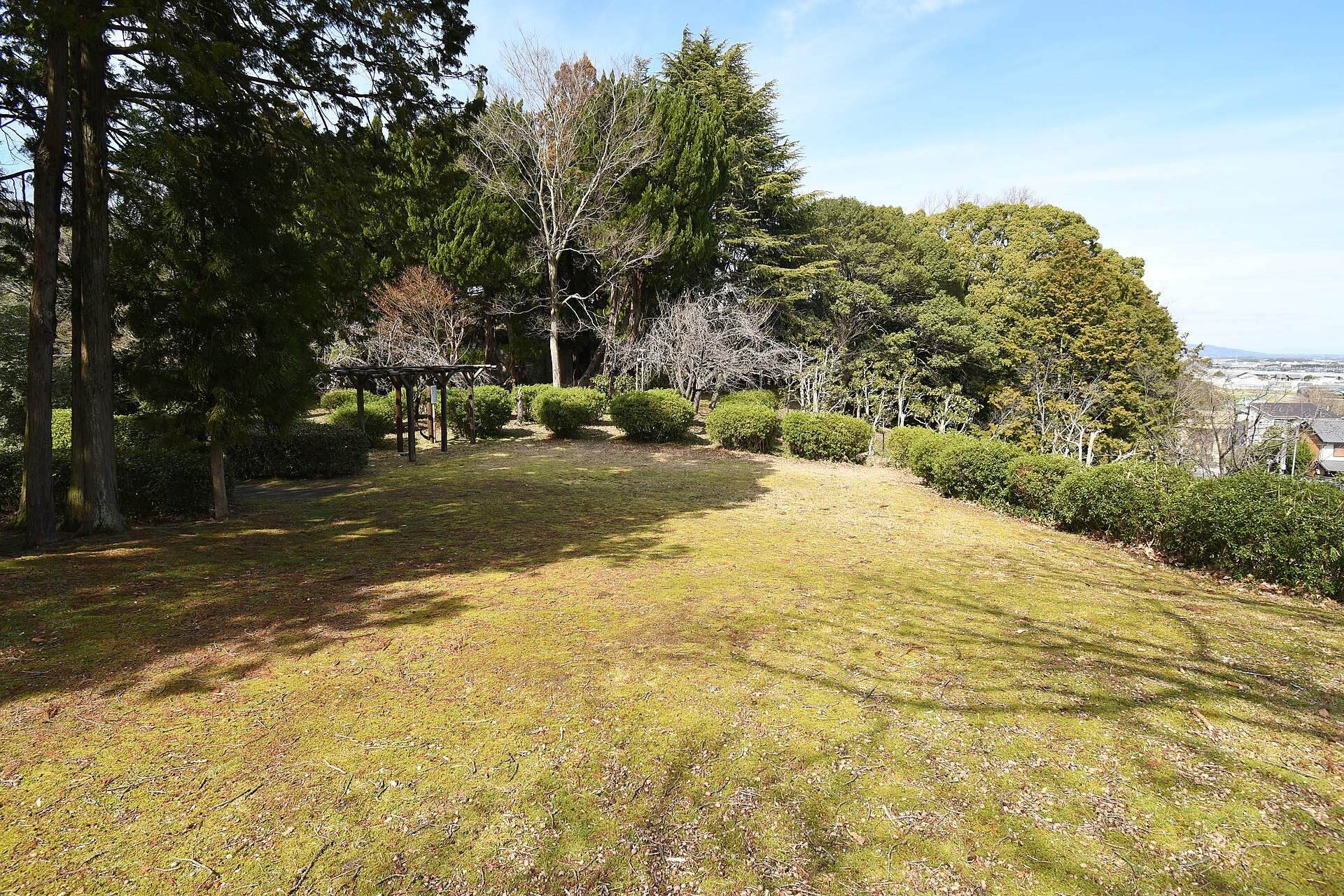
Site at a Glance
- Rating
- 3.3
- Popularity
- Very Low
- Country
- Japan
- Primary era
- Classical
- External website
- Open
- Eras represented
- Classical
- Civilizations
- Unclassified
- Site type
- Burial
- Remains
- Burial Mound
On this page8 sections
History
Yashikiyama Kofun is a large Kofun-period burial mound in Katsuragi, Japan, constructed around the middle of the fifth century during the middle Kofun period. The Kofun period was an era, lasting mainly from the third to the seventh century, when powerful regional and central elites built monumental burial mounds. Yashikiyama stands in the southwest of the Nara Basin, at the eastern foot of Mount Katsuragi, and its scale and burial features have made it important for understanding the Katsuragi region.
Construction in the Middle Kofun Period
The mound was built as a keyhole-shaped burial monument, a form that combines a rectangular front section with a circular rear section. Its large dimensions, stone burial chamber, and substantial coffin indicate the high status of the person or group commemorated there. The use of Tatsuyama stone, quarried in the Kakogawa River basin of Hyogo Prefecture, further connects the burial monument with materials used for high-status ancient Japanese burials.
A connection with the ancient Katsuragi clan has been suggested. The Katsuragi clan was an influential ancient lineage associated with the Katsuragi region, but the relationship between the clan and Yashikiyama Kofun has not been established with certainty.
Medieval and Early Modern Reuse
The mound acquired new functions long after its construction. During the medieval period, the Fuse clan established a fortified residence on it. In the early modern period, the Kuwayama clan, lords of Yamato-Shinjo Domain, used the site for a government compound. The name “Yashikiyama” derives from these later residential and administrative uses, rather than from the mound’s original burial function.
Excavation and Preservation
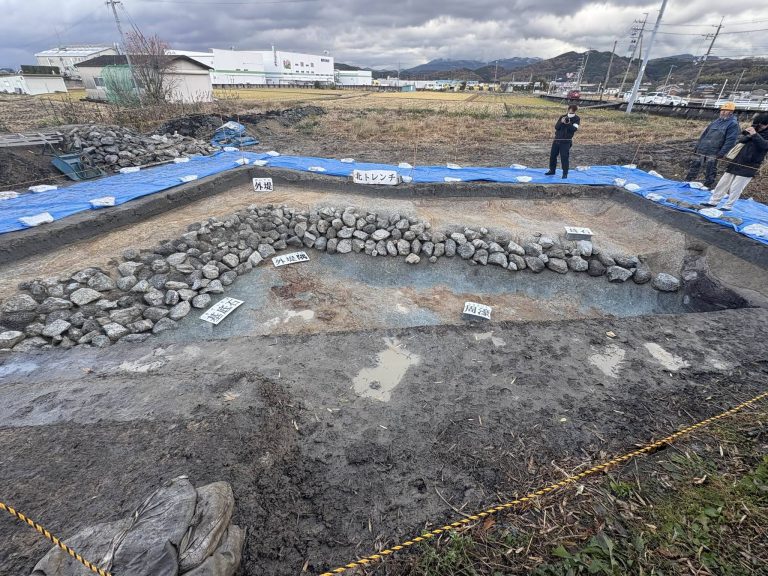
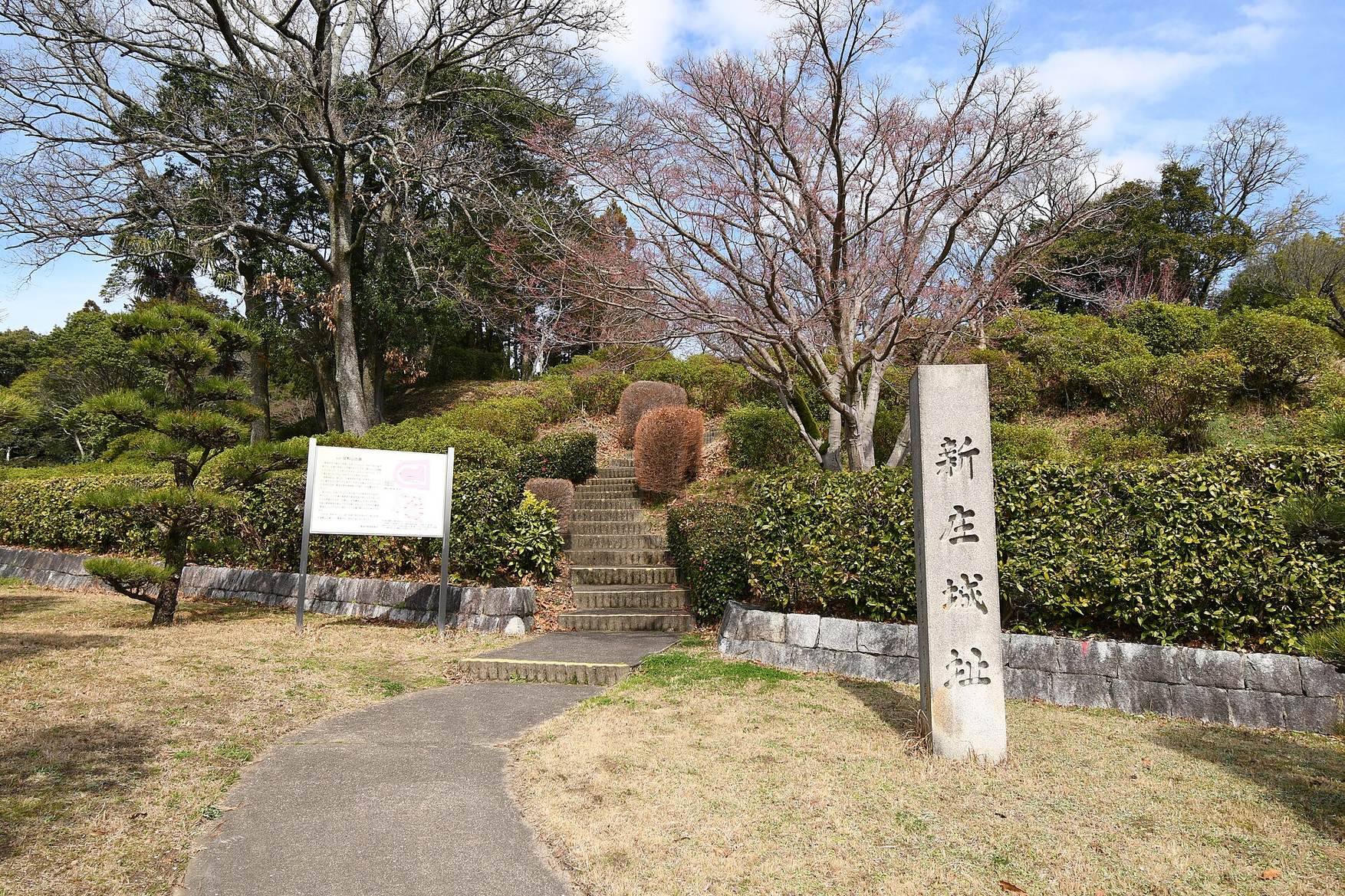
The Nara Prefectural Kashihara Archaeological Institute excavated the mound in 1972 during preparations for site improvement, and the investigation was reported in 1975. Yashikiyama Kofun was designated a National Historic Site of Japan on March 25, 1972. Later development as Yashikiyama Park followed substantial alteration caused by the mound’s residential and administrative reuse, as well as the installation of a water tank in modern times.
Remains
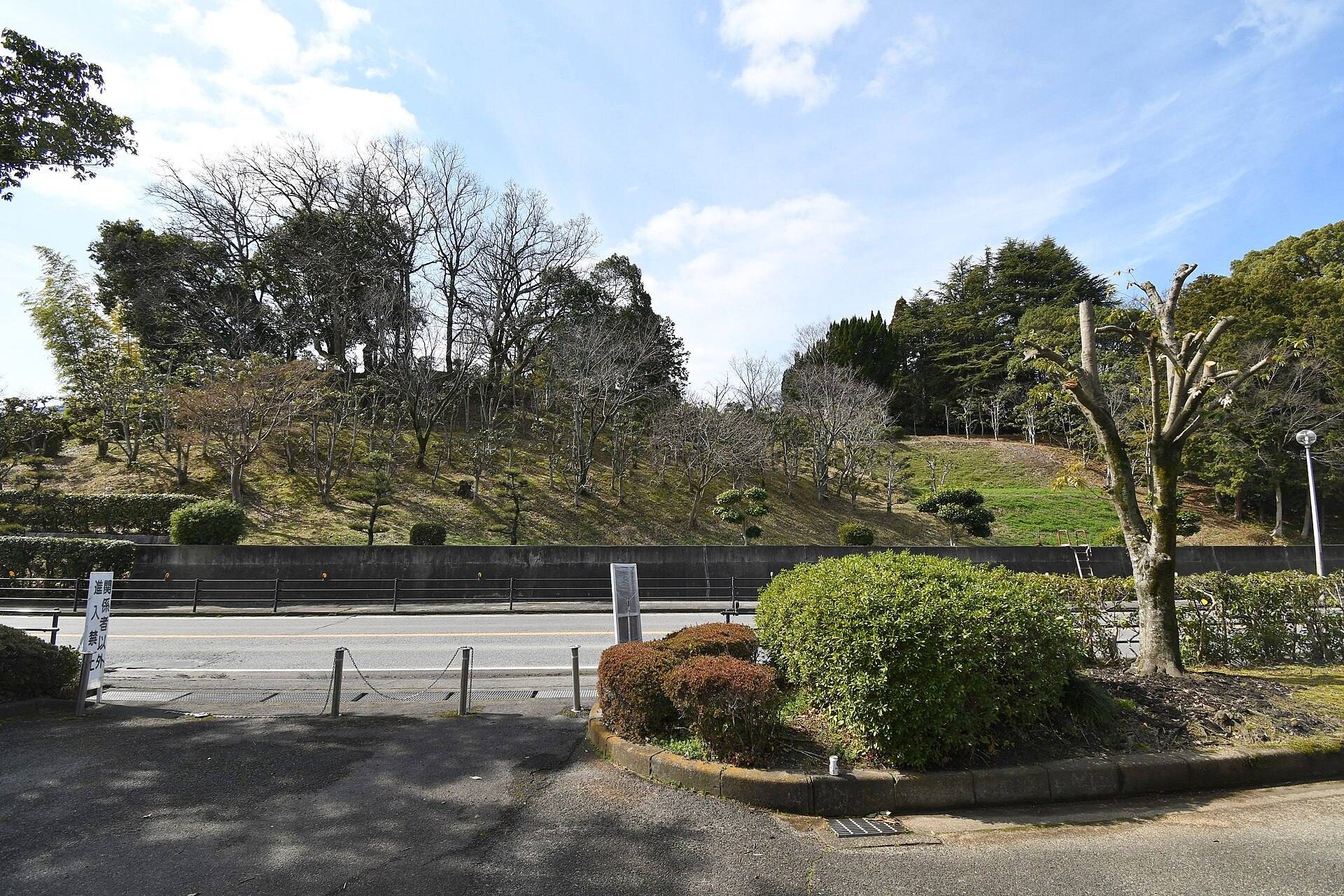
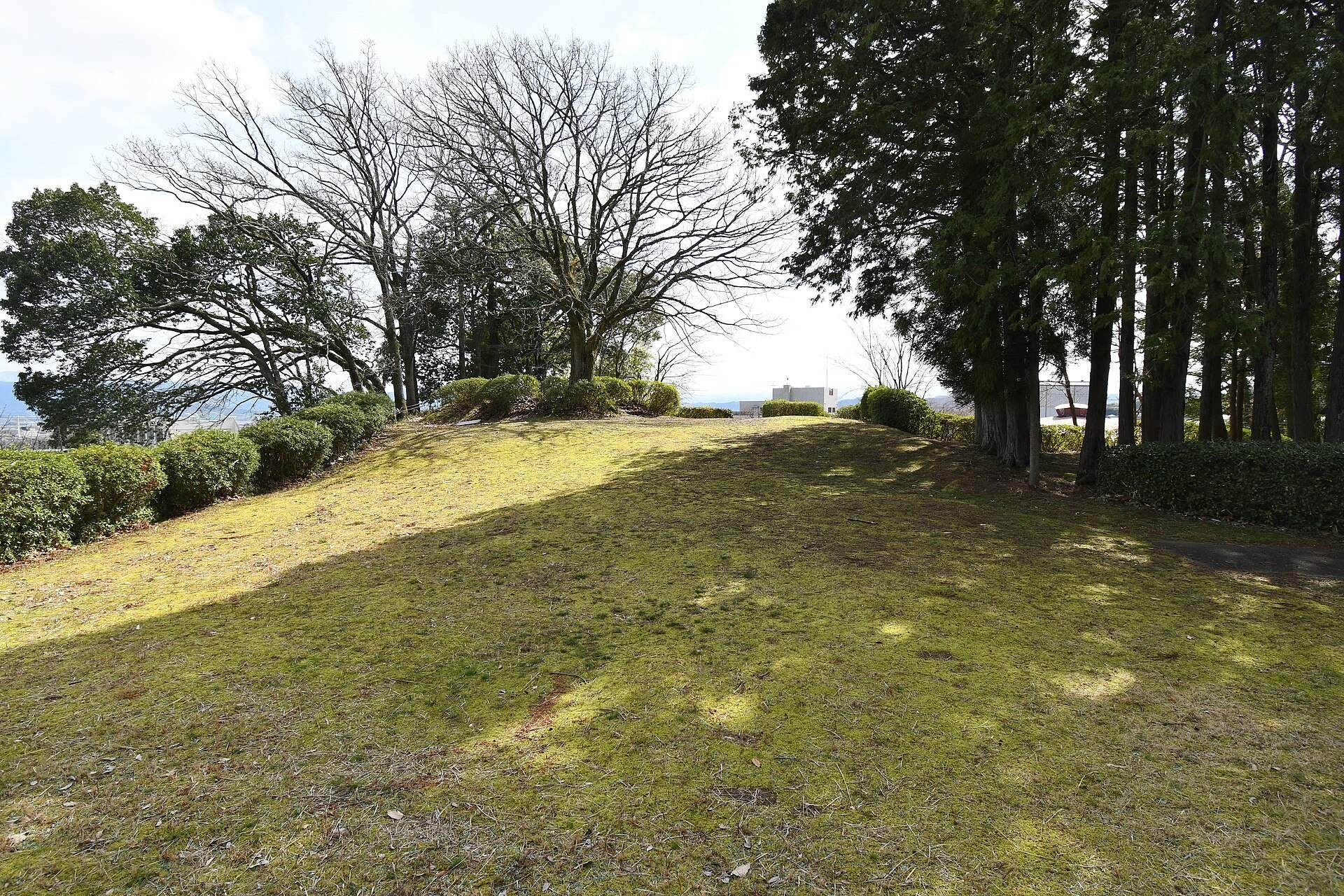
Yashikiyama Kofun has a keyhole-shaped plan, with a circular rear section and a rectangular front section extending toward the north-northwest. The mound measures at least 135 meters in total length, or approximately 140 meters. Its rear section is about 77 to 78 meters in diameter and rises roughly 15 meters, while the front section is about 90 meters wide. A moat surrounded the mound. It is the largest kofun in Katsuragi City.
Mound and Haniwa
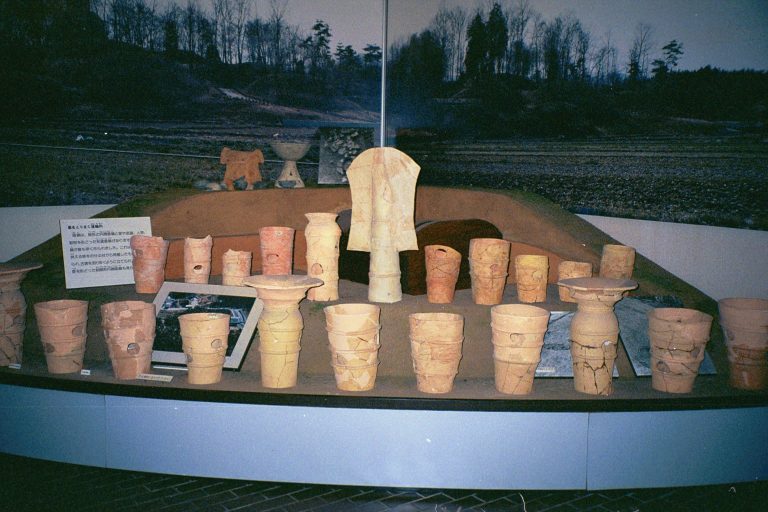
Cylindrical and figurative haniwa were placed on the exterior of the mound. Haniwa are clay cylinders and figures set on or around burial mounds to mark boundaries and represent structures, objects, animals, or people. The figurative examples from Yashikiyama include house-shaped, lid-shaped, and shield-shaped forms, providing evidence of the objects and structures associated with the mound’s ceremonial setting.
Stone Burial Facility
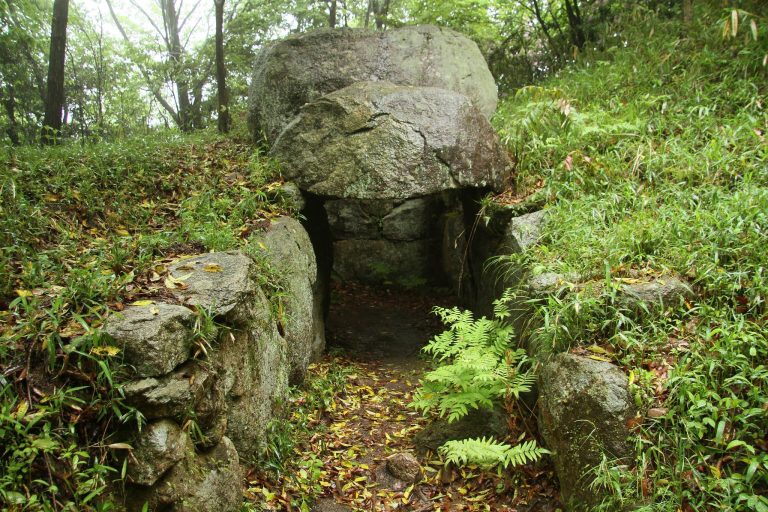
The burial facility was a vertical-entry stone chamber containing a large stone coffin with a long-chest form. Its chamber cover stones and the coffin were made from Tatsuyama stone, a workable material used in high-status ancient Japanese burial monuments. The chamber and coffin were damaged or destroyed during the medieval or early modern period, leaving their original details unclear. Stone from the chamber and parts of the coffin were found scattered and preserved in various locations.
Excavated Objects
The excavation recovered small glass beads, iron spears, knives, iron nails, and rivets. These objects were found alongside the remains of the burial facility and help define the material character of the burial. The excavated stone coffin and haniwa are displayed at the Katsuragi City History Museum.