Kongō Sanmai-in Temple: A Kamakura-Period Shingon Temple on Mount Kōya


Site at a Glance
- Rating
- 4.2
- Popularity
- Low
- Country
- Japan
- Primary era
- Medieval
- External website
- Open
- Eras represented
- Medieval, Early Modern
- Civilizations
- Kamakura shogunate
- Site type
- Religious
- Remains
- Monastery
On this page14 sections
History
Kongō Sanmai-in Temple is a Japanese Buddhist temple on Mount Kōya in Japan, founded in 1211 during the Kamakura period at the request of Hōjō Masako. It belongs to the Kōyasan Shingon school, an esoteric Buddhist tradition centered on ritual, mantra, mandala, and initiation, and holds the status of a special head temple. From approximately the beginning of the Edo period, it was treated as a subtemple of Kongōbu-ji.
Foundation for the Kamakura shogunal family
The temple was first established as Zenjō-in to commemorate Minamoto no Yoritomo, the founder of the Kamakura shogunate and Masako’s husband. Eisai, a major Buddhist monk associated with the introduction of Rinzai Zen to Japan, was invited to the foundation ceremony and became the first founding abbot.
After Yoritomo and Masako’s son, Minamoto no Sanetomo, was assassinated, the temple was rebuilt in 1219 and renamed Kongō Sanmai-in in his memory. It then became associated with the shogunal family and served as an institutional link between Mount Kōya and the rulers of the Kamakura shogunate. In 1223, Masako entered religious life under the name Zenjō Nyojitsu. Katsurayama Kagenori, also known as Gansei, and Adachi Kagemori acted as construction commissioners during the temple’s development.
The commemorative building campaign expanded the complex with a Great Sun Buddha Hall, a Kannon Hall, two treasure pagodas, two halls for fire rituals, a sutra repository, and a monks’ hall. In 1238, Ashikaga Yoshikane commissioned another Great Buddha Hall for the thirteenth anniversary of Masako’s death. A sixteen-foot image of Dainichi Nyorai, the central Buddha of Shingon esoteric Buddhism, was installed there, and Masako’s and Sanetomo’s remains were deposited in the hall.
Religious and scholarly transformations
Kongō Sanmai-in was administered independently from Kongōbu-ji as an institution that combined esoteric Buddhism, Zen, and Buddhist monastic discipline. Pure Land teachings, focused on devotion to Amitabha Buddha, were later incorporated. Its first elder was the Zen monk Taikō Gyōyū, and its abbots remained Zen monks for more than twenty generations.
In 1258, Gansei moved the temple’s Zen department to Saihō-ji and installed his former student Shinchikakushin, also known as Hōtō Kokushi. Kongō Sanmai-in thereafter functioned chiefly as an esoteric Buddhist temple. Jitsuyū later revived the institution and restored greater emphasis on the Risshū school, the Buddhist tradition concerned with monastic discipline.
In 1281, Hōjō Tokimune appointed Adachi Yasumori as construction commissioner for Kangaku-in and Kanshū-in. These institutions became centers of clerical study and helped establish Kongō Sanmai-in as a center of Nanzan doctrinal learning, using medieval Buddhist wooden printing blocks and impressions known as Kōya-ban. An imperial order from Retired Emperor Go-Uda moved Kangaku-in to the Danjōgaran in 1318.
Later continuity
The temple’s principal object of worship is Aizen Myōō, an esoteric Buddhist deity associated with transforming earthly desire into spiritual awareness. Kongō Sanmai-in is the eleventh station of the Eighteen Ancient Buddhist Pagodas pilgrimage and the seventeenth station of the Seventeen Sacred Sites of Aizen.
Its relatively peripheral position on Mount Kōya helped the temple survive the fires that repeatedly devastated other parts of the mountain. Kongō Sanmai-in now forms part of the UNESCO World Heritage property Sacred Sites and Pilgrimage Routes in the Kii Mountain Range and is associated with natural features protected by Wakayama Prefecture.
Remains
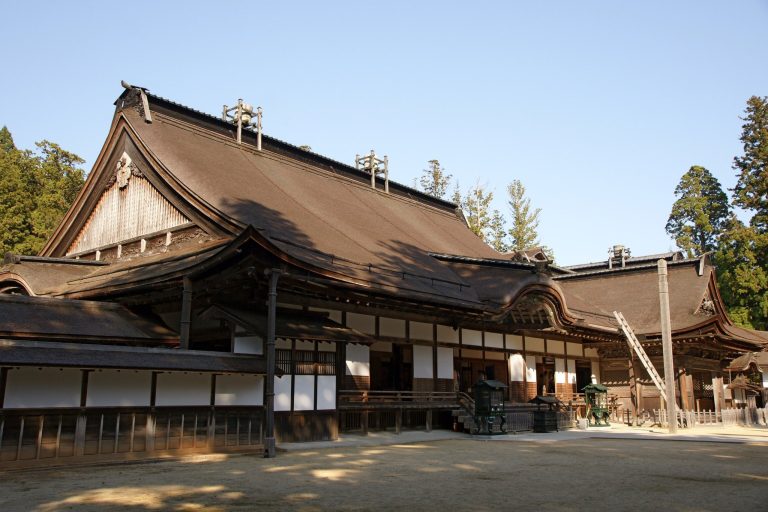
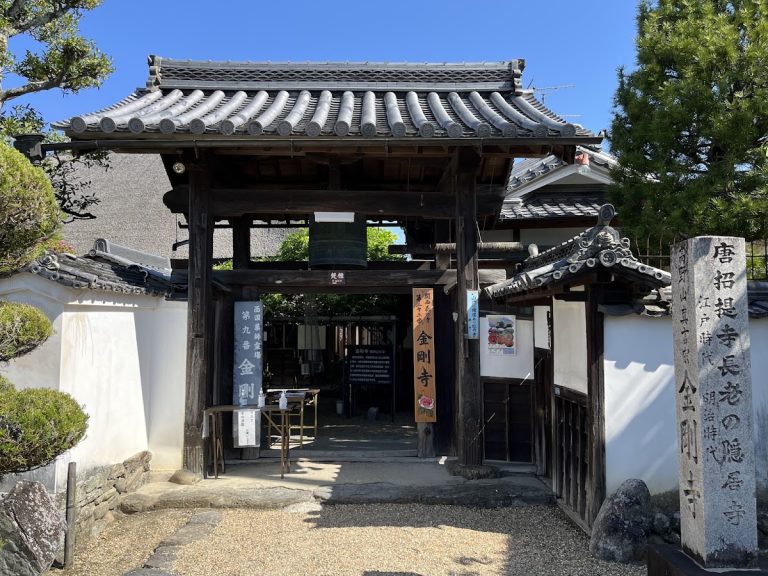
The temple complex contains a main hall, mountain gate, lodging facilities, kitchen, sutra repository, Shisho Myōjin Shrine, and other religious and service buildings. Its historic layout also includes the Great Sun Buddha Hall, Kannon Hall, two treasure pagodas, two fire-ritual halls, a monks’ hall, and the former study institutions Kangaku-in and Kanshū-in.
Historic buildings
Principal treasure pagoda
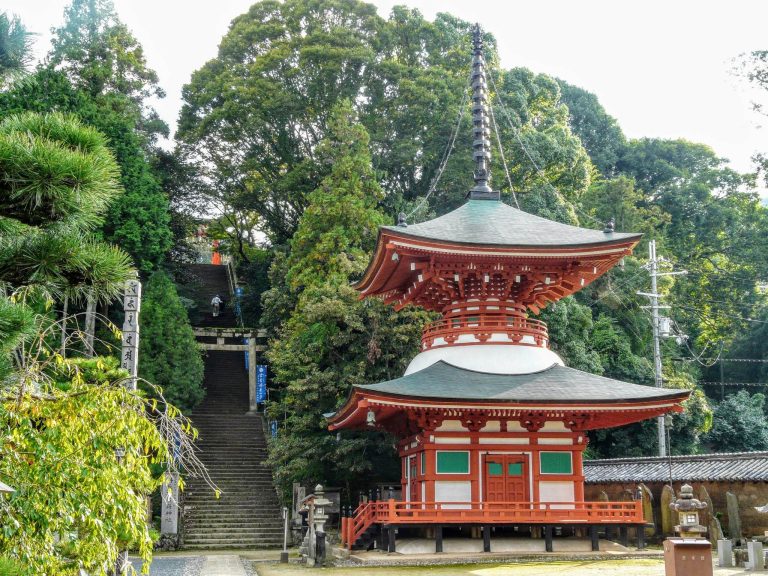
The principal treasure pagoda is 14.9 metres high and belongs to the early architectural history of Kongō Sanmai-in. Built in 1223 during the temple’s major building campaign, it has the form known as a treasure pagoda, or tahōtō, which generally combines a square lower section with a rounded or cylindrical upper chamber. A central image of Dainichi Nyorai occupies its interior. The pagoda was registered as a National Treasure in 1900 and is described as the second-oldest surviving example of its type in Japan.
Sutra repository
The sutra repository was also built in 1223. It uses azekura-zukuri, a timber construction technique made from crossed horizontal beams characteristic of the Kamakura period. The building contains 486 medieval wooden printing blocks for Buddhist texts, together with other materials associated with the Kōya-ban tradition of textual learning on Mount Kōya.
Great Buddha and Kannon halls
The Great Sun Buddha Hall formed part of the commemorative complex associated with Hōjō Masako and Minamoto no Sanetomo. It housed a sixteen-foot image of Dainichi Nyorai and the remains of both members of the Kamakura shogunal family. The Kannon Hall, the two fire-ritual halls, the monks’ hall, and the former study institutions formed additional parts of the temple’s religious and educational complex.
Shisho Myōjin Shrine
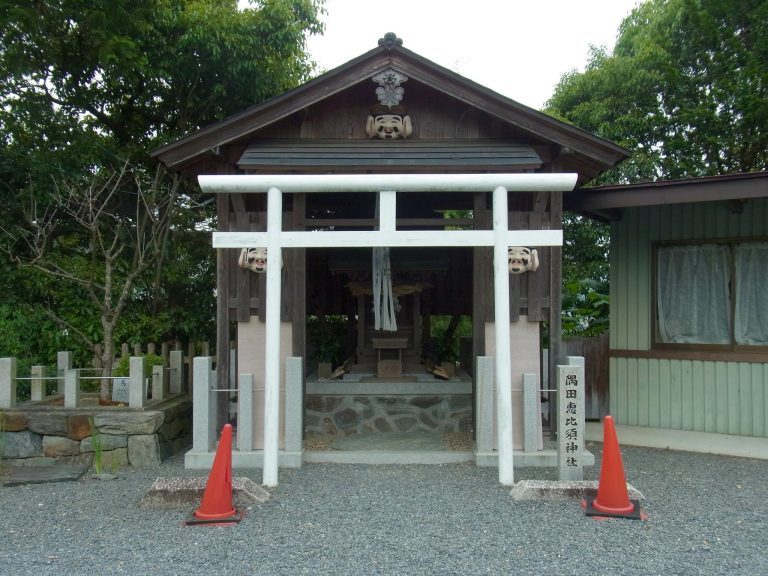
The Shisho Myōjin Shrine stands above the sutra repository. Built in 1522, it is a Shinto shrine within the Buddhist temple complex.
Images and natural features
Aizen Myōō image
The temple’s seated image of Aizen Myōō is traditionally said to have been made by Unkei, one of the most influential sculptors of Japan’s Kamakura period, on Hōjō Masako’s orders. The image reflects the temple’s continuing association with esoteric Buddhist worship.
Hidden Buddhist image
Kongō Sanmai-in houses a hidden Buddhist image, traditionally called a hibutsu, meaning an image kept concealed and revealed only on designated occasions. It is displayed for one day every 500 years, with the next stated public display expected in the late 2400s.
Rhododendrons and cedar
The grounds include a large rhododendron grove, with trees said to exceed 10 metres in height and to be more than 400 years old. A giant Japanese cedar, likewise described as more than 400 years old, is among the complex’s protected natural features.