Yamada Takatsuka Kofun: A Japanese Burial Mound in Osaka
Site at a Glance
- Popularity
- Medium
- Country
- Japan
- Primary era
- Unclassified
- Eras represented
- Unclassified
- Civilizations
- Unclassified
- Site type
- Burial
- Remains
- Burial Mound
On this page11 sections
History
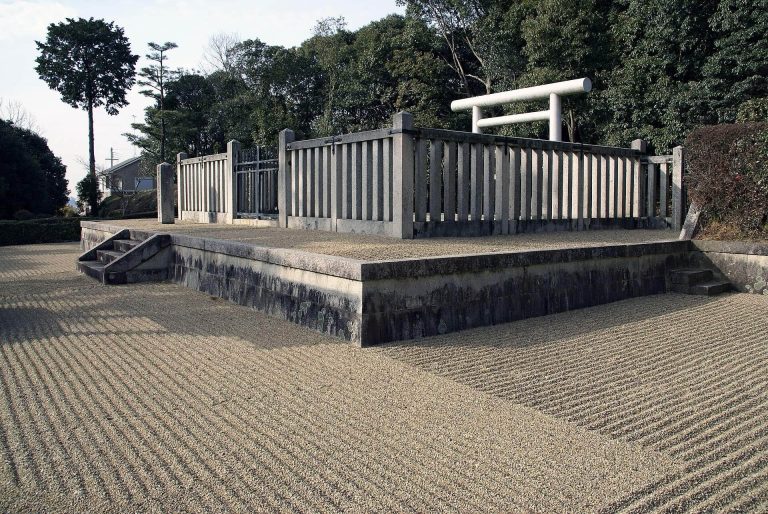
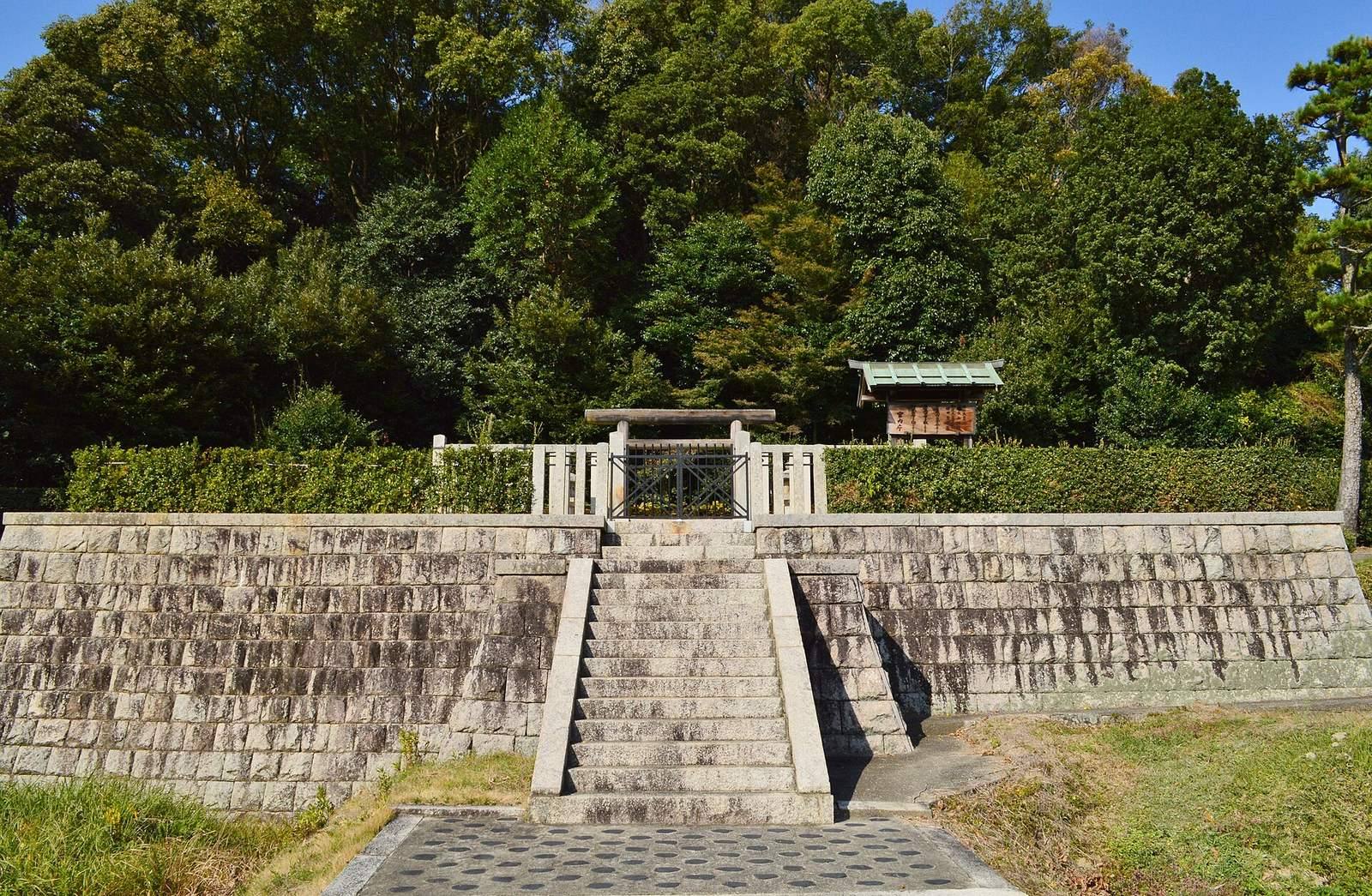
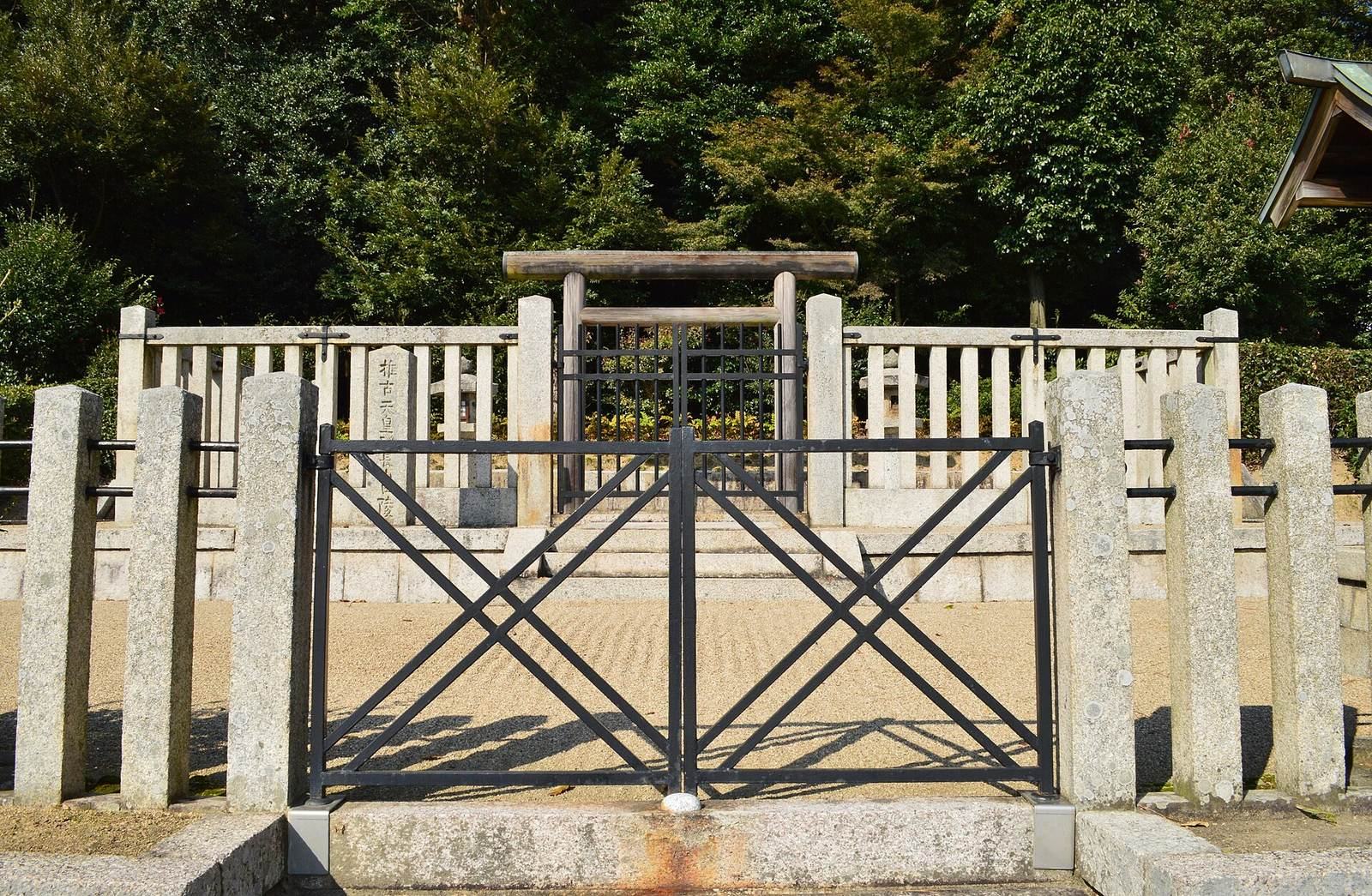
Yamada Takatsuka Kofun, also called Takamatsu Kofun, is a Japanese burial mound in Shinaga Valley, Taishi, Osaka Prefecture, Japan. Its actual occupants are unknown. The Imperial Household Agency administers it as the joint mausoleum of Emperor Suiko and Prince Takeda, using the names “Shinaga Yamada Mausoleum” and “Tomb of Prince Takeda.”
Accounts of Suiko’s burial
Prince Takeda was a child of Suiko and a son of Emperor Bidatsu; his date of death is unknown. The Chronicles of Japan says Suiko died in the third month of 628 and, following her testament, was buried in the ninth month in Prince Takeda’s tomb. These are traditional calendar months. The chronicle does not identify the tomb’s location or name.
The Records of Ancient Matters gives a different account. It says Suiko was first buried on a hill and later transferred to the Great Mausoleum at Shinaga, without linking her burial to Prince Takeda. A kofun in Kashihara, Nara Prefecture, has been proposed as the earlier burial place described in that account.
Imperial records and later identification
The court compilation Procedures of the Engi Era lists Suiko’s mausoleum as the Shinaga Yamada Mausoleum, in Ishikawa District, Kawachi Province. It classifies the tomb as a distant mausoleum and gives its precinct as two cho, a traditional Japanese unit of measurement, east to west and two cho north to south. The register also assigns one tomb household and four guardian households to serve and protect it.
A chronicle records that the mausoleum was robbed on the second day of the sixth month in 1060. During the Genroku era (1688–1704), a search for imperial tombs led the Sakai magistrate to report that the mausoleum now identified with Yamada Takatsuka existed. Another kofun about 200 metres east has also been proposed as the joint burial place of Suiko and Prince Takeda, leaving the site’s identification contested.
Repairs and later investigations
Repairs to imperial mausoleums during Japan’s Edo period (1603–1868) substantially altered the mound. The Imperial Household Agency investigated it in 1979 during work to install a boundary stone wall, then surveyed its exterior in fiscal year 1989.
Yamada Takatsuka is one of several traditional royal tombs in Shinaga Valley. The valley’s tombs of Emperors Bidatsu, Yomei, and Kotoku, Prince Shotoku, and Suiko are collectively known as the Plum-Blossom Mausolea.
Remains
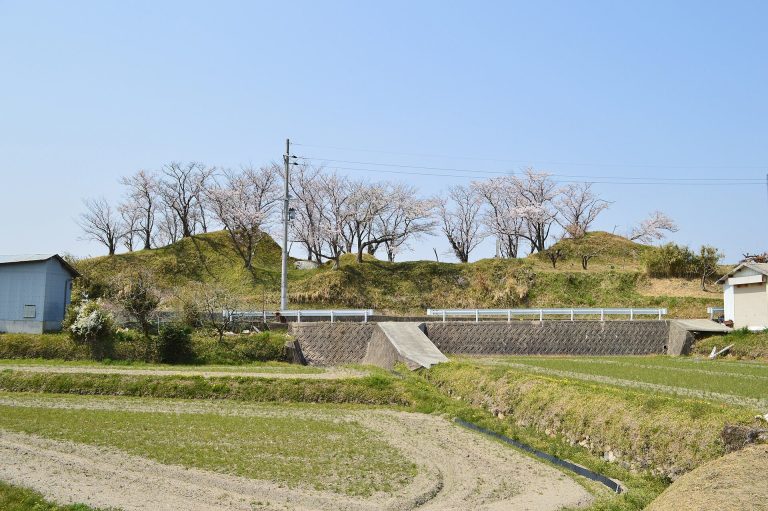
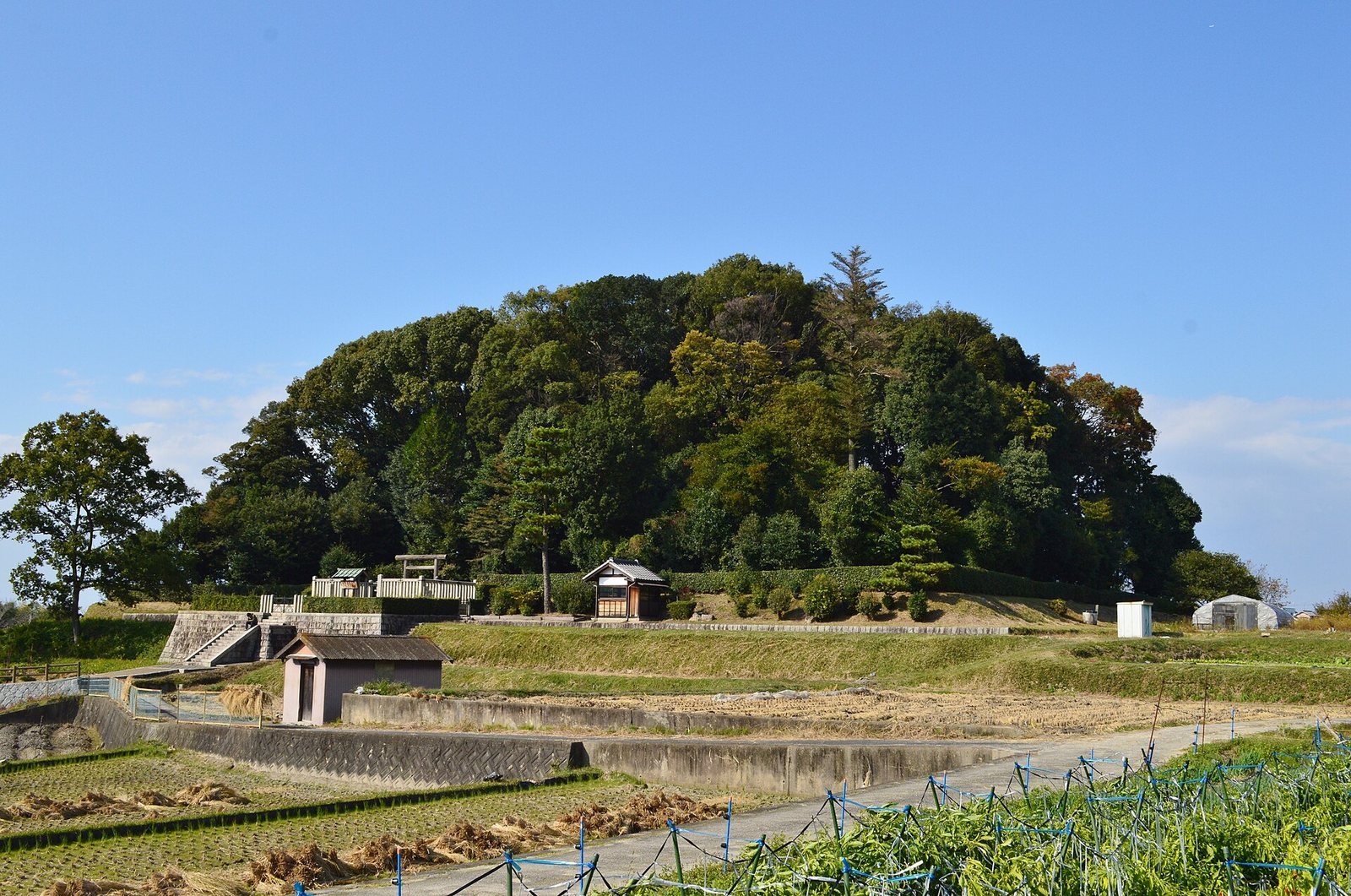
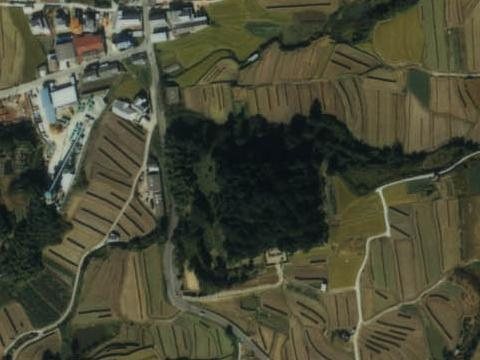
The mound stands at the western end of a plateau-like ridge extending from the Kongo Mountains, in Shinaga Valley at the foot of Mount Nijo. Its three tiers occupy the ridge, with a flat area to the south and a moat to the east and in front. Stone facing covers the mound’s exterior.
Mound and precinct
Three-tier mound
The mound rises 11 metres and is described as square or possibly rectangular. Its nearly square first tier measures 59 metres east to west by 55 metres north to south. The uppermost, third tier measures 34 by 25 metres, extends east to west, and has a particularly steep slope. The first tier’s present shape may reflect Edo-period repairs: it resembles the plan of Emperor Yomei’s mausoleum and may have been altered to follow that model. The tier may originally have been elongated east to west.
Southern forecourt and moat
A level, forecourt-like area lies south of the mound. Including this space, the mausoleum precinct measures 75 metres east to west by 72 metres north to south. The moat is 8 to 9 metres wide. A 1979 investigation found that its bank had been built later over rice fields.
Burial chambers and related mounds
Possible burial chambers
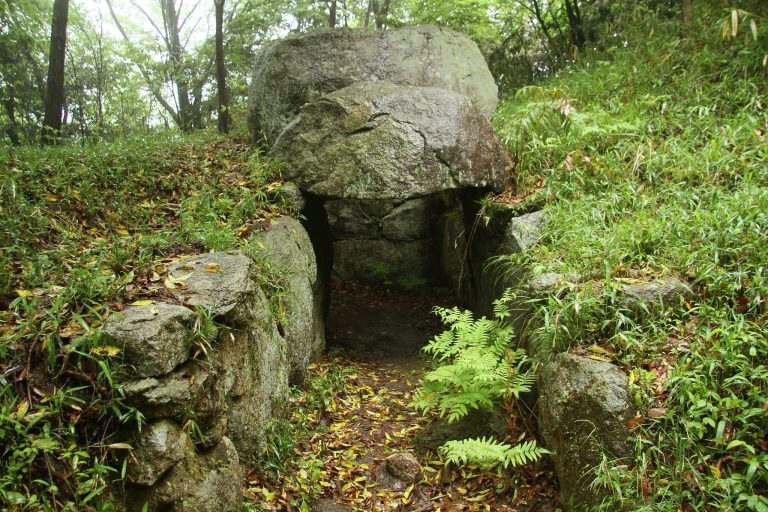
The mound’s east-to-west form has prompted the proposal that it contained two horizontal stone chambers, meaning burial rooms entered from the side, aligned east to west and opening south. Stone chamber materials were confirmed during a 2012 inspection. An older written description places two stone coffins in one chamber, identifying the coffin on the right as Suiko’s and the one on the left as Prince Takeda’s. The description does not specify which proposed chamber it concerns, and the contents attributed to the other chamber remain unresolved.
Parallels in Shinaga Valley
Two other kofun in the valley, one in Taishi’s Yamada district and another in Hamuro district, are described as rectangular or twin-square mounds. Their two-chamber arrangements and mound proportions are cited as parallels for interpreting Yamada Takatsuka.