Futagozuka Kofun: A Paired-Square Burial Mound in Japan
Site at a Glance
- Rating
- 3.6
- Popularity
- Very Low
- Country
- Japan
- Primary era
- Medieval
- External website
- Open
- Eras represented
- Medieval
- Civilizations
- Yamato
- Site type
- Burial
- Remains
- Burial Mound
On this page9 sections
History
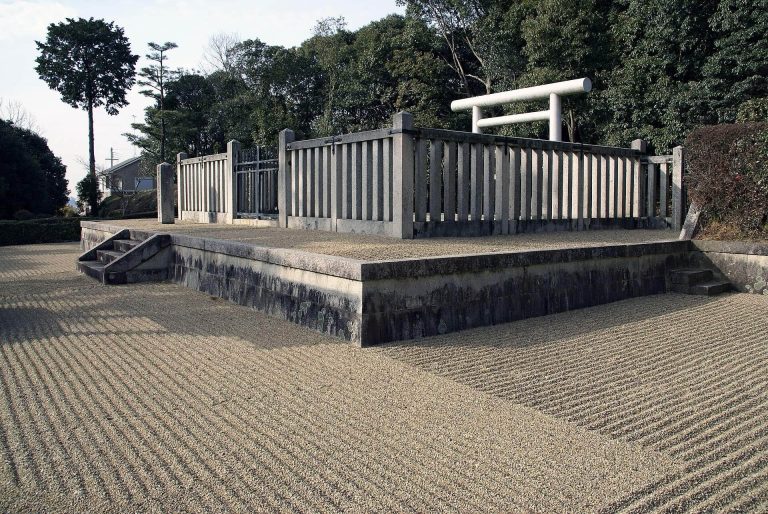
Futagozuka Kofun is a Japanese burial mound in Taishi, Osaka Prefecture, Japan, built during the seventh century at the end of the Kofun period and around the transition to the Asuka period. Its paired form makes it an unusual example within the Isonagadani Kofun Cluster, a group of about 30 mounded tombs in the area. Five tombs in the cluster have been designated as imperial tombs by the Imperial Household Agency, the institution that administers affairs of Japan’s imperial family and official imperial tombs.
Construction in the Seventh Century
The exact date of construction remains uncertain. Proposed dates extend from the first half to the latter half of the seventh century, a period when the Kofun tradition of building earthen burial mounds was reaching its end. The tomb’s two adjoining mounds may reflect changing funerary practices, including the increasing use of joint burials. One interpretation places construction of the east mound before that of the west mound.
The people buried at Futagozuka Kofun are unknown. A local tradition identifies it as the true joint burial place of Empress Suiko, who died in 628, and Prince Takeda, a member of Japan’s early imperial family whose date of death is uncertain. The Yamada Takazuka Kofun, roughly 200 meters to the west, is recognized as their current official joint tomb. Archaeological evidence has not established which tomb is the true burial place, and both are treated archaeologically as having imperial-tomb rank.
Looting and Archaeological Investigation
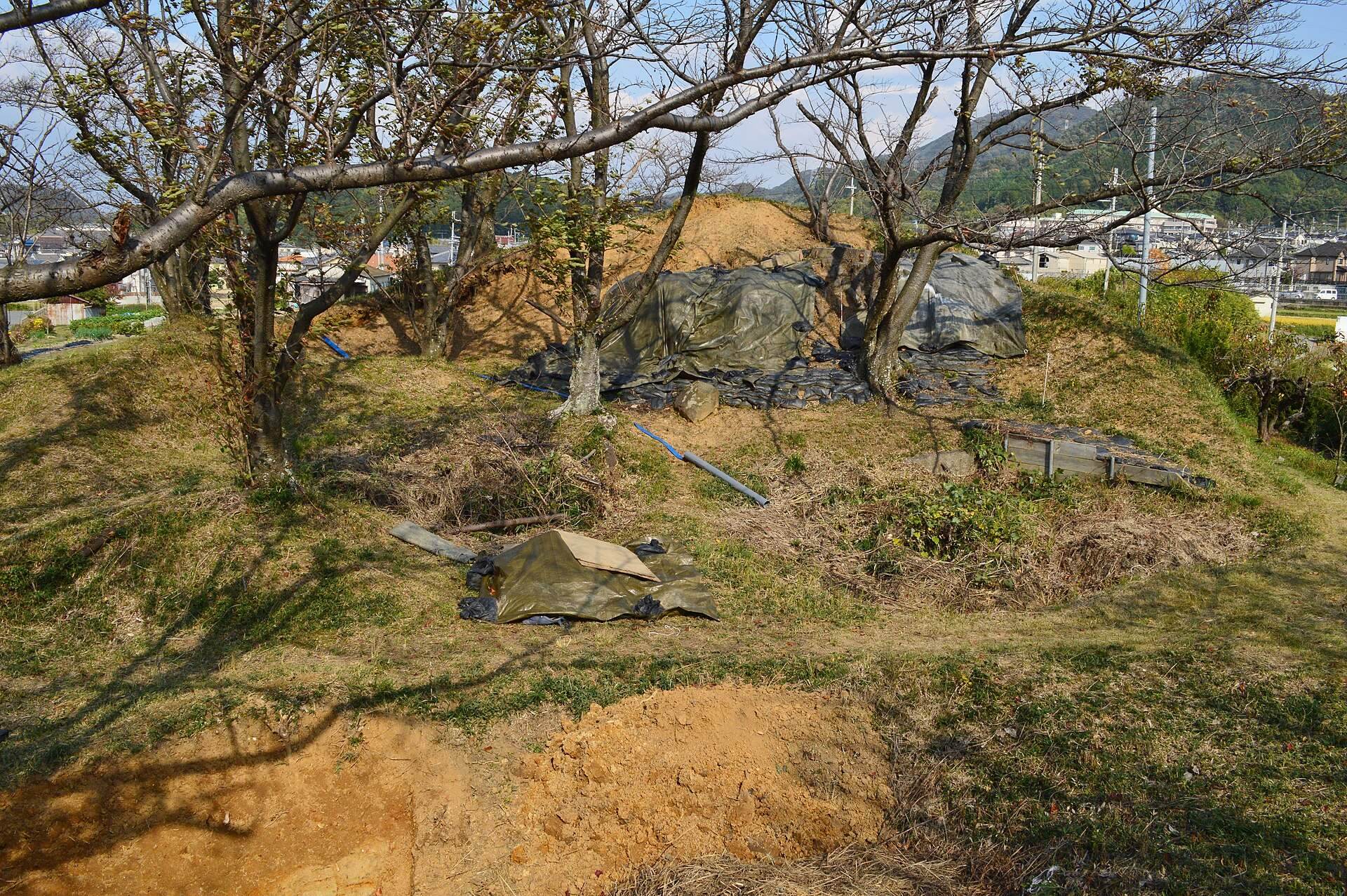
By the time the stone burial chambers and sarcophagi were discovered in 1915, the tomb had already been looted. Soil quarrying had also severely disturbed the central part of the mound. Investigations of the mound and its chambers took place after the Second World War and were published in 1958. Further excavations were conducted by Taishi’s education board during fiscal years 2016 and 2017.
Futagozuka Kofun became a National Historic Site in 1956, and the area protected under that designation was expanded in 2019. These measures preserve the mound and its associated archaeological features while maintaining its place within the wider Isonagadani cluster.
Remains
Mound and Setting
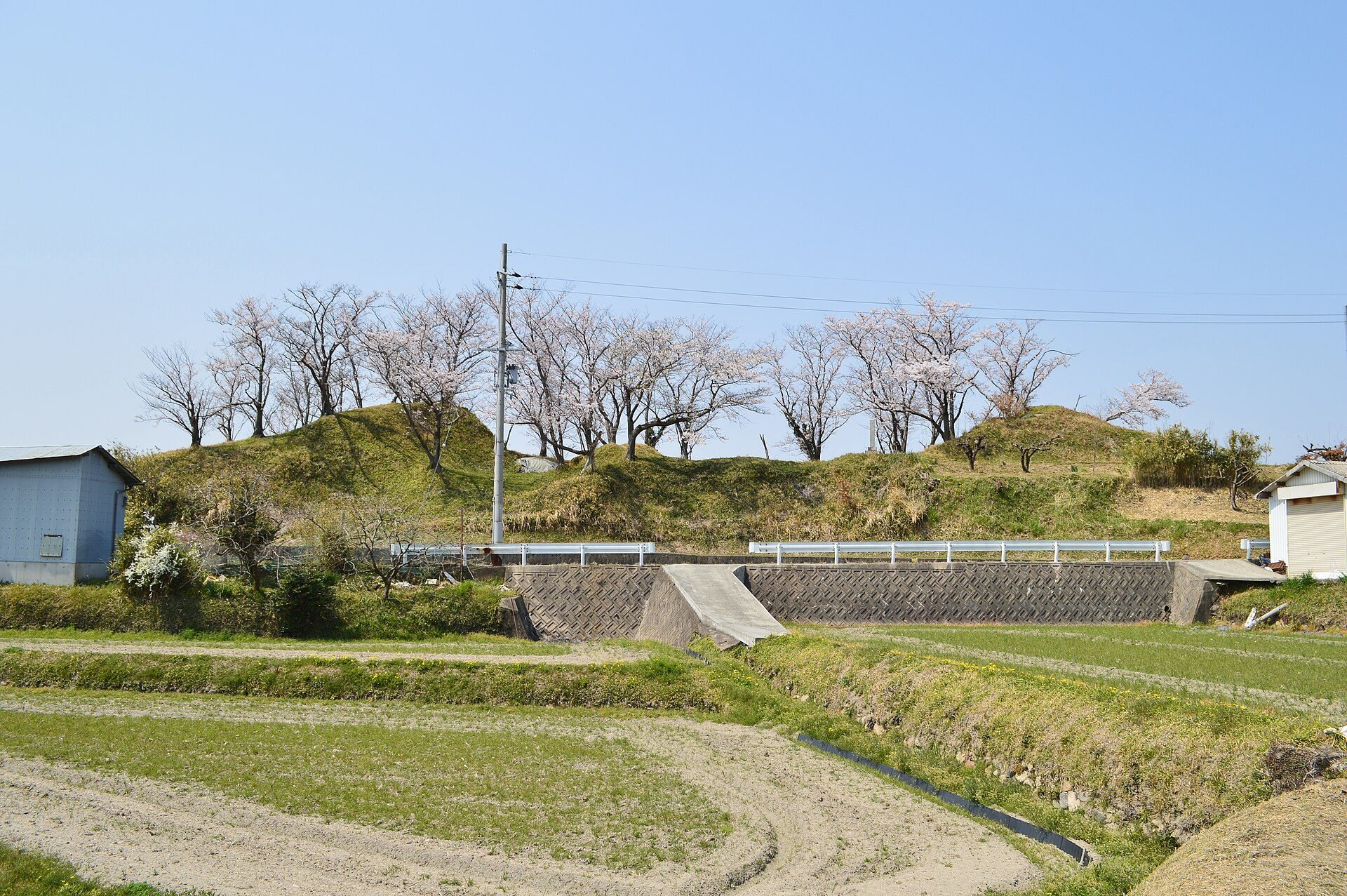
The tomb occupies a plateau-like hill extending from the Kongō Range at the foot of Mount Nijō, in the Isonagadani Valley of southeastern Osaka. It is a rare paired-square mound, or sōhō-fun, a burial mound formed from two adjoining square mounds. The east and west mounds are aligned along a northeast-southwest axis. Each is about 25 meters square, while the complete structure measures approximately 66 meters from east to west and 26 meters from north to south.
The mound was raised in three stages. Rammed-earth-like layers survive above the burial chambers, and the third stage forms a steep slope characteristic of construction at the end of the Kofun period. Paving stones have been found, and a moat surrounds the mound. A raised feature between the two mounds may have been a rectangular platform arranged along a north-south axis.
Burial Chambers and Sarcophagi
Stone Chambers
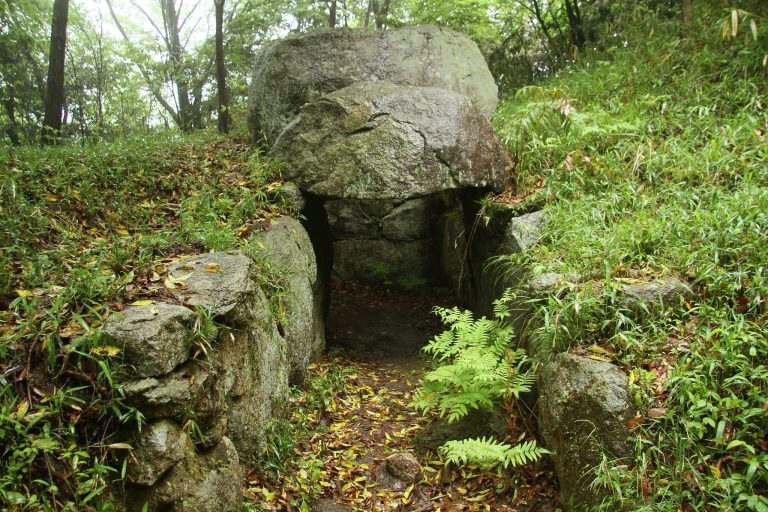
Each mound contains a nearly identical horizontal stone burial chamber. Both chambers open toward the southwest. Cut-stone-like blocks were set in two or three courses, with rubble packed into the spaces between them. Plaster covered the joints and interior surfaces. The passages are extremely short and were closed with rubble about the size of a human head.
House-Shaped Sarcophagi
Inside each chamber is a nearly identical hollowed-out stone sarcophagus shaped like a house. The coffins were made from tuff quarried from Mount Nijō and measure about 2.2 meters long, 1 meter wide, and 0.7 meters high. Their lids are semi-cylindrical. The projections intended for hanging ropes had deteriorated and are not present, giving the lids a simplified form. Robbers’ holes pierce the short ends of both sarcophagus bodies.
Surviving Finds
Looting greatly reduced the surviving grave goods. The remaining material consists of pottery fragments and iron nails. Among the pottery are fragments of a kettle-shaped vessel that may have been reused as an urn in a later period, together with small dish-shaped pieces. These finds, along with the chambers and sarcophagi, provide evidence for the tomb’s construction and later history.