Kitsui Shiroyama Kofun: A Burial Mound in Kashiba, Japan
Site at a Glance
- Rating
- 3.9
- Popularity
- Low
- Country
- Japan
- Primary era
- Classical
- Eras represented
- Classical, Medieval, Early Modern
- Civilizations
- Yamato
- Site type
- Burial
- Remains
- Burial Mound
On this page8 sections
History
Kofun-period burial
Kitsui Shiroyama Kofun is a burial mound in Kashiba, Nara Prefecture, Japan, built in the late fifth to early sixth century during the middle-to-late Kofun period, an era associated with the construction of large burial mounds. It belongs to the southern group of a larger burial-mound cluster. The person buried there has not been identified.
Because its scale is comparable to royal tombs of its time, proposals have named either Emperor Kenzō, traditionally numbered the 23rd emperor of Japan, or Emperor Buretsu, traditionally numbered the 25th. A more specific proposal identifies Kitsui Shiroyama as Kenzō’s southern imperial mausoleum and a neighboring mound as Buretsu’s northern mausoleum.
Fortification and modern investigations
A local clan reused the mound as a fortification from the medieval period into the early modern period. Excavations took place during repairs to the outer embankment in 1981–83, led by a prefectural archaeological institute. The town education board carried out further excavation during repairs in 1985, and an overview appeared in 1986.
A stone coffin lid found in a nearby river in August 1970 was designated a Kashiba City tangible cultural property in 1995.
Remains
Mound and enclosure
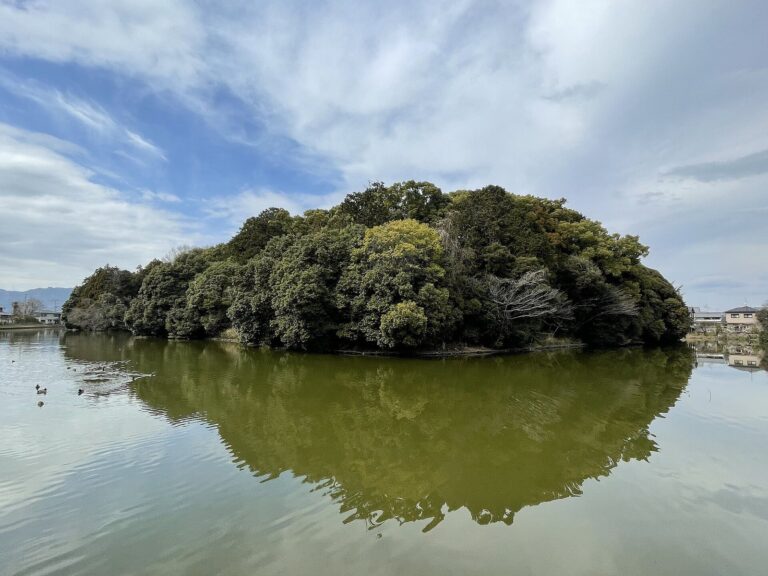
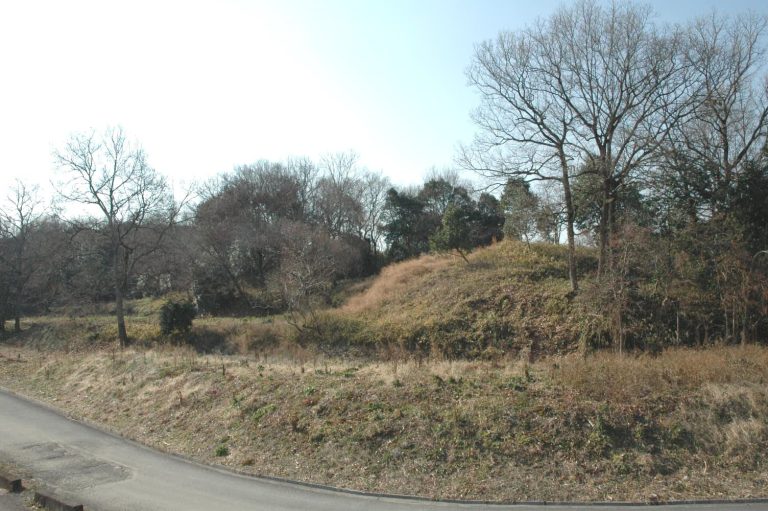
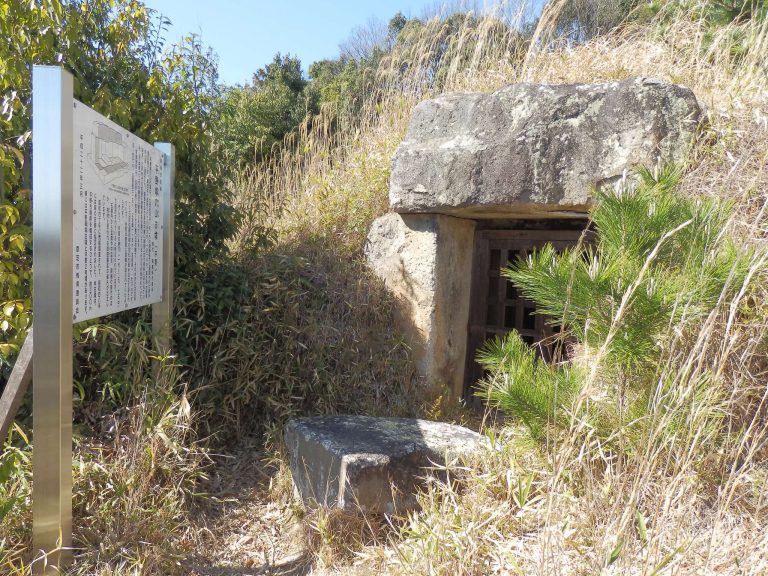
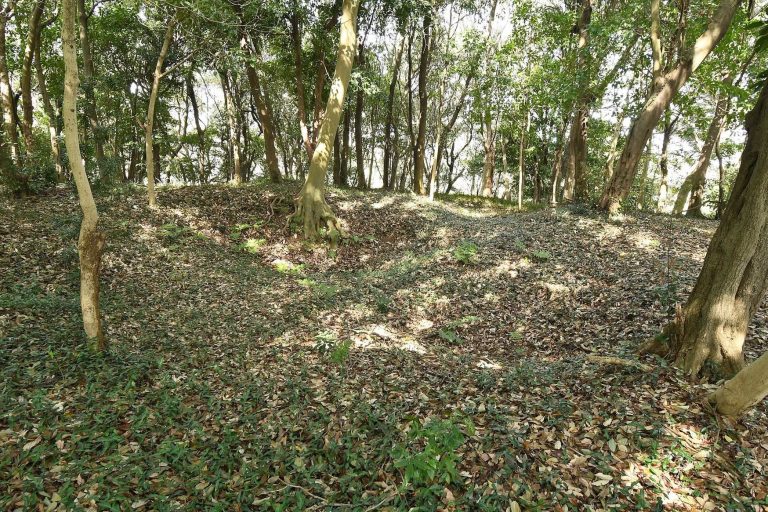
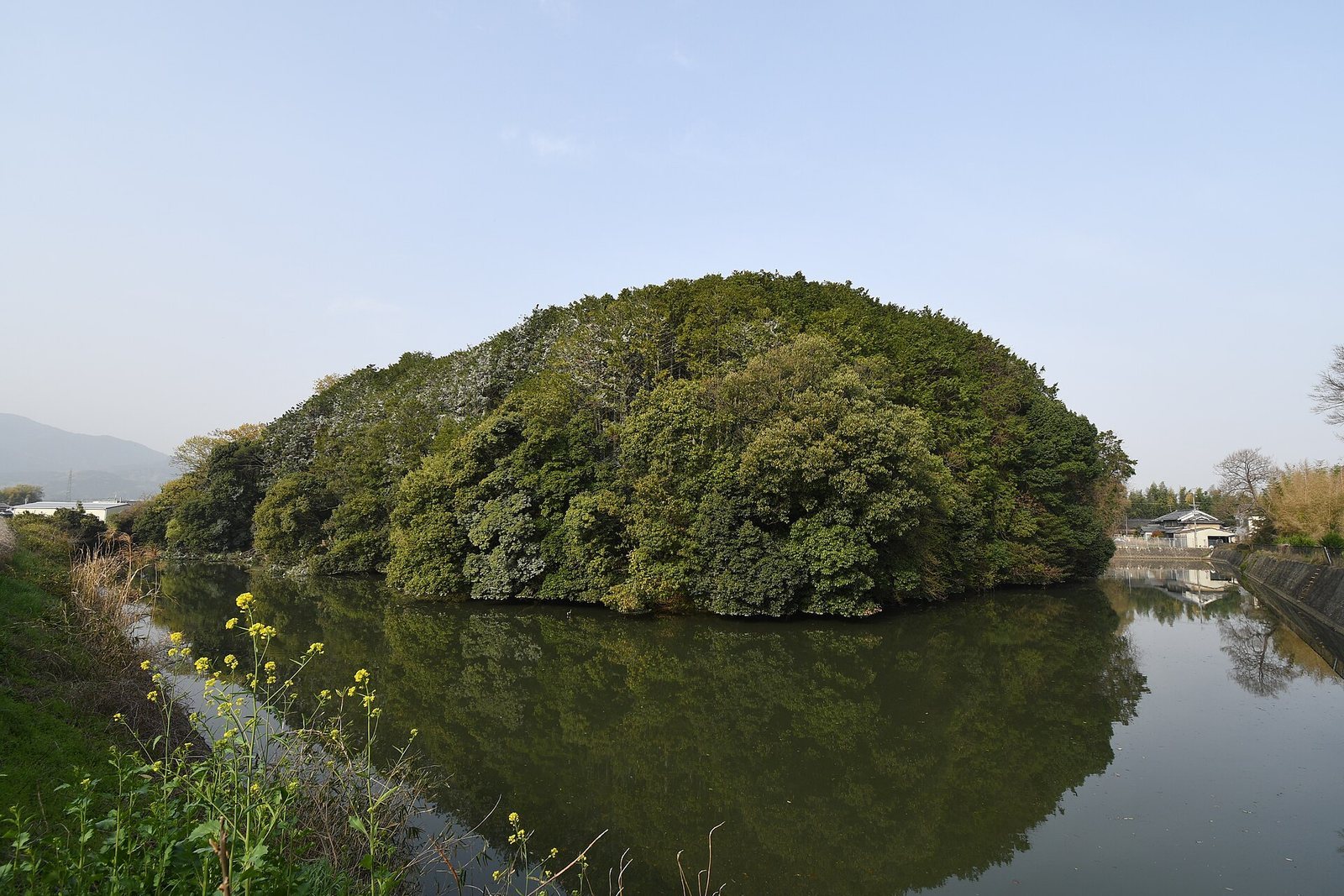
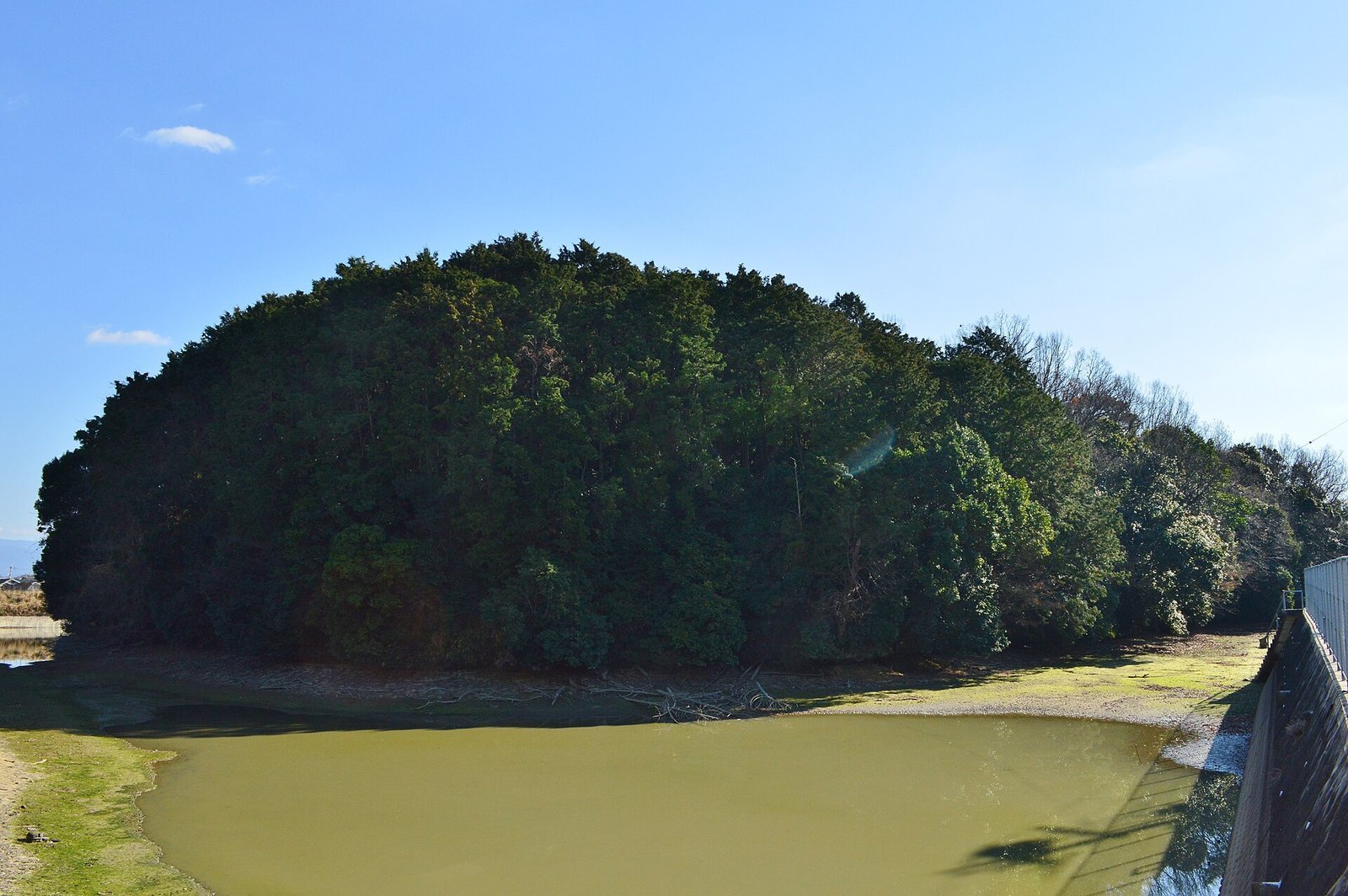
The mound stands on a plateau south of a settlement in western Nara Prefecture. It is keyhole-shaped, with a rounded rear section and a roughly rectangular front projection facing north. At about 140 metres long, it is the largest burial mound of its kind in Kashiba. A moat and outer embankment encircle it. On the north side, the moat is about 18 metres across; the embankment is about 18 metres wide and 4.5 metres high. Reuse as a fortification altered the mound’s shape. Stone facing survives on its exterior, along with fragments of cylindrical and morning-glory-shaped haniwa, clay objects associated with ancient Japanese burial mounds.
Burial-related finds
Coffin fragments and bead
The burial facility has not been identified. Fragments of a hollowed, long chest-shaped stone coffin collected near the mound suggest that this type of coffin may have been used there. A talc ornament in the shape of a comma, with smaller bead-like projections, was collected near the junction of the mound’s front and rear sections.
Stone coffin lid
The river-found lid measures 270 centimetres long and has raised projections for attaching ropes. Its stone came from the Kakogawa River basin in Hyogo Prefecture, rather than from nearby Mount Nijo. This difference in stone source has been considered relevant to the political circumstances of the period. The stone was once classified as rhyolitic welded tuff; later analysis identifies it as rhyolitic stratified hyaloclastite, a water-cooled fragmental rock. The lid is now held at a cultural center in Kashiba.