St. Severi (Kleinrettbach): A Gothic Church Rebuilt in 1733–1736
Site at a Glance
- Rating
- 3
- Popularity
- Very Low
- Country
- Germany
- Primary era
- Early Modern
- External website
- Open
- Eras represented
- Early Modern, Modern
- Civilizations
- German, Holy Roman Empire, Kingdom of Prussia
- Site type
- Religious
- Remains
- Church
On this page11 sections
History
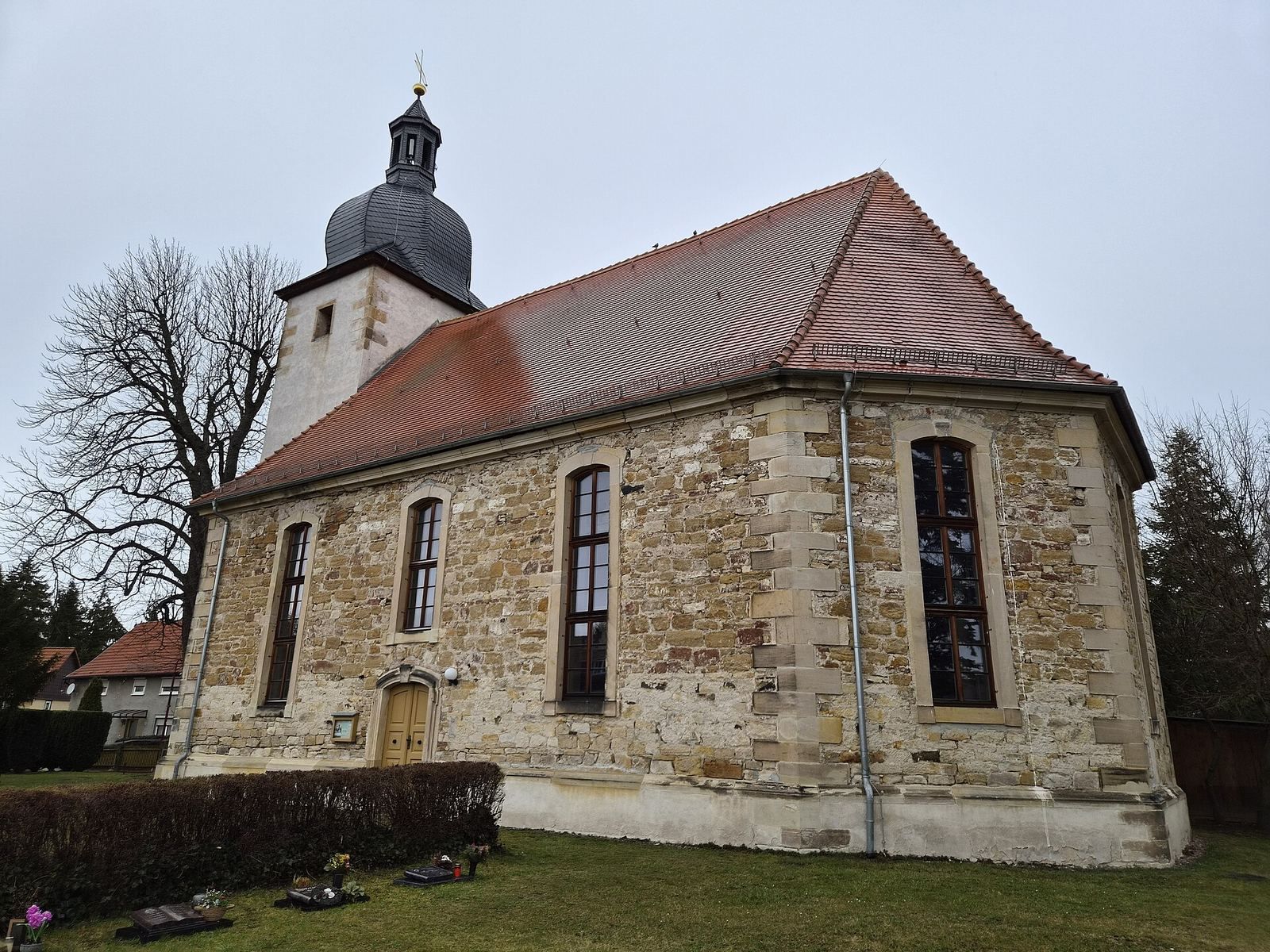
St. Severi (Kleinrettbach) is a church in Brühl, within Nesse-Apfelstädt, Germany, and a focal point of Kleinrettbach in Thuringia’s Gotha district. The Gothic church was rebuilt between 1733 and 1736 after an earlier building burned. It belongs to Frienstedt parish within the Evangelical Church in Central Germany, a Protestant regional church. Its name probably refers to Severus of Ravenna, a Catholic saint whose relics are now held at Erfurt’s Severi Church.
Chapel and earlier church
The church’s predecessor was a Catholic chapel dedicated to St. Gallus, an Irish monk and missionary venerated as a saint. During the Reformation, the 16th-century movement that led to the establishment of Protestant churches in Europe, the chapel became Protestant in the 1530s and remained in use until 1537. A later Gothic church is thought to have been built on the chapel’s foundations.
Fire and rebuilding
On the morning of 28 April 1722, a fire burned for about two hours and destroyed 41 houses, along with barns and stables. The church and its four bells were also lost. A replacement church was built between 1733 and 1736. Philipp Karl von Eltz-Kempenich, archbishop of Mainz and a prince-elector, a ruler entitled to help choose the Holy Roman Emperor, contributed 50 talers. He was then ruler of Erfurt, to which Kleinrettbach belonged. Duke Friedrich III of Gotha gave a further 12 talers.
Bells and organ
Three bells from the Schröder foundry in Erfurt replaced those destroyed in the fire, but one was cracked and the bells could not sound harmoniously. On 20 May 1855, bell-founder Meyer of Ohrdruf was commissioned to cast three bells using metal from the older ones. One bell was replaced in 1888 with a new casting from the Ulrich foundry at Laucha an der Unstrut. Two bells were surrendered to the arms industry in March 1917. The peal was restored on 29 November 1934 by bell-founder Wittrien of Erfurt, but two more bells were taken for military use in March 1942 and were not replaced.
The date of the earlier organ is unknown, though it is thought to have been made around 1736. It later became unplayable and was used as firewood. In the mid-19th century, organ builder Daniel of Walschleben installed a replacement. During the First World War, its tin pipes were requisitioned and replaced with tin-sheet pipes in 1927. The instrument remained playable into the 1960s; an electric blower was added in 1955.
Storm damage and conservation
During tower repairs from 5 to 12 July 1947, workers removed and repaired the tower finial. A time capsule inside it contained a school chronicle. Its contents led to an addition to the village chronicle covering 1928 to 1947. In 1981, a storm broke off the tower spire as it fell, badly damaging the church.
A winter church was added on the west side in 1987 to allow worship in cold weather. Shortages of money and materials then halted work on the building for 15 years. An association to preserve the village church was founded in 2002. Emergency stabilization followed that autumn, including the installation of an intermediate ceiling. Work in 2006 included reroofing the church, repairing parts of its roof structure, improving roof drainage, and undertaking stonework on the tower and nave. In 2010, a large section of the churchyard wall was covered again with roof tiles and repointed.
Remains
The church has a Gothic form and is arranged on an east-to-west axis. Its nave, the main space for the congregation, leads to a chancel, the area around the altar, with a three-sided eastern end. A narrower tower stands at the west and is crowned by a lantern, a raised structure at the top of a tower.
Tower and entrances
The tower is now 5.5 metres shorter than it was before the spire broke away. Parts were renewed with new timbers and covered with shingles in 1982. A gold-colored finial and weather vane were installed in 2009, recalling events of 1734. The lintel above a ground-floor tower doorway bears the date 1580, a clue to the proposed connection with the earlier chapel foundations. Over the north entrance, another lintel carries the Erfurt Wheel, the city’s coat of arms, and the date 1734.
Winter church and furnishings
Winter church
The winter church occupies the west side of the main building. It provides a worship space designed for use in cold weather.
Bell
One small bell remains. Weighing 116 kilograms and sounding the note E, it still calls the congregation to worship.
Organ
The organ has 17 stops, which control sets of pipes, two manual keyboards, and a pedal keyboard operated by the feet.