Wachsenburg Castle: A Medieval Hilltop Castle in Germany


Site at a Glance
- Rating
- 4.2
- Popularity
- Medium
- Country
- Germany
- Primary era
- Medieval
- External website
- Open
- Eras represented
- Medieval, Early Modern, Modern
- Civilizations
- German, Holy Roman Empire
- Site type
- Military
- Remains
- Castle
On this page24 sections
History
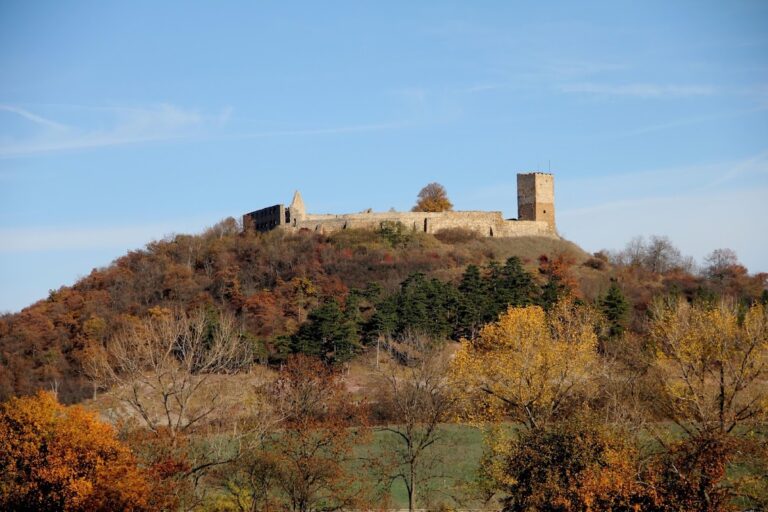
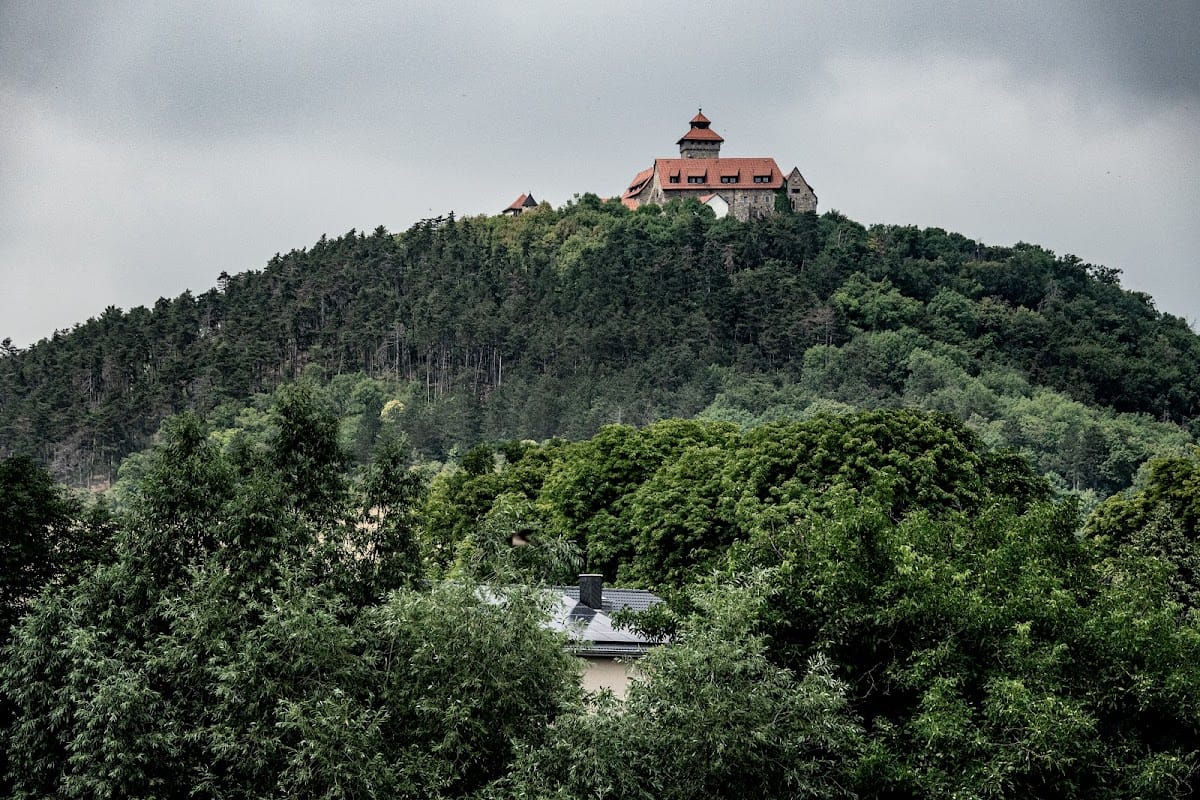
Wachsenburg Castle is a medieval hilltop castle in Germany, first fortified around 930 on the steep Wassenberg hill by the Imperial Abbey of Hersfeld to protect its possessions near Arnstadt. It forms part of the Drei Gleichen, a group of three castles on prominent hills in Thuringia, together with Gleichen and Mühlburg.
Hersfeld Origins and Medieval Conflict
The early fortifications served the Imperial Abbey of Hersfeld, a powerful ecclesiastical institution whose lands extended through the Arnstadt area. From 1090 to 1098, Hersfeld’s abbot Friedrich lived at the site and died there. He repaired and modernized the structure after it had suffered during feuds, although Wachsenburg still functioned more as a fortified estate than as a fully developed fortress.
Around 1100, the abbey transferred Wachsenburg to the Landgraves of Thuringia. In 1120, Saxon forces besieged imperial knights who were using the castle as a base for raids in Thuringia. Hunger eventually forced the defenders to surrender. The first documentary reference to the castle dates from 1140 and names the knight Adelher von Wassenburg.
Wachsenburg became involved in the conflicts between the Hohenstaufen and Welf factions at the end of the twelfth century. These were rival dynastic-political groupings within the Holy Roman Empire, a loosely organized central European political order in which rulers, princes, cities, bishops, and noble families competed for authority. A Welf-aligned Archbishop of Cologne established himself at the castle. In 1204, forces loyal to Philip of Swabia captured Wachsenburg.
Ownership then passed among the counts of Käfernburg and Orlamünde before the castle came to the Schwarzburg-Blankenburg family in 1306. Under Count Günther XII, Wachsenburg entered a prosperous phase. Strong stone walls and towers were constructed, and a residence regarded as luxurious by fourteenth-century standards was established within the complex.
Siege, Damage, and Administrative Reuse
Johann II of Schwarzburg sold Wachsenburg in 1366 to pay war debts. The city of Erfurt attempted to acquire it, but the castle passed to the Thuringian landgraves in 1369 and was pledged several times afterward. In 1441, it came into the possession of Apel Vitzthum the Elder of Roßla, a nobleman known as the “Devil and Firemaster of Thuringia.”
Erfurt, supported by the imperial cities of Mühlhausen and Nordhausen, besieged Wachsenburg in 1451. After four weeks, miners from Mansfeld undermined the castle’s shield wall, the especially strong defensive wall facing the most exposed direction. Its collapse compelled Apel Vitzthum to surrender. The damaged complex was not properly restored and gradually deteriorated.
By the seventeenth century, the masonry, roofs, and floors had decayed progressively. Duke Ernst I the Pious acquired Wachsenburg in 1640 and initially considered transforming it into a palace-like residence. In 1651, he ordered a 97-metre shaft to be drilled beside the castle gate. The resulting well reached groundwater and gave the complex a dependable water supply.
Plans made after the repairs proposed converting Wachsenburg into a correctional institution and orphanage, but this scheme was not fully carried out. Instead, a commandant’s office supervised a detention facility for military personnel. The last commandant died in 1856, after which prisoners were no longer brought to the castle. A castellan, an official responsible for a castle’s administration and defense, and an innkeeper moved into the complex in 1861.
Museum Building and Ducal Patronage
Later in the nineteenth century, the authorities decided to establish a military museum at Wachsenburg. The Wachsenburg Committee was founded in 1896 by Carl Ferdinand Grübel, Moritz Huppel, and Theobald Wolff, veterans of the Sixth Thuringian Infantry Regiment No. 95 in the Franco-Prussian War. Their initial aim was to present the German Wars of Unification from 1806 to 1871, but the project expanded into a collection of “patriotic antiquities” and regional history.
Duke Alfred of Saxe-Coburg and Gotha supported the undertaking with money and family possessions. After taking office in 1905, Duke Carl Eduard became its patron. The Wachsenburg Association, founded in 1907 under Captain Curt von Gillhausen-Gotha, managed and enlarged the collections. Extensive rebuilding followed, particularly between 1900 and 1913, turning the project into a museum of military, local, and national history.
The painter Eduard Fiedler of Apfelstädt directed the interior decoration from the beginning of the twentieth century. He created 471 designs, murals, portraits, paintings, postcards, and drawings for Wachsenburg, many of them concerned with the history of the castle and its region. The Knights’ Hall was reconstructed in 1934, and the artillery bastion was enlarged in 1938.
Until 1918, Wachsenburg was controlled by the Dukes of Saxe-Coburg and Gotha. It became property of the State of Thuringia in 1920, which undertook to preserve the castle and support the local-history museum housed there.
War, Occupation, and the German Democratic Republic
From 1941, three Wehrmacht soldiers operated a permanent air-observation post in the Hohenlohe Tower. During the Second World War, the castle suffered little direct damage. In early 1945, it became a depot for endangered cultural property from the Weimar art collections, including valuable holdings from the Weimar National Theatre.
US troops occupied Wachsenburg on 4 April 1945 while a white flag flew above the castle. Generals George Patton and Dwight Eisenhower met there, and a US Army garrison temporarily occupied the complex. After the American withdrawal from Thuringia under an agreement with the Soviet Union, Soviet forces arrived in early July 1945 and the castle entered the Soviet occupation zone.
Much of the museum collection disappeared during 1945. In January 1946, the Red Army removed the remaining military collection, and weapons and uniforms were later confiscated. Some historic artillery pieces were scrapped in Arnstadt, while a bronze gun barrel survived after being buried before the occupation. The Wachsenburg Association was dissolved after the war.
From 1947, surviving parts of the regional collection were displayed again in a local-history museum. Traditional clothing, household and work equipment, archaeological finds, and ethnographic material formed part of the displays. Collection administrator Franz Bonsack worked with state authorities and the occupation administration to establish the museum and preserve the remaining holdings. After his death in 1950, Cläre Werner directed it until her dismissal in 1962. The museum closed in 1965, and its remaining collections were transferred to museums in Arnstadt.
Repair and restoration work took place from 1964 to 1969. In 1966, the Arnstadt district established a hotel at the castle, together with a public restaurant. The hotel also served as a guesthouse for senior officials of the German Democratic Republic.
Restoration and Present Ownership
After German reunification, Wachsenburg returned to the ownership of the State of Thuringia in 1991, followed by extensive restoration. After a ten-year lease period, the castle, hotel, and restaurant were sold into private ownership from 2001. The owners initiated the reopening of a small New Castle Museum in the same year.
In 2003, the restored Chapel of Saint George in the ground floor of the Hohenlohe Tower was formally consecrated. That year, the Ordo Militaris Teutonicus Levantis, a self-described independent and secular hospitaller order with charitable aims, declared Wachsenburg its headquarters. The castle now functions as a privately operated hotel and restaurant and contains a small private museum.
Since 1996, the castle and its surrounding slopes have formed part of an 80-hectare nature reserve covering Wachsenburg hill, the Roter Berg, and adjoining land. The protected area includes forests, dry grasslands, warm-climate shrubs, and associated flora and fauna. The New Castle Museum was later reduced as the owners concentrated on hotel and restaurant operations, and much of the northern-wing display was removed around 2011.
Remains
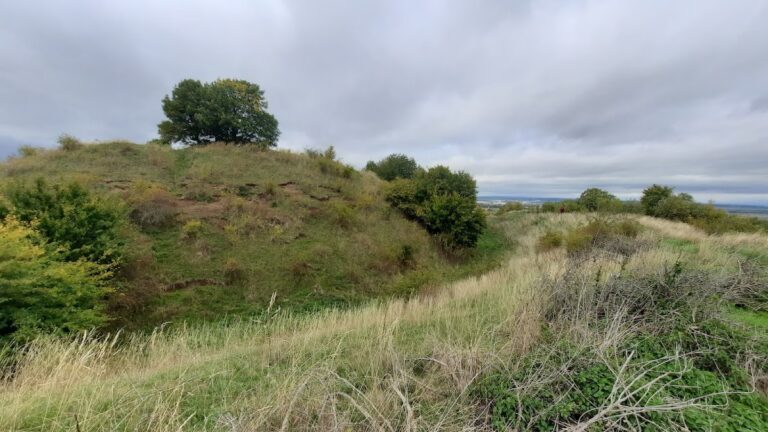
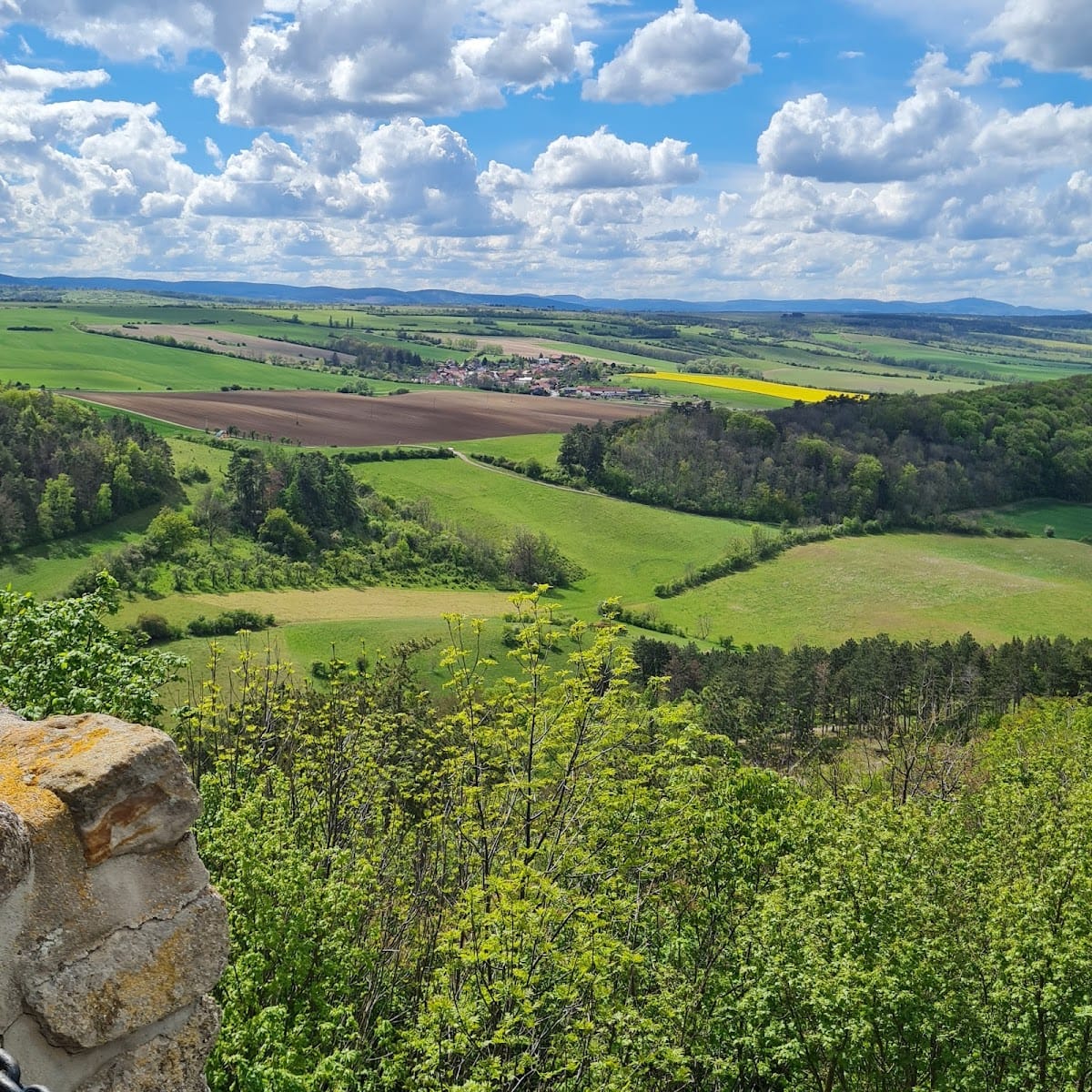
Wachsenburg is a summit castle at 420.8 metres above sea level, occupying one of the three prominent hills of the Drei Gleichen. Its central Upper Castle forms an irregular quadrilateral. Three residential wings and a tall square keep enclose a small courtyard, while a stone wall connects the keep to the adjoining buildings. Around this core, the Lower Castle, or outer bailey, extends around most sides except the north wing and is enclosed by a ring wall.
Upper and Lower Castle
Upper Castle and Keep
The Upper Castle was formerly the citadel and contains the principal residential and defensive elements of the complex. Its square keep rises within the irregular enclosure of the residential wings. The keep is joined to the surrounding buildings by a stone wall, preserving the compact arrangement around the inner courtyard.
Lower Castle
The Lower Castle surrounds the Upper Castle on most sides. Its ring wall enclosed storage buildings, a smithy, accommodation for soldiers and workers, and stables. The outer bailey therefore combined service, work, storage, and military functions around the more concentrated upper enclosure.
Historic Buildings and Water Supply
Well and Gate Area
The well beside the castle gate began in 1651. Its shaft was drilled to 97 metres, while the completed well is described as 93 metres deep and reaches groundwater. A special treadwheel raised water from the shaft until 1912, making the well an important element of the castle’s later infrastructure.
Knights’ Hall and Commandant’s House
The older surviving complex includes the Knights’ Hall building, also called the Pallas. A Pallas was the principal residential hall or palace building of a medieval castle. The 1664 New Building served as the Commandant’s House, while the Arrest House stood opposite it and retains limited masonry from the twelfth century. These buildings were repaired for use as museum galleries.
Hohenlohe Tower
The Hohenlohe Tower was built in 1905 as a new keep on the site or in the role of the former principal fortified tower. It is 30 metres high, with a consecration hall on the ground floor and three exhibition floors above. A roof-level gallery has 16 windows opening in all directions and functions as a viewing platform. Saint George’s Chapel occupies the ground floor and was formally consecrated in 2003.
Courtyards and Attached Buildings
A former kitchen building south of the Hohenlohe Tower was connected to the Commandant’s House. North of the tower, a gateway led into the inner courtyard, with a wall-walk above it. A wall-walk is a passage along the top of a defensive wall. Farther north, the small turret called the Thörlein provided access to another enclosed courtyard.
Rebuilt Defensive Features
Duke Carl Eduard Bastion
The west side of the inner castle was largely redesigned during the rebuilding campaign. The Duke Carl Eduard Bastion was completed in 1907 and enlarged in 1938. It served as an artillery hall and display area for historic guns.
Powder Tower and Defensive Tower
A small round powder tower was built in 1910 to store powder for ceremonial salutes. In 1913, a new defensive tower was erected west of the Hohenlohe Tower, primarily to improve the castle’s appearance from a distance. Its lower section used limestone slabs and its upper section was built in half-timbered form. Planned connections to the bastion and a gatehouse for the outer bailey were not completed because of the First World War.
Museum Collections and Interpretive Features
Military Displays
The former museum presented military clothing, uniforms, equipment, weapons, flags, standards, trophies, artillery, and siege tools. Much of the material concerned seventeenth- and eighteenth-century regiments of Saxe-Gotha-Altenburg, while the wider displays covered military history from the Thirty Years’ War to the First World War and included material relating to German forces and their opponents.
Captain Zachariae organized the artillery collection to illustrate the development of guns from the field gun to the heavy naval gun. Historic artillery was displayed in the open and in the Duke Carl Eduard Bastion. A diorama of the 1870 Battle of Wörth in Alsace contained approximately 4,000 tin figures of soldiers and officers and emphasized the participation of troops from the Duchy of Saxe-Coburg and Gotha.
Regional and Dynastic Collections
Other former displays included a 1914–1918 war-relief exhibition, the Duke Alfred Collection of weapons and ethnographic objects from Asian, African, and Pacific cultures, and a German colonial section. The regional collection included peasant furniture, household goods, tools, crafts, and traditional clothing. Its oldest objects dated from the seventeenth century.
The castle also held portraits of Ernestine Wettin dukes and their wives, a decorated dynastic genealogy, heraldic arms of German ruling families, historical paintings by J. H. Schneider von der Gleichen-Sage, and historical images and murals by Eduard Fiedler. Eight murals in the south room of the Knights’ Hall were destroyed during the East German period, while photographs taken in 1952 preserve their appearance.
Special Exhibits and Surviving Objects
A state carriage made in 1808 for the Duke of Gotha was displayed under the nickname “Totenkopf,” meaning “death’s head,” because of its unusual shape. An exhibition devoted to the writer Gustav Freytag was installed on the upper floor of the Hohenlohe Tower from 1906. The associated room retained original furniture from his house in Siebleben. Around 1870, Freytag wrote the chapter “Nest of Wrens,” concerning Mühlburg, at Wachsenburg.
The surviving bronze barrel of a historic gun was displayed in the military-history exhibition on the Petersberg in Erfurt in 1993, and a carefully made replica carriage was added in 2013. Some historic uniforms returned from the Soviet Union in 1966 and were transferred to the collection of the German Historical Museum in East Berlin.
New Castle Museum
The New Castle Museum opened in September 2001 in the north wing and Hohenlohe Tower. Its first displays consisted of objects privately owned by the castle’s proprietors. Additional rooms were later assigned to the museum, while much of the northern-wing display was subsequently removed or made inaccessible.
Protected Slopes
The nature reserve around Wachsenburg includes steep, rugged slopes, forests, semi-dry and dry grasslands, warm-loving scrub, and fields. Protected species found in this landscape include the blue-winged grasshopper, smooth snake, Lorraine flax, pheasant’s eye, and sand lizard.