St. Isidore’s Collegiate Church: A Baroque Church in Madrid
Site at a Glance
- Popularity
- High
- Country
- Spain
- Primary era
- Early Modern
- Eras represented
- Early Modern, Modern
- Civilizations
- Habsburg, Habsburg Spain, Spanish
- Site type
- Religious
- Remains
- Church
On this page16 sections
History
Jesuit foundation and construction
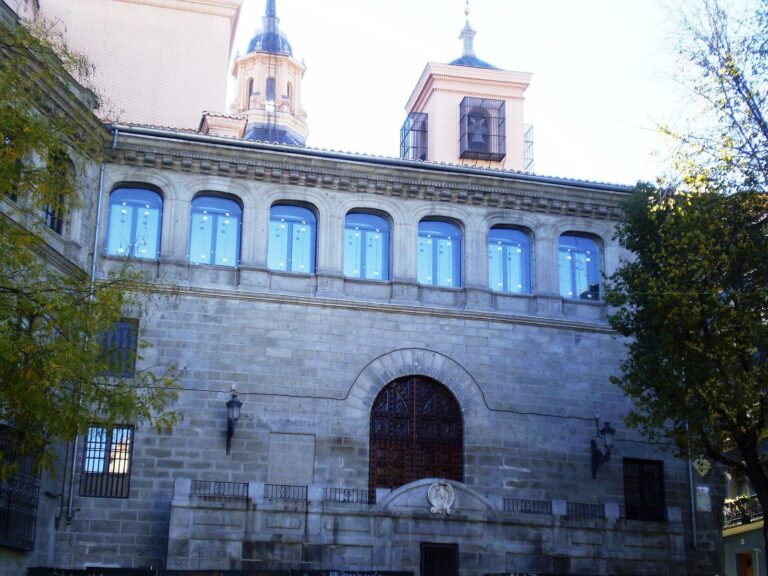
St. Isidore’s Collegiate Church, served by an organized body of clergy, is a Baroque church in Madrid, Spain. Jesuit architect Pedro Sánchez designed it in 1620, and construction began in 1622 as a church for the Society of Jesus, the Catholic religious order commonly called the Jesuits. The project replaced a sixteenth-century parish church dedicated to Saints Peter and Paul; that church and an earlier Imperial College were demolished to make way for the new building. Maria of Austria left her fortune to the Jesuits in her will to support its construction.
After Sánchez died in 1633, Francisco Bautista and Melchor de Bueras carried the work forward until the church was completed in 1664. It was consecrated on 23 September 1651, while construction was still underway, and was first dedicated to Saint Francis Xavier, a Jesuit missionary.
Collegiate church and cathedral
King Carlos III ordered the Jesuits expelled from Spain in 1767. The church then became a collegiate church and, in 1769, was rededicated to Saint Isidore the Laborer, Madrid’s patron saint. Relics of Isidore and his wife, Santa María de la Cabeza, were brought from the Church of Saint Andrew. Architect Ventura Rodríguez reshaped the interior for the new dedication, including a redesigned altar area and high altarpiece.
When the Diocese of Madrid was established in 1885, the church became the city’s provisional cathedral, serving in that capacity until the Almudena Cathedral was completed in 1993. On 18 April 1886, Madrid’s first bishop, Narciso Martínez Izquierdo, was shot on the church steps and killed by the priest Cayetano Galeote.
War damage and later history
In 1936, early in the Spanish Civil War, Republican-aligned groups set fire to the church. The blaze destroyed many artworks and badly damaged the building. A renovation in 1941–42 was followed by a broader restoration that continued for two decades, with the aim of recovering original features. Work carried on into the 1960s under architect Javier Barroso.
In 1993, the church returned to collegiate status when the Almudena Cathedral was completed. Images of the Virgin Mary and Saint Isidore, along with the Holy Christ of the Good Death by Juan de Mesa, were transferred there. Since 1978, St. Isidore’s has been the official church seat of a brotherhood associated with the Sevillian devotions to Jesus of Great Power and Our Lady of Hope of Macarena. Its Holy Week procession leaves on the evening of Maundy Thursday, and a procession honoring Saint Isidore takes place on 15 May, Madrid’s patronal feast day. The church is Catholic, belongs to the Archdiocese of Madrid, and is served by secular, or diocesan, clergy. It holds the honorary title of minor basilica and is protected as a Spanish Asset of Cultural Interest.
Remains
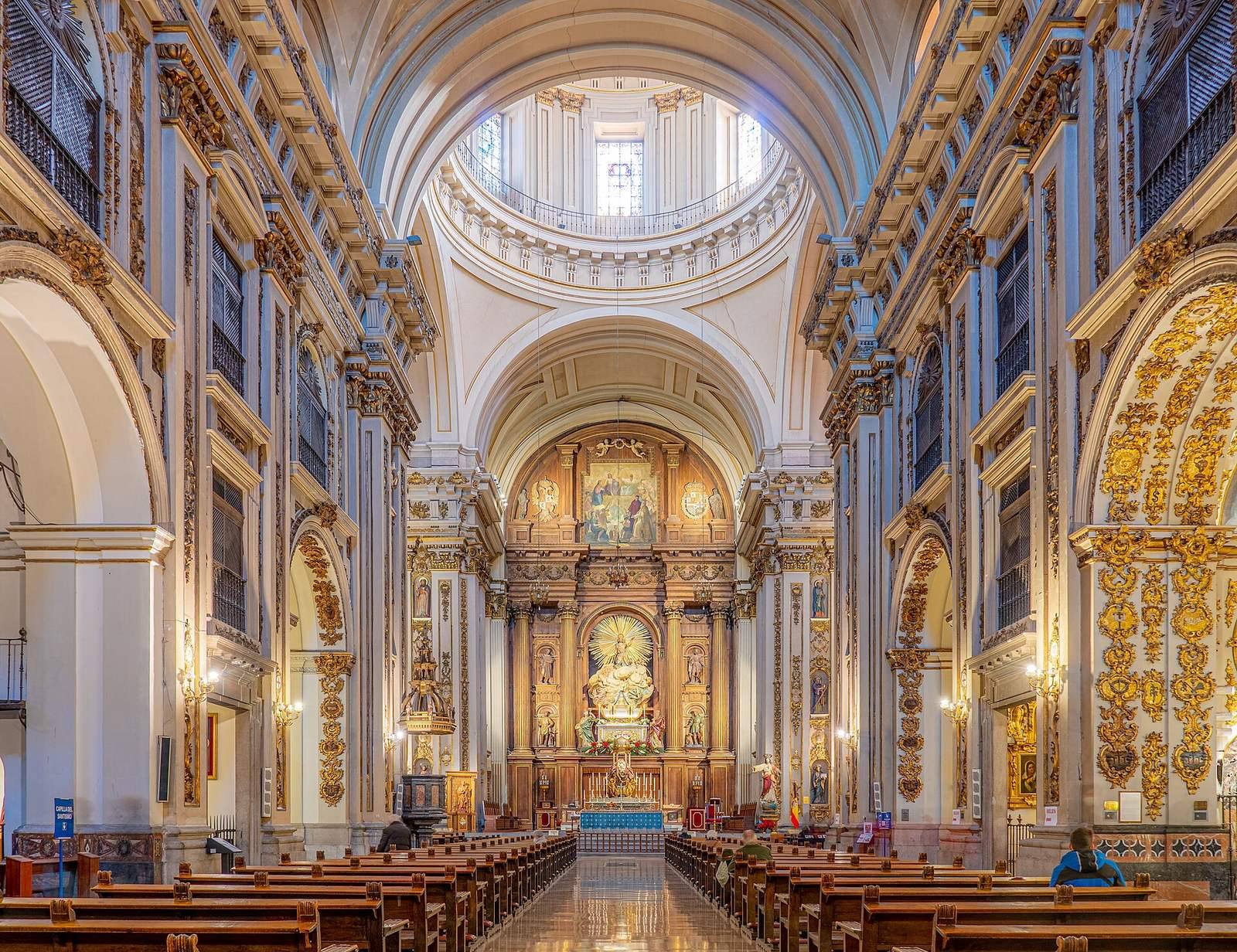
The church follows the Baroque model of Rome’s Church of the Gesù. Its cross-shaped plan has one main nave, side chapels, a crosswise arm, and a dome above the point where the arms meet.
Exterior and dome
Main façade
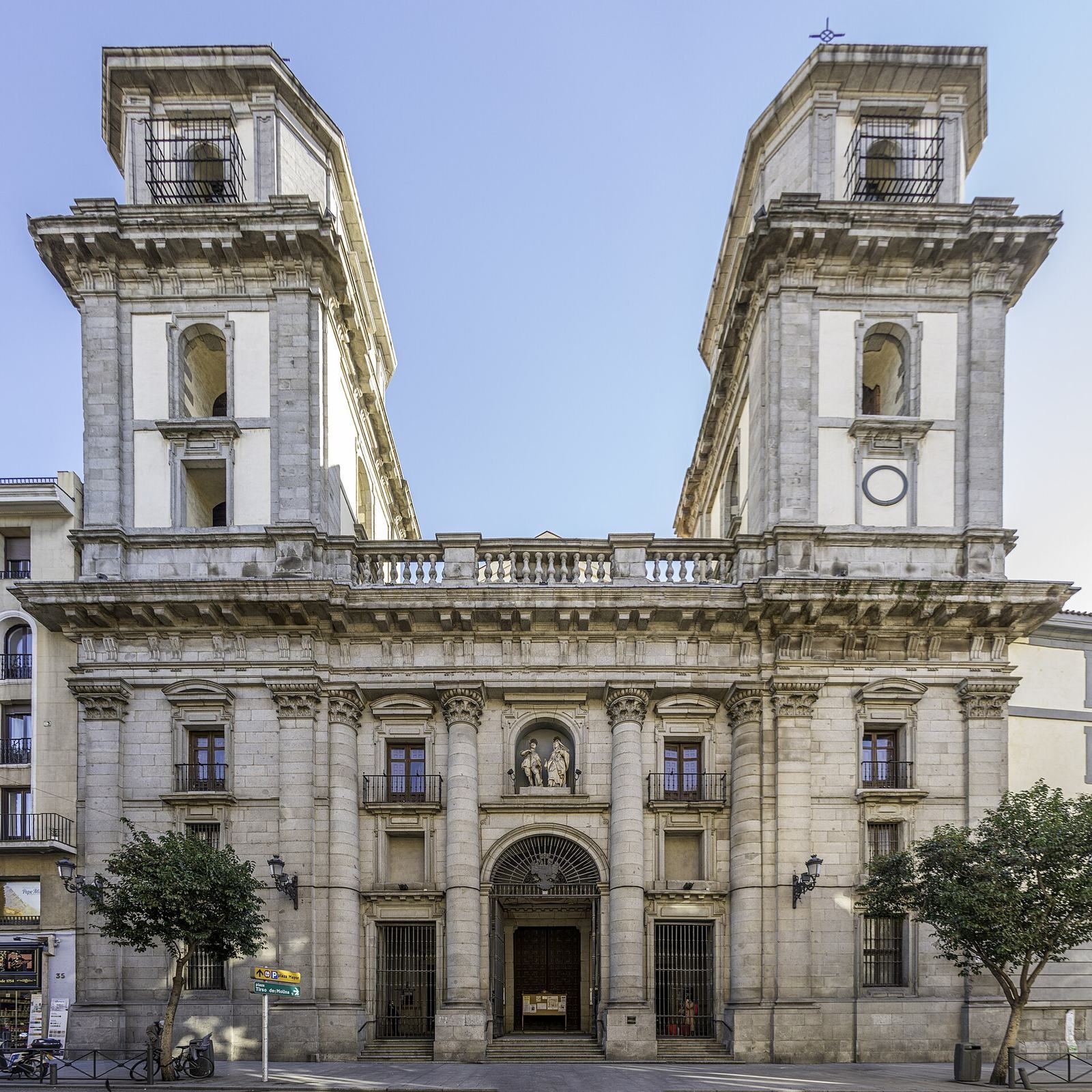
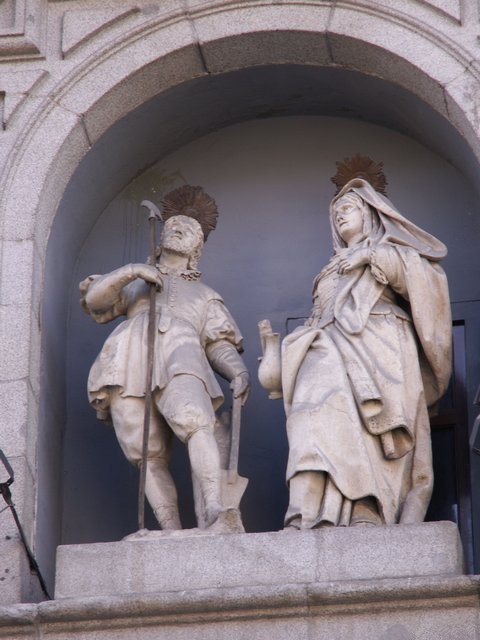
The monumental granite façade faces Calle de Toledo. Its central section has four Corinthian columns, a classical form with ornate, leaf-patterned capitals. Their tops feature paired rows of carved leaves and egg-shaped mouldings. A sculptural group showing Saint Isidore and Santa María de la Cabeza stands above the portal. Two pairs of flat, column-like supports flank the central section and align with the towers.
The façade has two square towers with intermediate levels marked by open railings. Their eight-sided spires end in pointed tips and were added during a twentieth-century renovation.
Dome and roof
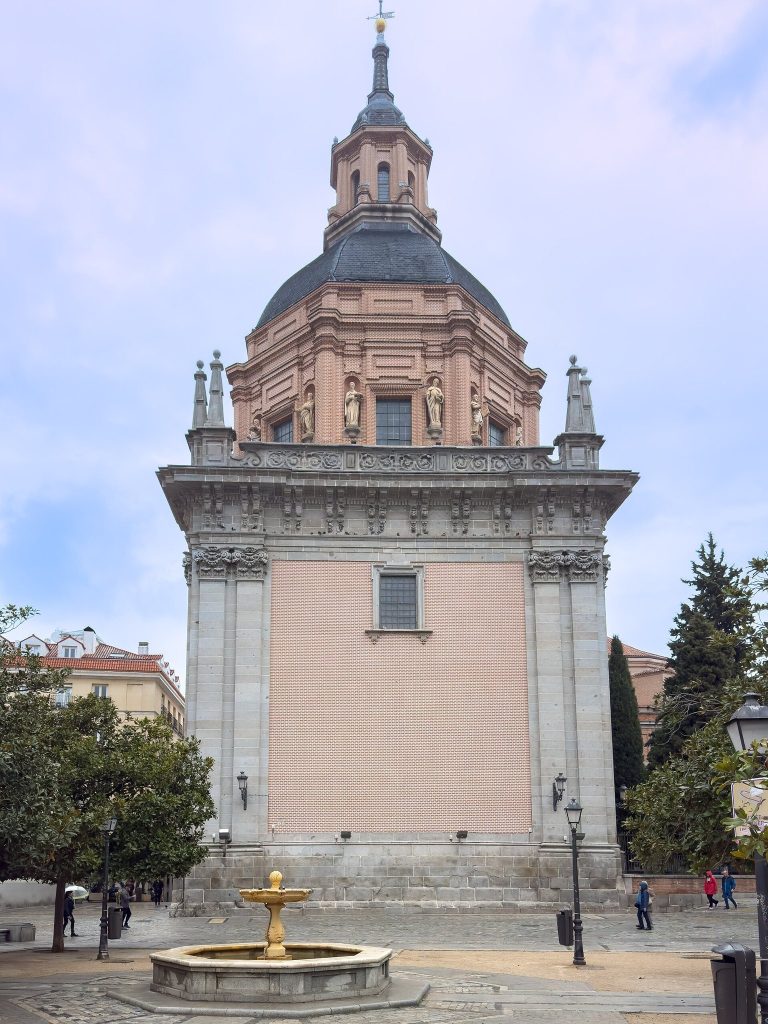
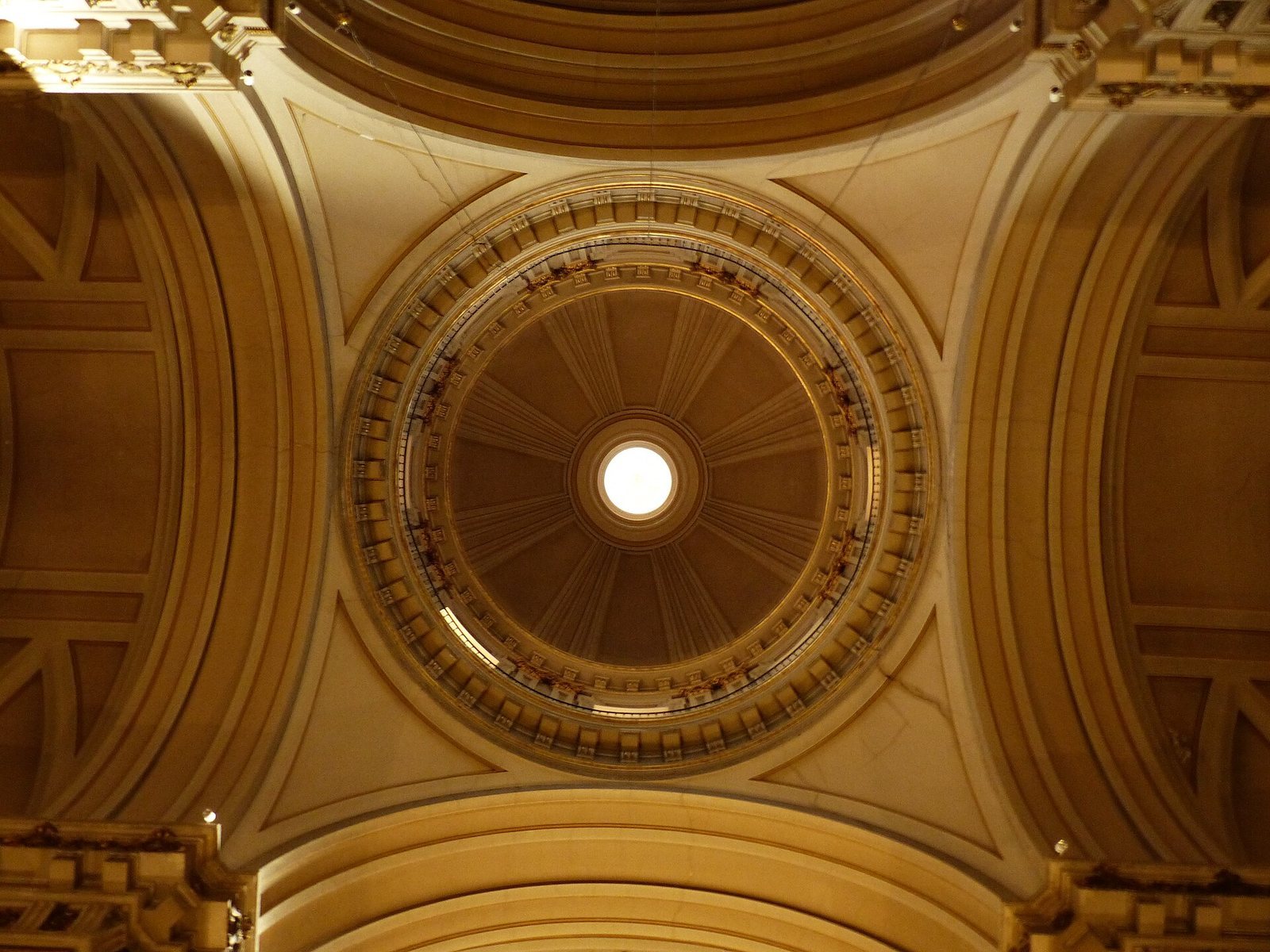
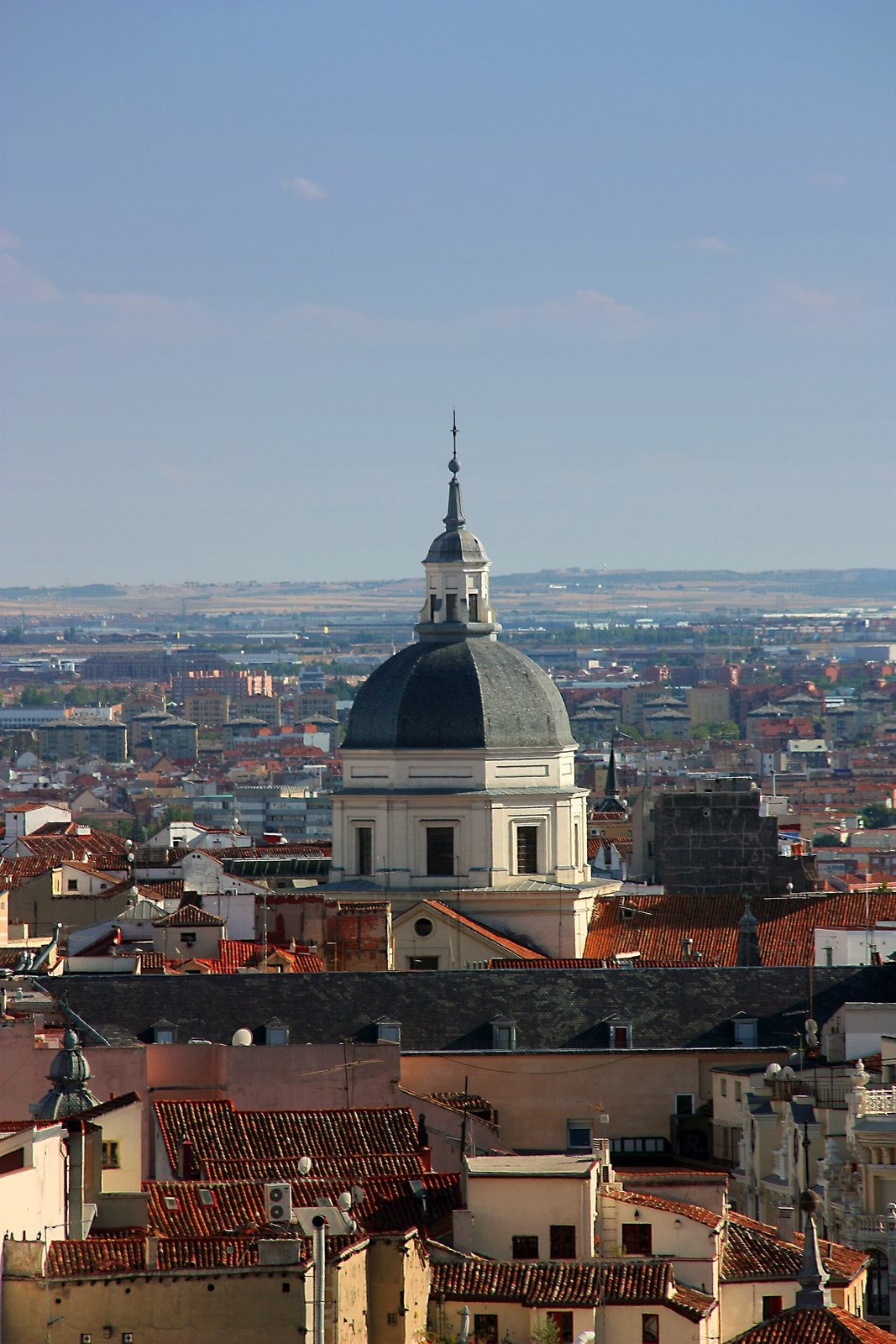
Francisco Bautista designed a lightweight dome of the kind known as a false dome, made from a timber frame covered in plaster. It was the first Spanish example of this construction, which could rest on relatively thin walls and lower building costs. The technique was soon adopted in other seventeenth-century buildings in Madrid. The dome’s shell and lantern collapsed in the 1936 fire; the other roof coverings are original.
Altarpieces and chapels
High altar and relics
The present high altarpiece reproduces the form of Rodríguez’s design, which was lost in the fire. Sculptures and paintings in the original included works by Manuel Pereira, Juan Pascual de Mena, and Anton Raphael Mengs. José Lapayese and Félix Granda made the replica. A sarcophagus containing Saint Isidore’s relics survived the fire, and relics of Isidore and his wife, kept in funerary urns at the high altar, were also saved.
Pilar Chapel and transept paintings
The Pilar Chapel altarpiece holds two paintings by Sebastián Herrera Barnuevo, The Holy Martyrs of Japan and The Holy Family. Other surviving works include paintings by Francisco Ricci, among them The Conversion of Saint Francis Borgia, placed in an altarpiece in the left arm of the crosswise section.
Great Power Chapel
The chapel dedicated to Jesus of Great Power has an ornate Baroque altarpiece and decoration to which Claudio Coello and Francisco Ricci contributed.
Chapel of the Dormition
This chapel contains a painted altarpiece from the sixteenth century. Its lower section, called a predella, includes a sculpted seventeenth-century relief of the Dormition of Mary, the Christian tradition of her death as a falling asleep.
Other interior features
Pulpit
Opposite the altar area stands a pulpit made from marbles of different colors.
Restored Marian chapel
A restored chapel honors Mary under her Mount Carmel title and is also known as the Chapel of the Sailors. The United Kingdom’s coat of arms appears above its altar.