St Botolph-without-Bishopsgate: A Parish Church in the City of London
Site at a Glance
- Popularity
- High
- Country
- United Kingdom
- Primary era
- Early Modern
- Eras represented
- Medieval, Early Modern, Modern
- Civilizations
- Anglo-Saxon, British
- Site type
- Religious
- Remains
- Church
On this page15 sections
History
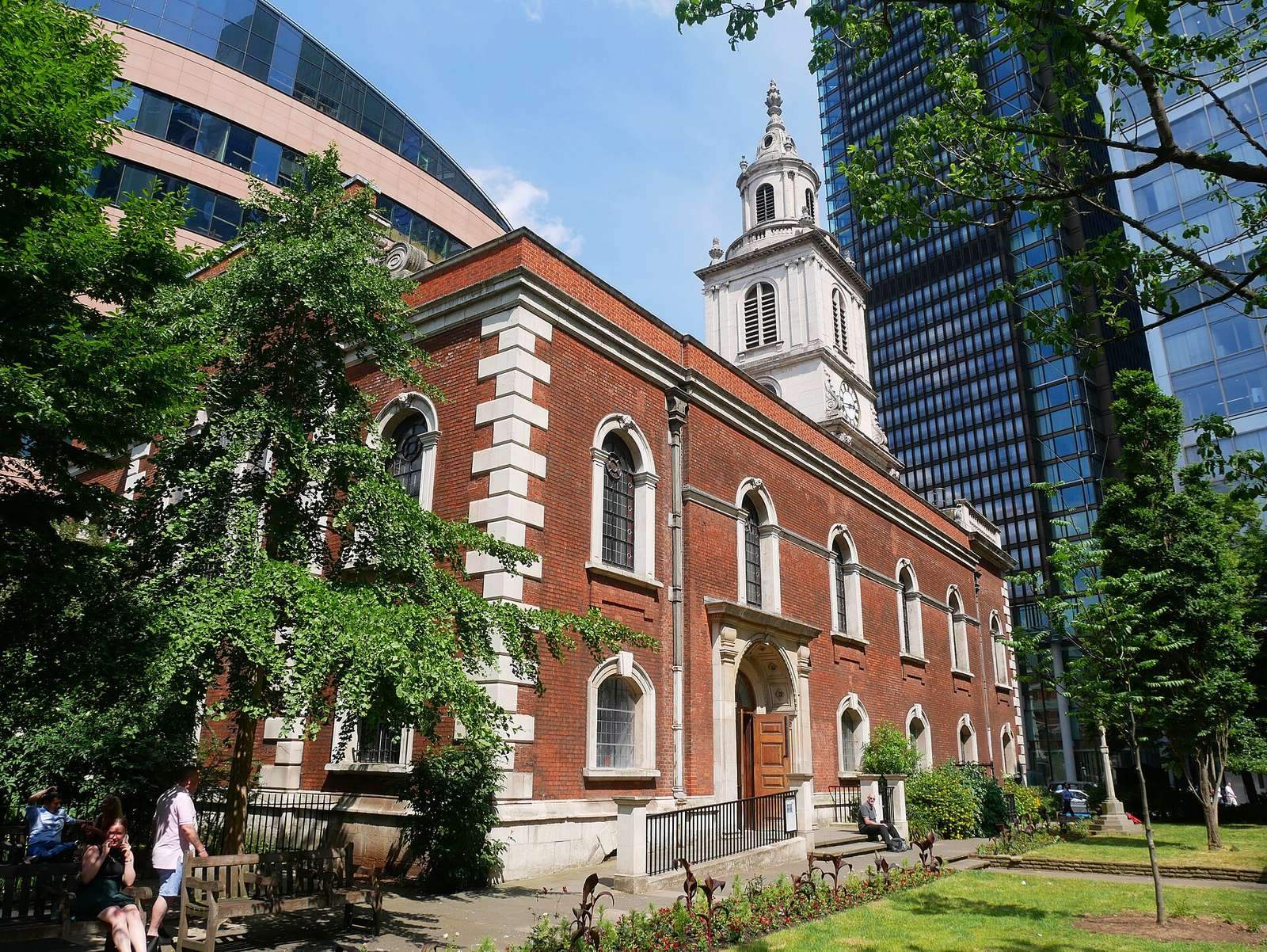
St Botolph-without-Bishopsgate is a parish church in London, United Kingdom. The present building is a Georgian church in the classical style, built from 1725 and completed in 1729 as the fourth church on the site. Christian worship here may have begun in the Roman period, although this origin remains unproven. The church is first recorded in writing in 1212, when William Allen, a London mayor born in the parish, paid for repairs.
Early worship and the medieval parish
The church was one of four medieval London churches dedicated to St Botolph, also known as Botwulf, a seventh-century East Anglian saint. By the late eleventh century, Botolph was associated with boundaries and, in turn, with trade and travel. Travellers especially venerated him before the legend of St Christopher became popular. The church near Aldgate is believed to have been London’s first dedication to Botolph, with the other three following soon after.
Around 1307, the Knights Templar, a medieval religious and military order, were investigated at the church on charges of corruption. In 1413, a woman hermit living there received an annual pension of 40 shillings from the sheriff. The church remained within the Roman Catholic Church until 1534. It is now a Church of England parish in the Diocese of London, and an Antiochian Orthodox parish also holds services there with the rector’s permission. The church has associations with the Worshipful Companies of Coopers and Bowyers, historic London trade companies.
The church narrowly avoided the Great Fire of London in 1666. To stop the flames spreading to it, the sexton’s house was partly demolished.
Eighteenth-century rebuilding
Parishioners petitioned Parliament in 1710 to have the church rebuilt elsewhere, but the proposal did not proceed. In 1723 the building was judged irreparable, and Parliament authorized a new church. A temporary church stood in the churchyard while the old one was demolished in 1725. The first stone of the replacement was laid that year. It was consecrated in 1728, with construction finished in 1729.
Parish records and later events
The parish registers survive in a complete series from 1558. Edward Alleyn, an Elizabethan actor, was baptised at the church in 1566. Emilia Lanier, a poet, was baptised on 27 January 1569 and married Alfonso Lanier there on 18 October 1592. The writer Mary Wollstonecraft was baptised in 1759, and the poet John Keats in 1795. The infant son of playwright Ben Jonson was buried in the churchyard.
The churchyard cemetery was converted into a public garden, the first such conversion of a City of London cemetery. The change prompted protests. The church was designated a Grade II* listed building on 4 January 1950.
Bombs damaged the church in 1992 and 1993. The 1993 Bishopsgate bombing, carried out by the Irish Republican Army, brought down the roof and destroyed windows and doors. Restoration took three and a half years, and a thanksgiving service was held in January 1997.
Remains
The site brings together a Georgian classical church, its churchyard and adjoining buildings. It stands on the west side of Bishopsgate, outside the former eastern wall of the City of London, in the area historically called Bishopsgate Without.
Church fabric
The Georgian church
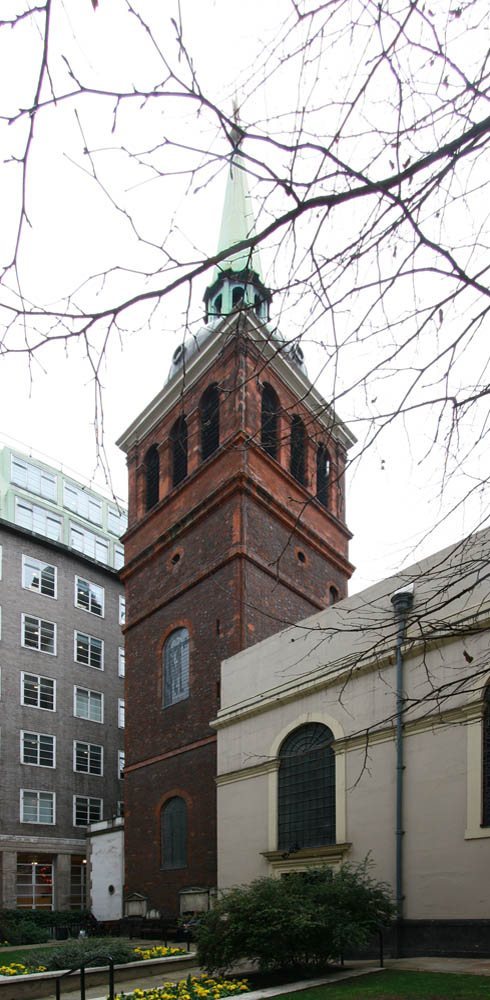
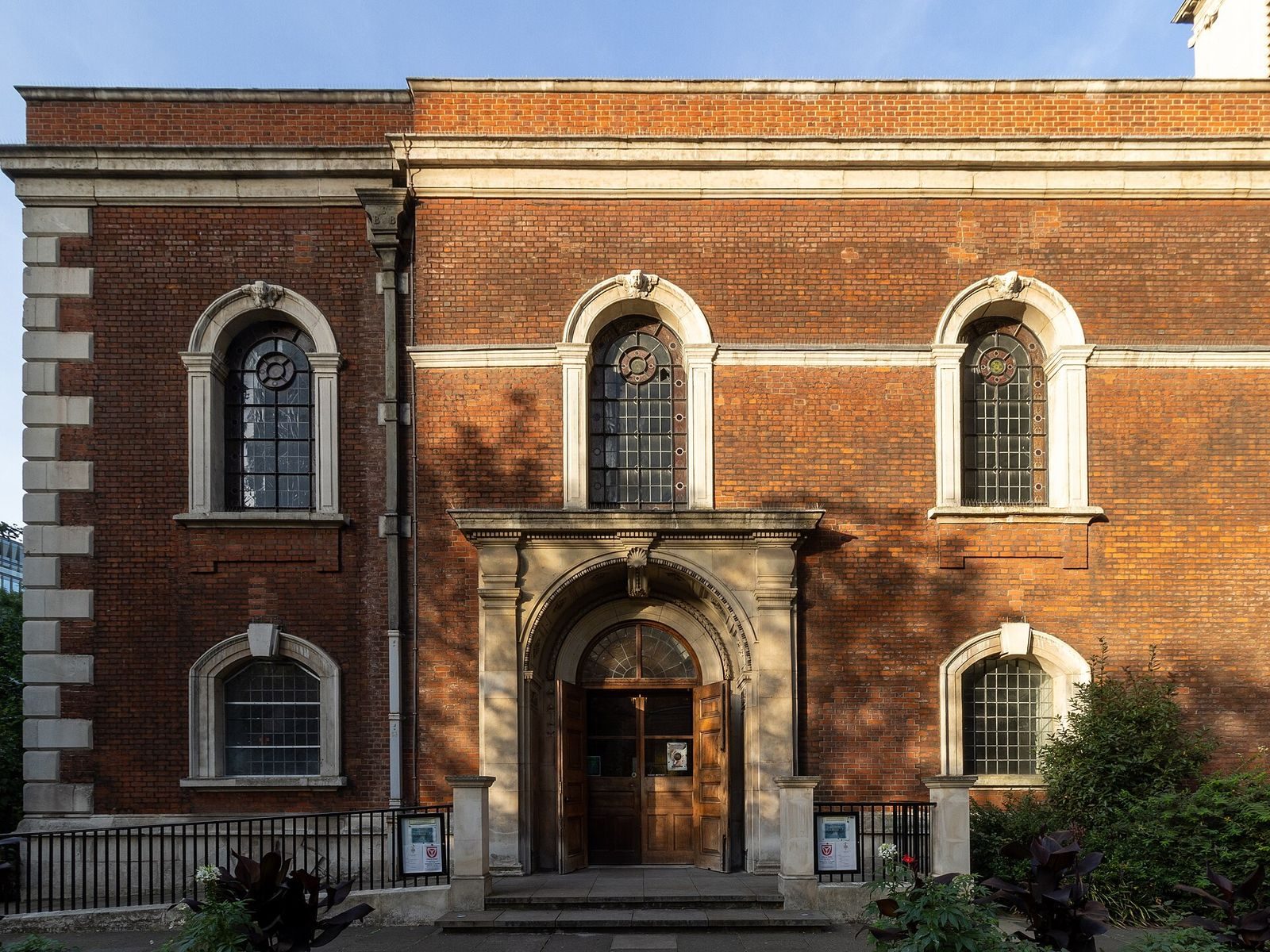
Designed by James Gould, the church has a single tower at its east end, facing Bishopsgate, and a nave, the main body of the church, with side aisles. The tower’s ground floor serves as the chancel, the area around the altar, and has an exterior triangular pediment. Stone faces the eastern end and tower; the rest of the building is brick with stone trim.
Interior and earlier church
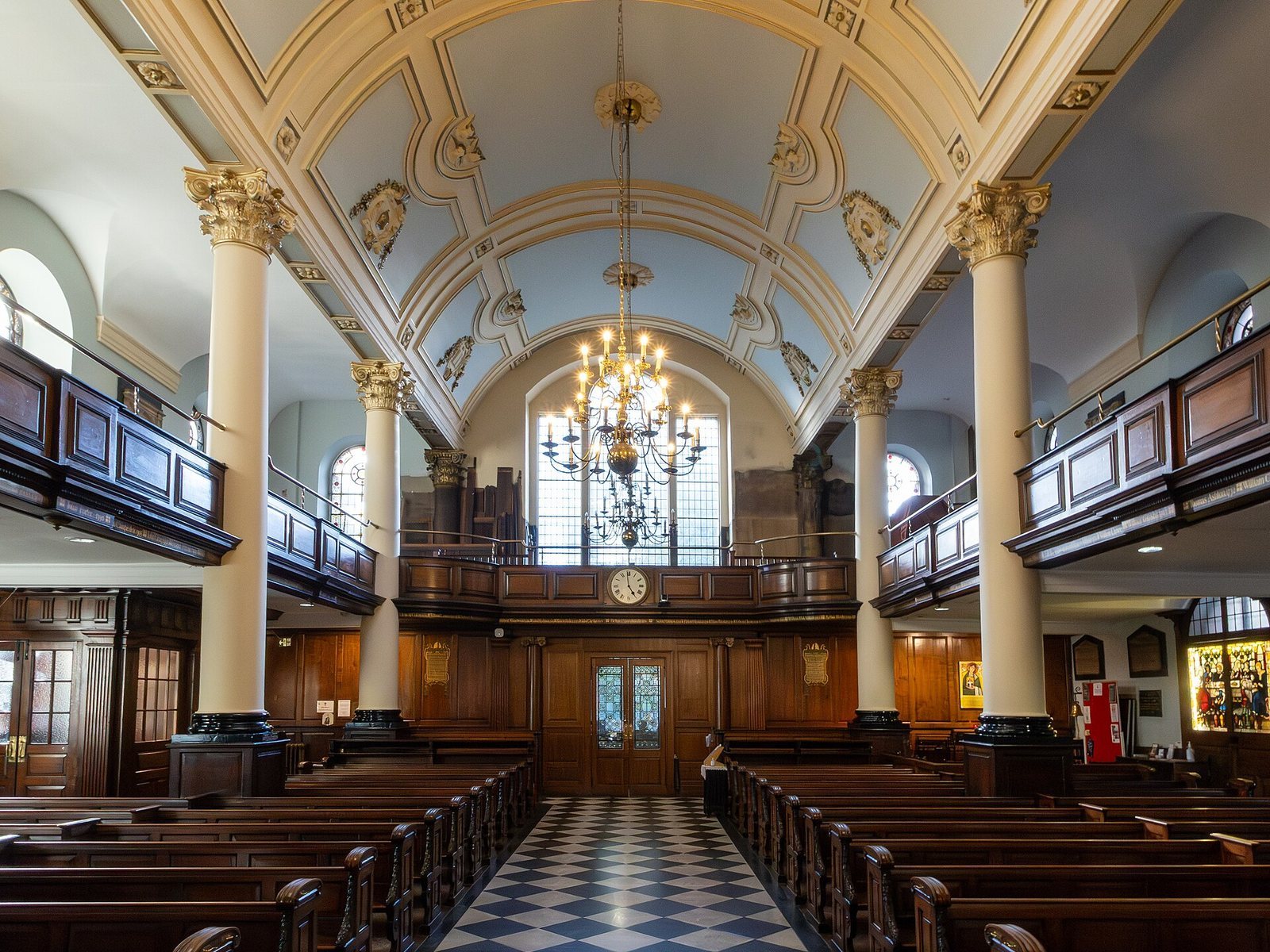
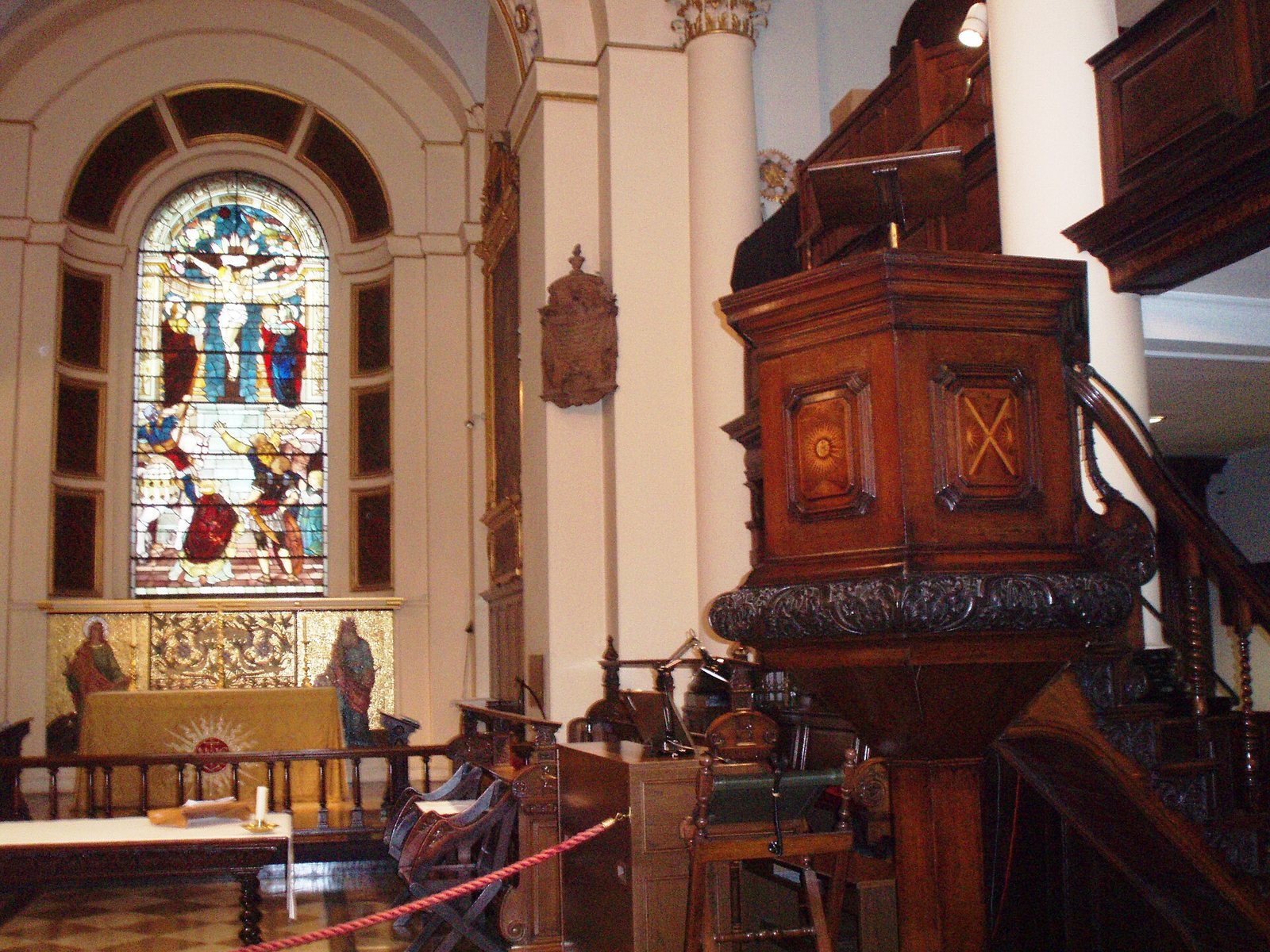
Composite columns, which combine features of the Ionic and Corinthian classical orders, divide the interior into nave and aisles. The nave has a barrel vault, a continuous tunnel-shaped ceiling. A large west window was added to bring more light into the church, but the organ installed in front of it in 1764 largely blocks it. A roof lantern, a raised structure that admits light, was added in 1820.
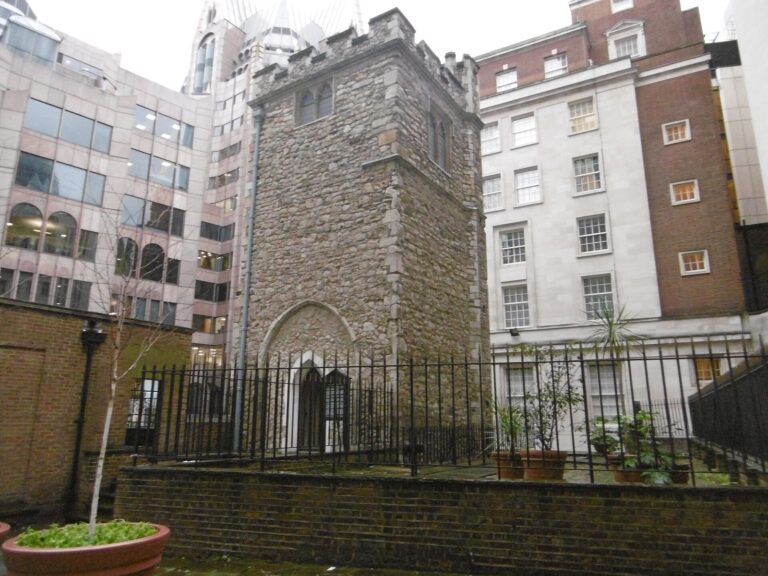
Foundations of an earlier Anglo-Saxon church were uncovered during the rebuilding of 1725–29. The preceding Gothic church was described in 1708 as built of brick and stone with an outer plaster coating. Tuscan columns, one classical column type, supported its roof, while Ionic columns, another classical type, stood in the galleries.
Churchyard and associated buildings
Churchyard and garden
A substantial churchyard extends behind the rear of Wormwood Street, which follows the former line of London Wall. The churchyard lay beside the City Ditch, the defensive ditch outside the city walls. A large tomb dated 1801 commemorates Sir William Rawlins, a London sheriff and benefactor of the church.
Former Fan Makers’ Hall
The church hall in the churchyard once served as the livery hall of the Worshipful Company of Fan Makers and was later used as a nursery. It is a single-storey classical building of red brick and Portland stone. Figures of charity children occupy exterior niches. Schoolchildren once painted the original figures each year; after attempts to steal them, the restored figures were stripped of paint and moved inside, and modern replicas were placed in the niches.
Turkish bath entrance kiosk
An entrance kiosk for an underground Victorian Turkish bath stands within the church grounds. A Turkish bath was a heated bathing establishment inspired by traditions associated with the Ottoman world. Designed by Harold Elphick, the kiosk opened on 5 February 1895 for two operators who owned other Turkish baths in Victorian London.
Memorials and furnishings
Church memorials and baptismal font
The church contains a memorial chapel for the Honourable Artillery Company, a Book of Remembrance for the London Rifle Brigade, and memorials to the dead of the 5th and 8th Battalions of the London Regiment. The present font is the one in which John Keats was baptised.
Garden and commemorative memorials
A commemorative cross near the Bishopsgate entrance to the garden was erected in 1916, following the Battle of Jutland, a major First World War naval battle, and the death of British commander and statesman Horatio Kitchener. It is believed to have been the first First World War memorial erected in England. A plaque at the church commemorates Maude Royden, a suffragist and preacher.