All Hallows Staining: A City of London Parish Church
Site at a Glance
- Popularity
- Very High
- Country
- United Kingdom
- Primary era
- Medieval
- Eras represented
- Medieval, Modern
- Civilizations
- British, English
- Site type
- Religious
- Remains
- Church
On this page9 sections
History
All Hallows Staining was a parish church of the Church of England, the Anglican church in England, on Star Alley in the City of London, United Kingdom.
Medieval church
The church was first mentioned in the late 12th century. All Hallows is an older English form of All Saints, while Staining meant stone, distinguishing this church from other All Hallows churches in the city that were wooden.
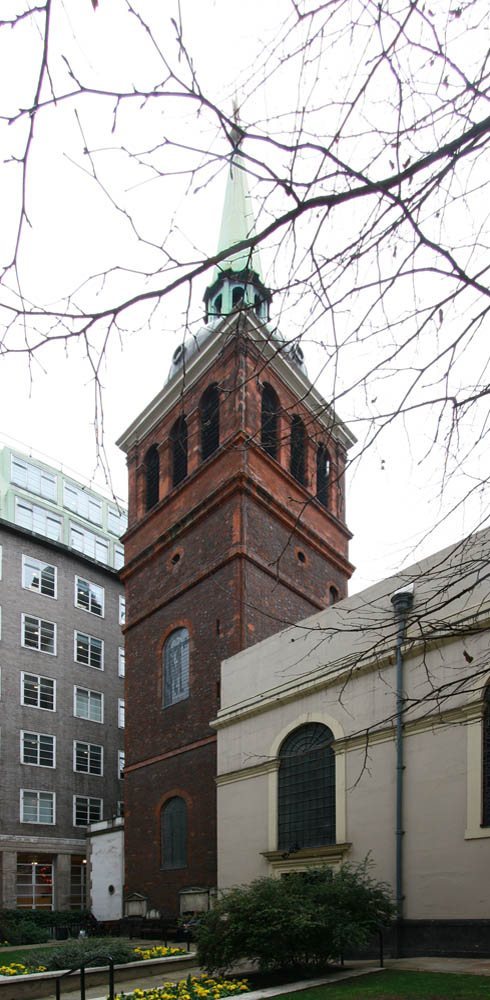
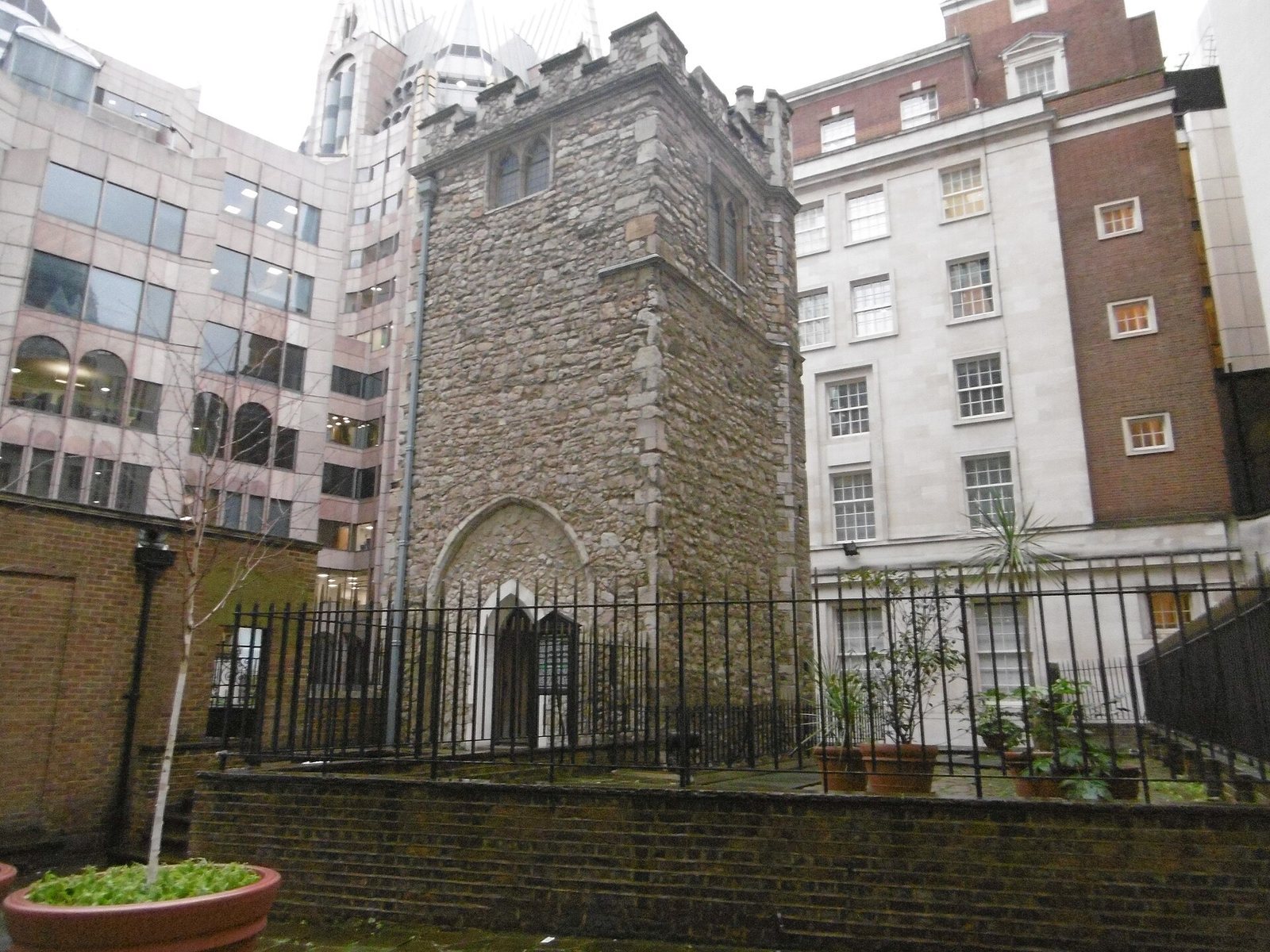
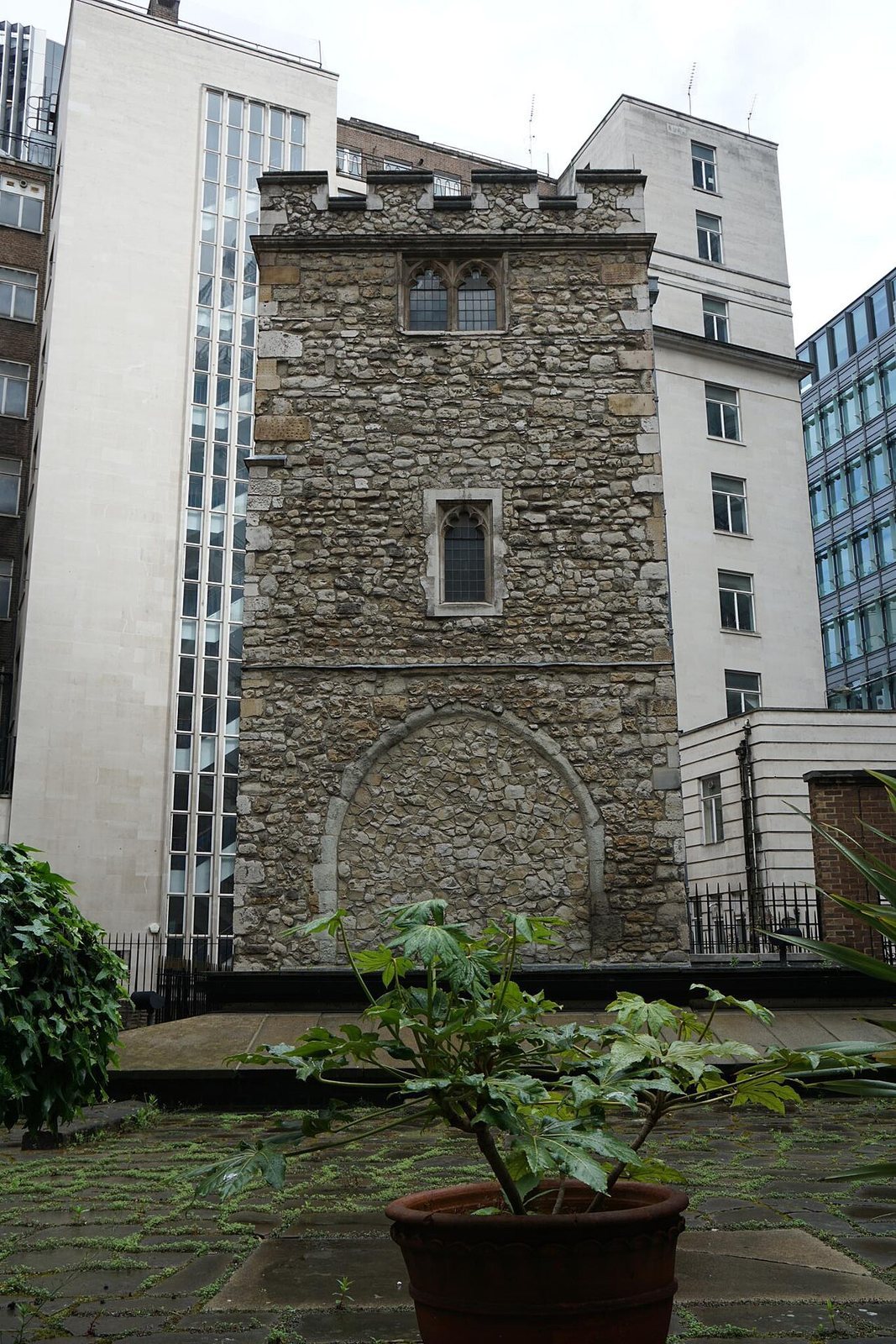
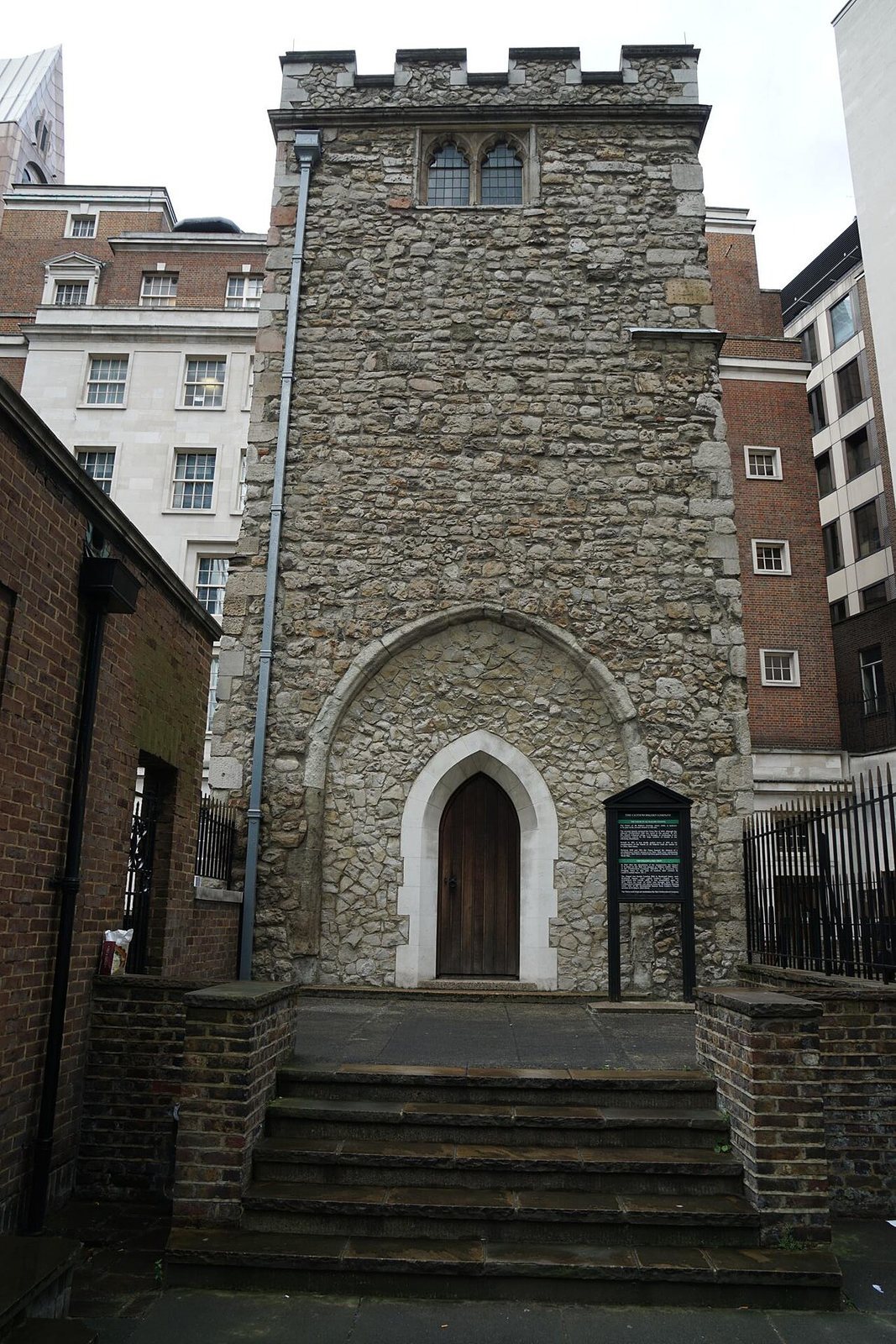
A second church was built on the site, with its surviving tower constructed around 1320.
The hermitage and William Lambe
A 1720 description placed a hermitage, a religious retreat for a recluse, or chapel of St James in the Wall near Cripplegate, at the north corner of Monks Well Street. It associated the hermitage with Garendon Abbey, a monastery of the Cistercian order, and cited records from the 27th year of Edward I and the 16th year of Edward III. The description named William de Lions as the hermit and said the abbey supplied two Cistercian chaplains, clergy serving a particular community. One served Aymer de Valence, Earl of Pembroke, and his countess, Marie de Saint-Pol. It also linked Monks Well Street’s name to the monks and a well associated with them. The Lambe’s Chapel Crypt, an underground chamber, was said to have formed part of this religious site.
During Edward VI’s reign, from 1547 to 1553, London citizen and clothworker William Lambe bought the hermitage and its associated property from the king. When Lambe died in 1577, he left the property, along with other holdings worth £50 a year, to the Worshipful Company of Clothworkers, a historic London guild with civic and trade roles. He required the company to employ a minister to conduct religious services there. The company had previously owned the chapel.
Fire, collapse, and rebuilding
The church survived the Great Fire of London, which devastated much of the city in 1666, but collapsed in 1671. The failure was thought to have followed the weakening of its foundations by numerous burials close to the walls. The church was rebuilt in 1674.
Merger and later use
In 1870, the parish was combined with that of St Olave Hart Street, and All Hallows Staining was demolished apart from its tower. The proceeds helped fund the building of All Hallows, Bow, in London’s East End. The Clothworkers’ Company thereafter owned and maintained the tower, with its hall next to it.
Bombing badly damaged St Olave Hart Street in 1941. While that church was restored, a prefabricated church called St Olave Mark Lane occupied the site from 1948 until St Olave reopened in 1954. The tower served as the temporary church’s chancel, the area around the altar. In 1957, the Clothworkers’ Company built a church hall for St Olave Hart Street on the site. On 4 January 1950, the church remains received Grade I listing, a category for buildings of exceptional architectural or historic interest; Lambe’s Chapel Crypt received Grade II status, for structures of special interest that merit preservation.
The Allhallows Staining Church Act received royal assent on 27 July 2010. It removed restrictions on the use of the former church, churchyard, and adjoining land, and allowed human remains to be removed so the land could be used for other purposes. As of 2025, redevelopment of the block was underway, including the planned demolition of Clothworkers’ Hall and St Olave’s church hall.
Remains
The former church stood at the junction of Mark Lane and Dunster Court, in the north-eastern part of Langbourn ward. Its tower occupied the church’s north-west corner. Before redevelopment, the tower stood at the rear of a small courtyard beside the 1957 church hall, while the crypt lay beneath the adjoining yard.
The tower
Modern infill occupies arches on the tower’s south and east sides. Its removal has been proposed as part of the redevelopment.
Lambe’s Chapel Crypt
The crypt was moved from the site of Lambe’s Chapel in Monkswell Street and rebuilt beneath the adjoining yard in 1872, after the Clothworkers’ Company acquired All Hallows. The rebuilt crypt was about half the size of the original and used a substantial amount of new material. As part of the redevelopment underway in 2025, it is being dismantled for reconstruction on the lower ground floor of a new 36-storey office building.
The rebuilt church interior
A 19th-century description characterized the rebuilt church as a long, narrow room with a simple cornice, a projecting horizontal molding, running around the walls.