Bevis Marks Synagogue: A Sephardic Synagogue in London
Site at a Glance
- Popularity
- Very High
- Country
- United Kingdom
- Primary era
- Early Modern
- Eras represented
- Early Modern
- Civilizations
- English
- Site type
- Religious
- Remains
- Synagogue
On this page13 sections
History
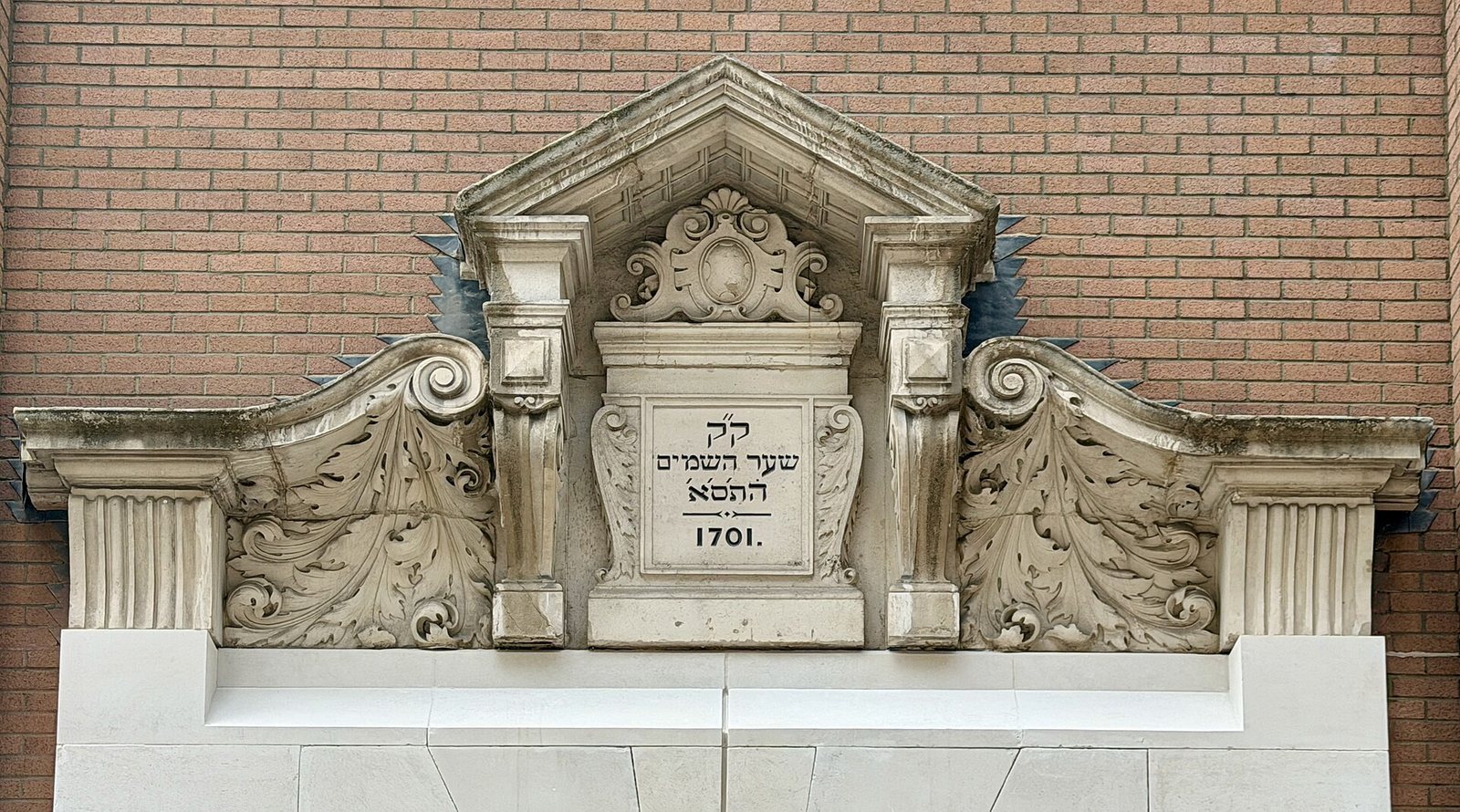
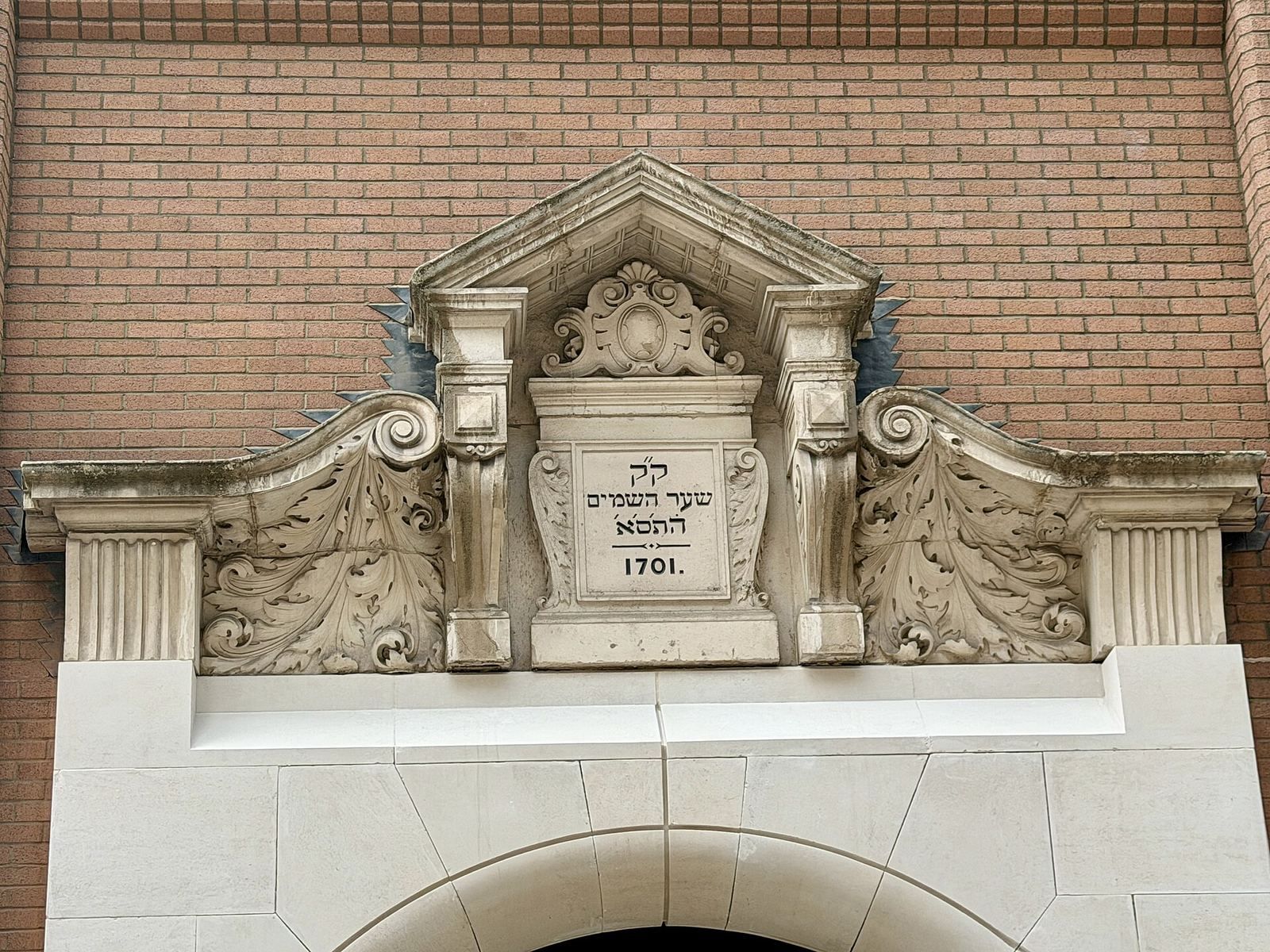
Bevis Marks Synagogue is a Sephardic synagogue in London, United Kingdom, completed in September 1701 for the Spanish and Portuguese Jewish congregation. Sephardic communities have historical ties to Spain and Portugal. The congregation grew from Jews who arrived in London in the early seventeenth century, many of them crypto-Jews who had maintained Jewish practices secretly under pressure to conform to Christianity. Some came by way of Amsterdam, where a Sephardic community was growing. They began to worship openly after Jews were resettled in England under Oliver Cromwell, the political and military leader who governed as Lord Protector.
Origins and the first synagogue
Services began in 1657 at a small synagogue in Creechurch Lane. The building was enlarged and refurbished in 1674. The congregation also acquired a burial ground at Mile End, known as the Velho Cemetery. In 1663, the diarist Samuel Pepys attended a service there and recorded his impressions.
Building at Bevis Marks
As the congregation grew, its Creechurch Lane synagogue became too small. A separate Ashkenazi congregation, associated with Jewish communities of Central and Eastern Europe, had also formed in London around 1690. In 1698, Rabbi David Nieto, a Sephardic rabbi and communal leader, took charge of the Spanish and Portuguese congregation.
On 12 February 1699, a committee contracted the Quaker builder Joseph Avis to construct a new synagogue for £2,650. Quakers belong to the Christian Religious Society of Friends. A tradition holds that Avis gave up part of his fee because he believed it wrong to profit from building a house of God. On 24 June that year, the committee leased land at Plough Yard in Bevis Marks from Sir Thomas and Lady Pointz. The lease ran for 61 years, with an option to renew for 38 more, at an annual rent of £120. The synagogue was completed and dedicated in September 1701. In 1747, Benjamin Mendes da Costa bought the land lease and gave it to the congregation. Salomon de Medina was among those who contributed to the building.
A centre for the Sephardic community
Portuguese Jewish refugees fleeing the Inquisition continued to arrive, alongside migrants from Sephardic centres including Amsterdam and Livorno. Immigration from Portugal had diminished after about 1735, but arrivals were recorded as late as 1790. Congregational marriage and circumcision records reflect the experiences of people who, once able to practise openly, underwent circumcision as adults or renewed their marriage vows. Sermons were delivered in Portuguese until English replaced it in 1833.
For more than a century, Bevis Marks served as a major religious centre for Sephardic Jews in the Anglo-Jewish community, and handled concerns from congregations and individuals elsewhere. It responded to Jamaican Jews seeking lower taxation in 1736 and addressed a dispute among Jews in Barbados in 1753. In 1777, it helped Moses de Paz, a seven-year-old who had escaped Gibraltar to avoid forced conversion to Christianity. The congregation also provided funds and an agent to oversee a wall around the Jewish cemetery at Ballybough in Ireland; the cemetery’s deeds were kept at Bevis Marks.
Changing community and wider influence
Through the involvement of Moses Montefiore, a prominent British Jewish philanthropist and communal figure, the synagogue became involved in the Damascus and Mortara affairs. These controversies prompted international debate about Jewish rights and reputation. The synagogue also influenced the design of Jacob Sassoon’s Ohel Rachel Synagogue in Shanghai. Its congregation included the writer and scholar Isaac D’Israeli, who resigned after a dispute over synagogue fees. Chief rabbis who served the Anglo-Sephardic community included David Nieto, Benjamin Artom, Abraham Haliva, and Moses Gaster.
As members moved from the City and East End towards the West End and suburbs, some sought a new synagogue there. When the leadership refused, a breakaway congregation formed in Burton Street and later became the West London Synagogue. A branch synagogue opened on Wigmore Street in 1853 and moved to Bryanston Street, Bayswater, in 1866. Lauderdale Road synagogue in Maida Vale succeeded it in 1896, and another satellite congregation was established in Wembley during the 1960s.
Preservation and continuing worship
Falling attendance led the congregation to consider selling the Bevis Marks site in 1886. The Bevis Marks Anti-Demolition League, founded under the auspices of H. Guedalla and A. H. Newman, opposed the proposal, and it was abandoned. The synagogue marked its bicentenary in 1901. During the Second World War, its silver, records, and fittings were moved to safety, and the building suffered only minor damage from wartime bombing.
The Irish Republican Army, an Irish republican paramilitary organisation, carried out attacks on the Baltic Exchange in 1992 and Bishopsgate in 1993, and the synagogue was damaged in both. Repairs followed the 1992 damage, and funds were raised for further renovation after the 1993 attack. Bevis Marks has been a Grade I listed building since 1950, England’s highest category of listed-building protection, reserved for buildings of exceptional interest. A 2019 conservation appeal and National Lottery support backed conservation work and plans for a religious and cultural centre. Government support in 2021 helped protect the collection and interpret the synagogue’s history.
Plans for two nearby skyscrapers were rejected after congregants raised concerns that the towers would block natural light and make daily services difficult. In 2023, approval of the Creechurch Conservation Area added a planning safeguard for Bevis Marks and nearby St Botolph’s-without-Aldgate. The synagogue remains an Orthodox congregation affiliated with London’s Spanish and Portuguese Jewish community, and follows the Sephardic rite, a Jewish liturgical tradition. It is the oldest synagogue building in the United Kingdom in continuous use, and the only synagogue building in Europe to have held regular services continuously for more than 320 years.
Remains
Prayer hall and furnishings
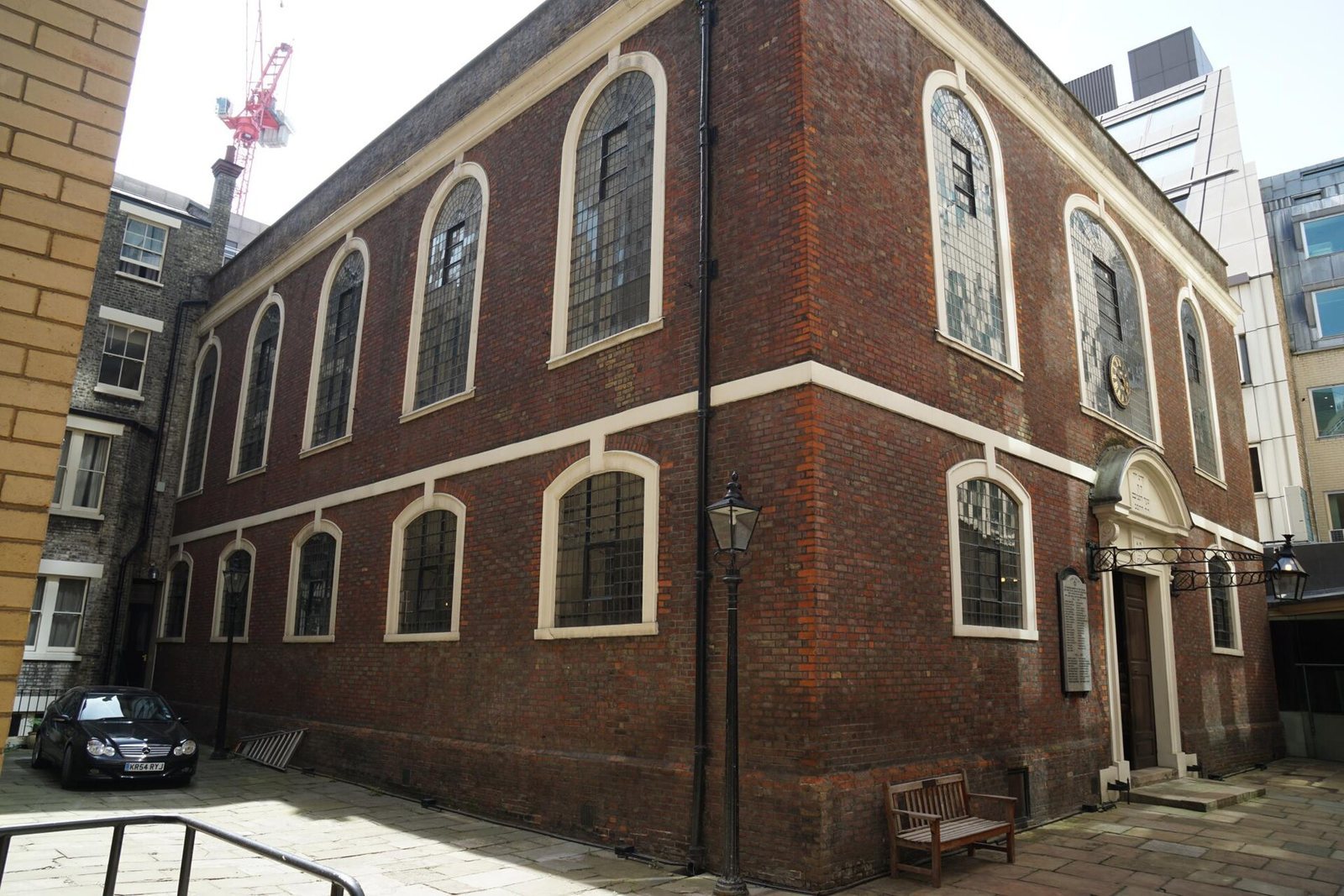
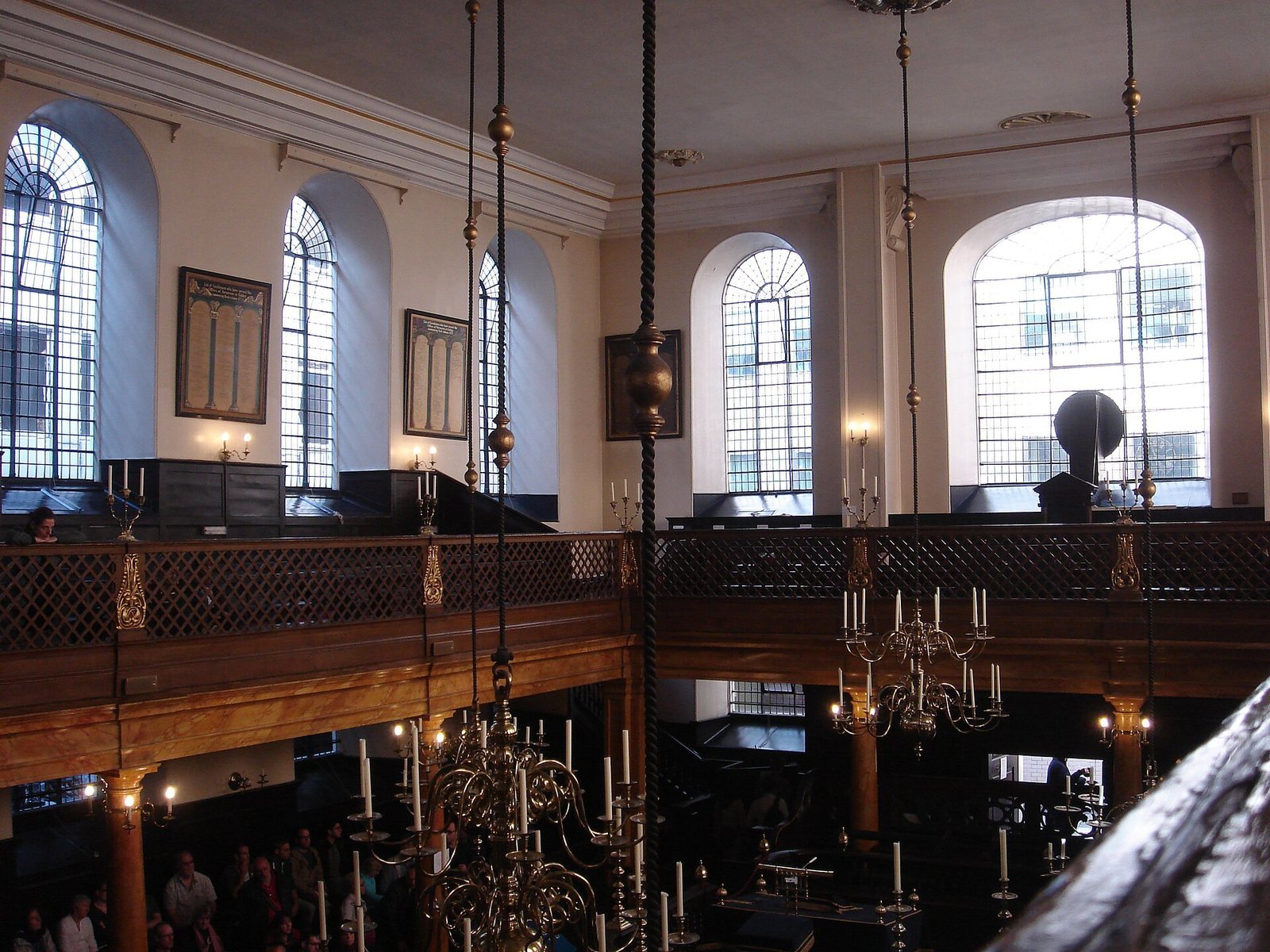
The synagogue has a discreet exterior and a rectangular prayer hall. Its position in a lane and near-isolated setting allows large clear-glass windows on every side to light the hall. The interior arrangement and furnishings reflect the influence of Amsterdam’s Portuguese Synagogue, built in the late seventeenth century, as well as contemporary church design. The design has also been attributed to Christopher Wren, an English architect, although this attribution is not certain.
Women’s gallery
A balcony for women extends along three sides of the hall. Twelve marble columns support it, representing the twelve tribes of Israel, while a simple wrought-iron grille separates the gallery from the sanctuary.
Ark
The ark, the cabinet holding the Torah scrolls, stands at the centre of the eastern wall. It is carved entirely from oak and painted to resemble coloured Italian marble. Raised carvings in Renaissance style are picked out in gold and green. Two large tablets crown the structure, displaying the Ten Commandments in Hebrew lettering of gold.
Reading platform and lighting
The bimah, the raised platform from which scripture is read, stands in the middle of the hall. Its platform has a turned-wood railing with entrances on both sides. Four large brass candlesticks stand in front of the reading desk, and ten others arranged around the platform represent the Ten Commandments. Seven brass candelabra hang in the synagogue. The largest, donated by an Amsterdam synagogue, hangs at the centre of the hall and represents the Sabbath. Their candles are still lit for weddings and Jewish festivals. Electric lighting was added in 1928, and the other candelabra were electrified in 1929. A silver sanctuary lamp, a light associated with worship, dates to 1876.
Benches and reserved seat
Benches run parallel to the side walls and face inward, leaving two aisles for processions with the Torah scrolls. Backless benches at the rear came from the Creechurch Lane synagogue, date to 1657, and remain in regular use. Near the ark, a seat with a footstool bears a brass plaque with Moses Montefiore’s name. It is now reserved as an honour for very senior dignitaries.
Community records
The synagogue retains community records of circumcisions and marriages dating from 1679.