St Anne church Alt Krüssow: A Late Gothic Pilgrimage Church in Germany
Site at a Glance
- Rating
- 5
- Popularity
- Very Low
- Country
- Germany
- Primary era
- Early Modern
- External website
- Open
- Eras represented
- Early Modern, Modern
- Civilizations
- German, Holy Roman Empire, Margraviate of Brandenburg
- Site type
- Religious
- Remains
- Church
On this page14 sections
History
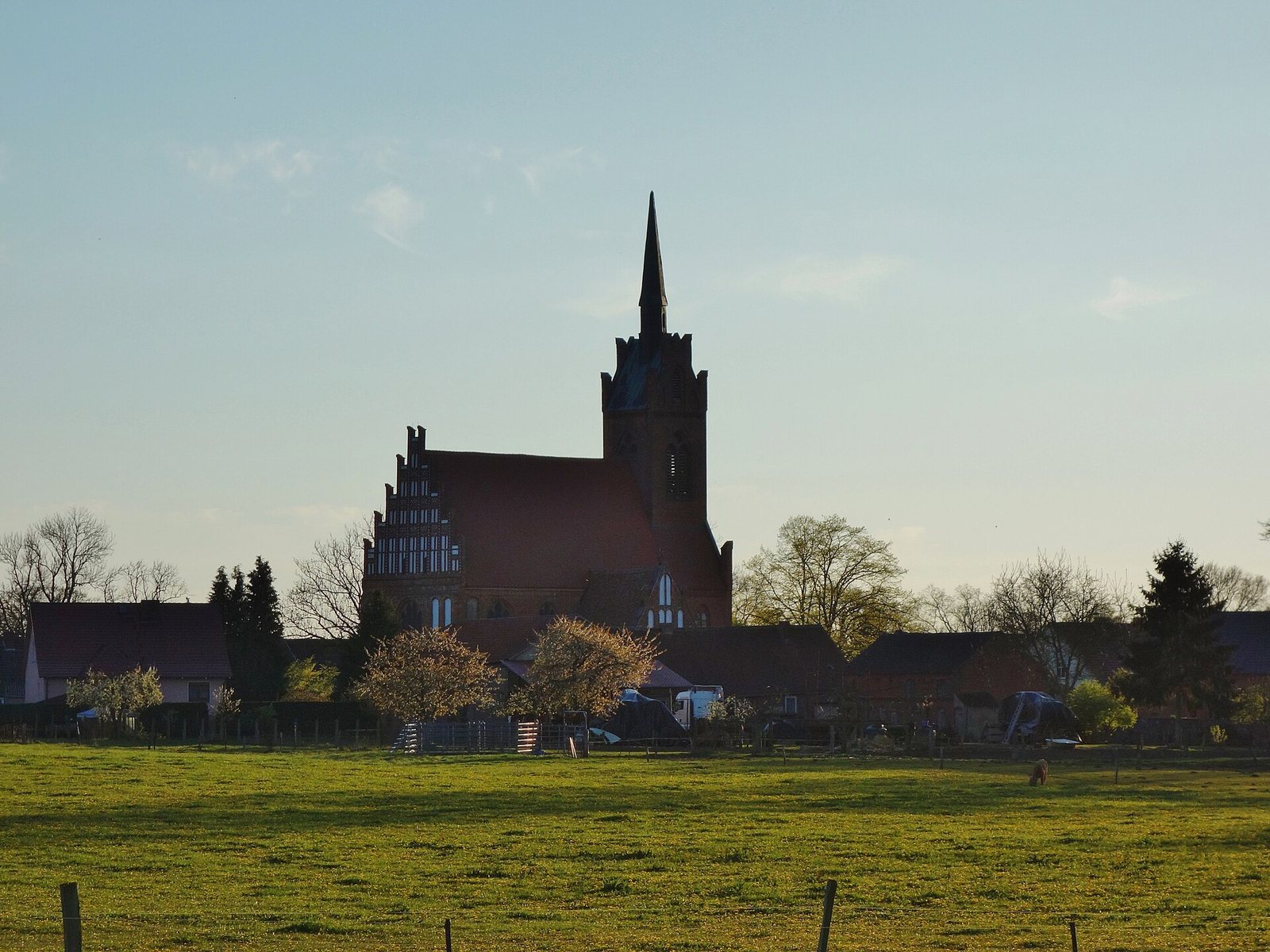
St Anne church Alt Krüssow is a late Gothic former pilgrimage church and Protestant church in Alt Krüssow, now part of Pritzwalk in Brandenburg, Germany. Founded by Johann von Schlabrendorff, Bishop of Havelberg from 1501 to 1520, it was consecrated in 1520, although dendrochronology, the dating of timber through its annual growth rings, shows that construction had begun before 1510.
Foundation and pilgrimage
The church was established as a place of pilgrimage dedicated to Saint Anne, the mother of Mary and, in Christian tradition, the grandmother of Jesus. For a short period, it ranked among the important pilgrimage destinations of the Prignitz, alongside the convent at Heiligengrabe and the Church of the Holy Blood in Bad Wilsnack.
Tradition associated Alt Krüssow with a garment belonging to Saint Anne and with a miraculous image of her. People suffering from plague and those with impaired mobility sought her intercession. During the eighteenth century, numerous crutches were said to have been kept in the church as offerings of thanks from people who believed they had received relief from physical ailments.
Reformation and later history
The Reformation, the sixteenth-century religious transformation that established Protestant churches across much of northern Europe, reduced the importance of many Catholic pilgrimage cults. Alt Krüssow’s pilgrimage role declined during this period. The first Protestant church visitation took place in 1543, and its record mentioned only one of the valuable objects formerly associated with the church, a chalice donated by Bishop Johann von Schlabrendorff.
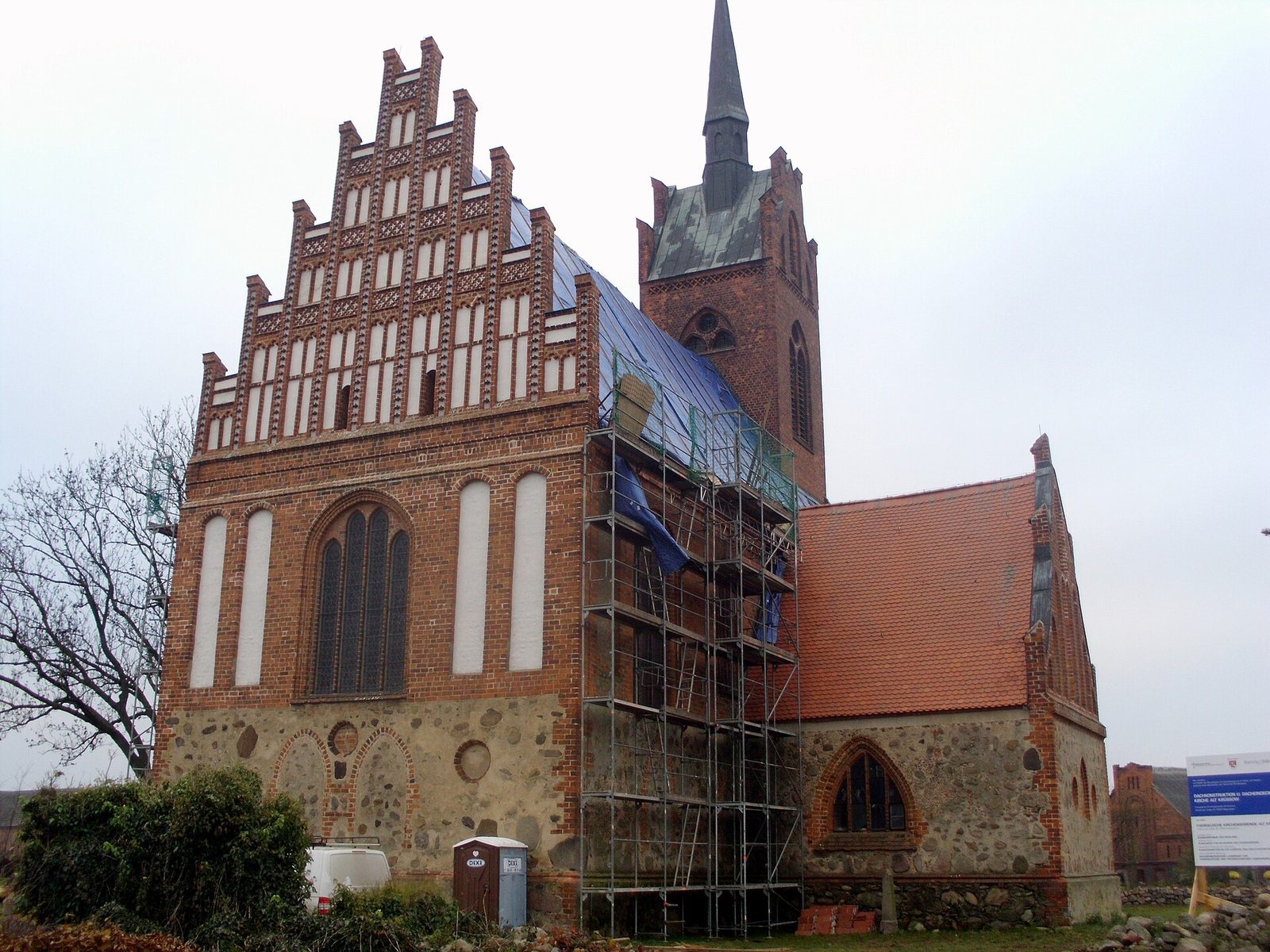
St Anne church Alt Krüssow remains an evangelical church within the Heiligengrabe parish district of the Prignitz church district of the Evangelical Church of Berlin-Brandenburg-Silesian Upper Lusatia. Since 2003, the Friends’ Association of the Alt Krüssow Pilgrimage Church has supported the preservation of the historic building. From 2006 onward, conservation work supported by the German Foundation for Monument Protection repaired the east gable, the nave roof, and the tower windows.
Since 2011, the 22-kilometre Annenpfad has connected the former pilgrimage sites of Heiligengrabe, Alt Krüssow, and Bölzke. The route continues the region’s historical association with the veneration of Saint Anne. The church is listed as a protected monument in Brandenburg’s monument database under number 09160011.
Remains
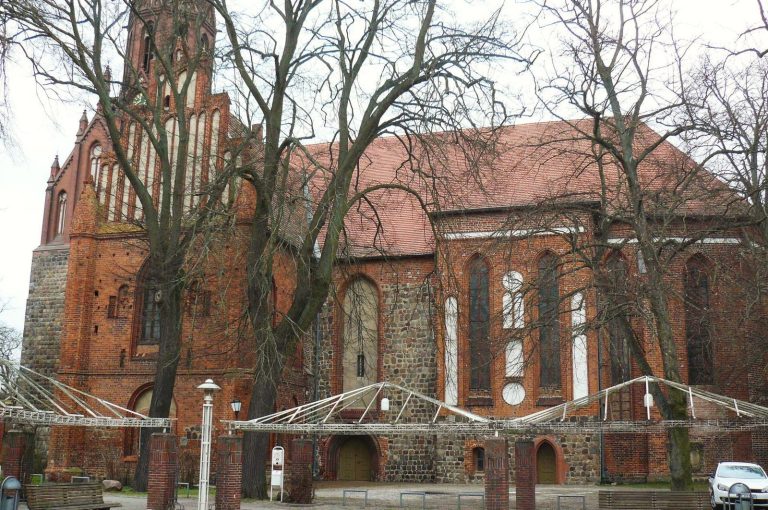
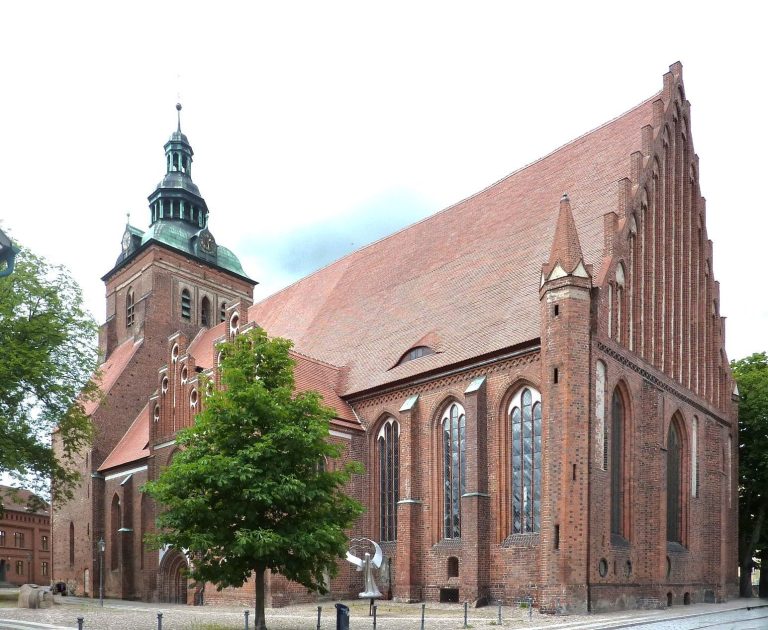
The surviving building is a late Gothic hall church, meaning that its main interior is organized as a broad hall rather than as a tall central nave beside substantially lower aisles. Its characteristic Prignitz construction combines fieldstone and brick. The church’s plan and fabric preserve several building phases, including an earlier fieldstone lower section, later brickwork, a north chapel, and a nineteenth-century western tower.
Exterior fabric and building phases
Nave
The lower part of the nave is made from irregular, wedge-shaped fieldstone masonry belonging to the first construction phase. Incised patterns imitate ashlar blocks in the joints. Brickwork from the third phase rises above this masonry to the eaves. Changes to the plan took place before the 1520 consecration, and the building was raised to more than twice its originally intended height.
Pointed-arch openings in the fieldstone outer walls were planned as windows. Inside, large blind-arch recesses were later closed when the upper brick walls were constructed during the third phase. The strengthened masonry between the recesses probably supported a lower vault, preserving evidence of an earlier structural plan.
East gable
The east wall carries a richly ornamented stepped gable. Its delicate decoration follows the model of the south transept gable at the pilgrimage church in Bad Wilsnack, which is more than fifty years older. Comparable gables constructed in the Prignitz between 1517 and 1523 at the Holy Sepulchre Chapel in Heiligengrabe and at the village churches of Falkenhagen and Wulfersdorf point to the involvement of the same building enterprise.
North chapel
A nearly square chapel from the second construction phase is attached to the north side of the church. Four glazed, figural corner corbels support its star vault. The corbels show long-eared figures with protruding tongues, including one figure playing a bagpipe. Similar corbels occur in the early-sixteenth-century baptismal chapel of St Nicholas’s Church in Pritzwalk, whose gable also follows a comparable design.
West tower
A richly ornamented Neo-Gothic tower and portal were added at the west end in 1878. The tower windows formed part of the later conservation work carried out from 2006 onward.
Interior and furnishings
Vaults and decoration
The eastern part of the central nave is covered by a star vault, whose ribs create a star-like pattern. The western part and the north chapel have rib vaults supported by intersecting structural ribs. Restrained interior painting dates from the late nineteenth century, while a brightly coloured ornamental stained-glass window decorates the altar area.
Principal altar
The principal altar is a late Gothic winged altarpiece made around 1520 and dedicated to Mary and Anne. It is now preserved in the Protestant parish church of St Nicholas in Pritzwalk. Its central representation shows the Coronation of Mary by Christ and God the Father. Beneath it, the central shrine presents the Holy Kinship, with Anne, her three husbands, three daughters, and seven grandchildren.
The scene follows a legend that originated in the ninth century. According to this tradition, Anne first married Joachim, the grandfather of Jesus, then Cleophas after Joachim’s death, and finally Salomas after Cleophas’s death. The legend gave Jesus six siblings, including later disciples and apostles, who appear in the altarpiece’s imagery.
North chapel altarpiece
A second altarpiece from 1510, also centred on Saint Anne, originally stood in the north chapel. It is now in the Anne Chapel beside the cloister at the convent of Heiligengrabe.
Altar fittings and treasury room
A piscina beside the altar is a basin with a drain leading outward into the ground. The priest used it to wash his hands and liturgical vessels, while an iron hook nearby held a water container.
In the nave, a small treasury-like room measures 1.60 metres in width and 0.97 metres in depth. Two medieval oak doors on the north side provide entry from the nave. The room was traditionally understood as a place for storing valuable objects, linking its physical arrangement with the church’s former role as a pilgrimage destination.