Schloss Wolfshagen: A Baroque Palace and Museum in Brandenburg


Site at a Glance
- Rating
- 4.5
- Popularity
- Low
- Country
- Germany
- Primary era
- Early Modern
- External website
- Open
- Eras represented
- Medieval, Early Modern, Modern
- Civilizations
- German, Holy Roman Empire, Kingdom of Prussia, Margraviate of Brandenburg
- Site type
- Domestic
- Remains
- Manor House
On this page9 sections
History
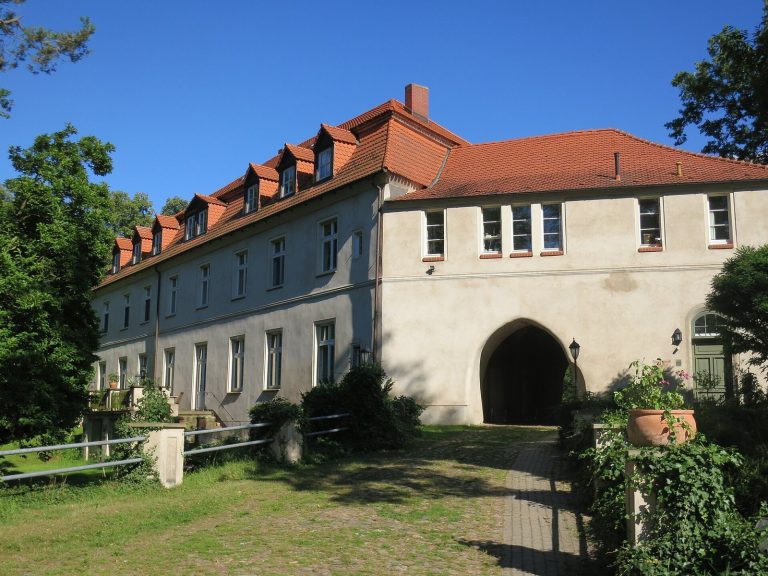
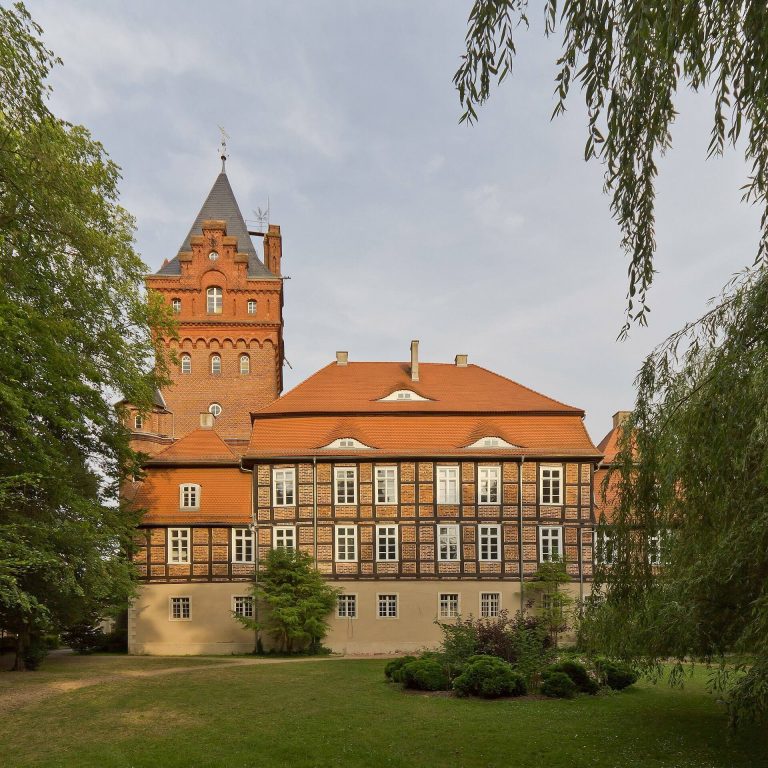
Schloss Wolfshagen is a late Baroque palace in Germany, in Wolfshagen, a district of Groß Pankow in the Prignitz region of northwestern Brandenburg. Built between 1771 and 1787, it stands beside the Stepenitz River and developed from a medieval water castle and a sixteenth-century Renaissance fortress into the residence of the Gans Edle Herren zu Putlitz, a Brandenburg aristocratic family whose estates shaped the locality’s history.
Medieval fortress and Renaissance castle
During the Wendish Crusade of 1147, a campaign by Christian rulers and forces against Slavic peoples south of the Baltic Sea, the Gans Edle Herren zu Putlitz brought the Stepenitz area under their control. They established a water castle at Wolfshagen, and vaulted remains of this predecessor fortress survive within the west wing of the present palace.
Around 1590, the medieval fortress was enlarged into a four-wing Renaissance castle surrounded by earthworks. The complex fell into disrepair after the Thirty Years’ War, the major European conflict fought from 1618 to 1648.
Late Baroque rebuilding
Between 1771 and 1787, Albrecht Gottlob Gans Edler Herr zu Putlitz constructed a two-wing late Baroque palace on the foundations of the earlier fortress. Late Baroque architecture belonged to the later eighteenth-century style of formal palace layouts and elaborate interior decoration. The rooms received painted canvas wallpapers, fixed wall and ceiling paintings, and illusionistic decoration designed to make flat surfaces appear three-dimensional.
The palace’s Gartensaal, or garden hall, contained allegorical and figurative paintings showing Frederick the Great, Frederick II of Prussia, as a military commander. The decoration made Wolfshagen one of the earliest monuments commemorating Frederick in Prussia. In the Second Prince’s Room, grisaille paintings, made mainly in shades of grey to imitate relief sculpture, showed scenes based on widely circulated engravings by the German-Polish painter and printmaker Daniel Chodowiecki.
Nineteenth-century estate and twentieth-century alterations
During the nineteenth century, the estate passed successively to Albert Gans zu Putlitz, the chamberlain and hereditary marshal Hermann Gans zu Putlitz, and Hermann’s nephew Wedigo Gans zu Putlitz. Wedigo served as a cavalry officer, trained in agriculture at Gut Putlitz-Philippshof, became a Knight of Justice in the Order of St John, and headed the foundation at Marienfließ Convent.
In the 1850s, the landscape designer Peter Joseph Lenné created a park on both sides of the Stepenitz. In 1911, Hans Albrecht Gans zu Putlitz remodelled the palace facade in the Neo-Baroque style, a later revival of Baroque forms, and added a projecting porch supported by Doric columns.
In 1914, the Wolfshagen manor, including the outlying estates of Horst-Dannhof, Hellburg, and Horst, covered 1,928 hectares. Before the global economic crisis of 1929, the estate covered 2,010 hectares and was administered by a manager under conditions that suggest the involvement of a lender, usually the Ritterschaftsbank or its legal successor. Hans Albrecht designated his children Carla, Wedigo, and Hans Hermann as co-owners and heirs during his lifetime.
War, school use, and museum conversion
In October 1945, Soviet occupation troops expelled the Gans zu Putlitz family from the palace, which was then looted. The building became a school in 1952. During this conversion, the Baroque canvas wallpapers, both interior staircases, and the surviving manorial and family archive were destroyed. Eighteenth- and nineteenth-century stoves and fireplaces were removed during the 1960s, and the Doric porch was demolished in 1969.
The small sixteenth-century castle chapel received monument protection in 1975 but was demolished in 1982. The Wolfshagen Castle Museum support association was founded in 1995, and school use ended in 1998. After several years of restoration, carried out partly with assistance from the German Foundation for Monument Protection, the palace became a museum. A chapel room was redesigned and consecrated in 2002, while the Schlossmuseum Wolfshagen Foundation, established by Bernhard von Barsewisch in 2005, has supported the palace’s preservation. The building now serves as a museum and cultural venue for concerts, exhibitions, lectures, conferences, readings, and other events.
Remains
Palace, predecessor fortresses, and park
The surviving complex is a late Baroque two-wing palace beside the Stepenitz, built on the foundations of the earlier fortress. The medieval water castle survives partly through vaulted remains incorporated into the west wing. Beneath and around the later palace, the history of the site is also represented by the sixteenth-century four-wing Renaissance predecessor and its surrounding earthworks.
The interiors retain evidence of the palace’s former decorative program, although most of the paintings were destroyed in 1952. The Gartensaal once presented Frederick the Great through allegorical and figurative scenes, while the Second Prince’s Room contained grisaille panels above doors and wall cupboards, modelled on Chodowiecki’s engravings. Lenné’s landscape park extends along both sides of the Stepenitz. The 1911 Neo-Baroque facade alteration formed part of the building’s later appearance, but its Doric-columned porch was removed in 1969.
Chapel room and museum collections
The chapel room created in 2002 incorporates substantial elements rescued from the demolished sixteenth-century chapel. These include pew ends dated 1572, heraldic shields, ceremonial helmets, and a baptismal font. Together, the furnishings preserve material evidence of the chapel’s earlier appearance within the modern museum setting.
On the ground floor, the museum presents furnishings, household objects, hunting trophies, and ancestral portraits associated especially with the von Winterfeld, von Saldern, von Platen, and von Königsmarck families. The displays also include portraits of members of the Hohenzollern dynasty, the ruling house of Brandenburg-Prussia and later the German Empire. Some objects came from Schloss Wolfshagen, while others originated at Gans zu Putlitz estates or other aristocratic residences in the Mark Brandenburg.
Special collections and archaeological interpretation
The upper floor contains Bernhard von Barsewisch’s porcelain collection. It includes tableware and Central European blue-painted porcelain from more than fifty European manufactories, spanning four centuries. The collection is described as Europe’s most important collection of these categories.
The basement contains a reconstructed classroom from the period of the German Democratic Republic, recalling the palace’s long use as a school. A permanent exhibition presents the nearly 3,000-year-old so-called King’s Grave of Seddin through copies of grave goods found in 1899. The original objects are held at the Märkisches Museum in Berlin.