Sōrin-ji Temple: A Tendai Buddhist Ritual Center in Kyoto

Site at a Glance
- Rating
- 4
- Popularity
- Very Low
- Country
- Japan
- Primary era
- Early Modern
- External website
- Open
- Eras represented
- Early Modern
- Civilizations
- Toyotomi regime
- Site type
- Religious
- Remains
- Monastery
On this page8 sections
History
Sōrin-ji Temple is a Tendai Buddhist temple in Kyoto, Japan, founded in 805 as Japan’s first center for training in and conducting goma, a Buddhist fire ritual in which offerings are placed into a consecrated flame. Its full formal name is Reishū-zan Hokke Sanmai Muryōju-in Sarasōjurin-ji. Reishū-zan, meaning Golden Jewel Mountain, is its mountain name, while Hokke Sanmai Muryōju-in is its institutional title.
Foundation under Saichō
After returning from Tang China, Saichō, the monk who founded the Tendai school in Japan, performed a major goma prayer at the imperial court. The rite sought peace throughout the realm, security for the state, and the welfare of the people. Saichō also presented Emperor Kanmu with 500 volumes of imported Tendai esoteric Buddhist scriptures and commentaries, together with goma implements.
At Emperor Kanmu’s request, the court official Owari no Muraji Sadami established the monastic compound at this location in 805, with Saichō as its founder. The temple’s formal name was associated with the resemblance of the site to Sarasōjurin-ji at Mount Yunheng in present-day Zhejiang, China. That earlier temple was traditionally attributed to Fu Dashi, a sixth-century Chinese Buddhist religious figure associated with the Northern Qi period. In 823, Sōrin-ji became a branch temple of Enryaku-ji, the major Tendai monastic center on Mount Hiei near Kyoto.
Medieval change and restoration
During the later Heian period, the warrior and courtier Taira no Yasuyori lived in retirement at Sōrin-ji while serving Emperor Go-Shirakawa. The Buddhist monk and poet Saigyō, along with the Nanboku-chō-period poet Ton’a, also lived there in seclusion. The temple had 17 subtemples during the Kamakura period, but later declined. In 1335, it was burned and devastated during the conflicts of the Nanboku-chō period, an era of warfare between rival Northern and Southern imperial courts.
Kokua entered the temple in 1373 and restored it. In 1384, Sōrin-ji became a Jishū training center and the head temple of the Kokua branch. Jishū was a Buddhist movement associated with itinerant devotional practice and worship centered especially on Amida, the Buddha of the Pure Land. The temple was then known as the Higashiyama Training Center. In 1386, Emperor Go-Komatsu granted it an imperial plaque bearing the name Golden Jewel Mountain.
Decline and reduction of the grounds
Sōrin-ji declined again after becoming involved in the Ōnin War, the fifteenth-century conflict that caused widespread destruction in Kyoto. In 1584, Toyotomi Hideyoshi held a flower-viewing banquet at the temple and ordered Maeda Gen’i to erect a notice protecting its flowering trees. Hideyoshi rebuilt the main hall in 1585.
The temple’s scale was reduced through successive transfers of land. Land was surrendered for the construction of Kōdai-ji in 1605 and again in 1653 for the Ōtani Mausoleum of the Ōtani branch of Shin Buddhism. Sōrin-ji returned to the Tendai school in the early Meiji period, but in 1886 further land was transferred for the creation of Maruyama Park. The surviving complex was consequently reduced to the main hall and the detached precinct containing Saigyō-an, also called Saigyō-dō.
Sōrin-ji is the seventh temple on the Kyoto Twelve Yakushi Pilgrimage. Its principal images are Yakushi Nyorai, the Medicine Buddha associated with healing and protection from illness, and Daishō Kangiten, a Buddhist deity of prosperity and auspiciousness. The wooden seated image of Yakushi Nyorai is designated an Important Cultural Property.
Remains
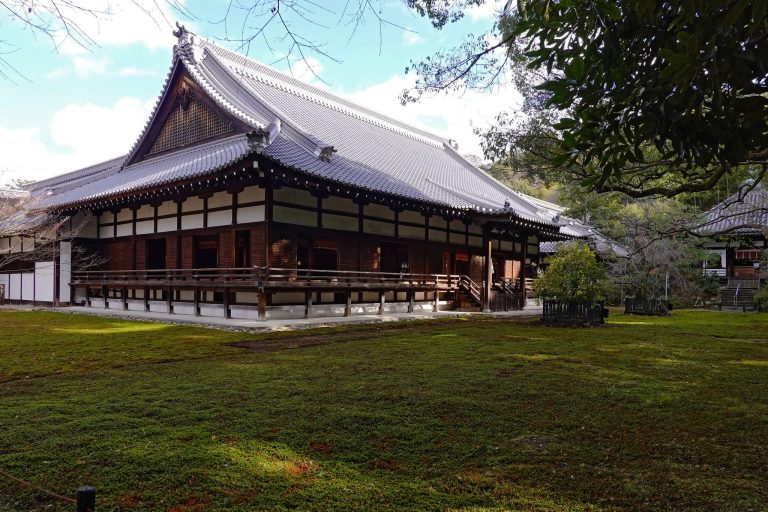
The surviving site consists of the main hall and a detached precinct containing Saigyō-an, or Saigyō-dō. These remains represent only part of the former temple grounds, which were successively reduced when land was transferred for Kōdai-ji, the Ōtani Mausoleum, and Maruyama Park. The main hall was rebuilt in 1585 under Toyotomi Hideyoshi.
Surviving buildings and sacred images
Main hall
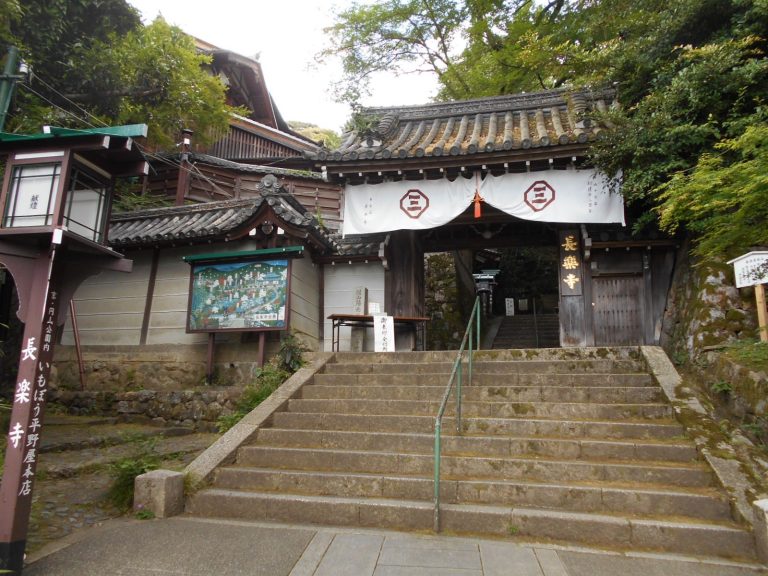
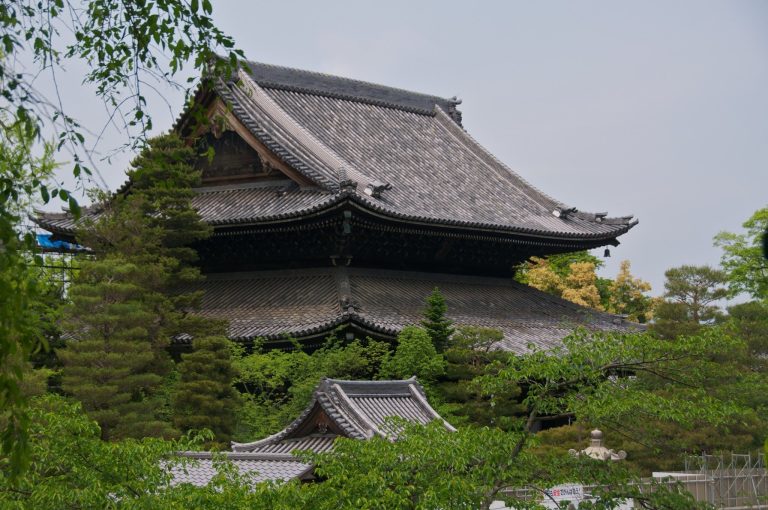
The main hall is the principal surviving building of Sōrin-ji’s reduced complex. Its present structure dates from the 1585 rebuilding ordered by Toyotomi Hideyoshi. The hall houses the temple’s principal seated wooden image of Yakushi Nyorai, whose designation as an Important Cultural Property reflects its recognized cultural value.
Saigyō-an
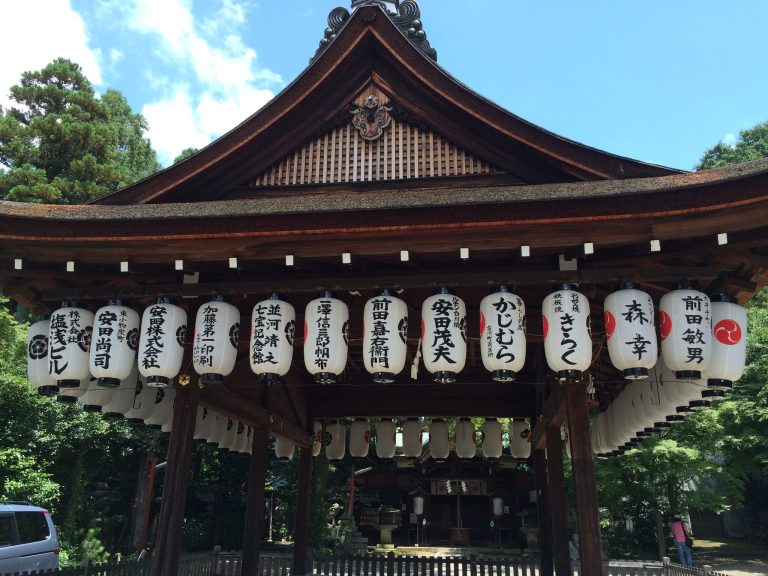
The detached precinct contains Saigyō-an, also known as Saigyō-dō. It forms the other surviving part of the temple complex after the loss of much of the former grounds through land transfers. Sōrin-ji’s second principal image is Daishō Kangiten, a Buddhist deity associated with prosperity and auspiciousness and identified in Japanese Buddhist tradition with Ganesha.