Chōraku-ji Temple: A Ji-shū Buddhist Temple in Kyoto


Site at a Glance
- Rating
- 4.1
- Popularity
- Low
- Country
- Japan
- Primary era
- Early Modern
- External website
- Open
- Eras represented
- Medieval, Early Modern
- Civilizations
- Ashikaga shogunate, Toyotomi regime
- Site type
- Religious
- Remains
- Temple
On this page16 sections
History
Chōraku-ji Temple, formally Ōdaizan Chōraku-ji, is a Ji-shū Buddhist temple in Kyoto, Japan, southeast of Maruyama Park. Tradition places its foundation in 805, when Saichō, the monk who founded the Tendai school and established Enryaku-ji on Mount Hiei, carved its principal image of Juntei Kannon under imperial command. The temple was established as a branch temple of Enryaku-ji and was regarded as an imperial prayer institution, receiving the devotion of successive emperors.
Imperial foundation and medieval associations
Chōraku-ji once occupied an extensive precinct that covered most of present-day Maruyama Park and much of the neighboring Higashi Ōtani complex, a temple of the Ōtani branch of Jōdo Shinshū. Its history is closely connected with the Tale of the Heike, the medieval narrative of the conflict between the Taira and Minamoto forces.
According to the tale, Kenreimon’in, empress consort of Emperor Takakura and mother of Emperor Antoku, reached Chōraku-ji on May 1, 1185, after the Battle of Dan-no-ura. She entered religious life under Insei, a monk of Chōraku-ji and disciple of Hōnen, the founder of the Japanese Pure Land school centered on devotion to Amida Buddha and recitation of the nenbutsu. In October of the same year, she entered Jakukō-in in Ōhara.
Hōnen’s disciple Ryūkan also lived at Chōraku-ji and promoted many-recitation practice, a form of nenbutsu devotion emphasizing repeated recitation. His followers became associated with the Chōraku-ji school, lineage, or branch. In 1385, the Ji-shū monk Koku’a entered the temple, revived it, and converted it into a Ji-shū institution. Ji-shū is a Pure Land tradition founded by Ippen that emphasizes faith in Amida Buddha, recitation of the nenbutsu, and its public propagation. Chōraku-ji now belongs to the Ji-shū Yugyō branch, associated with itinerant religious practice and the head temple Yugyō-ji.
Land loss and institutional changes
In 1745, Tokugawa Yoshimune, the eighth shogun of the Tokugawa shogunate, confiscated approximately 10,000 tsubo of temple land and donated it to the adjacent Higashi Ōtani complex. Chōraku-ji subsequently declined. Between 1804 and 1818, it transferred part of its grounds to Yōfuku-ji and changed affiliation to the Seizan branch of the Jōdo school. It returned to the Ji-shū Yugyō branch in 1870.
The government confiscated the temple grounds in 1871 under a land-confiscation order. In 1886, part of the confiscated land became Maruyama Park. Chōraku-ji absorbed Konkō-ji, the Shichijō Dōjō temple, in 1906. Konkō-ji had held quasi-head-temple status within the Ji-shū Yugyō branch, and seven wooden images of Ji-shū patriarchs were transferred to Chōraku-ji.
Recent preservation and continuing associations
A fire in 2008 almost completely destroyed the repository containing the temple’s treasures. Firefighters and the abbot removed the cultural properties immediately after the fire, and the objects escaped damage. Chōraku-ji remains associated with the Tale of the Heike through its images and traditions concerning Emperor Antoku and Kenreimon’in. It also serves as the seventh temple of the Rakuyō Thirty-Three Kannon Pilgrimage and as a stop on the Kyoto Seven Lucky Gods pilgrimage, representing Hotei.
The temple’s Juntei Kannon is regarded as a strictly confidential imperial image. It is opened only for an emperor’s accession and serves as an object of prayer for the emperor’s protection and the peace of the imperial household. The most recent recorded opening took place from May 1 to June 16, 2019, in connection with the accession of the present emperor at that time.
Remains
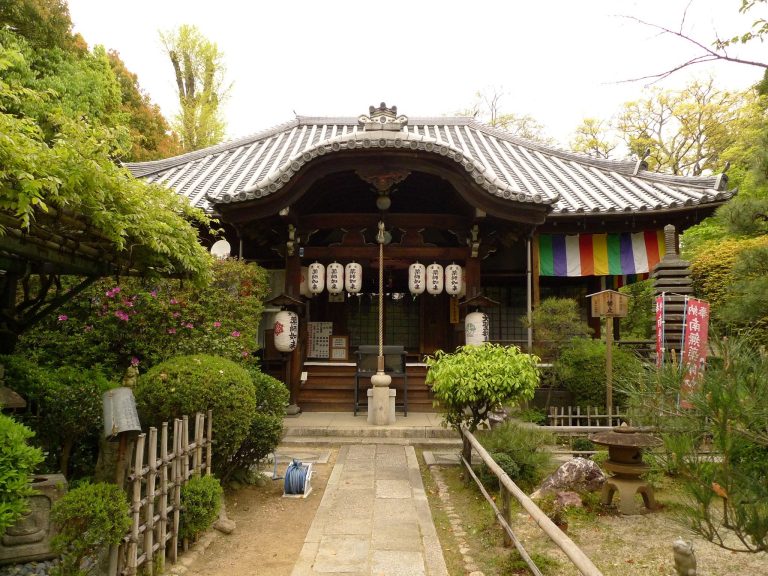
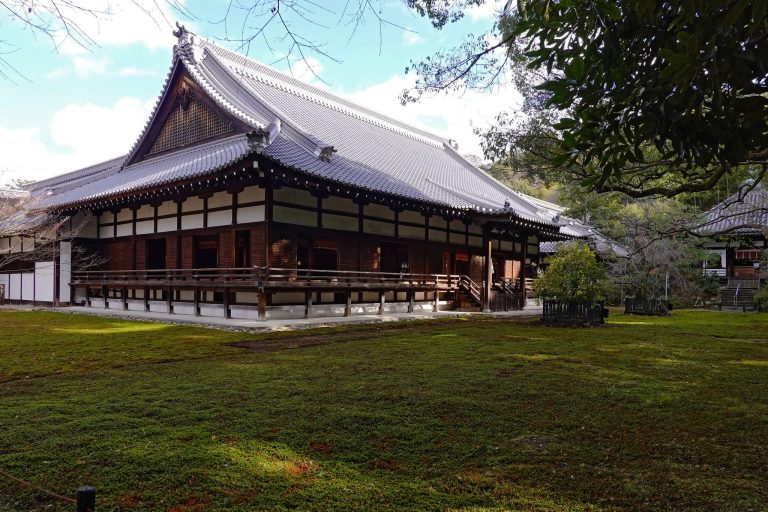
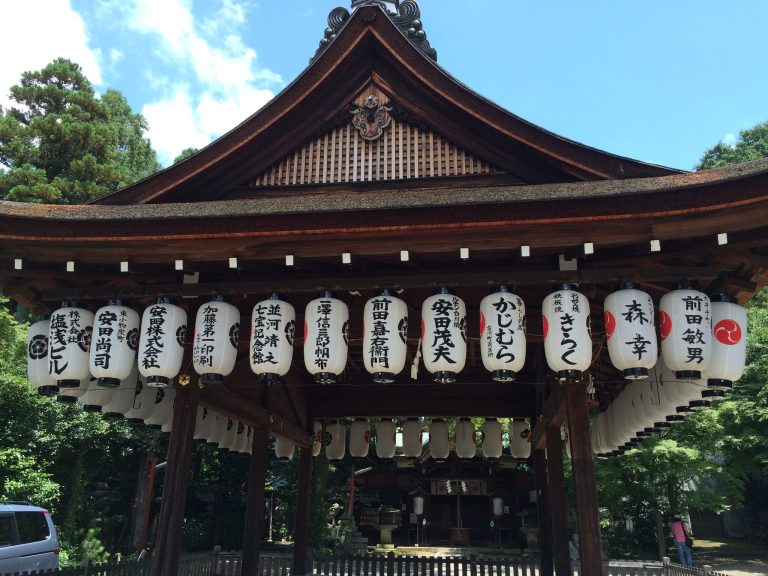
Chōraku-ji stands in Higashiyama Ward, southeast of Maruyama Park. Its surviving grounds include the main hall, bell tower, repository and treasure hall, abbot’s quarters, study hall, tea room, guest hall, main gate, garden, waterfall, cemetery, and the detached lodging facility Yugyō-an in front of Yasaka Shrine. The former extent of the precinct is reflected in the relationship between the temple, Maruyama Park, and the neighboring Higashi Ōtani grounds.
Sacred images and associated monuments
Juntei Kannon
The principal image is a standing Juntei Kannon, a form of the bodhisattva of compassion shown with multiple arms and eyes. The figure has one face, three eyes, and eighteen arms. It stands on a lotus rising from two dragons, and is traditionally attributed to Saichō. The image is normally kept inside a shrine cabinet donated by Tōfuku-mon’in, empress consort of Emperor Go-Mizunoo.
The image’s origin legend tells that Saichō encountered a maritime disaster while traveling to China. After he prayed to the Three Jewels, a Juntei Kannon riding two dragons appeared, flew onto his robes, and calmed the waves. The image is said to have been carved in that form. An Amida Buddha triad is displayed before the hidden Kannon, and its Amida image is traditionally regarded as the devotional Buddha of Emperor Sutoku.
Benzaiten and Hotei
Images of Benzaiten and Hotei stand beside the principal image. Benzaiten, a Buddhist and Japanese religious deity associated with eloquence, music, and learning, is traditionally attributed to Saichō. Hotei, the smiling figure carrying a cloth bag and one of Japan’s Seven Lucky Gods, is said to have been made by Enni from soil brought from India, China, and Japan.
Kenreimon’in’s Pagoda
A thirteen-story stone pagoda known as Kenreimon’in’s Pagoda is traditionally said to contain Kenreimon’in’s hair. The temple also preserves an image of Emperor Antoku, a banner said to have been made from his clothing, and a statue of Kenreimon’in made by Matsuhisa Hōrin.
Main buildings and garden
Main hall
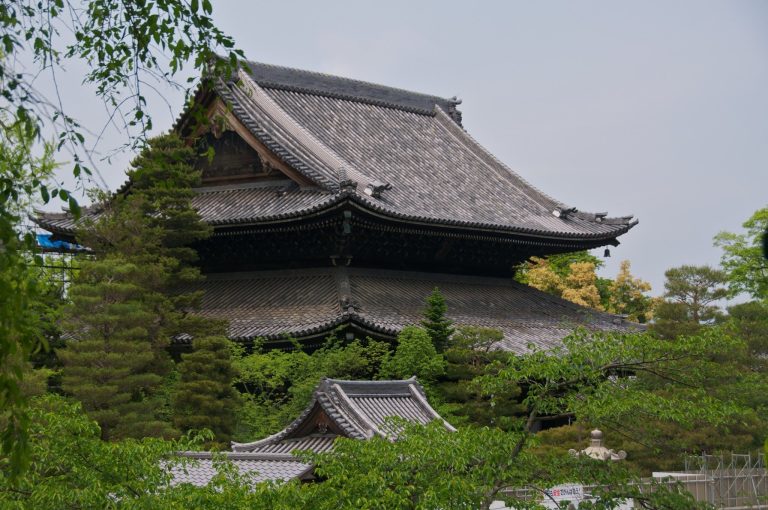
The main hall was originally a palace building constructed at Fushimi Castle during the Azuchi-Momoyama period. It was later moved to Shōden-ji, where it served as a Dharma hall, and was transferred to Chōraku-ji in 1890.
Bell tower
The bell tower contains a bronze bell cast in 1956. An earlier bell, cast in 1657, was admired for its sound and known as the bell of Chōraku-ji. During the Pacific War, it was requisitioned under the wartime Metal Collection Order.
Garden and Heian Waterfall
The temple garden is a pond-viewing garden, designed to be appreciated from a building or viewing area. It is traditionally attributed to Sōami, a Muromachi-period painter and garden designer, and is said to have been commissioned by Ashikaga Yoshimasa as a trial design for the garden of his Higashiyama villa, later known as Ginkaku-ji. The Heian Waterfall is also attributed to Sōami.
Patriarchal images and cemetery
Wooden images of Ji-shū patriarchs
The repository contains seven wooden images of Ji-shū patriarchs made by sculptors of the Kei school, a major lineage of Japanese Buddhist sculptors. They represent Ippen standing, and Shinkyō, Ichin, Sonmyō, Taikū, Son’e, and Kiyū seated. The seven images are Important Cultural Properties.
The standing image of Ippen bears an inscription identifying Yasuhide as its maker and dating it to February 1420. An inscription on the image of Ichin is dated June 1334 and names the donors Yoa-mida-butsu and Yukitoshi. The image of Sonmyō carries inscriptions dated February 1407 that name Kōyū, the thirteenth head priest of Konkō-ji, and the sculptor-priest Yasuhide. The inscription on Son’e, dated December 1421, refers to the Shichijō Buddhist sculptors’ workshop. A wooden five-element pagoda associated with the image of Shinkyō has a base inscription referring to the “Great Saint.”
Sonjō-en cemetery
The cemetery known as Sonjō-en commemorates people connected with the Mito domain and other historical figures. Those remembered there include the thinker Rai San’yō, his son Rai Mikisaburō, the Chinese-style poet Fujii Chikuga, Matsudaira Akinori, a brother of Tokugawa Yoshinobu, and the Mito-domain samurai Ukai Kichizaemon and his son Ukai Kōkichi. The cemetery also includes the Mito-domain elder Ōba Isshinsai, Hara Ichinoshin, a cousin of Fujita Tōko, and Suzuki Shōnen, the first teacher of the painter Uemura Shōen.
Ukai Kōkichi’s grave is linked with his receipt of the Secret Imperial Mandate and its delivery to Tokugawa Yoshiatsu, lord of the Mito domain, in Edo.