Shōgunzuka: A Kofun-Period Burial Mound in Kyoto
Site at a Glance
- Rating
- 4.3
- Popularity
- High
- Country
- Japan
- Primary era
- Classical
- Eras represented
- Classical, Medieval
- Civilizations
- Yamato
- Site type
- Burial
- Remains
- Burial Mound
On this page5 sections
History
Shōgunzuka is a Kofun-period burial mound on Mount Kachō in Kyoto’s Yamashina Ward, Japan. The Kofun period was an early era of Japanese history, roughly spanning the third through seventh centuries. The mound’s name means “General’s Mound,” and later traditions connected it with the commander Sakanoue no Tamuramaro, though his tomb is now thought to be elsewhere.
Origins and association with Tamuramaro
From the late Heian period, part of an era spanning 794–1185, Shōgunzuka was confused with the separate tomb of Tamuramaro. By the Kamakura period, broadly covering the late twelfth through fourteenth centuries, stories about his burial had become attached to the mound, which was known as Shōgunzuka in medieval times.
Tamuramaro, a senior court official and military commander, died on June 17, 811. Emperor Saga ordered his burial four days later at Kurisu village in Uji District, Yamashiro, a historical province that included Kyoto. The burial tradition described him standing upright and facing east, with armor, weapons, dried provisions, and salt. His tomb was regarded as a protector of the capital, and people believed it would rumble like a drum or thunder when the country faced danger. That warning legend later became linked to Shōgunzuka. Tamuramaro’s tomb is now identified with the Nishinoyama Tomb in Yamashina Ward, rather than this mound.
Medieval accounts of rumbling
The medieval war tale The Tale of the Heike portrays an eight-shaku clay figure, about 2.5 metres tall, buried upright at Shōgunzuka and facing west. It wears iron armor and a helmet and carries an iron bow and arrows. The story reshaped burial details associated with Tamuramaro, making the figure part of the mound’s rumbling tradition.
Genpei Seisuiki, a variant of The Tale of the Heike, recounts that the mound rumbled three times between 3 and 5 p.m. on August 11, 1179. The following year, Minamoto no Yoritomo raised forces, beginning the Genpei War, a conflict between the Minamoto and Taira clans.
The chronicle Taiheiki describes another disturbance at midnight on March 15, 1349. For about an hour, a violent rumble was accompanied by sounds of horses and soldiers in the sky, frightening Kyoto’s residents. Temporary celestial objects known as guest stars had appeared since around January. The court office responsible for divination, calendars, and astronomy interpreted them as warnings of upheaval, war, and epidemic, and secretly delivered its reading to the emperor.
A later origin tradition
A 1711 gazetteer of Yamashiro repeated an earlier account that offered a different explanation for the mound. In this tradition, when Emperor Kanmu moved the capital, he ordered an eight-shaku clay figure to be made and buried on the eastern mountain summit to protect the royal city for the future. The mound was named Shōgunzuka, and its shaking was said to warn of calamity threatening the capital.
Remains
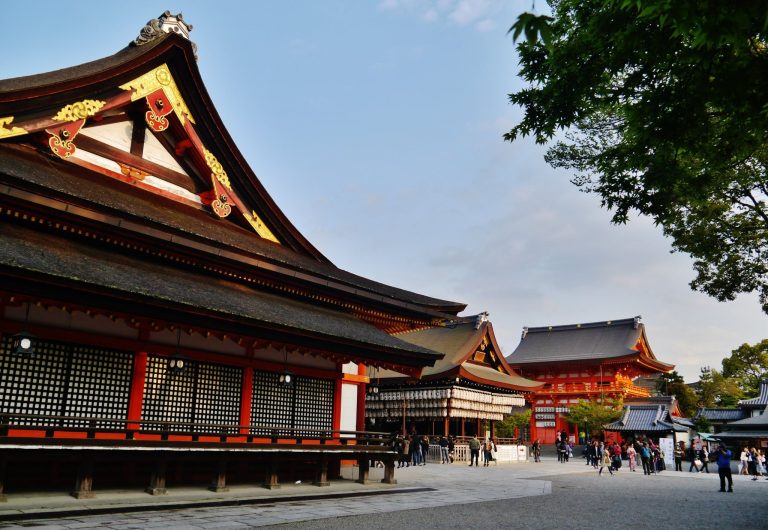
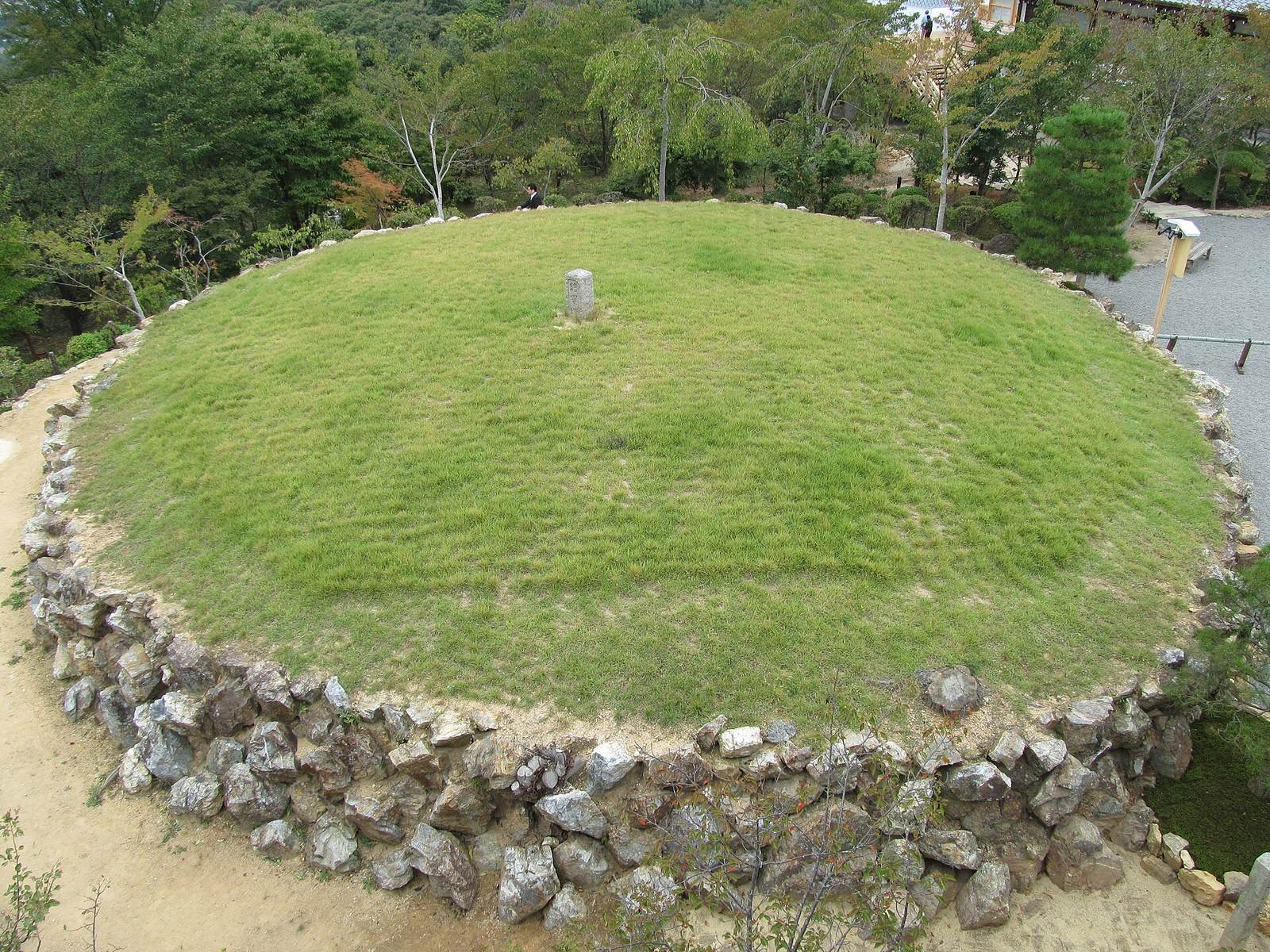
Shōgunzuka is one of three circular burial mounds in the Shōgunzuka group. It measures about 20 metres across and stands roughly 2 metres high, on a ridge among the Momoyama Hills of Higashiyama. The mound lies at an elevation of 216 metres on the summit of Mount Kachō, directly east of Yasaka Shrine and on the projected line of Shijo Street.
The mound is within the precincts of Shogunzuka Seiryuden, a Buddhist hall belonging to Shoren-in, a Tendai Buddhist temple. The grounds also contain hand-planted pine trees and stone pillars associated with visits by Admiral Togo Heihachiro, General Kuroki Tamemoto, and statesman Okuma Shigenobu.