Ichigaya Kamegaoka Hachimangū: A Shinto Shrine in Tokyo


Site at a Glance
- Rating
- 4.3
- Popularity
- Low
- Country
- Japan
- Primary era
- Medieval
- External website
- Open
- Eras represented
- Medieval
- Civilizations
- Ashikaga shogunate
- Site type
- Religious
- Remains
- Sanctuary
On this page8 sections
History
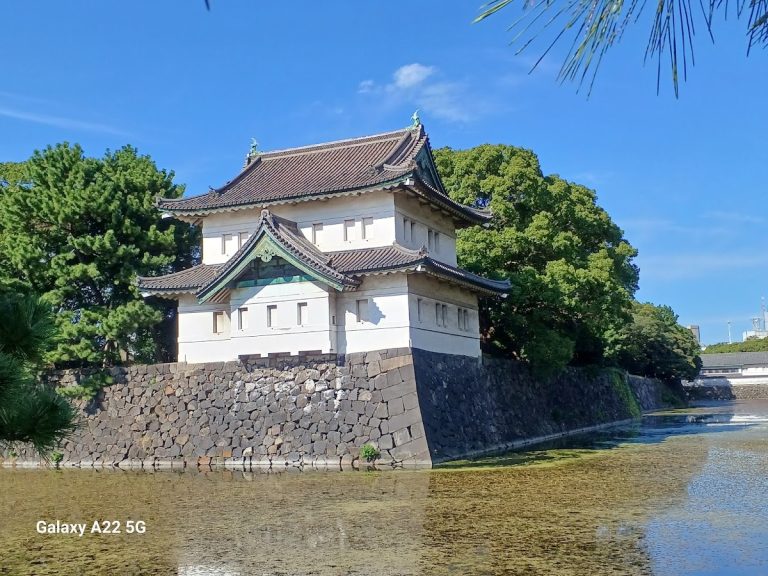
Ichigaya Kamegaoka Hachimangū is a Shinto shrine in Shinjuku City, Tokyo, Japan, founded in 1479 during the construction of Edo Castle. Ōta Dōkan, the fifteenth-century military leader and castle builder responsible for the castle, enshrined a divided spirit of Tsurugaoka Hachimangū in Kamakura as Edo Castle’s western guardian deity. Hachimangū shrines are dedicated to Hachiman, a deity traditionally associated with Emperor Ōjin and later with protection in warfare and state affairs. The shrine was called Kamegaoka Hachimangū in contrast to Tsurugaoka Hachimangū.
From Edo Castle to the Present Precinct
The shrine originally stood inside Ichigaya Gate, in what is now Chiyoda Ward. After suffering war damage and falling into decline, it was moved to its present location around 1636, when Edo Castle’s outer moat was completed. The new precinct had originally belonged to Chanoki Inari Shrine, a local protective shrine. Chanoki Inari is traditionally said to have been established by Kūkai, the founder of the Shingon Buddhist tradition in Japan, and it remains within the precinct as a subsidiary shrine.
The shrine was revived during the Edo period, the era of Tokugawa shogunal rule conventionally dated from 1603 to 1868. This renewal was connected with the devotion of Tokugawa Iemitsu, the third shogun, and Keishōin, the mother of the fifth shogun, Tokugawa Tsunayoshi, and a prominent patron of religious institutions. From this period it was known as Ichigaya Hachimangū.
Edo-Period Prosperity and Meiji Transformation
During the Edo period, teahouses and theaters operated in the precinct, which drew a steady flow of people. Its annual festival was regarded as one of the particularly splendid events of Edo and attracted large crowds.
The shrine’s bettoji, a Buddhist temple associated with a Shinto shrine, was Tōenji. The temple belonged to the Old Shingon school, a branch of Japanese Shingon Buddhism, and had been established when Kamegaoka Hachimangū was founded. In 1872, the Meiji government’s policy of separating Shinto and Buddhism led to Tōenji’s abolition. The theaters withdrew, trees were planted, and the precinct lost the lively character it had held during the Edo period.
Wartime Destruction and Rebuilding
An air raid on 25 May 1945 destroyed the shrine buildings and burned the sacred camphor tree. The present shrine buildings were rebuilt in 1962. The shrine is classified as a former gōsha, a prewar shrine rank, and continues to receive devotion from local residents and other worshippers.
The principal deity is Hondawake no Mikoto, identified with Emperor Ōjin. The other enshrined deities are Okinagatarashi-hime no Mikoto, identified with Empress Jingū, and Yotohime no Kami. The precinct also accommodates Chanoki Inari Shrine, whose deities are Inari Ōkami and Ukemochi no Kami. Pets are permitted within the precinct, and the shrine offers pet amulets and prayers for pets.
Remains
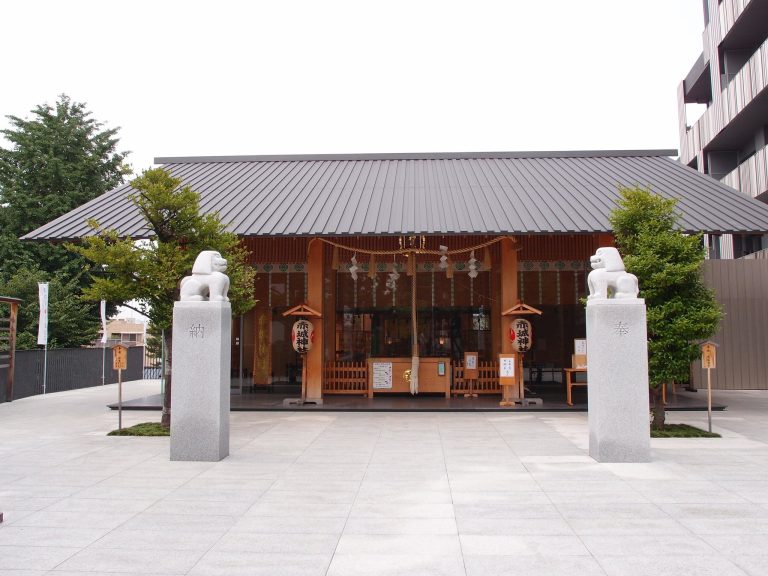
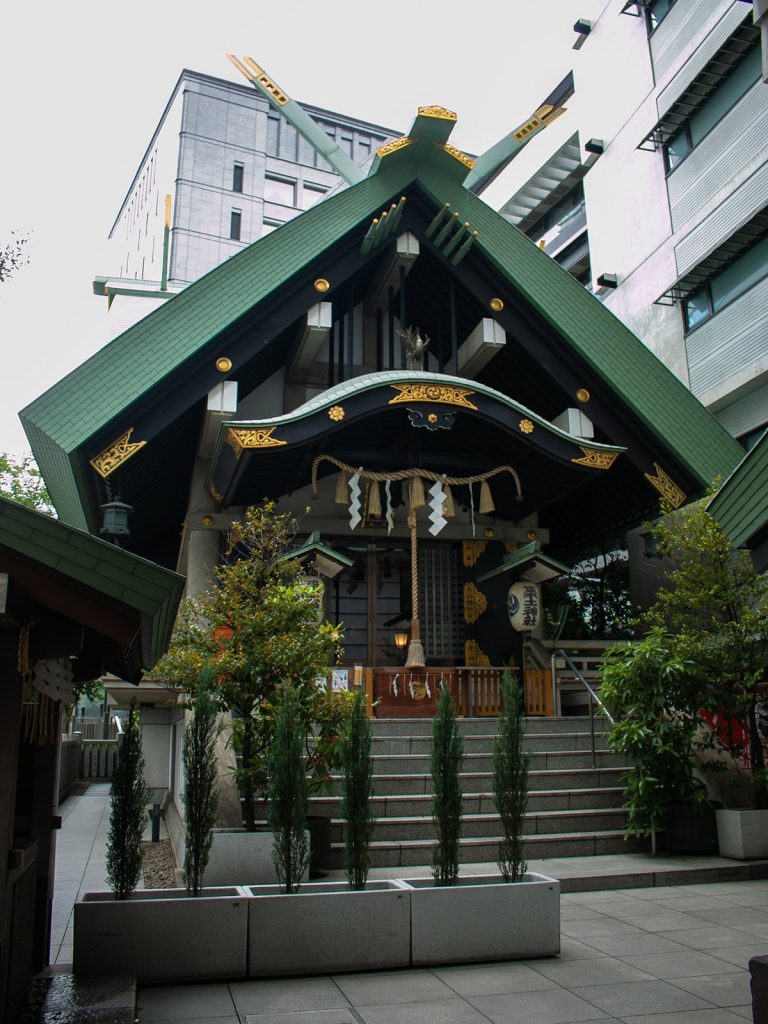
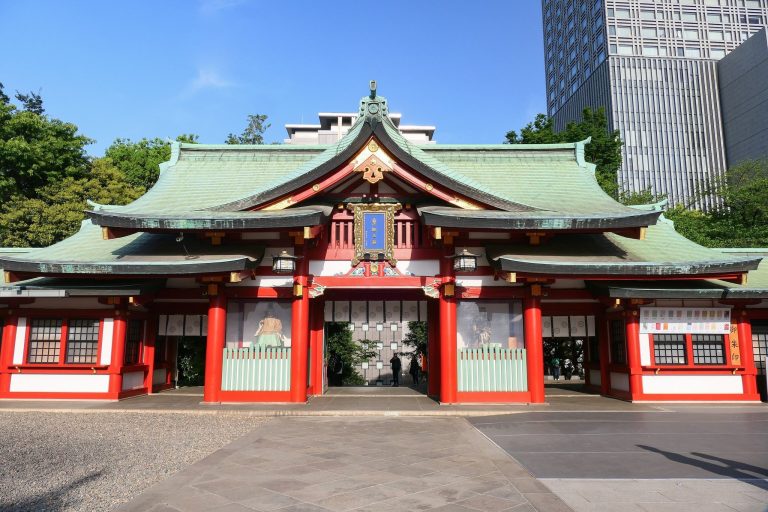
The present precinct combines the rebuilt Hachimangū shrine buildings with Chanoki Inari Shrine, the subsidiary shrine whose grounds became the site of the relocation around 1636. The surviving arrangement therefore reflects both the shrine’s postwar reconstruction and the earlier use of the location as a local protective shrine. The sacred camphor tree that once stood in the precinct was destroyed in the 1945 air raid.
Hachimangū Shrine
The current Hachimangū buildings date from the 1962 rebuilding after the wartime destruction. They serve the worship of Hondawake no Mikoto, Okinagatarashi-hime no Mikoto, and Yotohime no Kami. Their present form belongs to the shrine’s postwar phase, while their religious identity continues the foundation established during Ōta Dōkan’s construction of Edo Castle.
Chanoki Inari Shrine
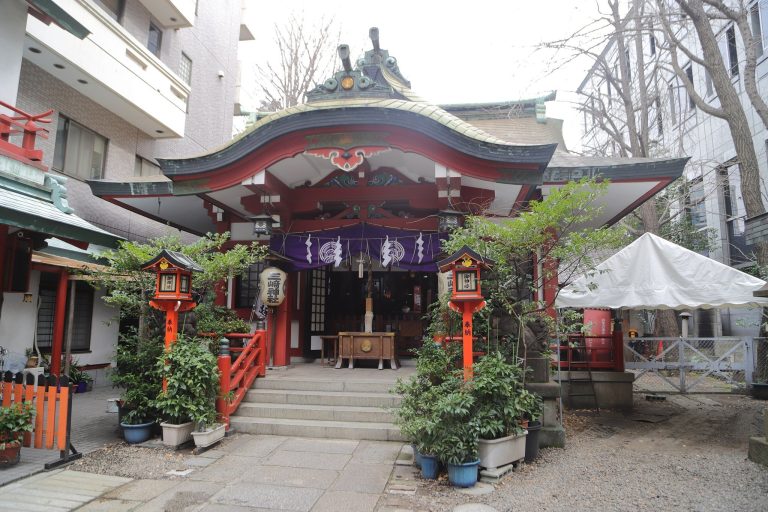
Chanoki Inari Shrine occupies part of the precinct as a subsidiary shrine. Its grounds formed the location to which Ichigaya Kamegaoka Hachimangū was moved around 1636. Chanoki Inari is dedicated to Inari Ōkami and Ukemochi no Kami and continues the local protective role associated with the site before the Hachimangū shrine’s relocation.
Former Tōenji
Tōenji stood within the shrine precinct as its associated Buddhist temple. It had a time bell known as one of the bells used to announce the hours throughout Edo. Following the temple’s abolition in the Meiji period, the bell and other remnants were removed.