Sonnenberg Castle: A Swiss Noble Seat and Renaissance Palace
Site at a Glance
- Popularity
- Medium
- Country
- Switzerland
- Primary era
- Early Modern
- Eras represented
- Medieval, Early Modern
- Civilizations
- Habsburg, Holy Roman Empire
- Site type
- Domestic
- Remains
- Castle
On this page8 sections
History
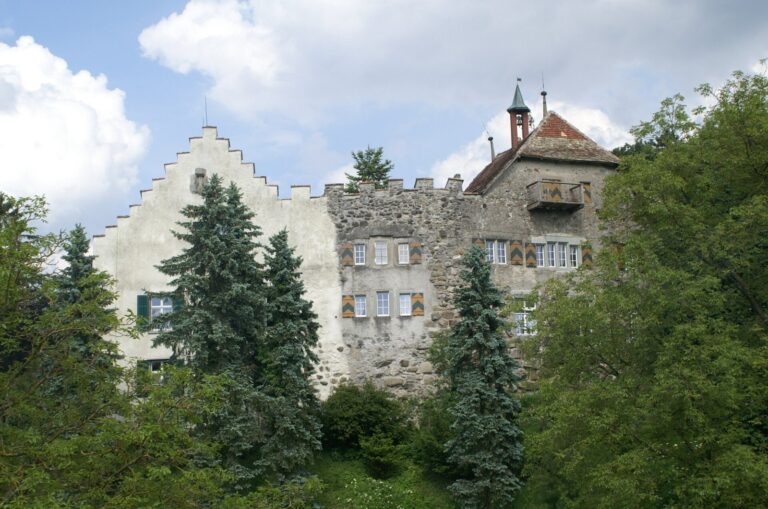
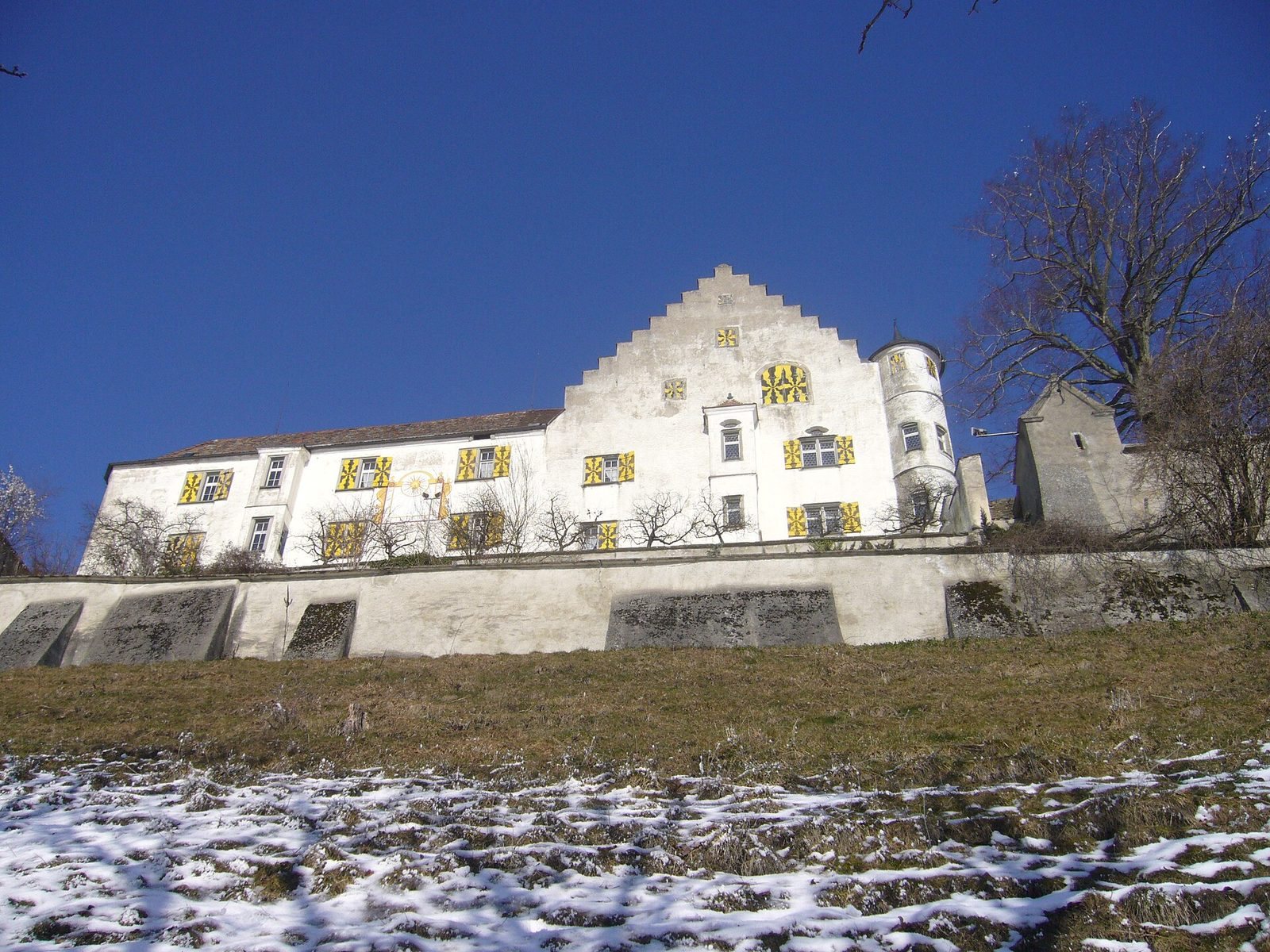
Sonnenberg Castle stands on the Immenberg in Stettfurt, Switzerland. First recorded in 1242 as Sunnunbergh, it served as the seat of the von Sonnenberg family, ministerial nobles who performed military or administrative duties for a lord. The family was associated with Reichenau Abbey, a major Benedictine monastery on Lake Constance. The surviving palace is a late-Renaissance building commissioned in 1596.
Medieval lordship and conflict
In 1360, the castle’s lower-court jurisdiction passed by marriage to Hermann IV von Landenberg-Greifensee. This authority gave him control over lower courts in the territory. Troops from the canton of Schwyz destroyed the castle in 1407 during the Appenzell Wars and again in 1444 during the Old Zurich War, two conflicts in the fifteenth-century Swiss region. The Landenbergs rebuilt it after both attacks.
Transfers of ownership
In 1460, Austrian nobleman Bernhard Gradner threatened the castle and its fishpond, which he threatened to drain. Control later passed to Barbara von Knöringen, widow of Beringer X von Landenberg, a son of Hugo von Landenberg. Reichenau Abbey gave up its feudal authority over the estate in 1528.
Around 1542, Ulrich von Breitenlandenberg of Altenklingen and his son Hans Michael acquired the castle and lordship, then pledged them as security to Anna Ziegler of Schaffhausen. Hans Gutensohn of St Gallen bought the property in 1561 and left it to his sons David and Thomas. Jost Zollikofer, of St Gallen’s Zollikofer von Altenklingen family, acquired it in 1580. Albrecht von Breitenlandenberg was living at the castle in 1585.
Palace and abbey estate
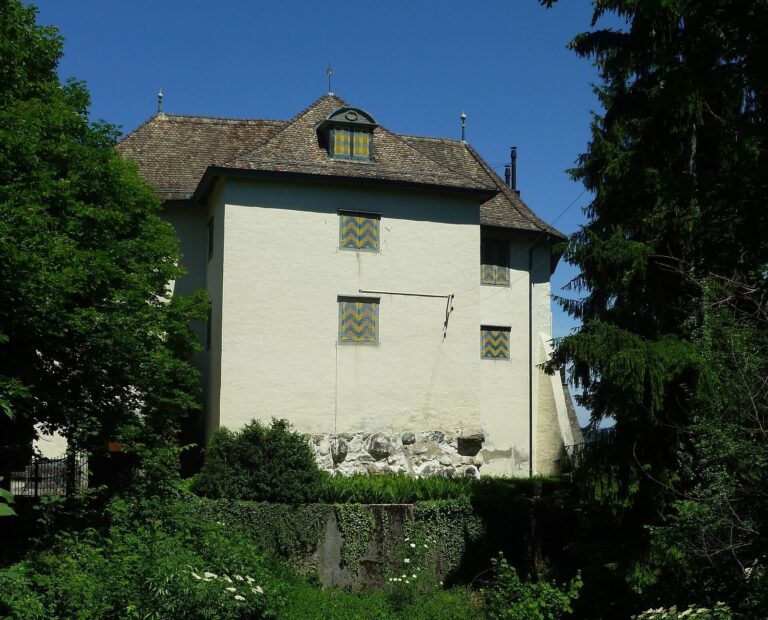
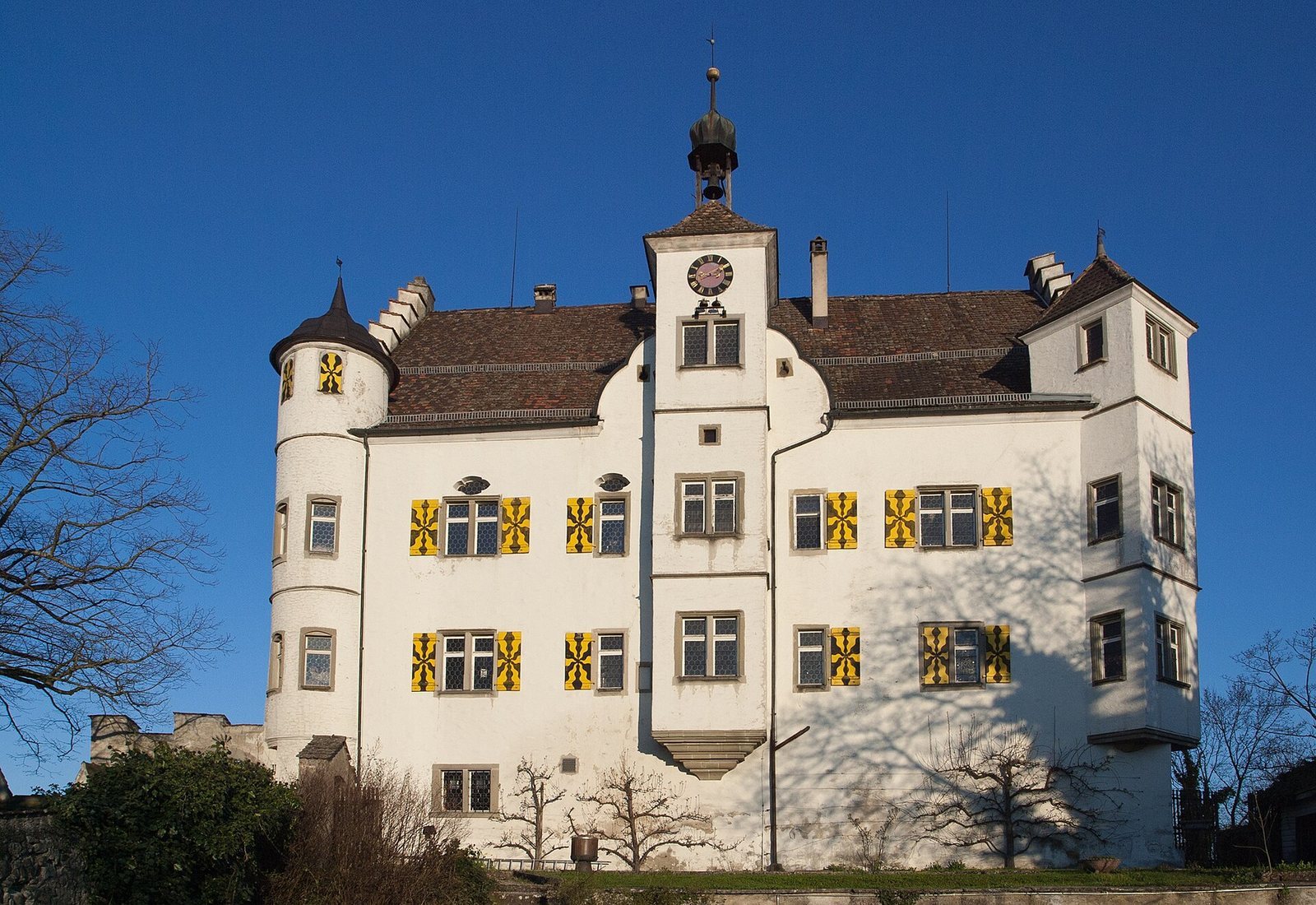
A major fire in 1595 led Jost Zollikofer to commission a new palace the following year, designed by Mathäus Höbel in the style of Altenklingen Castle. The building costs prompted Jost’s son Kaspar to sell the property in 1618 to Colonel Konrad von Beroldingen of Uri.
In 1678, Konrad’s son Sebastian Ludwig, then chief bailiff at Bischofszell Castle, sought to sell Sonnenberg to the city of St Gallen. The Catholic cantons did not confirm the sale. Sebastian’s brother, Colonel Karl Konrad von Beroldingen, used his right to claim the property ahead of the prospective buyer, then sold it to Einsiedeln Abbey that year. The Benedictine abbey exercised jurisdiction over the estate until 1798, after which it used the property for agriculture.
Modern ownership and archaeology
Austrian financier Christian Baha bought the castle and its 150-hectare estate in 2007. Renovation and conversion work aimed at making the castle a private residence began afterward, but faced repeated stoppages and disputes. Preparations for renovation, including plans for an underground garage, led to emergency excavation in 2009 and the discovery of prehistoric deposits.
Sonnenberg Castle is designated a Swiss heritage site of national significance.
Remains
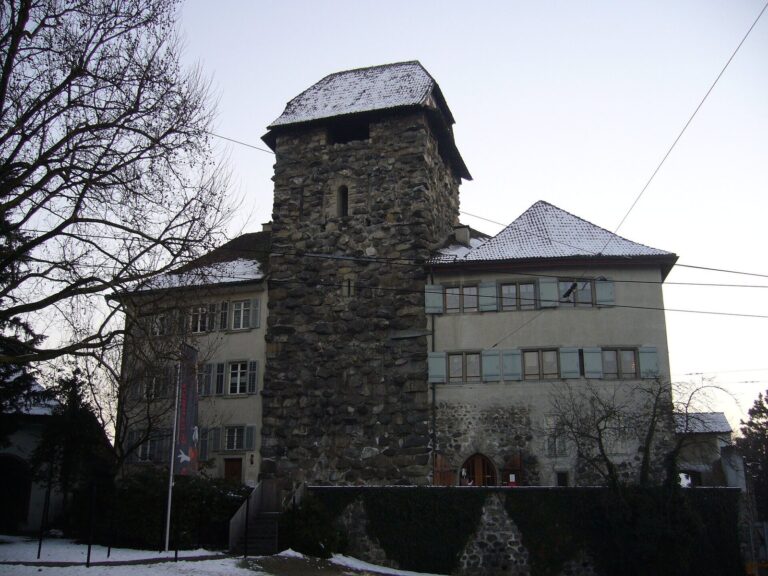
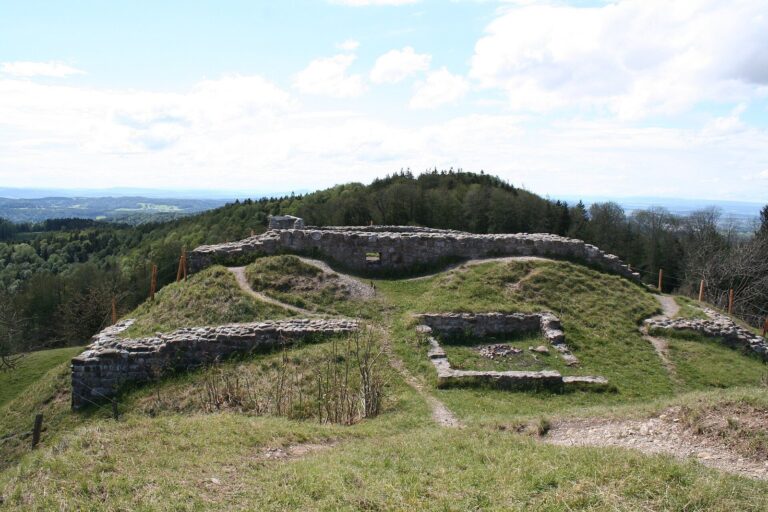
The castle occupies a plateau on the Immenberg, 649 metres above sea level. Its layout centers on a late-Renaissance palace enclosed by outer walls and gate structures.
Palace and estate
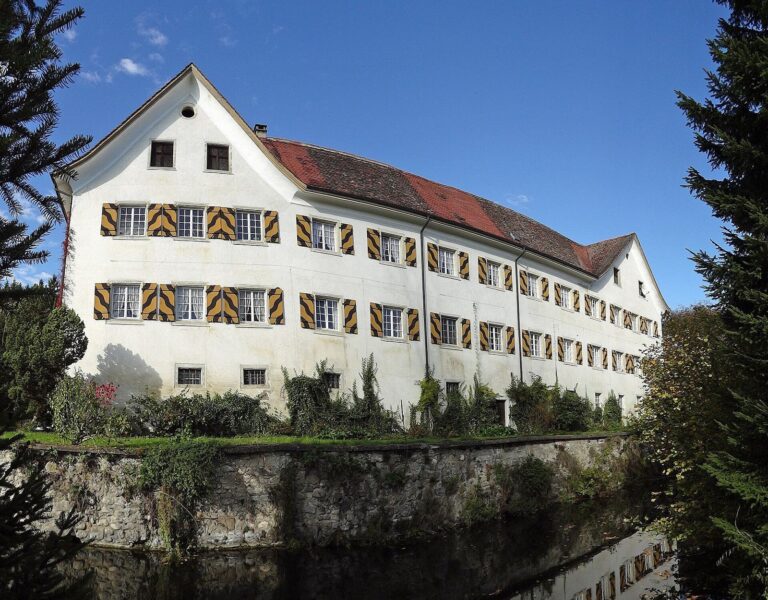
The palace is a multi-storey, gabled building designed in the style of Altenklingen Castle and built by Mathäus Höbel. The associated estate, acquired with the castle in 2007, covers 150 hectares of arable land, meadows, woodland, and vineyards.
Prehistoric deposits
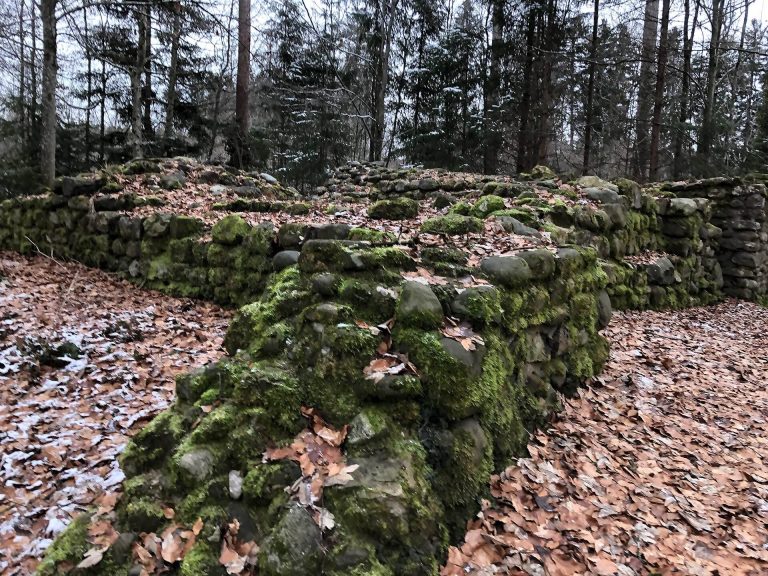
Discontinuous deposits beneath the castle plateau are interpreted as probable traces of settlements. The finds include a ceramic beaker from the 43rd century BCE, about 300 kilograms of pottery sherds, and about 150 kilograms of animal-bone fragments. Most of the pottery and bones are attributed to the Pfyn and Horgen cultures, prehistoric cultures known in Switzerland and the surrounding region, and date to between 3900 and 2750 BCE. The evidence points to one of the region’s earliest settlements. The quantity of material is comparable to finds from lakeside pile-dwelling sites, prehistoric settlements built on piles over water or wet ground.