Solnitsata: A Prehistoric Salt-Production Settlement in Bulgaria
Site at a Glance
- Rating
- 4.7
- Popularity
- Low
- Country
- Bulgaria
- Primary era
- Stone Age
- External website
- Open
- Eras represented
- Stone Age
- Civilizations
- Unclassified
- Site type
- City
On this page12 sections
History
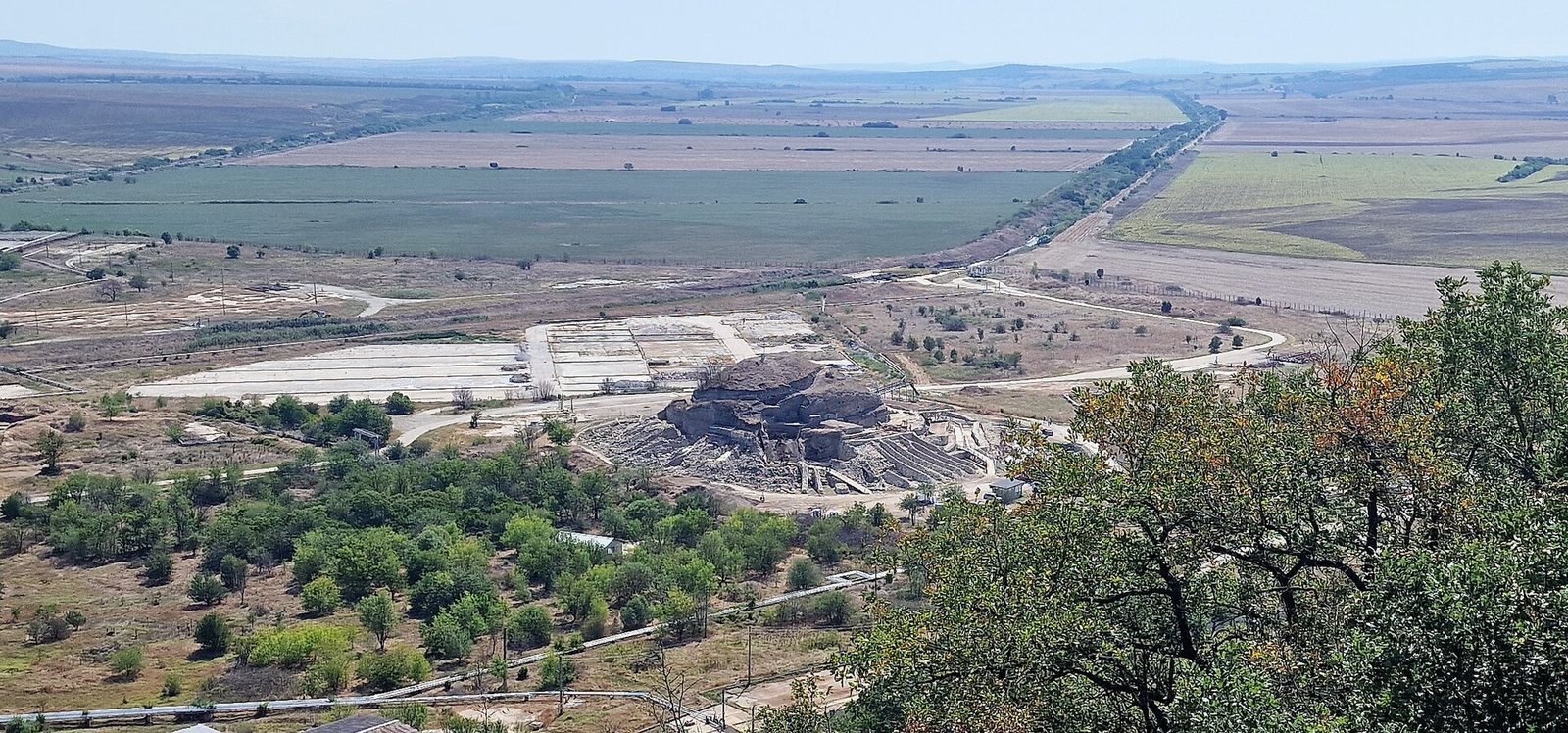
Solnitsata was a prehistoric salt-production settlement near Provadia in Bulgaria, occupied from approximately 5500 BC into the fifth millennium BC during the Neolithic and Chalcolithic periods. Its most intensive development took place between roughly 4700 and 4200 BC. The settlement is associated with the Karanovo III–IV, Hamangia III–IV, Gumelnita–Karanovo VI, and Varna cultural phases, archaeological traditions identified through distinctive ceramics, settlement patterns, burial customs, and other material evidence.
Origins and salt production
Salt making began around 5500 BC, during the Karanovo III–IV phase. Solnitsata developed beside springs containing approximately 160 to 190 grams of salt per litre of water, giving its inhabitants access to an unusually rich natural resource. Salt was a strategically important commodity, and production was probably directed toward exchange within the locality and across the Balkans.
As demand increased and the output of the springs changed, salt-making moved through several stages. Production first took place inside domestic buildings. Around 5200 BC, installations outside the built-up settlement used a large pit where several vessels could be heated at once. By about 4900 BC, groups of larger pits had increased the output from approximately 25 kilograms per firing to about 4.5 tonnes in a production cycle. Around 4500 BC, the demand for fuel had contributed to deforestation in the surrounding area, and the inhabitants began using shallow basins in which brine could evaporate in the sun.
Social development and abandonment
The accumulation of large salt surpluses required systems for storage, control, and distribution. These arrangements encouraged social and economic hierarchy and the emergence of early elite groups. Archaeologist Vassil Nikolov has connected the concentration of wealth at Solnitsata with the rich gold grave goods of the Varna Chalcolithic Necropolis, a major fifth-millennium BC cemetery in Bulgaria that demonstrates pronounced social inequality. Solnitsata has consequently been interpreted as a proto-city, meaning a settlement with some urban characteristics, such as specialized production, organized construction, and defensive infrastructure, despite its relatively small population. Estimates place its population at about 150 during certain periods or approximately 350.
The settlement may have been destroyed by a powerful earthquake, possibly the same event associated with destruction in the seventh horizon of the settlement mound at Durankulak. The salt springs later declined or disappeared, probably contributing to abandonment. The end of occupation is placed around 4200 BC, although a date around 4350 BC has also been proposed.
Discovery and investigation
Ara Margos discovered Solnitsata during the 1970s. Systematic excavation began in 2005 under Vassil Nikolov and a team from Bulgaria’s National Institute of Archaeology. The investigations established the importance of the settlement’s changing salt-production technology and its relationship to the organization of prehistoric society.
Salt extraction remained important in the wider Provadia area. A salt spring documented in 1922 contained 19 percent salt water, and during the same period the syndicate Obshte Podem received a concession to industrialize salt production.
Remains
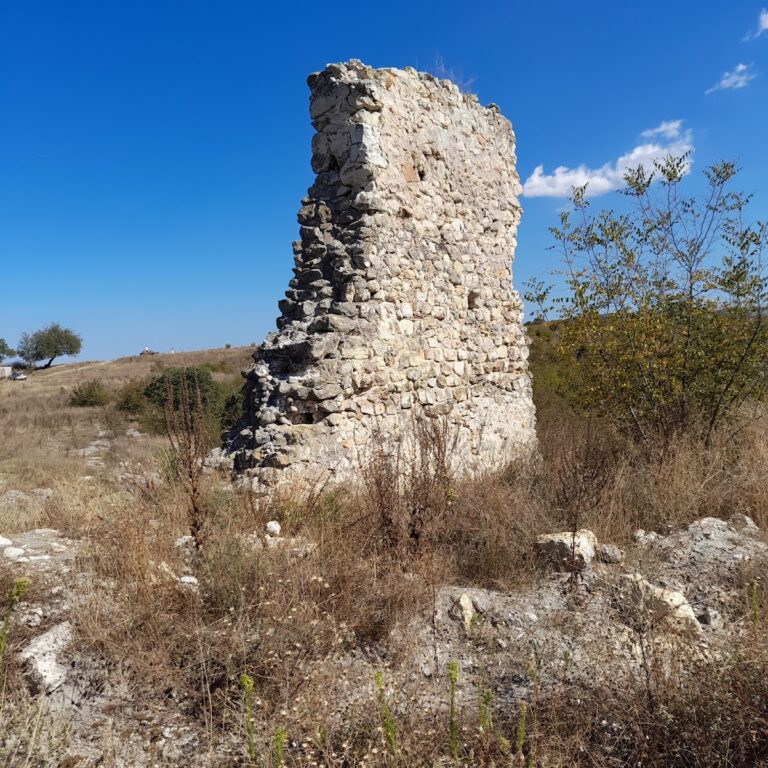
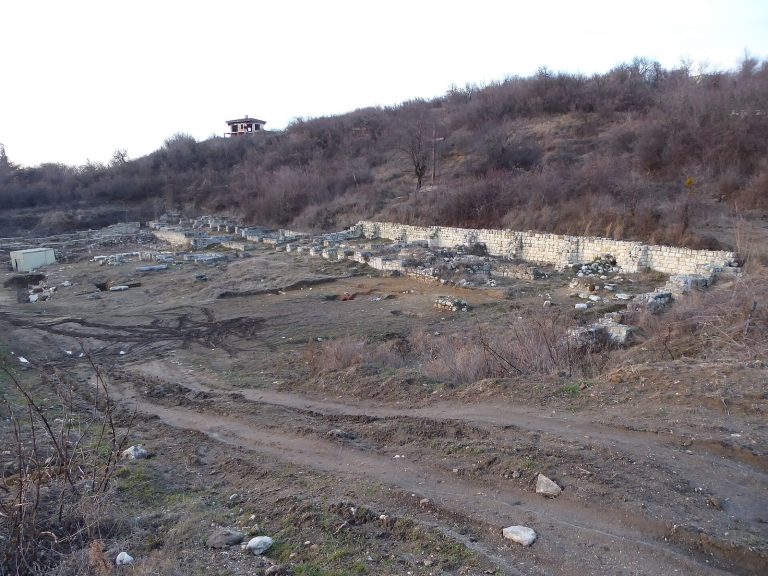
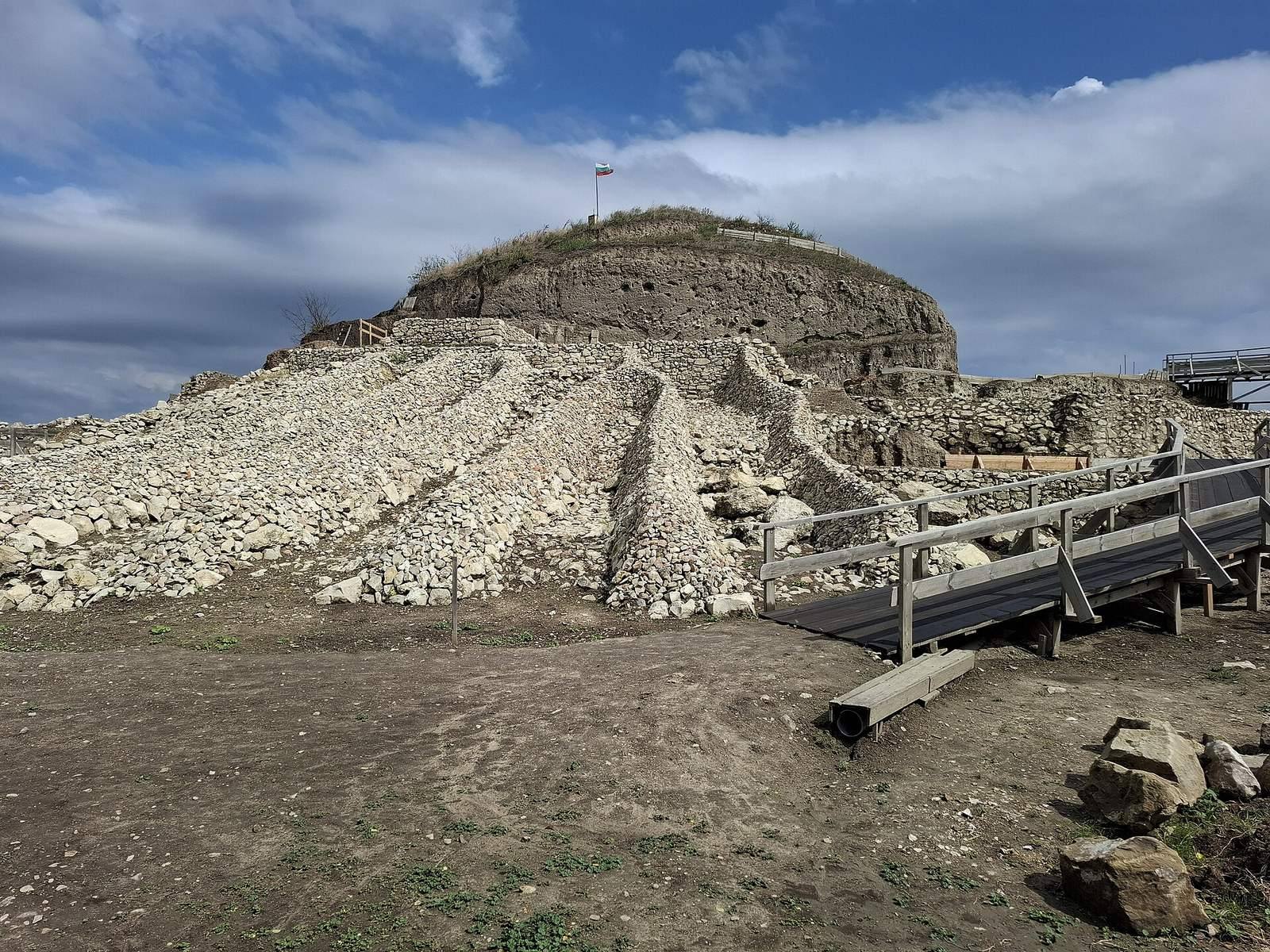
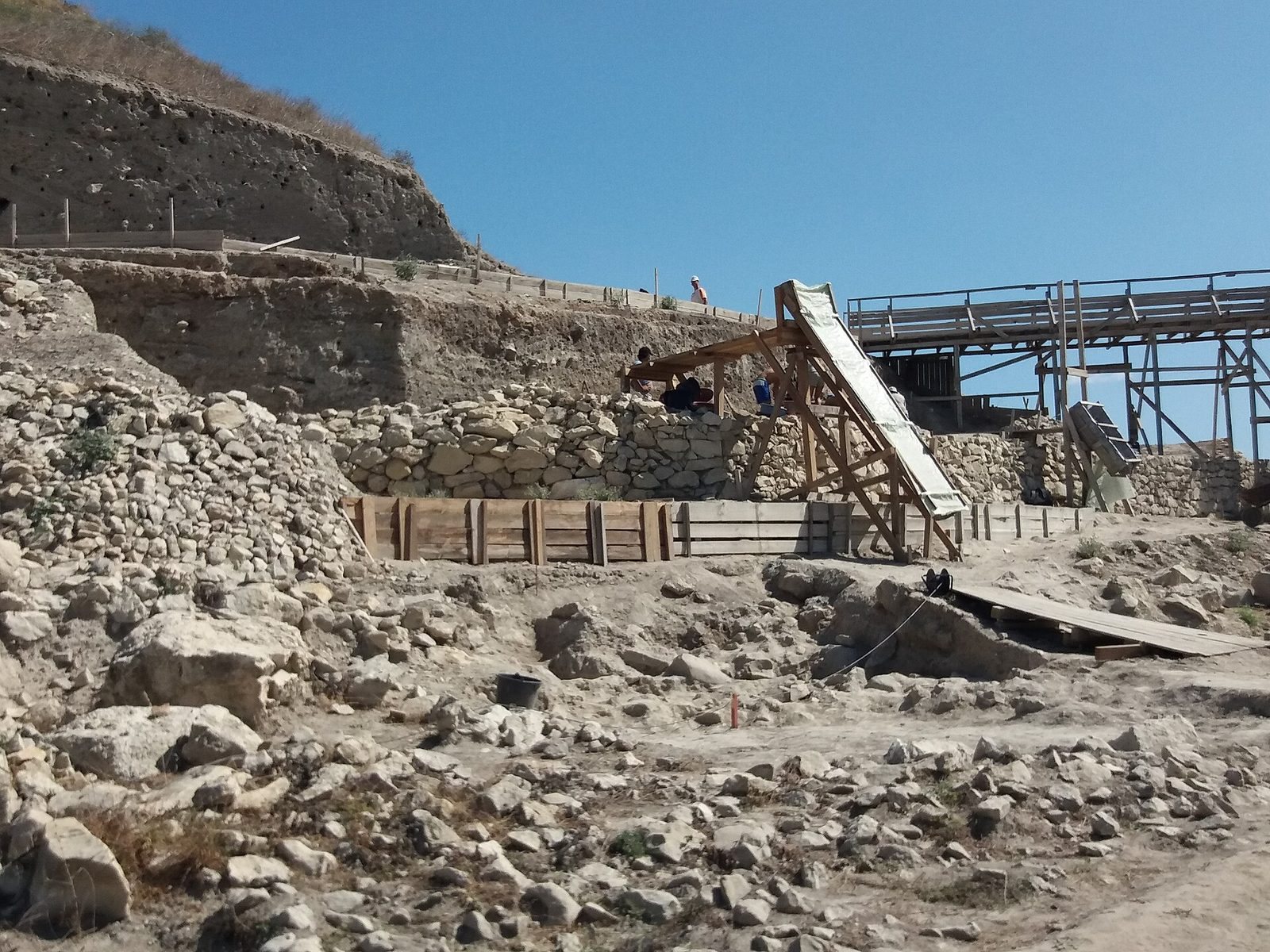
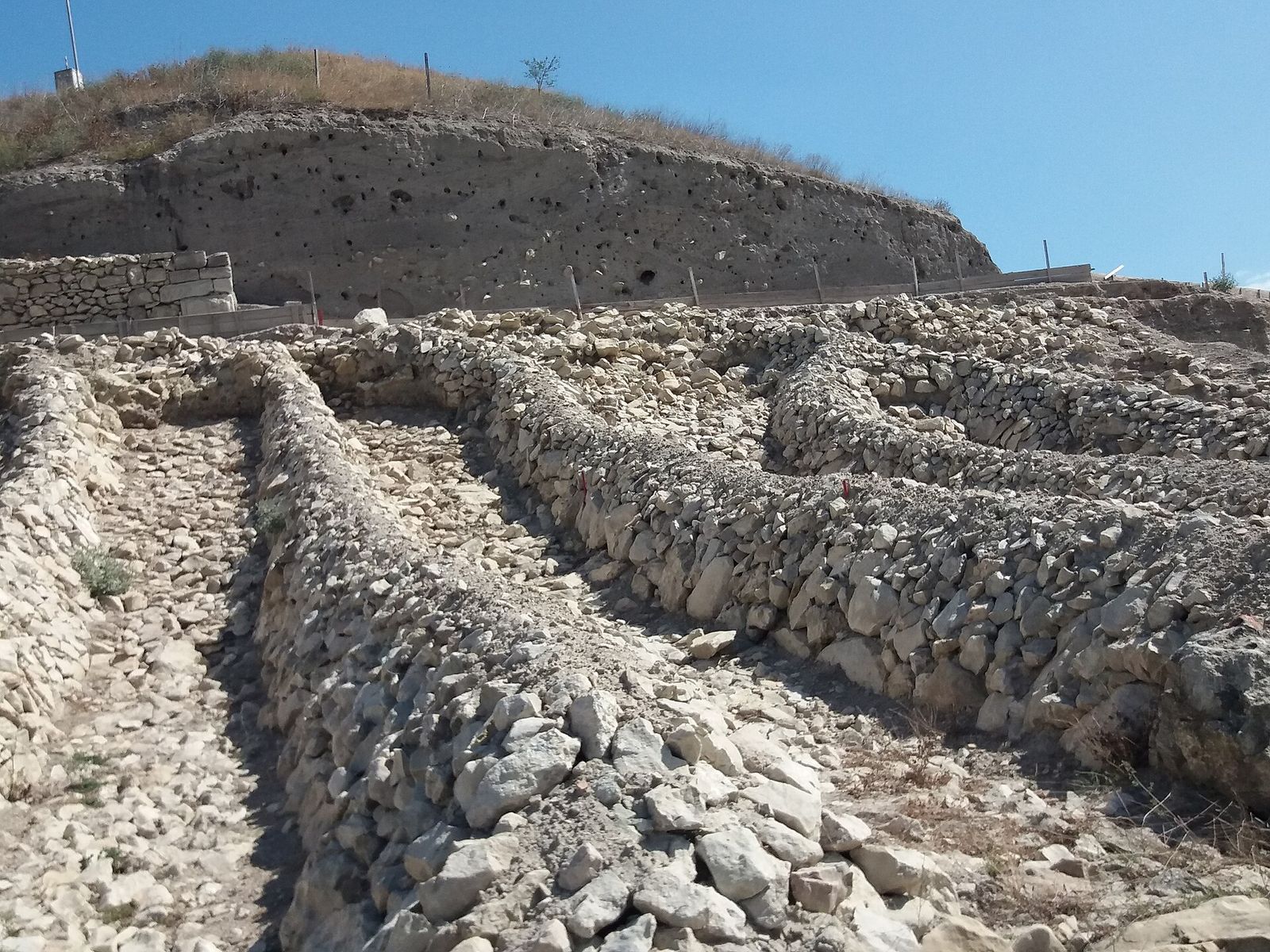
Solnitsata survives as ruins of a fortified stone settlement arranged around a citadel with inner and outer settlement areas. Massive defensive walls reached approximately 4.3 metres in thickness. The fortifications are among the earliest known examples of defensive architecture in Europe and protected both the settlement and its valuable salt reserves. Within the defended area were residential buildings, salt-production facilities, pottery-production areas, and cult structures. Some houses are thought to have had two storeys, indicating carefully planned construction for a prehistoric community.
Fortifications and settlement areas
Stone defenses
The settlement’s principal defenses were built from stone in exceptionally substantial walls, reaching up to about 4.3 metres thick. Their arrangement around the citadel and the inner and outer settlement areas formed the site’s main protective structure. The walls’ scale reflects the importance of securing the settlement and the salt stores connected with its economy.
Buildings and activity areas
Residential buildings stood alongside areas devoted to pottery production and cult activity. Some houses may have risen to two storeys. This combination of domestic, craft, and ritual spaces shows how several functions were organized within the fortified settlement.
Salt-production installations
Domestic furnaces
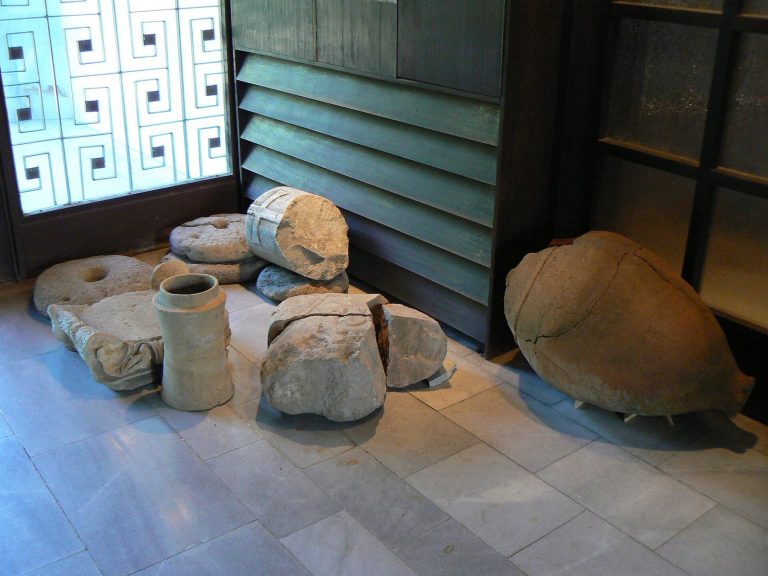
In the earliest production system, brine was placed in specially made ceramic vessels over hearths inside houses. Massive domed furnaces built from clay supplied the heat, after which the crystallized salt was mechanically collected. A single furnace load produced approximately 25 kilograms of salt briquettes. Fragments of the ceramic vessels provide the principal evidence for the gradual refinement of this technology.
External pits and evaporation basins
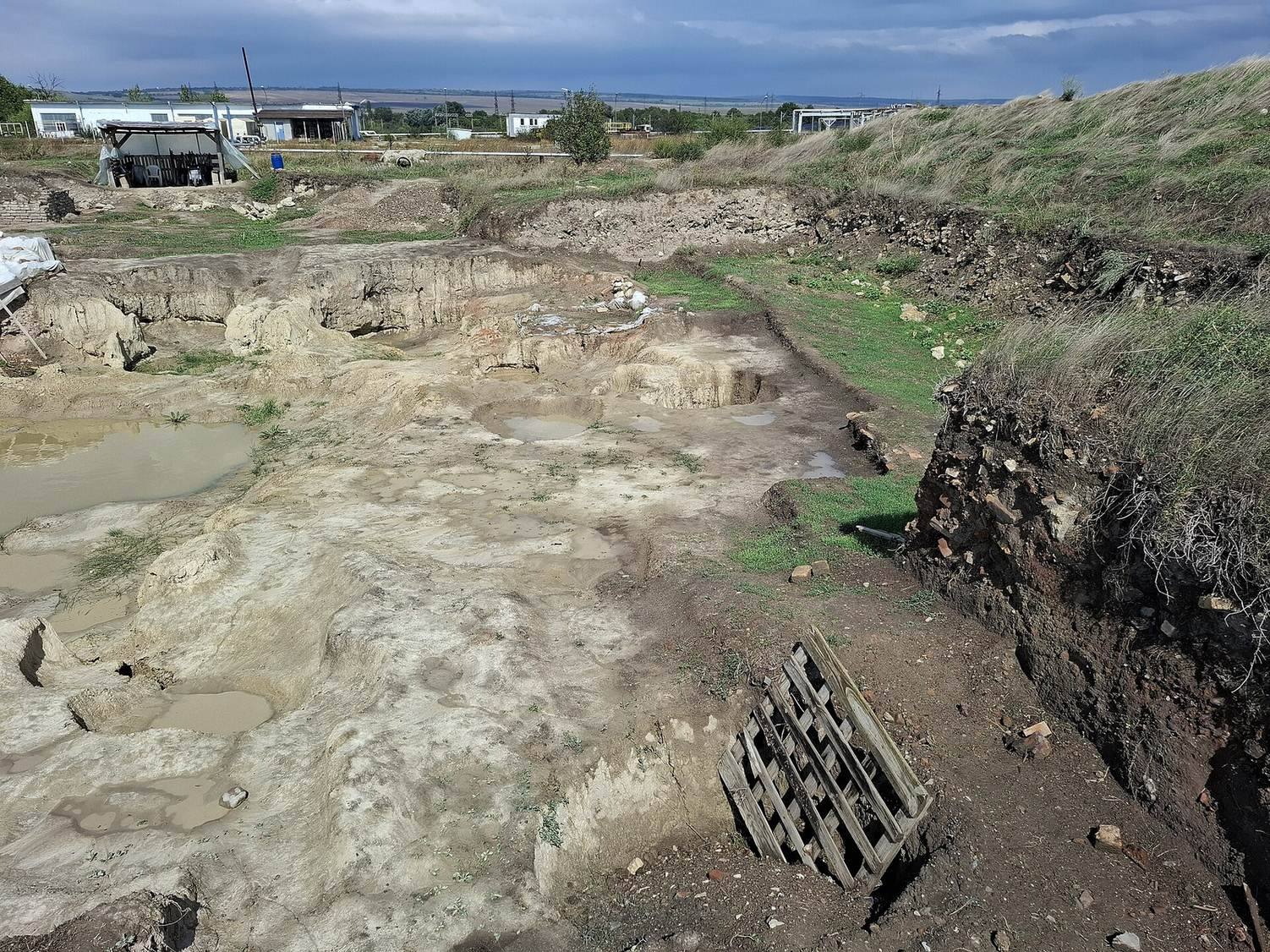
Later production moved beside the salt springs. Around 5200 BC, a large pit allowed several brine-filled vessels to be heated simultaneously. Around 4900 BC, groups of pits up to 2 metres deep and approximately 7.5 metres in radius expanded production, with later installations capable of yielding about 4.5 tonnes in one production cycle.
By around 4500 BC, numerous shallow basins near the springs supported solar evaporation. Brine was channelled into the basins and concentrated through the sun’s heat instead of being heated entirely with fuel. The sequence of furnaces, heating pits, and evaporation basins traces the growth of production through the Late Neolithic, Early Chalcolithic, and Late Chalcolithic phases.
Burials and metal finds
Burials near the settlement include an unusual mortuary practice in which bodies were divided at the waist and only the upper parts were buried. Approximately 3,000 associated gold ornaments form a major group of prehistoric metal finds connected with Solnitsata. They are regarded as among the oldest gold ornaments in Europe, and have also been described as the earliest gold ornaments known. Their association with finds from Varna and Durankulak provides evidence for the wealth connected with the settlement.