Petrich Kale: An Early Byzantine and Medieval Fortress in Bulgaria


Site at a Glance
- Rating
- 4.6
- Popularity
- Low
- Country
- Bulgaria
- Primary era
- Medieval
- Eras represented
- Classical, Medieval
- Civilizations
- Byzantine, Second Bulgarian Empire
- Site type
- Military
- Remains
- Fort
On this page14 sections
History
Petrich Kale is an Early Byzantine and medieval Bulgarian fortress above Razdelna in Bulgaria, built during the fifth or sixth century as part of the Early Byzantine defensive system. Its position on a high stone terrace made it an important fortified site in the historical landscape of the Avren Plateau.
Early Byzantine and Bulgarian Periods
During the First Bulgarian Empire, the medieval Bulgarian state that lasted from the late seventh century until 1018, Petrich Kale probably ceased to function as a defensive site. Slavic settlements were established in its surroundings during this period.
Under Byzantine rule, the fortress resumed its defensive function. It later flourished during the Second Bulgarian Empire, the Bulgarian state established in 1185 and brought to an end by Ottoman conquest in the late fourteenth century.
Petrich in Medieval Records
Petrich was first mentioned in 1154 by Muhammad al-Idrisi, a twelfth-century Arab geographer and traveler. He described it as a flourishing, attractive, medium-sized city situated 30 miles west of Barnas.
The Ottomans conquered the fortress in 1388. On 7 November 1444, forces of the Crusade of Varna reached Petrich Kale. This fifteenth-century Christian expedition against the Ottoman Empire culminated in the Battle of Varna. The assault on the fortress caused many deaths, while Hungarian and Slavic prisoners were freed and returned across the Danube. Bulgarian allies are believed to have joined the crusaders after the battle. Philip Callimachus, a fifteenth-century humanist and historian, recorded the military valor of a Polish knight during the events surrounding the fortress.
Archaeological Research and Commemoration
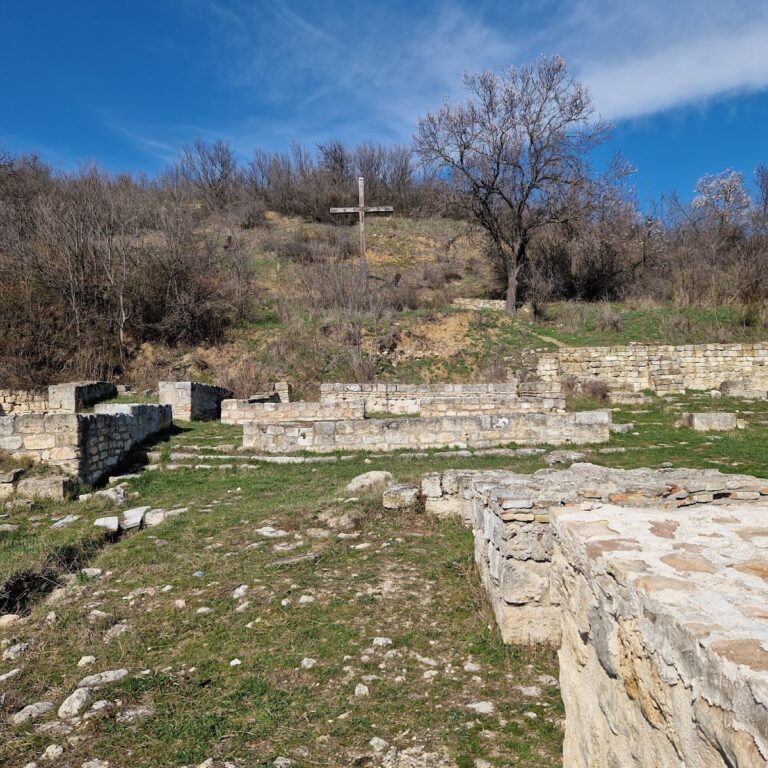
Research at Petrich Kale was conducted during the 1970s and resumed in the second decade of the twenty-first century. A metal cross was installed and consecrated on 13 September 2015 at the edge of the fortress’s stone ring, commemorating the flood that struck Razdelna village on 1 February 2015.
Remains
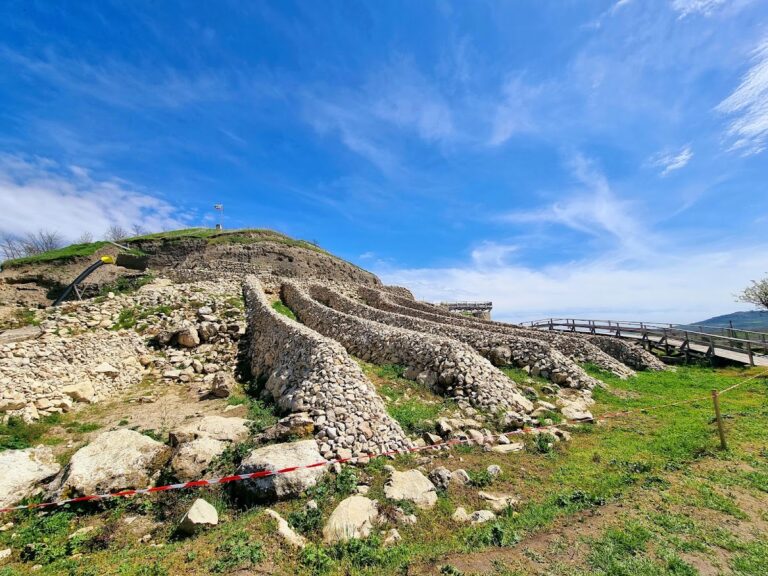
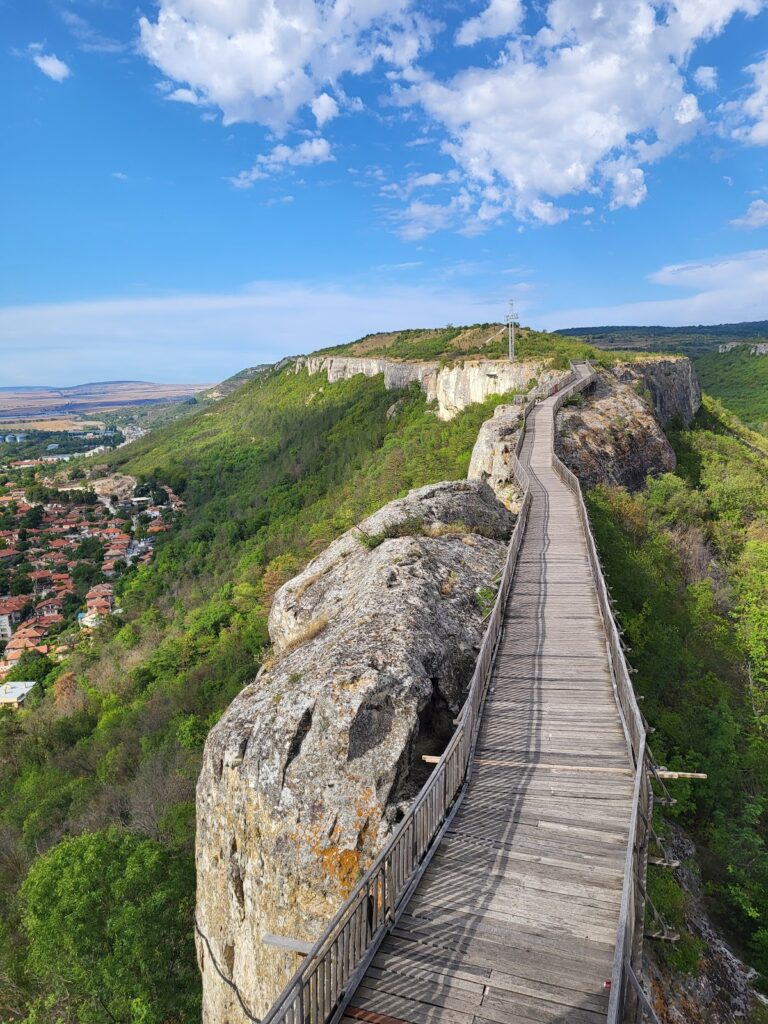
Petrich Kale occupies a high stone terrace above Razdelna, within the Avren Plateau. The protected Petrich natural area lies northeast of the fortress. In the fifteenth century, three lines of walls and deep ditches surrounded the site. Vertical cliffs reaching up to 35 meters protected it on the west and north, while deep, steep ravines guarded the east and part of the south. The approach ran from the south along a narrow rocky strip connecting the fortress with the Avren Plateau.
Walls and Defensive Towers
Rectangular Towers
Two rectangular towers measured 11 by 9 meters and stood 50 meters apart. Their surviving masonry reaches heights of up to 7 meters. On one tower, a wall remains 5 to 6 meters high, while two fortress walls survive to heights of 5 to 6 meters.
Approach Tower
A larger tower defended the approach to the fortress. Pottery and animal bones were found within it, providing material evidence connected with the use of this defensive structure.
Church, Settlement, and Water System
Church and Residential Buildings
Archaeological investigations uncovered a small single-nave church surrounded by graves. Residential buildings dating from the eleventh and twelfth centuries were also found within the fortress.
Stairway and Reservoirs
A rock-cut stairway approximately 20 meters long leads to two large water reservoirs. Together, the reservoirs had a capacity of more than 700 cubic meters, forming part of the fortress’s water infrastructure.
Archaeological Finds and Memorial Cross
Recovered Objects
Finds from Petrich Kale include arrows, rings, coins, belts, ornaments, and various iron objects. These materials represent the range of military, personal, and practical objects recovered from the site.
Flood Memorial
The metal cross installed in 2015 stands at the edge of the stone ring associated with the fortress. It commemorates the flood that affected Razdelna village earlier that year.
Nearby sites