Ovech Fortress: A Byzantine and Bulgarian Stronghold in Bulgaria


Site at a Glance
- Rating
- 4.6
- Popularity
- Medium
- Country
- Bulgaria
- Primary era
- Classical
- Eras represented
- Classical
- Civilizations
- Byzantine
- Site type
- Military
- Remains
- Fort
On this page12 sections
History
Ovech Fortress is a Byzantine-built stronghold near Provadia in Bulgaria, founded in the fourth century AD as a defensive outpost, probably against incursions by northern tribes. Thracian groups occupied the site before the fortress was established. Its history spans Byzantine, Bulgarian, and Ottoman rule, and it became an important administrative, military, and religious center during the Second Bulgarian Empire.
Byzantine foundation and early Bulgarian history
The fortress operated until the seventh century, then remained inactive for about a century. It was reoccupied from the eleventh century and continued in use until the late seventeenth century. During the Byzantine period it was known as Provaton or Provat. The twelfth-century Arab geographer al-Idrisi called it Burfanta, while the Ottoman name Tas Hisar means “stone fortress.” In Bulgarian usage, it became known as Ovech.
Ovech reached its greatest prosperity under the Second Bulgarian Empire, the Bulgarian state that flourished from the late twelfth to the late fourteenth century. From an important defensive position, it developed into a major administrative and military center with a permanent population, a regional administrative seat, and a strong garrison. After the Bulgarians adopted Christianity, the fortress also became the residence of a bishop. A bishopric was a Christian administrative district governed by a bishop, whose seat served as its religious center.
Two inscriptions associated with Khan Omurtag, an early ninth-century ruler of the First Bulgarian Empire, mention commanders who were killed during campaigns against the Franks and Magyars. The fortress was later used by Tsar Kaloyan and by his brother Peter II. Tsar was the imperial title of medieval Bulgarian monarchs.
Conflict during the Second Bulgarian Empire
In 1278, two Byzantine armies attempted to cross the Balkan mountain passes toward Tarnovo. One force numbered approximately 5,000 soldiers and was commanded by the general April; the other numbered about 10,000 and followed the general Mourin. Ivaylo, a Bulgarian rebel leader who became emperor, defeated both armies.
The Byzantine commander Michael Gabras Trachaniotes later entered Bulgarian territory after conquering several fortresses in eastern Thrace. His advance was halted at Ovech. He besieged the fortress, which Ivaylo defended, but failed to capture it and withdrew.
In 1366, on the orders of Tsar Ivan Alexander, three knights serving Amadeus of Savoy were imprisoned at Ovech after the fortress’s forces captured them during the battles of Galata. They were released after the intervention of the Catholic Patriarch of Constantinople and the payment of a ransom of 2,400 gold perpera. A perpera was a medieval gold coin used in Byzantine and Balkan monetary systems.
Ottoman conquest and abandonment
Ovech came under Ottoman control in 1388, after a besieging army of 30,000 commanded by Lala Shahin attacked the fortress. The capture was reportedly achieved through a stratagem. After the Ottomans concluded a truce in the evening, they broke it and launched an assault.
In 1409, Ovech became the center of a revolt led by Fruzhin, the son of the Bulgarian dynastic ruler Shishman. In 1413, Musa, an Ottoman prince and ruler and the son of Bayezid I, recaptured the fortress. Polish and Hungarian forces led by King Wladislaus III attacked Ovech in 1444 but were defeated. Afterward, the fortress lost its military purpose and importance and was gradually abandoned.
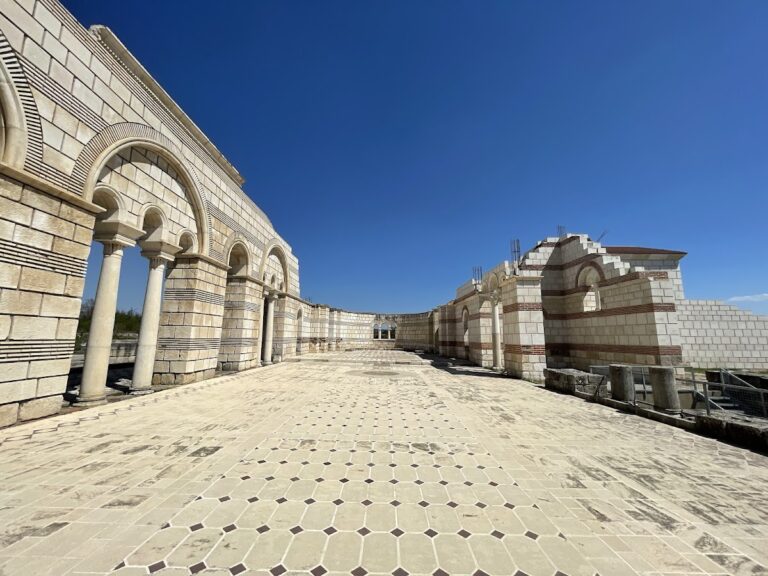
The fortress has since been fully restored, and a bridge has been constructed between Ovech and the Tabiite Plateau.
Remains
Plateau and defenses
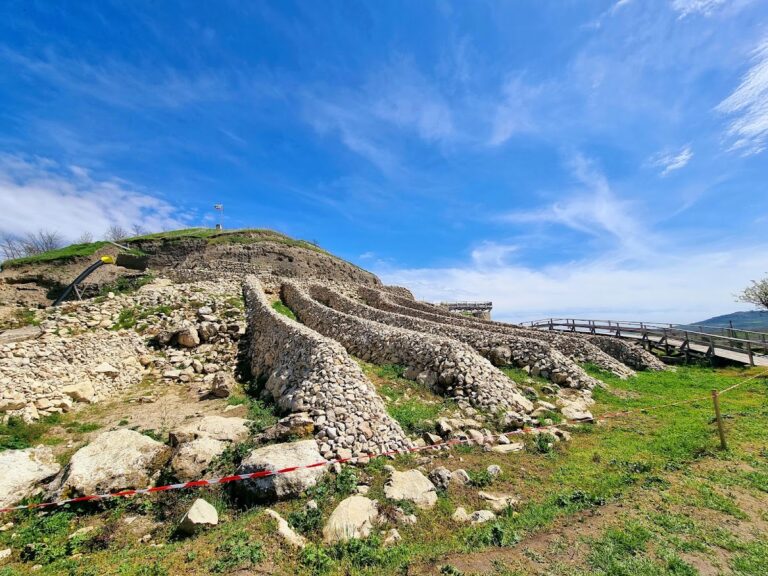
Ovech occupies a ship-shaped plateau running from north to south. Rock faces approximately 11 to 25 metres high surround it on every side. A narrow passage connects the fortress with the Tabiite Plateau to the north, where the main gate and high defensive walls formed the principal approach.
Main gate and bridge
The main gate was linked to the Tabiite Plateau by a bridge approximately 160 metres long. A suspension bridge crossed an artificially raised approach that had been excavated to a stated length of 8 metres and a depth of 5 metres. Beside the rock-cut gate is a vaulted cistern more than 10 metres long.
Water and storage installations
Numerous wells used to collect water survive across the site, including one that reaches a depth of 80 metres. Grain-storage tanks are also preserved, reflecting the fortress’s capacity to maintain supplies within its defended plateau.
Religious and architectural remains
Bishop’s temple
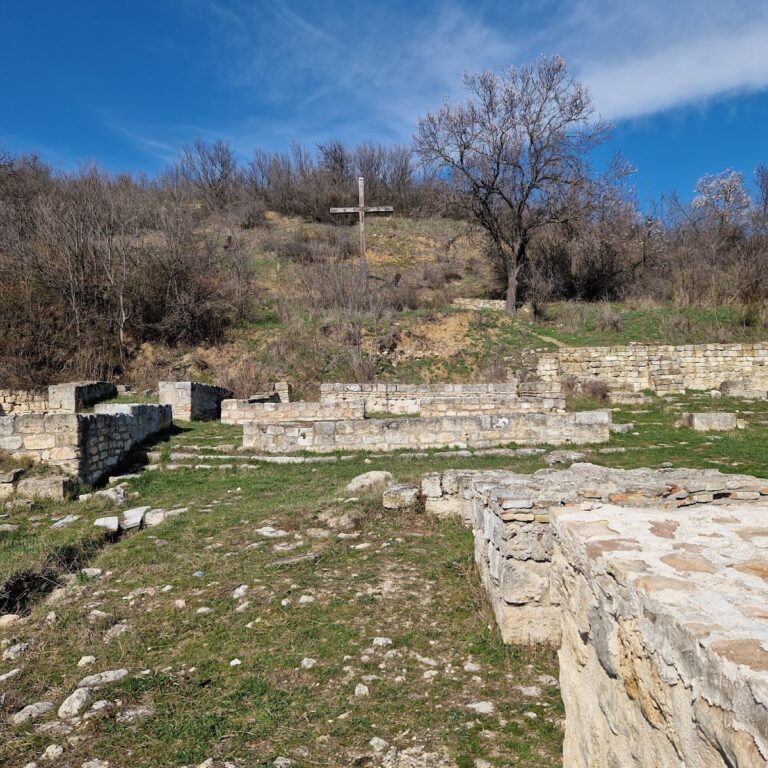
The remains include a temple with an apse, the semicircular end of a church, which served as the center of the Ovech bishopric. Its surviving elements connect the fortress’s religious function with the period when Ovech was the seat of a bishop.
Apsidal churches and towers
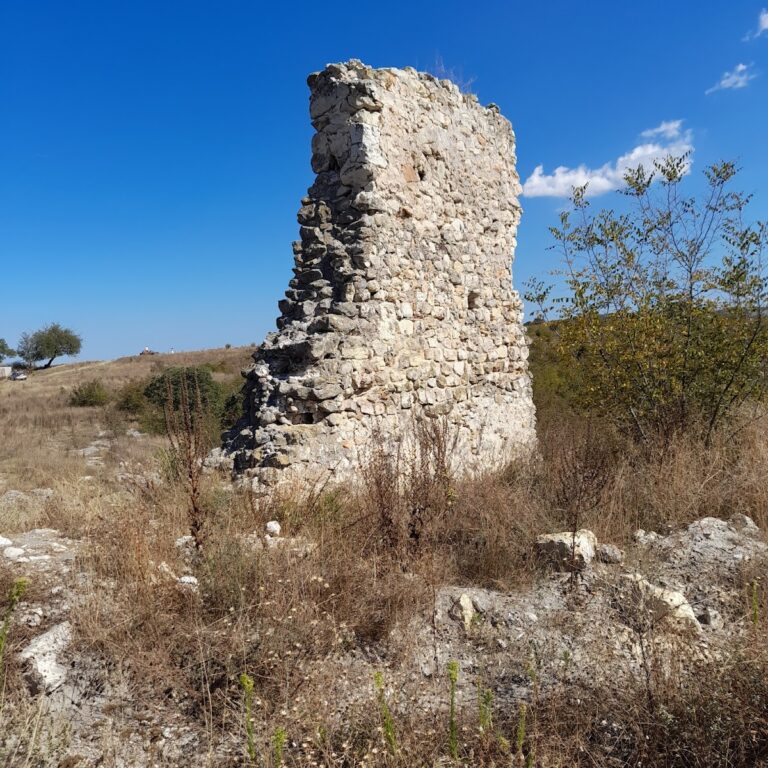
Two additional apsidal churches, along with towers, the stone northern gate, and marble columns, form part of the surviving architectural complex. Together these remains represent the fortress’s religious, defensive, and monumental construction.
Caves beneath the fortress
Karst caves extend beneath the fortress. Karst formations develop in soluble rock, especially limestone, through the action of groundwater. Local tradition associates these caves with large stores of grain and food that allowed the inhabitants and the town to endure a siege. Caves inhabited since antiquity have also been found at the site.
Nearby sites