Varna Museum of Archaeology: Preserving the History of Varna and Odesos


Site at a Glance
- Rating
- 4.7
- Popularity
- Medium
- Country
- Bulgaria
- Primary era
- Classical
- External website
- Open
- Eras represented
- Stone Age, Bronze Age, Iron Age, Classical, Medieval, Early Modern, Modern
- Civilizations
- Ancient Greek, Bulgarian, Byzantine, Ottoman, Roman, Thracian
- Site type
- Museum
On this page14 sections
History
Varna Museum of Archaeology in Varna, Bulgaria, occupies a Neo-Renaissance building constructed between 1892 and 1898 for the city’s Girls’ High School. Its origins lie in the late nineteenth-century efforts of archaeologists Karel and Herman Shkorpil to collect and preserve antiquities from the Varna region. Today, the museum traces the area’s history from the Lower Paleolithic to the nineteenth century and serves as both a cultural institution and a center for archaeological research.
Foundations of the museum
An initial archaeological collection was associated with Varna’s city library in the late 1880s. After archaeological objects were transferred to Sofia in 1893, Karel Shkorpil encouraged the formation of a new local collection. It was installed in the Girls’ High School in 1895, linking the city’s growing interest in its past with an institution originally created for education.
The Varna Archaeological Society was founded on December 12, 1901. Its purpose was to search for, preserve, and study the antiquities of Varna District while working toward the creation of a city museum. Disagreements with archaeological authorities in Sofia and the Ministry of the Interior led the society to accept affiliation as a branch of the Central Archaeological Society in Sofia.
In 1902, the Ministry of Education and Culture provided a room in the Girls’ High School for the collected antiquities. On June 5 of that year, Varna’s Municipal Council approved the charter of the Varna Archaeological Museum. The collection initially remained in basement rooms under the care of Karel Shkorpil and three assistants.
Opening and early development
The museum formally opened on June 11, 1906, in an attic room of the Girls’ High School. Its charter described a broad historical institution that would present the history of the county from the earliest period to the present. It envisaged archaeological-historical, ethnographic, and natural-history departments, although the abundance of ancient material led the museum to develop mainly as an archaeological institution.
The museum’s accommodation changed several times during the first decades of its existence. In 1915, the school principal reclaimed the attic, and the collection was moved to the basement. During the First World War, the exhibits were stored away to protect them from looting and possible destruction during bombardment. The museum returned to the attic in 1923 and later expanded into the great hall and corridor on the school’s second floor.
Karel Shkorpil directed the museum until his death in 1944. Among the curators who contributed to its development were Stoyan Andreev, Archimandrite Innokentius, Milen Sakazov, Milko Mirchev, Stoyan Velkov, and Sergey Pokrovski. Mirchev later directed the Varna Museum from 1945 to 1962.
State institution and regional collections
In 1945, the museum became state property. It moved in 1950 to the former school building on Sheynovo Street, where a new exposition opened in 1952. The institution returned to the Girls’ High School in 1983. After restoration, the entire building was occupied by the Archaeological Museum from 1993 onward.
The permanent exposition is arranged chronologically and thematically. Its four principal sections cover prehistory, ancient history, the Middle Ages, and church art. The collections include prehistoric, Thracian, Greek, Roman, Byzantine, medieval Bulgarian, Ottoman, and Bulgarian National Revival material, together with a permanent presentation of icons dating from the sixteenth to the nineteenth century.
The museum’s holdings illuminate the history of Odesos, the ancient Greek and Roman city that occupied the site of present-day Varna. Greek colonists from Miletus founded Odesos around the sixth century BCE, and the city prospered during the Hellenistic period. It became part of the Roman Empire in 15 BCE. Odesos was destroyed in 614 and remained uninhabited for several centuries, after which Slavic and Proto-Bulgarian communities formed settlements in the area.
The collections also cover Byzantine rule from 1018 to 1185, the Second Bulgarian Empire during the thirteenth and fourteenth centuries, Ottoman rule, and the Bulgarian National Revival. Medieval holdings include lead seals of Boris I and Simeon I. Ottoman-period objects include imported Anatolian faience vessels and materials associated with theriac, a medicinal mixture containing opium and other herbs.
The Varna gold
The museum’s most renowned archaeological collection comes from the Varna Eneolithic cemetery. The Eneolithic, or Copper Age, was the prehistoric period between the Neolithic and Bronze Age, when metallurgy, settlement development, and social differentiation expanded in the region. The cemetery was discovered in 1972 and excavated thereafter. Its burials date approximately to 4600–4200 BCE and include exceptionally rich grave groups.
The gold objects from the cemetery are regarded as the oldest worked gold objects known. They provide evidence for the development of Copper Age society and its contacts with other Mediterranean regions. The museum holds approximately six kilograms of Varna gold, mainly in the form of hammered or cast ornaments and bracelets. The stated purity of the gold alloys ranges from approximately 13 to 23 carats, and the collection is displayed in three exhibition halls under special security arrangements.
Research and associated sites
Varna Museum of Archaeology functions as a cultural and scientific center. Its collections support Bulgarian and international research and have represented Bulgaria in exhibitions in France, Germany, Japan, Israel, and Italy, as well as at the 1992 Seville and 1998 Lisbon world exhibitions.
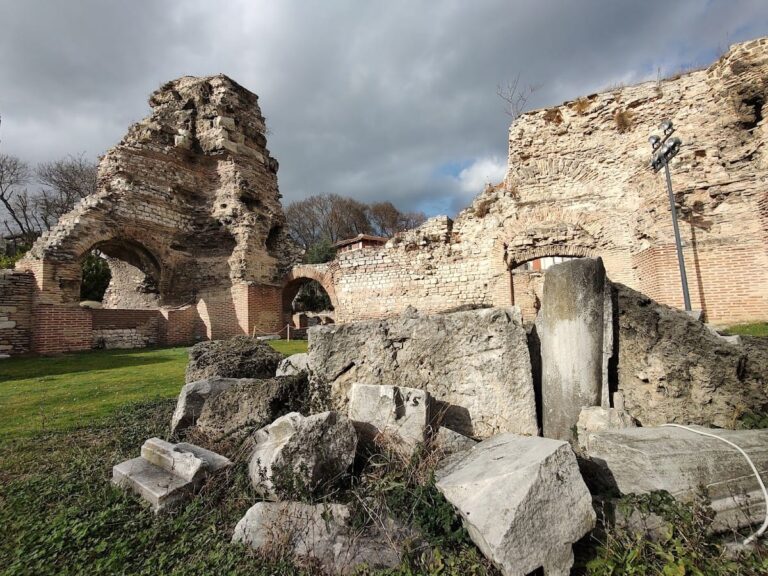
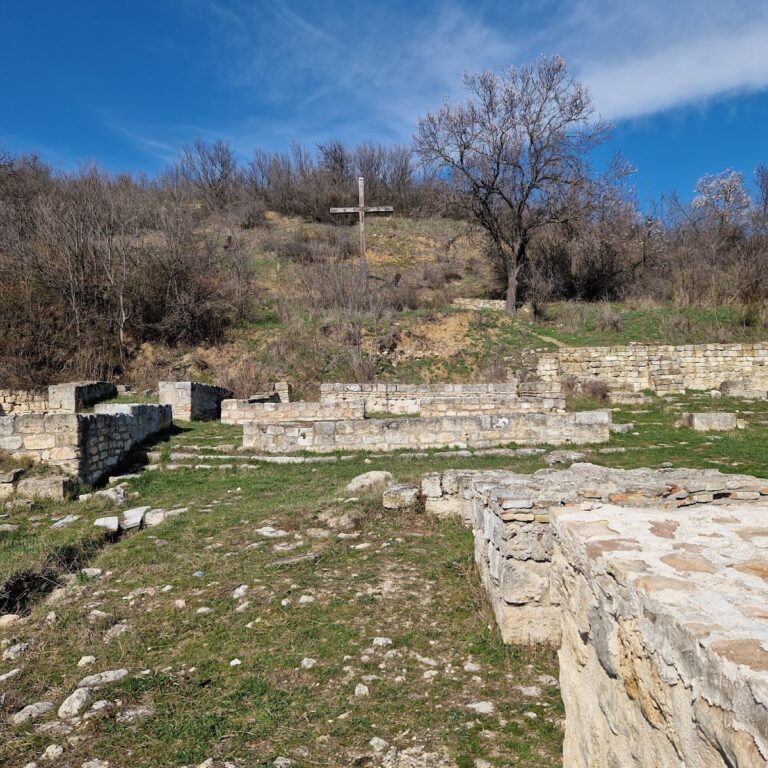
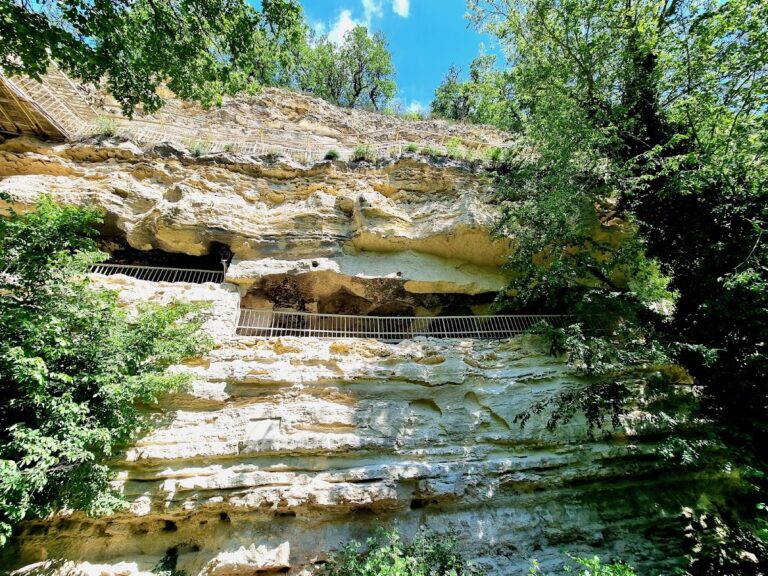
The museum also manages the Roman Baths of Odesos and the medieval rock-cut Aladzha Monastery. These associated sites extend its work beyond the museum building to important remains from the Roman and medieval history of the Varna region.
Remains
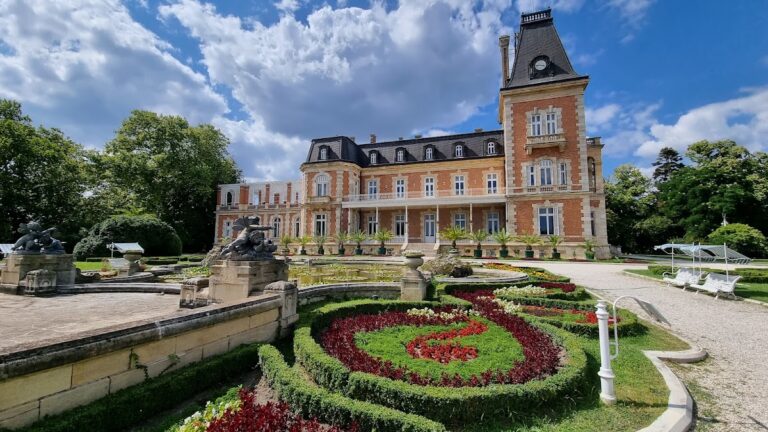
The museum occupies the former Girls’ High School on Maria Luisa Boulevard. The almost square Neo-Renaissance building has a basement, two upper floors, and a spacious inner courtyard. Approximately 2,150 square meters are used for exhibitions, while other parts of the building contain storage areas, a library, an archive, and an Educational Children’s Museum. A continuous corridor runs around the building and connects the exhibition halls. Decorative wall paintings survive in some rooms and corridors.
Building and exhibition layout
A broad staircase on the south side leads to a lobby connected with the exhibition halls on the first and second floors, the inner courtyard, the basement, and service areas. The library and Educational Children’s Museum are located in the basement. The permanent displays follow a chronological and thematic sequence. Prehistory extends from the Paleolithic through ancient Thrace, the ancient-history section presents Greek, Roman, and early Christian Varna, the medieval section covers the two Bulgarian empires, and the church-art section contains later religious works.
Archaeological collections
Prehistoric material
The archaeological collection contains approximately 60,000 objects dating from the Lower Paleolithic to the nineteenth century. Paleolithic material includes stone, wood, and bone tools from sites in the Varna region. Mesolithic finds from Pobiti Kamani form a particularly represented group.
Copper Age material includes tools, anthropomorphic and animal-shaped clay figurines, ceramic fragments, votive objects, decorated pottery, and gold beads from a tomb on the northern shore of Lake Varna. A late Copper Age assemblage from a settlement beneath Lake Varna contains votive objects, decorated pottery, and tools. Early Bronze Age material from around the lake includes stone axes of different shapes, wooden objects, and ceramic vessels. Later Bronze Age holdings include numerous bronze tools from the Suvorovo area and a sword from Cherkovna.
Varna Eneolithic cemetery
Finds from the Varna Eneolithic cemetery include skeletons with grave goods, gold objects associated with scepters, gold sheets shaped as bulls, clay funerary masks, jewelry made from several materials, decorated ceramic vessels, crustacean shells, and stone and metal objects. One displayed burial presents a skeleton with gold ornaments, allowing the relationship between the human remains and the grave goods to be seen directly.
Thracian and Greek material
Early Iron Age grave finds, especially pottery and weapons, illustrate Thracian occupation and contacts with Greek colonies. The first millennium BCE collection also includes Thracian pottery, coins, bronze ornaments, and iron weapons. Other objects include a stone funerary stele possibly associated with the Cimmerian culture, Scythian horse ornaments, and Celtic weapons from the period after approximately 280 BCE.
Material from Hellenistic Odesos includes gold jewelry, sarcophagi, vessels, terracotta figurines, coins, and glass and metal objects. Roman-period holdings comprise lamps, pottery, coins, architectural elements, and objects made of glass, bronze, gold, and silver. They also include material connected with early Christianity and the early Byzantine period.
Medieval and Ottoman collections
Medieval displays contain jewelry, everyday objects, metal belts, leather ornaments, architectural elements, and decorations from religious buildings. They include a model of a Proto-Bulgarian yurt with a relief depicting a cult scene, the lead seals of Boris I and Simeon I, ceramics, craftsmen’s utensils, and jewelry from the Byzantine and Second Bulgarian periods.
Ceramics decorated with sgraffito, a technique that incises designs through a surface layer to reveal the contrasting body beneath, represent material from the Second Bulgarian Empire. The museum also holds a large group of finely made gold and silver jewelry found near Doliste. Ottoman-period displays contain jewelry, imported faience vessels from Anatolia and more distant regions, and objects connected with the preparation or use of theriac.
Associated archaeological sites
The Roman Baths of Odesos, managed by the museum, are large second-century Roman baths. The museum also manages the medieval grotto complex of Aladzha Monastery, a rock-cut religious site. Together, these open-air archaeological sites complement the collections housed in the former school building and represent major Roman and medieval phases of the Varna region’s past.