Soave Castle: A Medieval Fortress in Italy
Visitor Information
Google Rating: 4.6
Popularity: Medium
Official Website: www.castellodisoave.it
Country: Italy
Civilization: Medieval European, Venetian
Site type: Military
Remains: Castle
History
Soave Castle, located in the municipality of Soave in Italy, was originally established by medieval builders in the 10th century atop Monte Tenda. Its foundation utilized the remains of an older Roman watchtower, which had served as a lookout point. The first significant recorded act regarding the site occurred when King Berengarius I of Italy granted the castle and its surrounding lands to local lords tasked with defending the area against Magyar (Hungarian) raids, demonstrating the fortress’s early role in regional security.
During the 12th century, ownership of the castle passed to the Sambonifacio family, counts of Verona, a tenure officially recognized by Emperor Frederick Barbarossa. Control shifted repeatedly in the early 13th century, with Ezzelino III da Romano seizing the fortress in 1226, followed by stewardship under the Greppi family until 1270. This period reflects the unstable political climate of northern Italy, where strategic sites like Soave Castle were contested by noble families asserting local dominance.
The castle’s most enduring chapter began in 1271 with the conquest by Mastino I della Scala, marking the start of Scaliger authority over Soave. The Scaliger dynasty controlled the castle for about a century, notably under Cansignorio della Scala (1340–1375), who restored its defenses and reinforced the town’s fortifications in 1379. Their tenure consolidated Soave Castle as a central stronghold within the region.
Following the fall of the Scaliger family, the castle’s command transferred to the Visconti of Milan, then to the Carrara family from Padua. In 1405, the Republic of Venice seized Soave Castle, integrating it into their extensive mainland possessions. Under Venetian administration, the castle played a vital military role, facing significant assaults such as the 1439 attack by the Visconti and the 1508–1511 War of the League of Cambrai. During the latter conflict, the fortress was set ablaze and many residents perished, but Venetian captain Rangone and local defenders successfully recaptured and secured the castle in 1511. Venice honored this victory with symbolic gifts related to the fortification, highlighting its importance.
By the late 16th century, advancements in firearms rendered the castle’s defensive utility obsolete. Venice subsequently leased and then sold the property in 1696 to the noble Gritti family, who transformed it into agricultural land by renting it out to private tenants. This transition marked the castle’s shift from a military bastion to a working farm estate.
In 1889, Giulio Camuzzoni, a senator and former mayor of Verona, acquired the castle and undertook its restoration, preserving its medieval fabric and historical character for future generations.
Remains
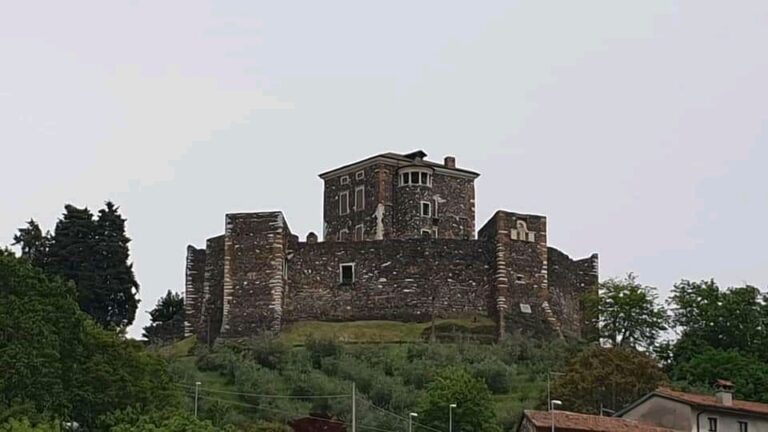
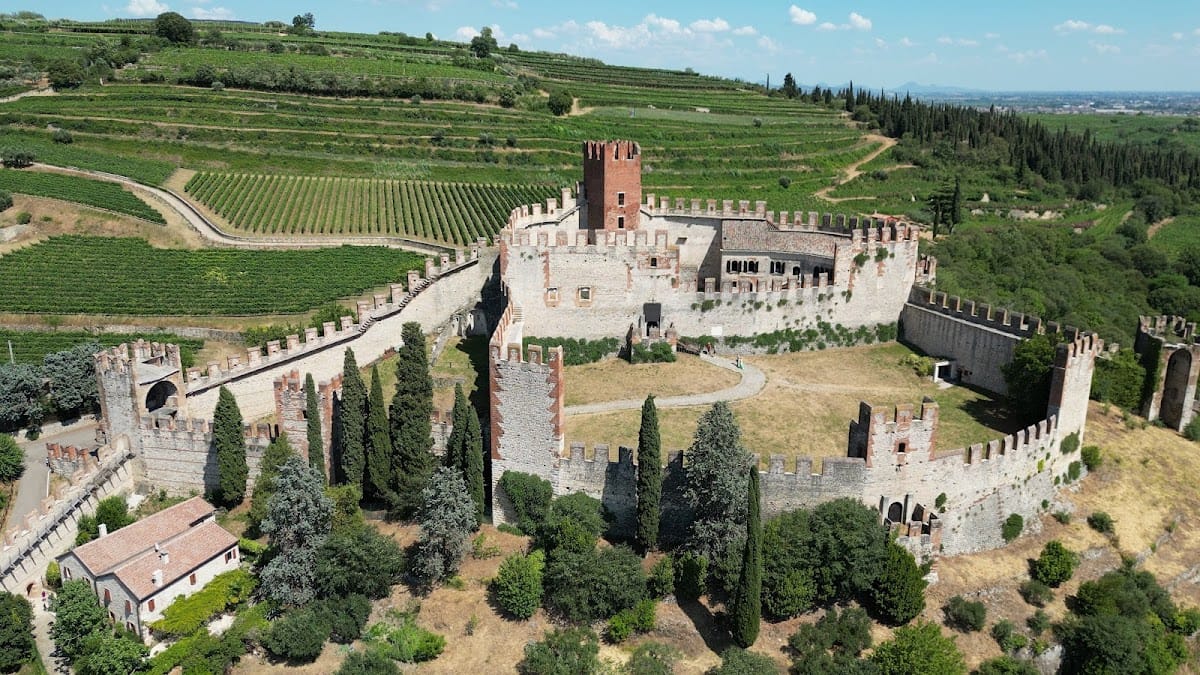
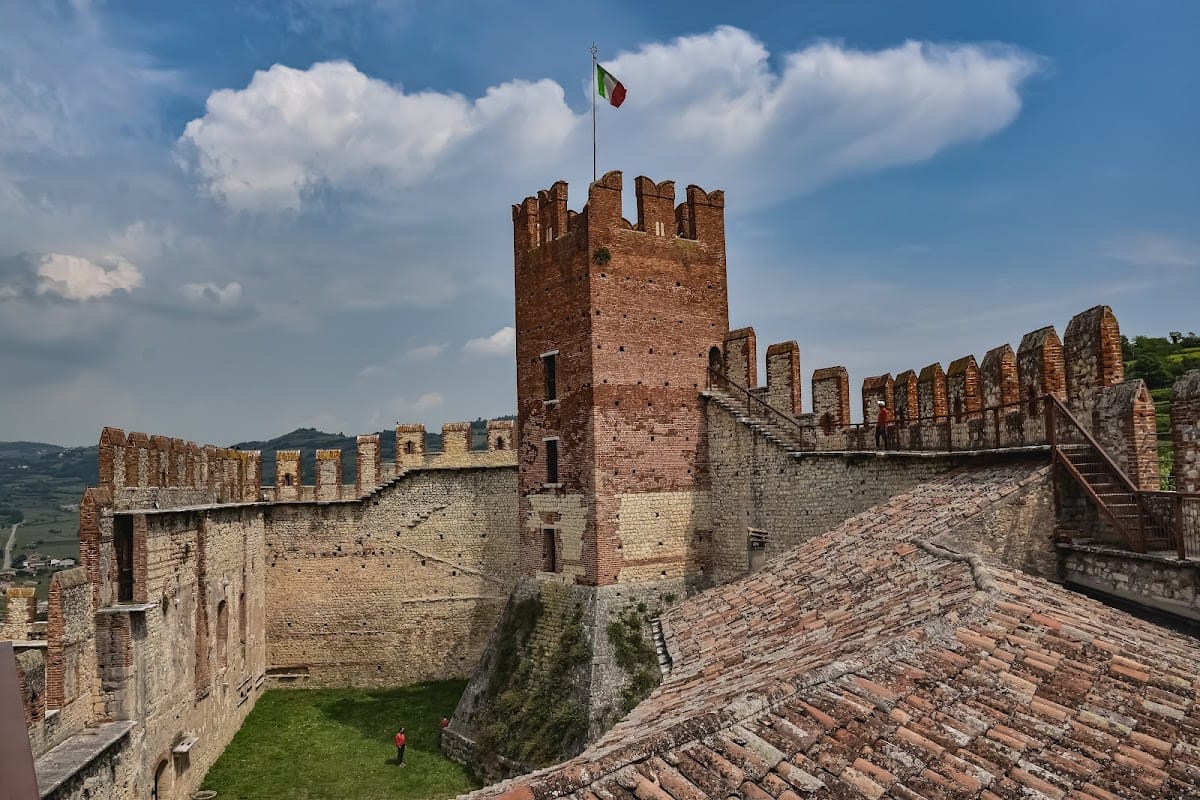
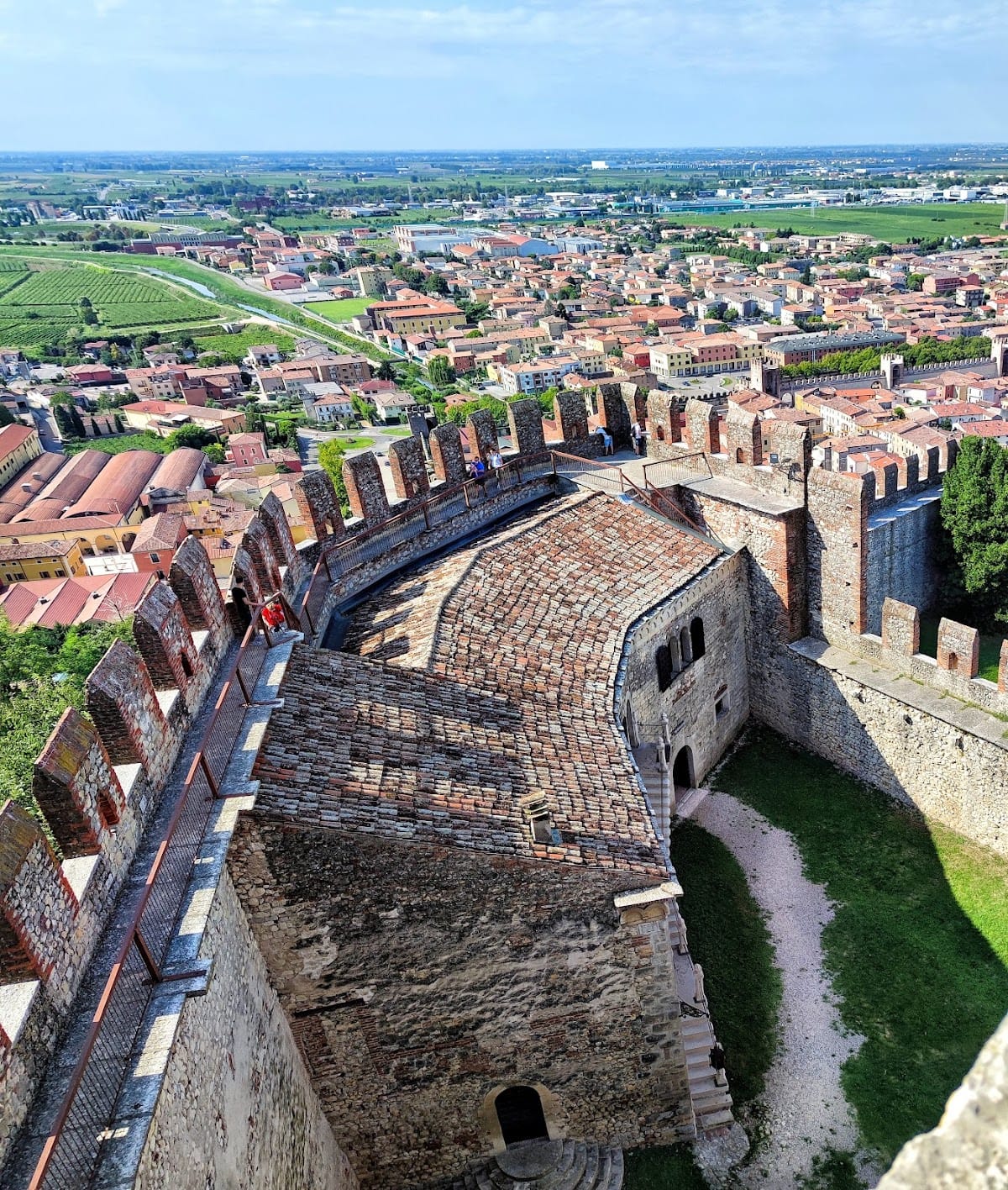
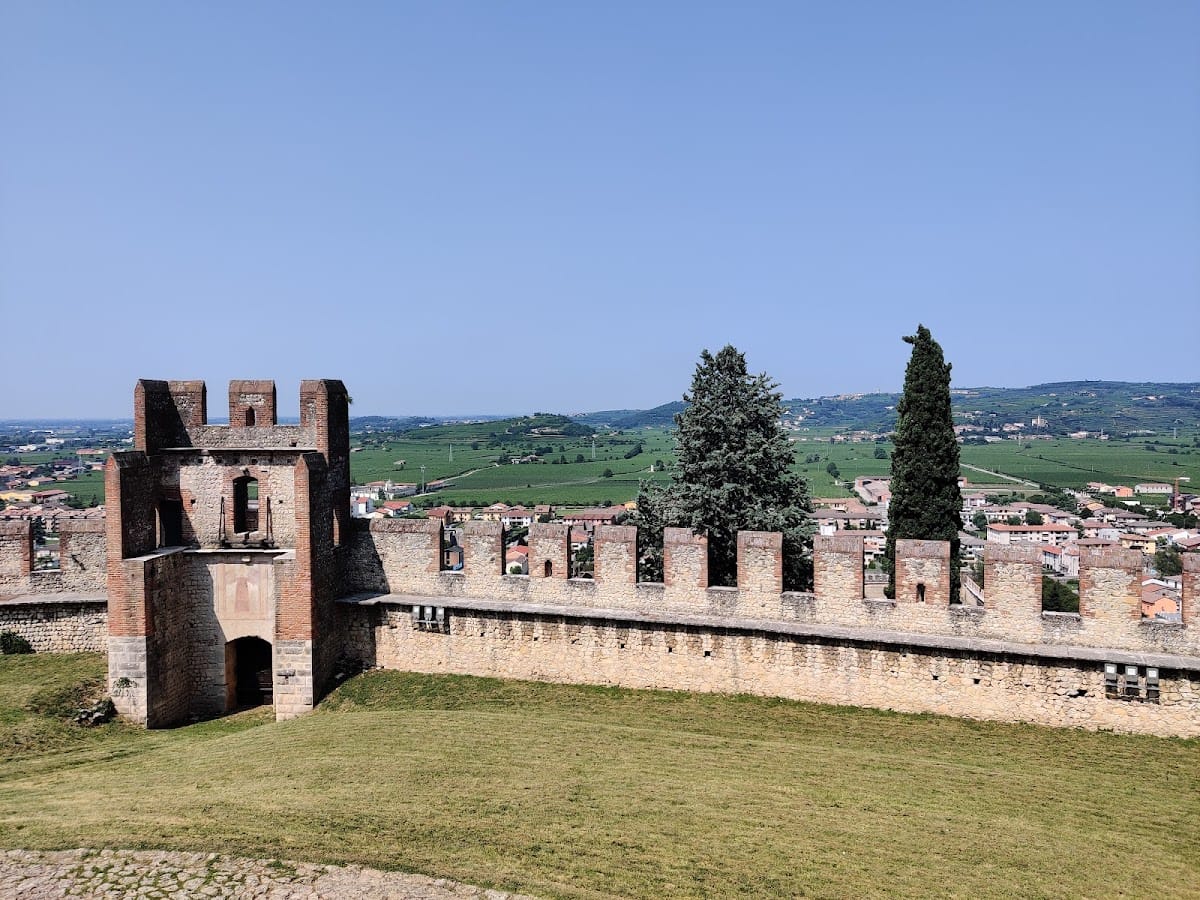
Soave Castle stands as a medieval military complex constructed predominantly of strong masonry suited for defense. Situated on the summit of Monte Tenda, it commands a broad view of the surrounding plains. The fortress consists of a central mastio, or keep, and three courtyards arranged at different levels, each serving distinct functions and built during various phases of the castle’s history.
The highest and smallest of the courtyards, covering approximately 972 square meters, was accessed through a raised doorway specifically designed to slow and expose attackers. Archaeological remnants reveal traces of soldiers’ quarters along the western and southern boundaries of this space. A notable detail within this courtyard is a fresco dated to 1340, portraying a Scaliger soldier. This artwork has been tentatively attributed to the painter Cicogna, reflecting the castle’s role as a military center under the Scaliger family.
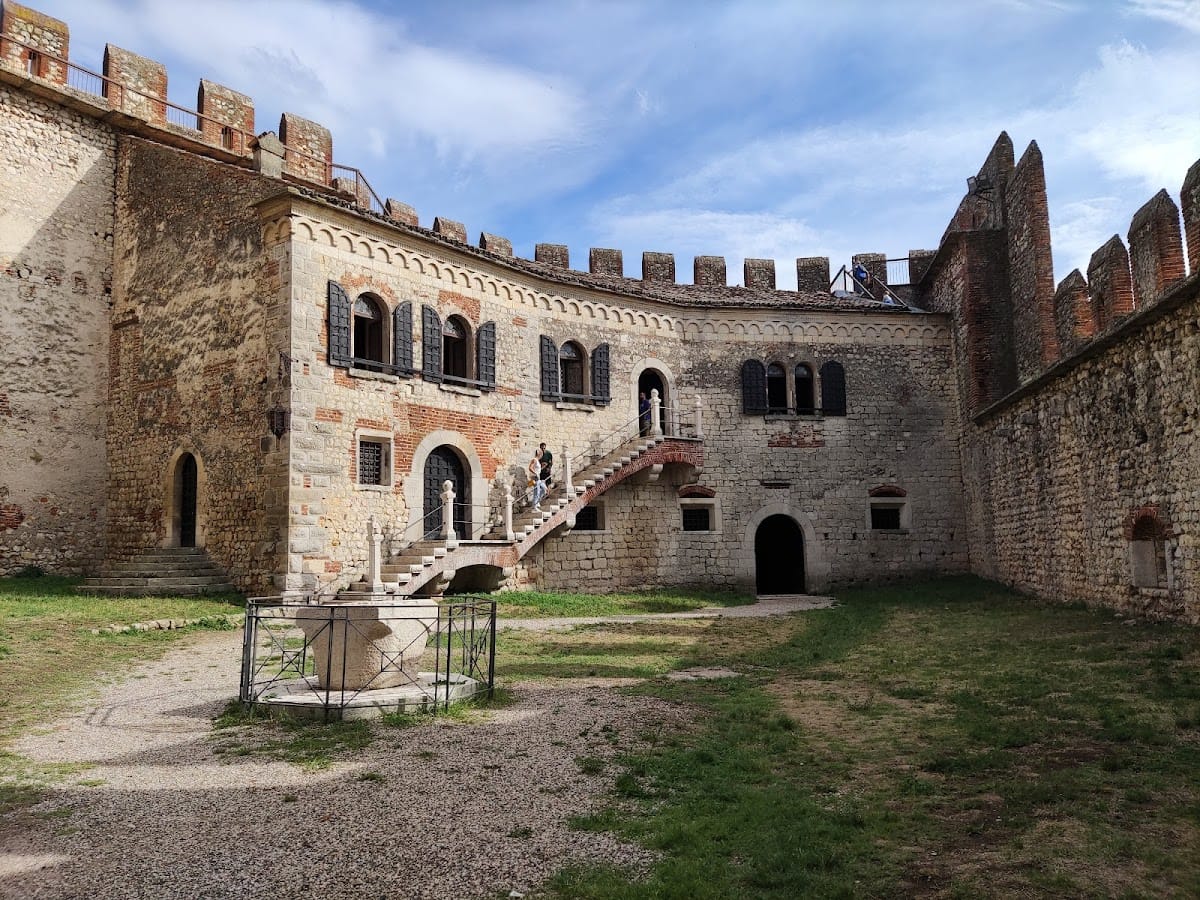
The second courtyard, also called the “Madonna courtyard,” is the largest, measuring nearly 2,922 square meters and corresponds to the original inner castle courtyard. It features a fresco from 1321 above its western entrance, depicting the Virgin Mary offering protection to kneeling figures. The presence of a postern gate here suggests a strategic provision for supplies to enter discreetly during times of siege, emphasizing the castle’s defensive planning.
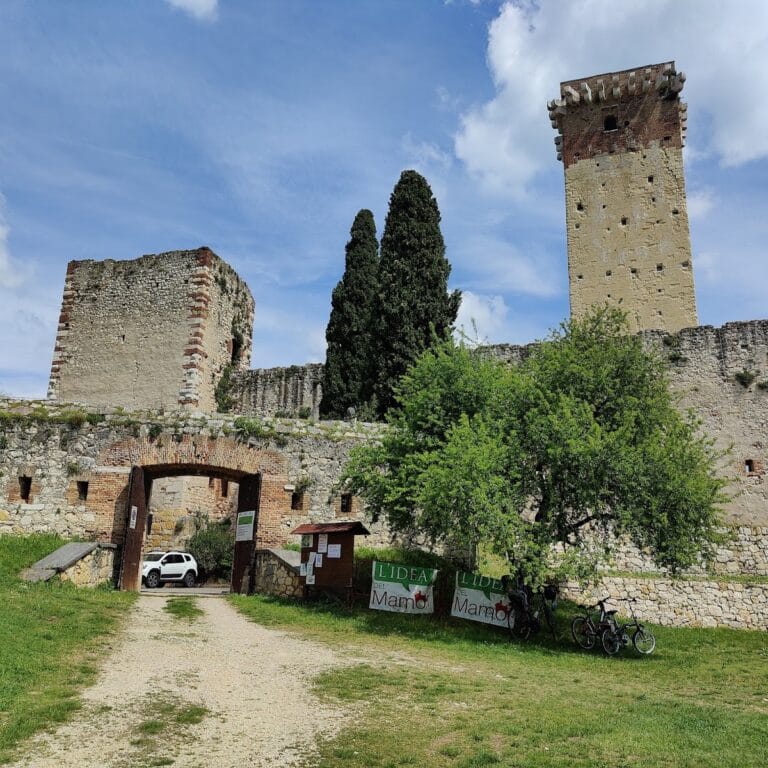
Constructed during Venetian rule in the 15th century, the third courtyard lies at a lower elevation and covers about 1,164 square meters. Its entrance is fortified with a gate equipped with a drawbridge. Within this space are the remains of a small three-apse chapel dating back to the 10th century. This chapel likely served as a sanctuary for local inhabitants during early Magyar incursions, predating the widespread defensive enhancements of the castle itself. Its location outside the original castle walls highlights both its religious and protective functions in the early medieval period.
The mastio, or keep, accessed through an opening in the basement, served as the castle’s final defensive refuge during attacks. Archaeological discovery of human bones inside suggests it was also used to imprison and possibly execute prisoners. Near the mastio lies an ancient well, notable for heavy wear marks from ropes used to draw water—evidence of sustained use during sieges. A nearby guardroom contains display groups of offensive and defensive weapons historically employed by soldiers of the Scaliger period, illustrating the castle’s militarized nature.
Among the interior rooms, the “Caminata” stands out for its large fireplace after which it is named. During restoration efforts, various artifacts surfaced here, including Roman and Venetian coins, fragments of weaponry, and war instruments sourced from other fortresses, indicating the castle’s long and layered history. The Caminata connects with a small courtyard added in the Venetian era, a bedroom decorated with a 13th-century fresco depicting the Crucifixion accompanied by the Madonna and Mary Magdalene, and a dining room furnished with period-appropriate tableware, offering insights into the residential aspects of the castle.
The “Portrait Room” contains five painted portraits of important figures tied to the castle’s past: Mastino I della Scala, founder of the Scaliger dominion; the poet Dante Alighieri, who is believed to have visited; Cangrande della Scala, renowned as the most prominent Scaliger; Cansignorio della Scala, the key restorer and fortifier of Soave; and Taddea da Carrara, the wife of Mastino II. These portraits underscore the castle’s connection to notable historical personalities.
Venetian contributions are visible in the outer walls, descending from the castle to encircle the medieval town beneath. These additions illustrate the adaptation of the fortress to evolving military needs. Today, the combined architectural elements manifest the castle’s long-standing role as a defensive site, religious refuge, residence, and strategic military base through successive centuries.
Nearby sites