Museo Archeologico al Teatro Romano Verona: Archaeological Museum and Roman Theatre Complex


Site at a Glance
- Rating
- 4.5
- Popularity
- Medium
- Country
- Italy
- Primary era
- Classical
- External website
- Open
- Eras represented
- Classical, Medieval, Early Modern
- Civilizations
- Roman, Venetian
- Site type
- Entertainment
- Remains
- Theatre
On this page18 sections
History
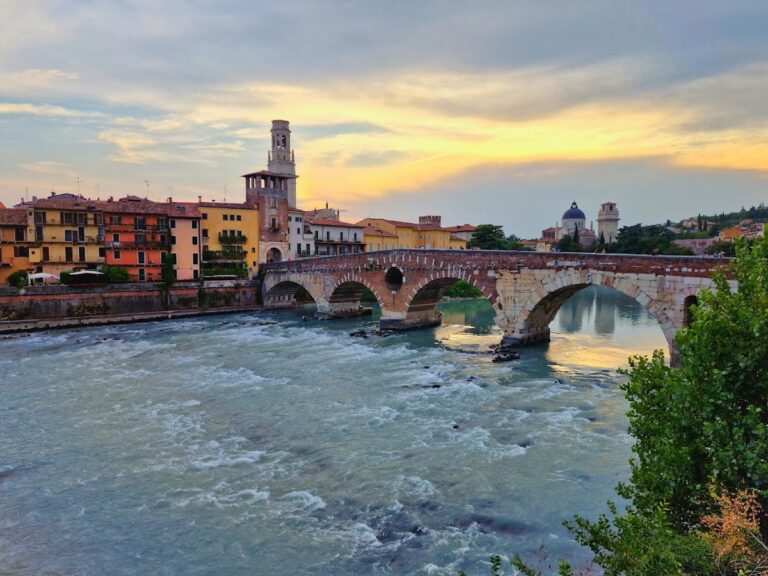
The Museo Archeologico al Teatro Romano Verona is an archaeological museum complex in Italy, built around an ancient Roman theatre and later religious buildings. Its setting brings together the theatre’s archaeological area, Palazzo Fontana, and the former Jesuati convent on the hill of San Pietro, near a bend of the Adige.
The Jesuati monastery
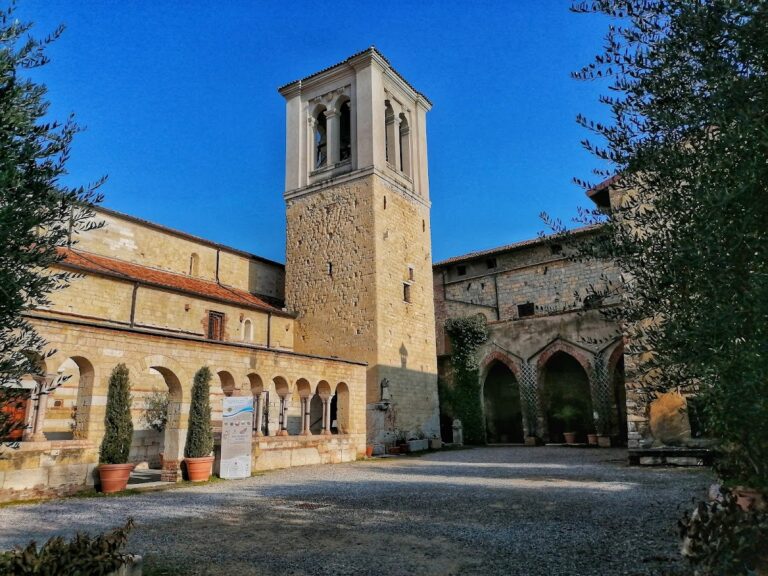
Around 1430, the Jesuati, a religious community known for establishing monasteries and charitable institutions in Italy, settled on San Pietro hill. The area was rich in spring water, and the community built its monastery on a broad terrace above the Roman theatre. The former convent remained part of the site’s development until a Napoleonic decree suppressed it in 1805.
The building now known as Palazzo Fontana takes its name from the Fontana family, who lived there during the eighteenth century. Members of the family carried out archaeological excavations in the area of the Roman theatre, helping to bring ancient architectural and decorative elements into later collections.
Formation of the archaeological collections
From at least 1857, archaeological collections were held in the civic museum at Palazzo Pompei, a Renaissance-Mannerist building designed by Michele Sanmicheli near Porta Vittoria. The earliest holdings came largely from private gifts to the municipality. Giovanni Fontana bequeathed decorative elements and statues from the theatre area, while Giacomo Verità gave Etruscan urns, bronze statues, lamps, and Greek vases. Girolamo Orti Manara and Antonio Smania contributed numerous inscriptions.
The municipality later acquired collections assembled by Jacopo Muselli, including glass, terracotta, and bronze objects, as well as Bernardino Biondelli’s Etruscan vases and the Lazise-Gazzola family’s ceramic vessels. In 1895, Carlo Alessandri donated a large group of statues, vases, bronze statuettes, and glass objects. Excavations in Verona and its province added further material.
Creation and renewal of the museum
In 1904, the Municipality of Verona purchased the entire area occupied by the Roman theatre from the heirs of Andrea Monga. The purchase included the buildings and archaeological collections associated with the site, including inscriptions and architectural and decorative elements recovered through excavation. The archaeological museum was established in 1923 and installed in the former Jesuati convent.
The first major arrangement of the displays was completed during the 1930s. Restoration followed in the 1970s, while structural consolidation and a renewed museum presentation took place between 2013 and 2016. These interventions preserved the connection between the convent’s historic spaces and the archaeological remains of the theatre.
Remains
The museum is arranged across the Roman theatre, Palazzo Fontana, and the former Jesuati convent. The convent occupies several levels on a broad terrace cut into the hillside during the Roman period. The archaeological route incorporates the theatre’s seating area and the surviving religious buildings, while the collections occupy rooms, cloisters, a covered courtyard, and former cells.
Roman theatre and Palazzo Fontana
The theatre and cavea
The archaeological area contains the Roman theatre and its cavea, the bank of tiered seating. The former convent is reached from the theatre’s seating steps, while another access point is provided by a lift above the ascent and a staircase in the western part of the theatre. This arrangement physically joins the ancient auditorium with the later museum buildings.
Palazzo Fontana
Palazzo Fontana is a Renaissance building that incorporates substantial surviving remains of the stage building of the ancient Roman theatre. Its ground floor contains the ticket office and an introductory room for the archaeological area. The upper floors provide teaching rooms and laboratory spaces, particularly for school groups.
Roman cavity and theatre finds
A lower room contains inscriptions dedicated to Roman gods and an approximately 18-metre-deep cavity cut by the Romans. The excavation separated the hill from the auditorium and helped prevent water infiltration. Finds associated with the theatre include a marble herm of a youthful satyr from the Augustan period and a marble medallion showing a gladiator fighting a lion, also dating to the Augustan period.
Former Jesuati convent
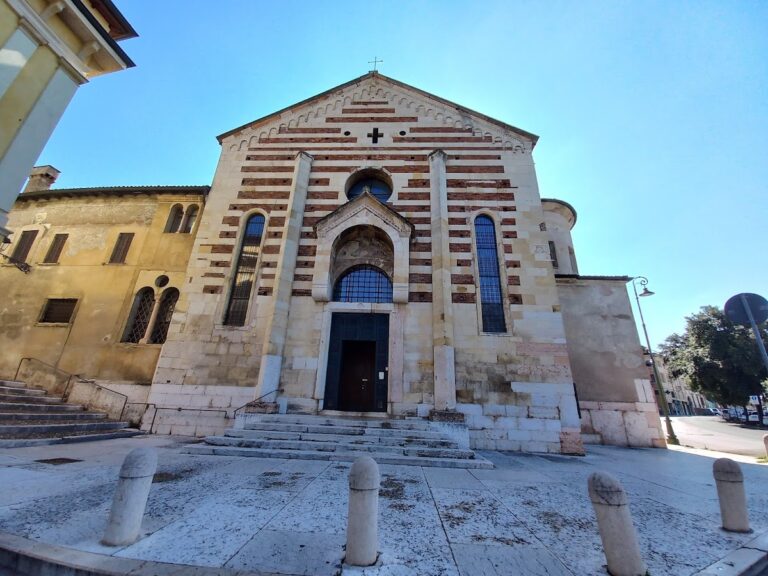
Church of San Girolamo
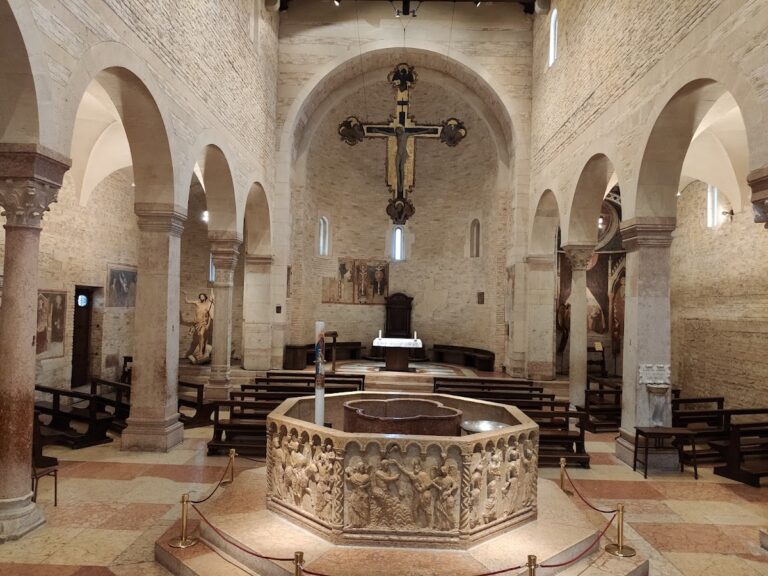
The former convent retains the Church of San Girolamo, a smaller cloister, the refectory, and the former religious cells. The chapel of San Girolamo preserves frescoes painted by Giovanni Francesco Caroto in 1508, together with remnants of mosaic flooring. Its flat wooden alla gesuata vault, a Jesuati-style decorated ceiling, is ornamented with leafy branches and shields arranged around a central rosette.
Cloister
The smaller cloister contains inscriptions, particularly funerary inscriptions from Verona. Their placement within the convent forms part of the museum’s presentation of Roman epigraphic remains.
Refectory
The refectory houses the marble sculpture section. Among its works is a headless seated woman wearing a tunic and mantle, possibly a Roman copy of an Aphrodite associated with the Greek sculptor Phidias. The room also contains statues of Artemis, the goddess associated with the hunt, and Eros, the god of love, shown with a bow. Many of the displayed figures are headless.
The walls of the refectory were formerly covered with frescoes. Surviving sections include part of Caroto’s Last Supper on the rear wall and a figure of a Jesuati on a side wall. A third-century mosaic remains in the floor, adding an earlier Roman feature to the later religious interior.
Former cells and covered courtyard
The former religious cells contain domestic glass objects, bronze lamps, a bronze head, a bronze bust, and bronze statuettes. Other displays include Etruscan and Roman bronzes, Roman ceramics from the Verona area, and a bronze portrait of an aristocratic Veronese from the Augustan period.
The bronze sculpture section is arranged in a covered courtyard. A double-faced female herm, a sculptural form with two faces set on a pillar, is made of bronze and dates to the beginning of the second century AD. It is 23.5 centimetres high and may represent Hygieia, the Greek goddess associated with health and sanitation.
Mosaics, portraits, and domestic displays
Roman villa mosaics
In the room beside the lift, two panels of mosaic flooring from a Roman villa at Negrar are mounted on the wall. They date to the third century AD and depict a mythological scene and a chariot drawn by a putto, a childlike figure used in classical and later decorative art.
Portraits and marble sculpture
The first-floor displays include fragments of marble frames, statue bases, and a fresco of Bacchus, the Roman god of wine and revelry, which probably decorated a triclinium, a Roman dining room arranged for reclining diners. The museum also displays a marble portrait of a Roman in a toga from the second half of the second century AD, during the age of Marcus Aurelius, and a marble portrait of a member of the imperial Julio-Claudian dynasty, Rome’s first imperial dynasty.
A large marble statue of a woman from Verona dates to the first century AD. Another marble statue from the same area represents an emperor in armour and also dates to the first century AD. Together with the theatre finds, these works form part of the museum’s presentation of Roman sculpture, religious imagery, civic identity, and domestic life.
Integrated museum spaces
The museum includes a section devoted to domestic life in Verona, a chapel displaying Roman mosaics, and a large panoramic terrace. The convent rooms and the archaeological theatre remain physically integrated into the museum route, allowing the collections to be presented within the buildings and archaeological setting that give them their context.