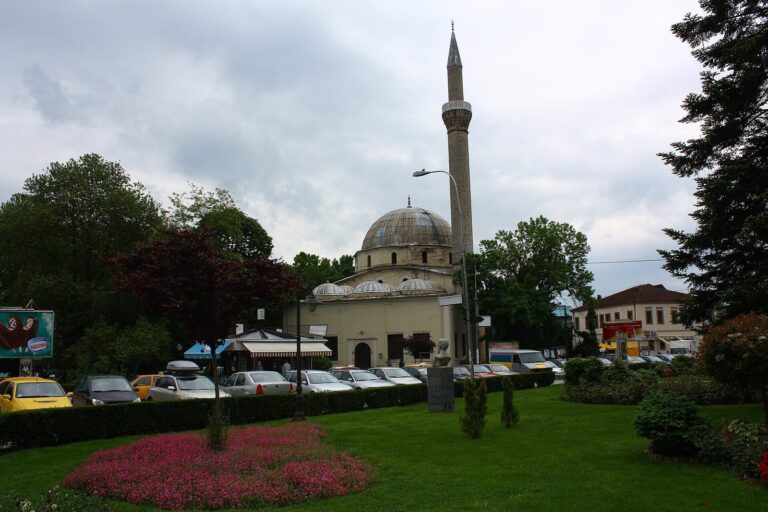
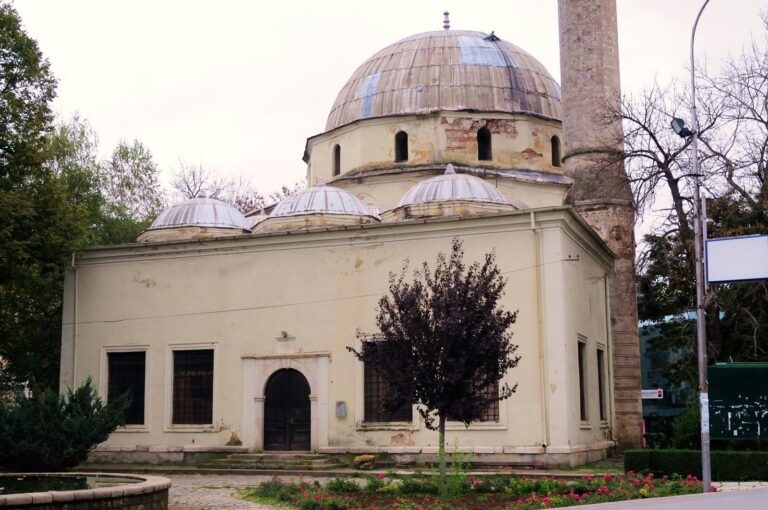
Slepče Monastery (Demir Hisar): A Religious and Literary Center in North Macedonia
Site at a Glance
- Popularity
- Medium
- Country
- North Macedonia
- Primary era
- Modern
- Eras represented
- Early Modern, Modern
- Civilizations
- Ottoman
- Site type
- Religious
- Remains
- Monastery
On this page18 sections
History
Slepče Monastery (Demir Hisar) is an Orthodox monastic complex above the village of Slepče in North Macedonia. Its foundation date is unknown, but a fourteenth-century origin has been inferred from a liturgical book, a triodion, copied there in 1393–1394, the earliest dated record associated with the monastery. Over time, it developed into an important religious, educational, and literary center connected with the Ohrid Archbishopric.
Early history and ecclesiastical standing
A tradition connects the monastery’s early history with the Battle of Kleidion in 1014, when the Byzantine emperor Basil II defeated the army of Samuel, a medieval Balkan ruler. In this account, blinded soldiers rested near present-day Slepče, perhaps at the monastery, before continuing toward Prespa. The same tradition links the village’s name to the episode and identifies Kosara, Samuel’s daughter, as the monastery’s founder. It also credits her with giving land at Elbasan and establishing the western residential building.
The monastery flourished in the time of Saint Clement of Ohrid, a Christian missionary, teacher, and writer associated with the region. It later became a stavropegial monastery, meaning it was directly subject to a senior church authority rather than a local bishop. That authority was the Ohrid Archbishopric, a major Christian institution in the medieval Balkans.
Literary and artistic life
Serving the Ohrid Archbishopric, Slepče developed a school, a place for producing manuscripts known as a scriptorium, a substantial library, and a large monastic community. Its literary work grew during the fourteenth and fifteenth centuries and reached its height in the sixteenth. Scribes copied worship books in Church Slavonic, a literary and religious Slavic language, and translated works from Old Greek and Latin. In the sixteenth century, they also prepared books for churches in the Demir Hisar area and elsewhere in Macedonia.
The monastery’s educational and artistic life brought together clergy, carvers, painters, architects, and teachers. Its work became associated with the Slepče–Prilep woodcarving school and a local tradition of manuscript production, with artistic and literary ties to monasteries in Kratovo and the Ohrid Archbishopric. Byzantine Emperor Michael VIII Palaiologos and Empress Theodora Doukaina Vatatzina were named as patrons in the monastery’s oldest surviving memorial book in the late thirteenth century. A Kratovo nobleman named Dimitar supported wall painting in the late fourteenth or early fifteenth century. Other benefactors included princes of Wallachia, a medieval principality, Macedonian nobles, Ottoman-period princes, and wealthy mine lessees.
A senior priest, Luka, mentioned the monastery in a letter in 1543. That year, its brotherhood also visited the Kratovo prince Dimitar Pepik. The school and its scribes continued to serve religious communities beyond the monastery, while the institution maintained its role as an educational center.
Ottoman-era and nineteenth-century roles
Under Ottoman rule, the monastery prepared priests and teachers in the local Slavonic-Macedonian literary tradition and served as a cultural and educational center. In the nineteenth century, its school provided spiritual training for priests in the Bitola and Prilep dioceses. A tradition places a congress attended by delegates from across Macedonia at Slepče in 1881. In 1889, a new school opened at the monastery.
The monastery also served as a refuge for revolutionaries during Ottoman rule and for resistance members during the National Liberation War, the Second World War-era resistance in Yugoslavia. An inscription on the monastery fountain refers to a hospital for people with mental illness within the complex.
Attacks and later changes
In 1675, Albanian attackers took the monastery’s valuables, leaving a box of holy relics and a cross. The monastery was attacked again during the Ilinden Uprising, a 1903 rebellion against Ottoman rule in Macedonia and surrounding areas. On 13 August, Ottoman troops and irregulars from nearby villages looted and burned the large monastery inn but did not enter the monastery. Nine monastery workers and five villagers were killed, and Slepče village was looted. On 27 August, Ottoman soldiers entered the monastery and began taking valuables; officers ordered them to return what they had taken. Fighting then followed with a nearby rebel band, and soldiers killed two unarmed villagers.
Fires also damaged the complex in the twentieth century. Slepče remains an active monastery affiliated with the Macedonian Orthodox Church–Ohrid Archbishopric and the Krushevo–Demir Hisar Diocese. It has a women’s monastic community and is fully restored.
Remains
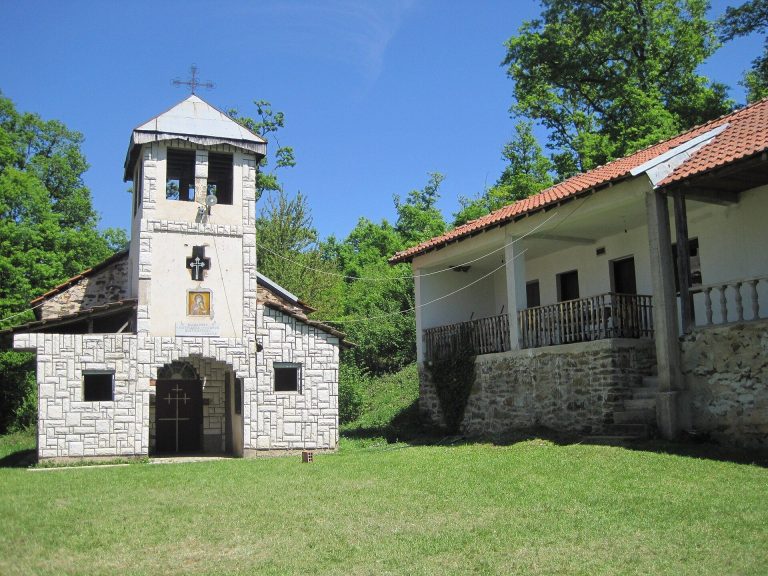
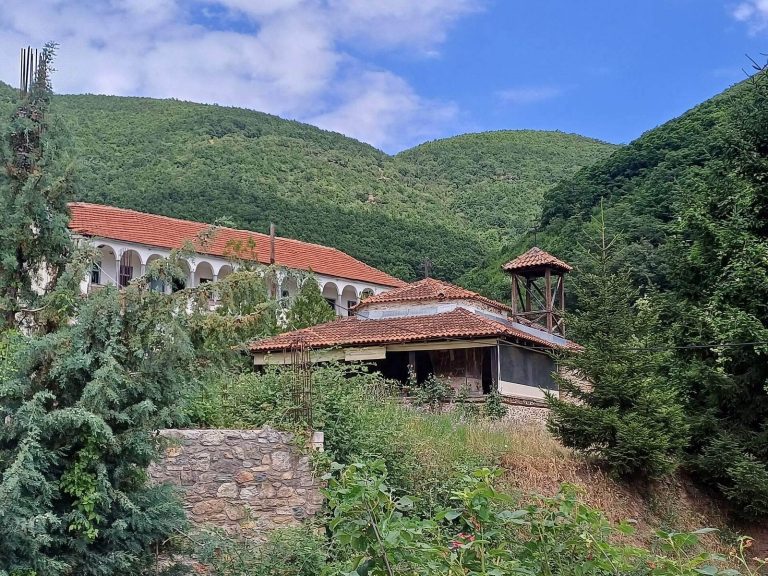
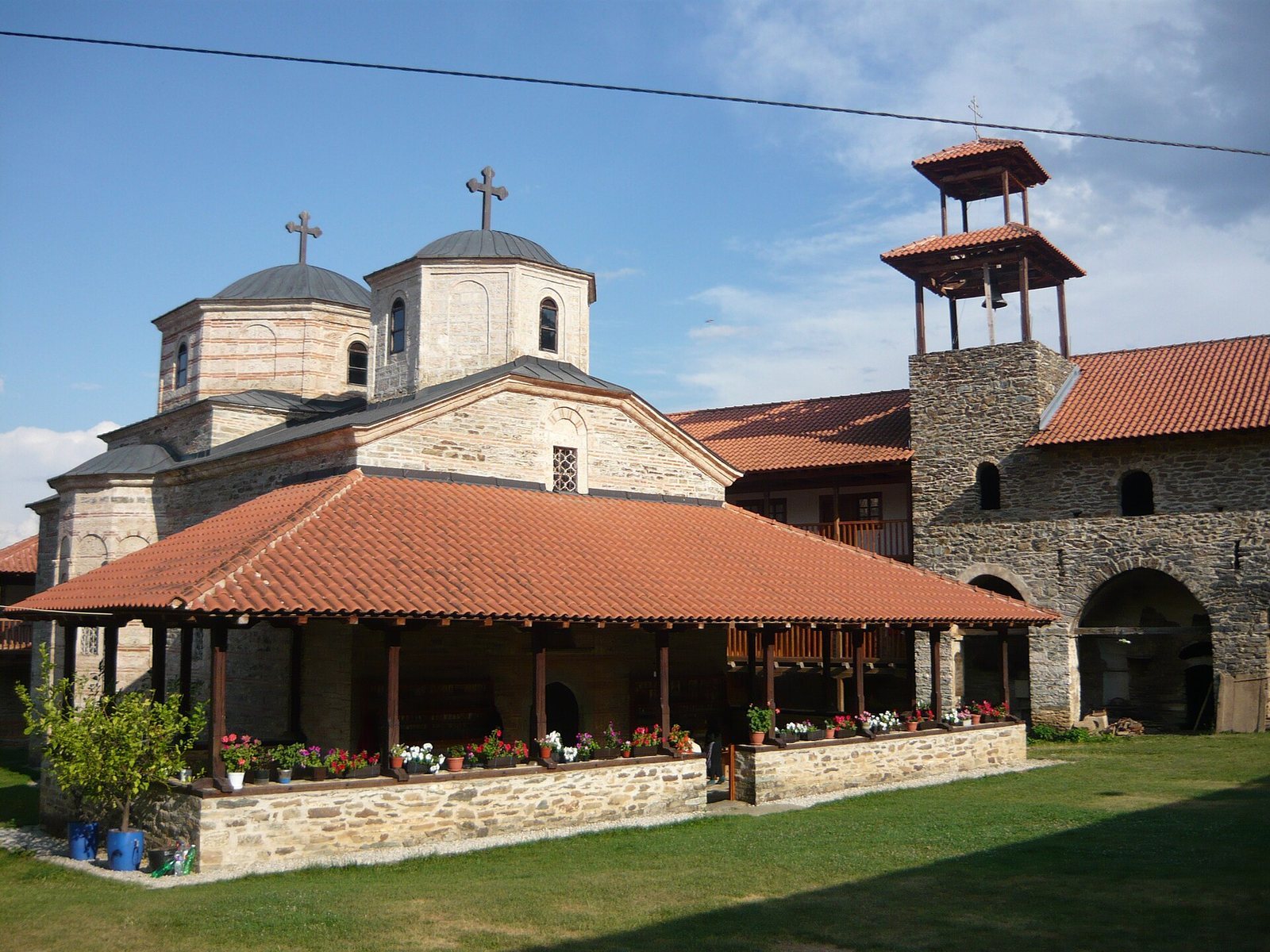
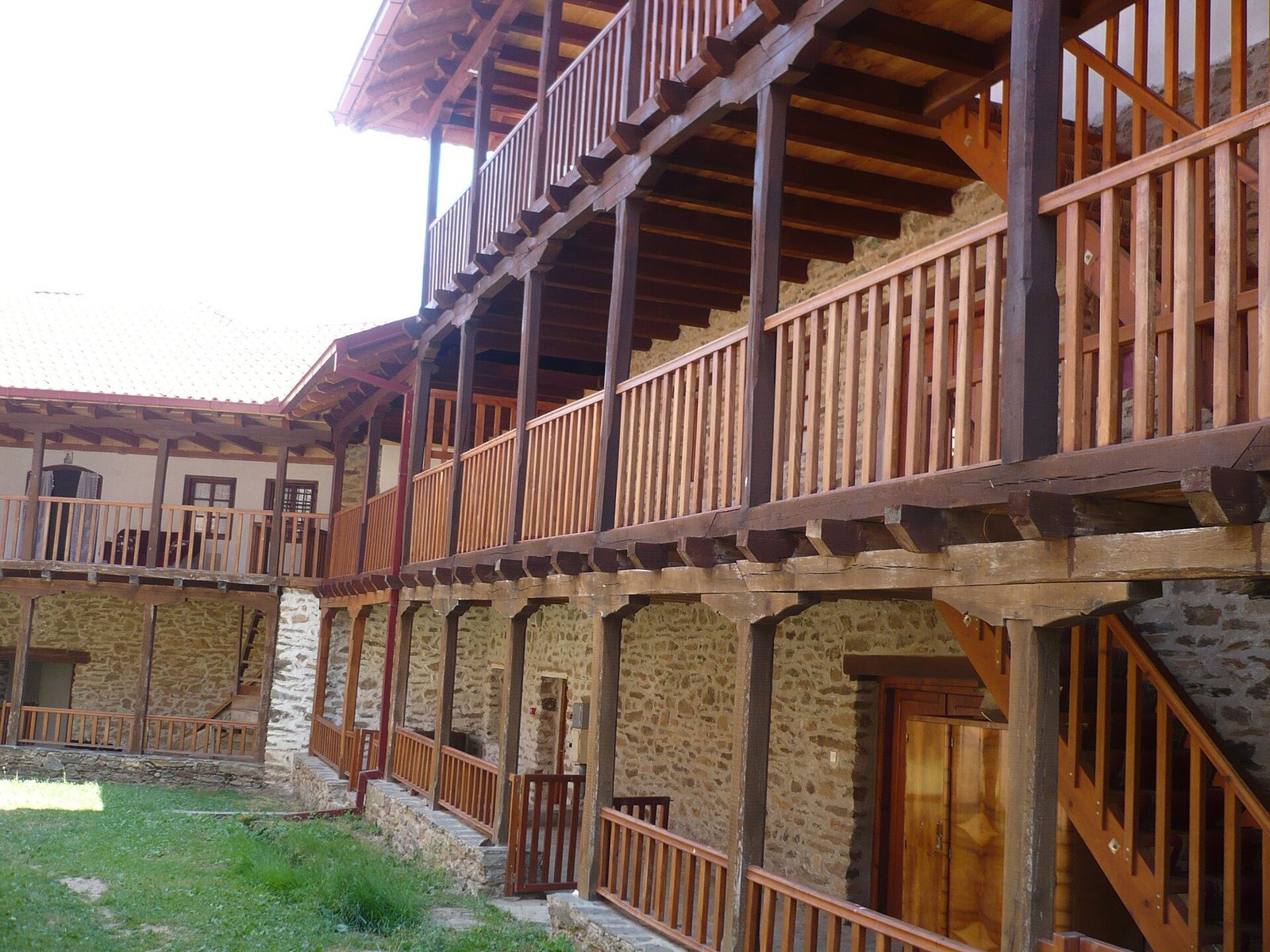
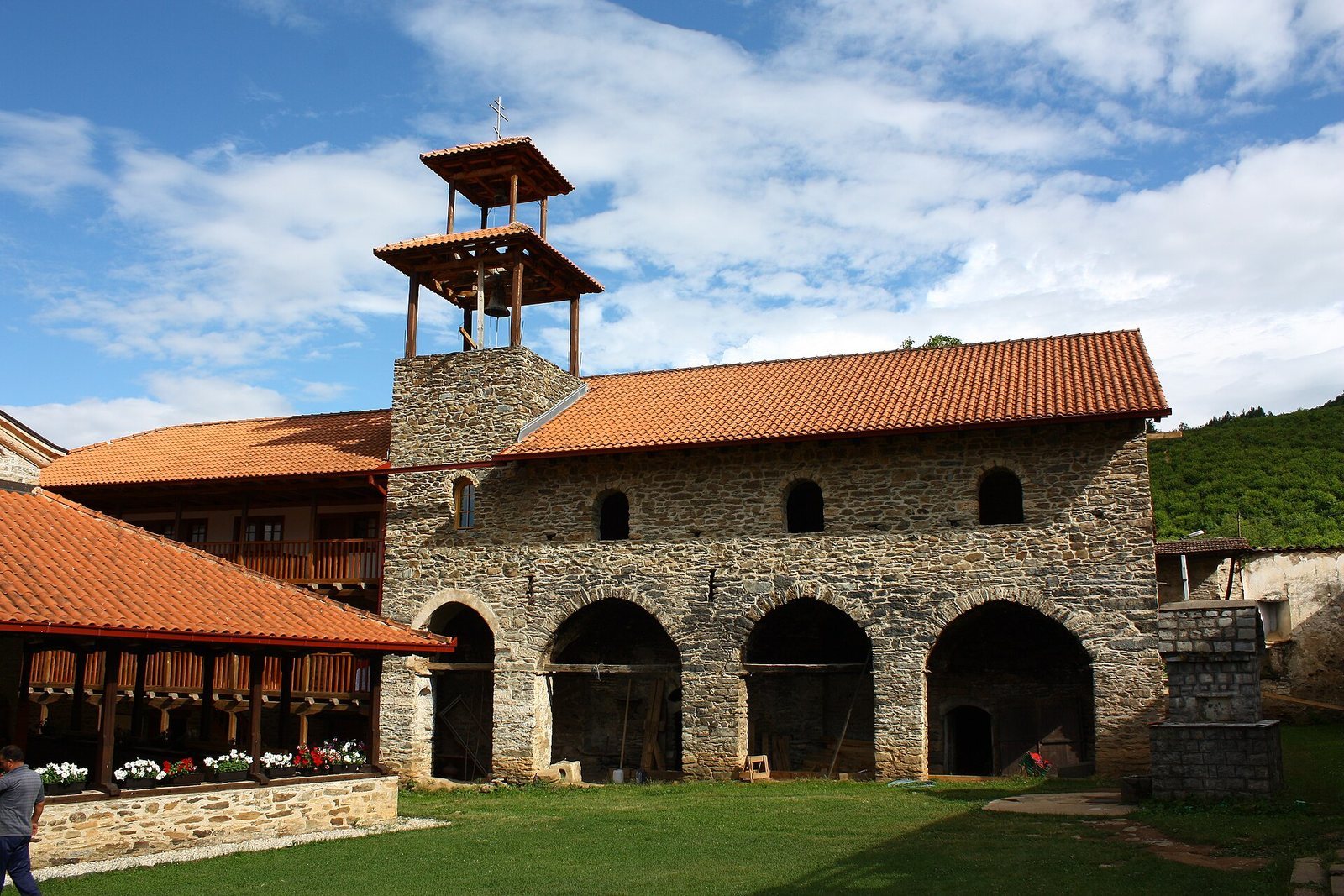
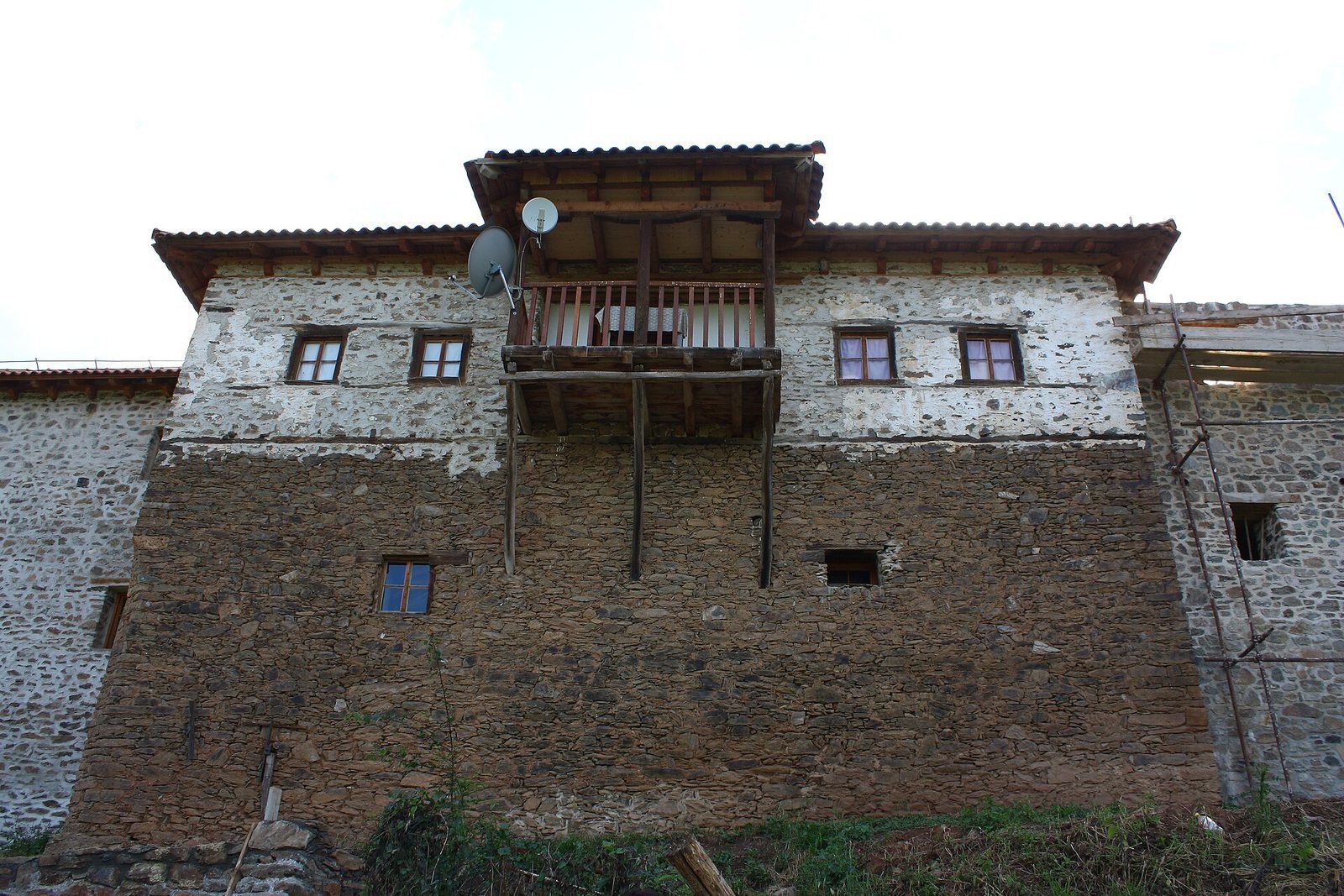
The monastery stands in a wooded area on the slopes of the Ilinitsa mountain range, about three kilometres from Slepče village. Its complex includes the main Church of St John the Baptist, the smaller Church of St John the Theologian above it, newer residential buildings, remains of older residences, and service structures. The main church is built of dressed stone, while the buildings and surviving objects reflect different phases of the monastery’s use.
Churches and monastic buildings
Church of St John the Baptist
The present Church of St John the Baptist, also called St John the Forerunner, was built in 1862 on the site of an earlier large church with painted walls. It has three rounded sanctuary projections. Domes on eight-sided bases cover its main worship space and western entrance area, and open porches extend along the west and south sides. The church’s design, carved screen separating the sanctuary from the main body, and icons are attributed to Kitan Petrov.
Church of St John the Theologian
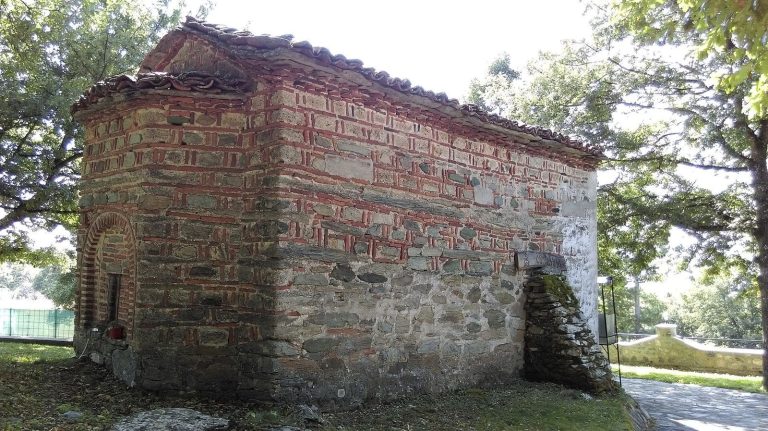
The smaller church, also known as the Old Church, stands above the monastery. Its date is uncertain, and its frescoes are attributed to the Linotop school, a regional painting tradition.
Residential and service buildings
The complex contains newer residential buildings as well as remains of older residences. An earlier painted refectory, a communal dining hall dated to the sixteenth or seventeenth century, was destroyed along with the kitchen in a 1954 fire.
Paintings and church furnishings
Wall paintings and icons
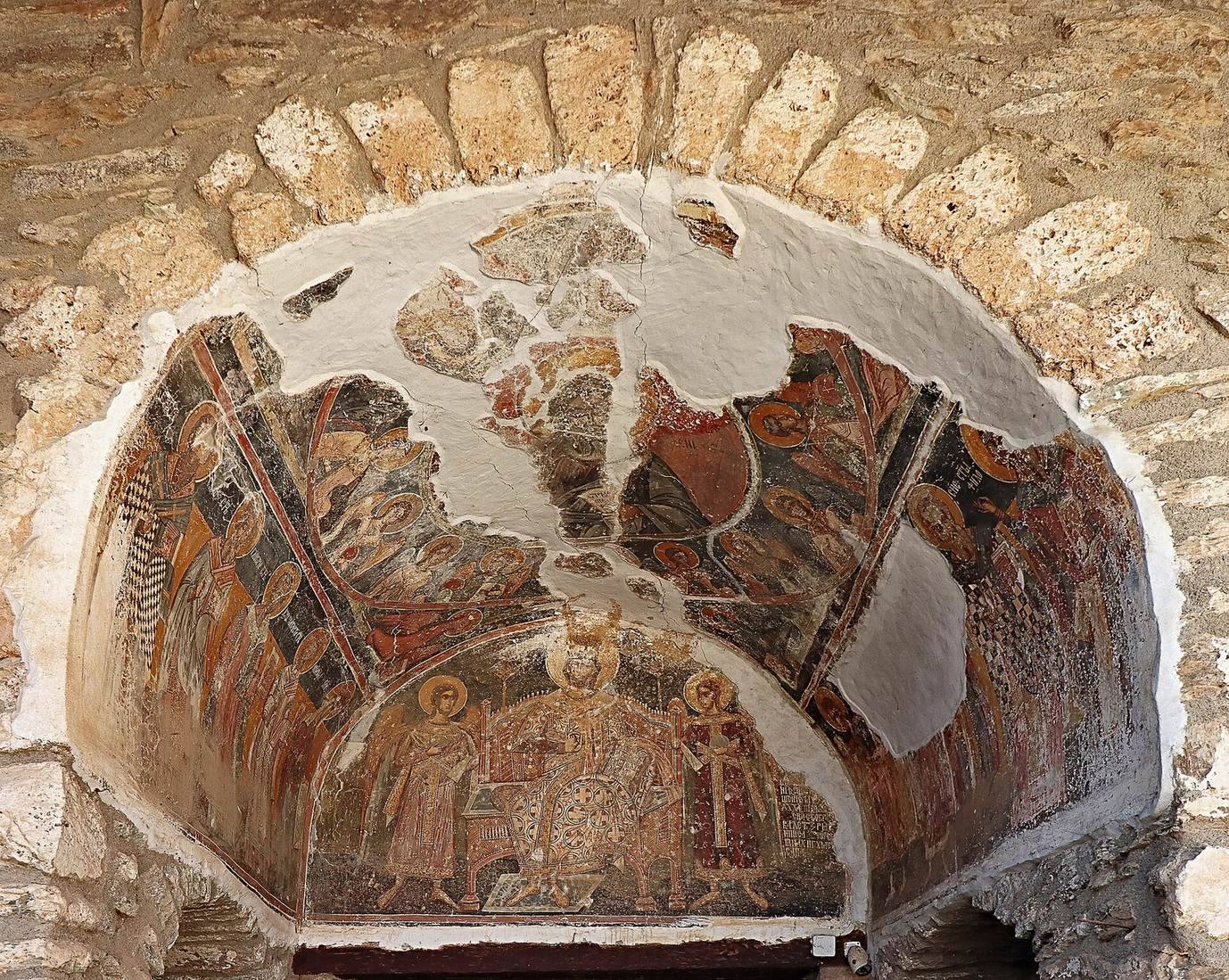
Paintings in the church porches date to 1637–1638 and are probably the work of artists from the Linotop school. Many of the church’s icons are also attributed to that tradition. The western entrance door was painted in 1637 and the southern door in 1638. The nave and entrance area were painted by Kosta Anastasov in 1889; an inscription records his work.
Iconostasis and carved furnishings
A large composition for the church’s iconostasis, the screen between the sanctuary and the main worship space, was made by the monk Kalinik in 1607. Sixteenth-century works attributed to the painter Onufriy Argitis include two large crosses for the iconostasis and an altar image of the Hodegetria, in which the Virgin Mary points toward the infant Christ. The church also contains a large sixteenth-century cross depicting the Crucified Christ and carved wooden choir stands. A fire in 1972 damaged the right side of the iconostasis and its royal doors, the central doors in the screen.
Carved entrance doors
Two carved doors that once decorated entrances to the monastery church are now held in an art gallery in Skopje. Their shallow relief shows figures and interlaced patterns comparable to designs found in fifteenth- and sixteenth-century manuscripts.
Manuscripts, memorials, and the fountain
The Slepče Apostolos
The Slepče Apostolos, a manuscript containing readings from the Apostles, dates to the twelfth century. Viktor Grigorovich found it at the monastery in 1845. Its calendar uses old Slavic names for the months, and the manuscript is an early copy of the Slavic translation associated with Cyril and Methodius.
Memorial records
The oldest surviving Slepče memorial book, a record of people commemorated in prayer, is held in Odesa, Ukraine. A wooden three-panel memorial associated with the monastery dates to the 1540s.
Fountain inscription
An inscription on the monastery fountain refers to the complex’s use as a hospital for people with mental illness.