Myōden-ji Temple: A Head Temple of Nichiren Buddhism in Kyoto


Site at a Glance
- Rating
- 4.1
- Popularity
- Low
- Country
- Japan
- Primary era
- Early Modern
- External website
- Open
- Eras represented
- Early Modern
- Civilizations
- Tokugawa
- Site type
- Religious
- Remains
- Monastery
On this page11 sections
History
Myōden-ji Temple is a Nichiren Buddhist temple in Kyoto, Japan, founded in 1477 by the priest Nichi’i with the support of the apothecary Myōzen. Nichiren was a thirteenth-century Japanese Buddhist teacher whose teachings formed the basis of a tradition centered on the Lotus Sutra. At its foundation, the temple received a bone relic of Nichiren and a sacred image regarded as identical in wood and spiritual substance to the image of the Seven-Faced Heavenly Woman worshipped at Mount Shichimen in Minobu. This connection led to Myōden-ji’s traditional name, the “Western Minobu.”
Foundation and early relocations
Nichi’i consulted his teacher Nichichō while establishing the temple at Ichijō-Shirikirechō. Myōden-ji became Kyoto’s representative temple for the direct Minobu lineage, a tradition associated with Minobu, a major sacred center of Nichiren Buddhism. It was counted among Kyoto’s eight principal Nichiren temples and its sixteen principal temples.
In 1536, the Tenmon persecution, also known as the Tenmon Hokke conflict, completely destroyed the temple by fire. Myōden-ji then took refuge in Sakai. After Emperor Go-Nara issued an edict allowing the Nichiren Buddhist community to return to Kyoto, the temple was rebuilt in 1542 in western Kyoto, near Shijō and Nishidōin.
Expansion and institutional role
In 1591, Toyotomi Hideyoshi, the late-sixteenth-century military ruler who unified Japan, ordered Myōden-ji to move to its third Kyoto location, in the Kyōgoku Nijo and Teramachi Ebisugawa area. The temple became the ancestral temple of the Ichijō and Shijō families.
The sixth abbot, Jigen-in Nichie, is regarded as the central figure in the temple’s revival. The fourteenth abbot, Hōshō-in Nichiyū, was known for his learning and virtue. Tōfuku-mon’in, the consort of Emperor Go-Mizunoo, gave him a gold-crested kesa, a Buddhist monastic robe. He later founded Gokoku-ji in Yamashina and established a Buddhist seminary there. The sixteenth abbot was Jakuen-in Nichitsū.
Destruction and rebuilding
During the tenure of the twenty-ninth abbot, Jūshin-in Nichigi, the Hōei Great Fire of 1708 destroyed the entire temple complex. Myōden-ji was subsequently moved to its present Nijo-Kawabata site, where the fourth temple was rebuilt. The fifth abbot, Ryōon-in Nikkin, preached approximately ten thousand times, gathered donations, and built the present main hall.
Myōden-ji is a head temple of Nichiren Buddhism and is officially recognized within the sect as a temple of historical importance. Its formal name is Hōkyōzan Shōhōkke-in Myōden-ji, and it belongs to the pilgrimage grouping known as the Twenty-One Hokke Temples of Central Kyoto. Five subtemples remain within the precinct. The former head-temple and branch-temple system of Nichiren Buddhism was dissolved in 1941, after which these institutions were conventionally described as former branch temples.
The mausoleums of successive abbots are located at Tsūmyō-ji in Higashiyama. The mausoleums of Hōshō-in Nichiyū and Jakuen-in Nichitsū are at Gokoku-ji in Yamashina, outside the present temple precinct.
Remains
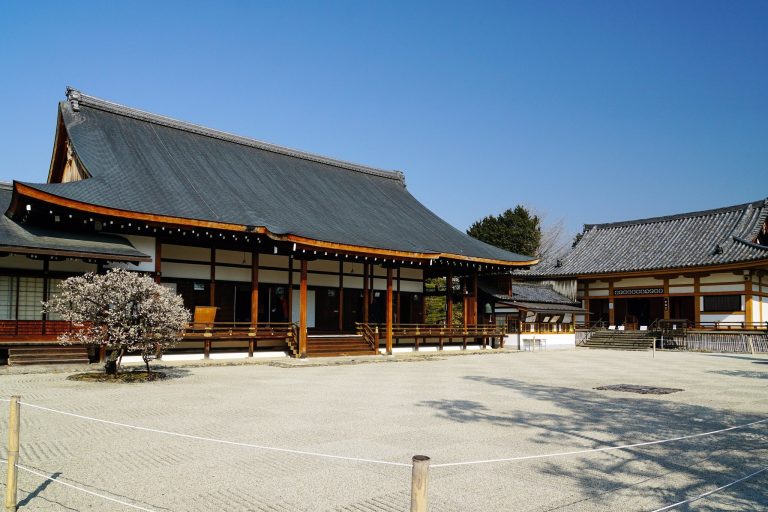
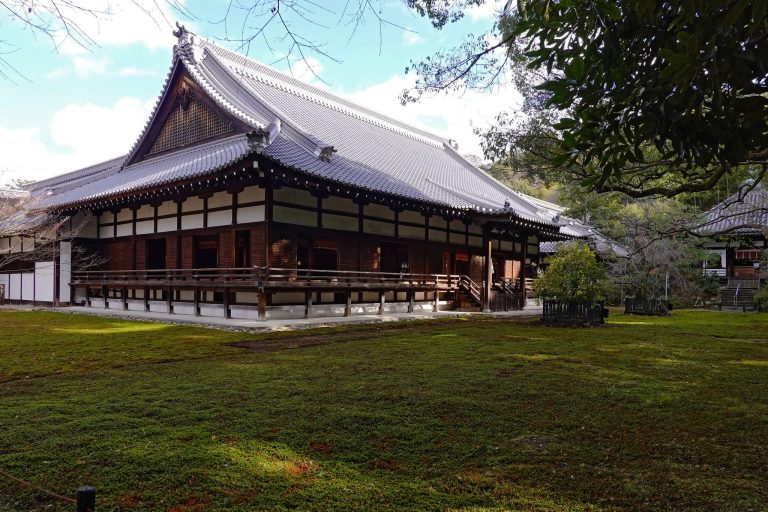
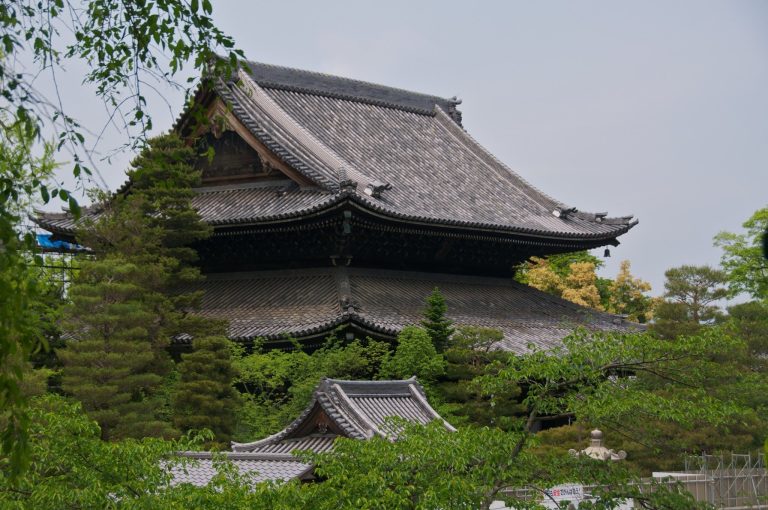
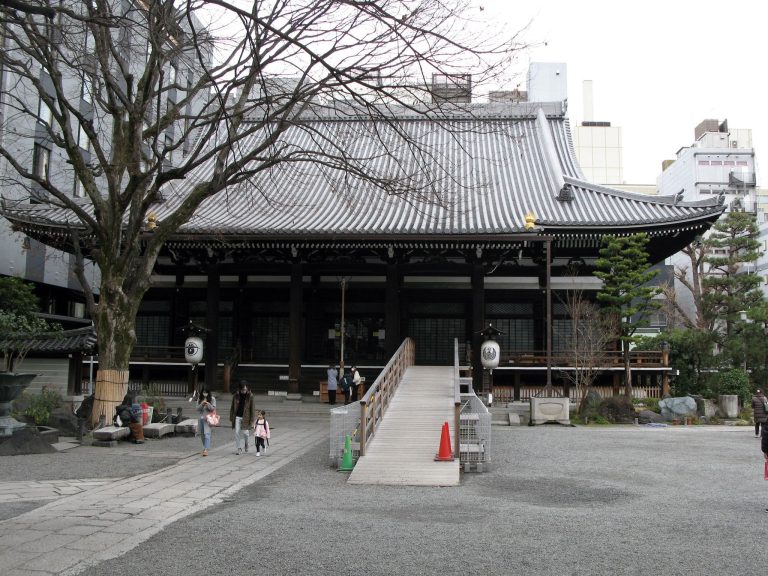
The present complex is the fourth Myōden-ji, rebuilt at its Nijo-Kawabata location after the 1708 fire. Its surviving precinct includes the principal worship hall, a mountain gate, the temple’s central Buddhist image, and five subtemples. The associated abbot mausoleums lie at other temples in Kyoto rather than within this precinct.
Principal buildings and worship
Mountain gate and main hall
A sanmon, or mountain gate traditionally marking entry into a Buddhist temple precinct, forms part of the complex. The main hall was built through the fundraising efforts of Ryōon-in Nikkin, the fifth abbot, during the rebuilding that followed the Hōei Great Fire.
Central object of worship
The principal object of worship is the Sanbōzon, an image representing the Three Treasures of Buddhism: the Buddha, the Buddhist teaching, and the Buddhist community. The temple’s sacred foundation also included a bone relic of Nichiren and the image of the Seven-Faced Heavenly Woman associated with Mount Shichimen in Minobu.
Subtemples and associated mausoleums
Five subtemples
Five smaller temple institutions stand within the precinct: Myōshaku-in, Enritsu-in, Ryūgaku-in, Honkō-in, and Gyokujū-in. They are associated with Myōden-ji as subtemples, a term for smaller temple institutions situated within, or historically attached to, a larger temple.
Abbot mausoleums
The mausoleums of successive abbots are associated with Tsūmyō-ji in Higashiyama, while those of Hōshō-in Nichiyū and Jakuen-in Nichitsū are located at Gokoku-ji in Yamashina. These memorial structures form part of Myōden-ji’s institutional history while remaining outside its present grounds.