Hyūga Myōkoku-ji Temple: A Nichiren Buddhist Temple in Japan


Site at a Glance
- Rating
- 4.1
- Popularity
- Very Low
- Country
- Japan
- Primary era
- Medieval
- Eras represented
- Medieval
- Civilizations
- Kamakura shogunate
- Site type
- Religious
- Remains
- Temple
On this page9 sections
History
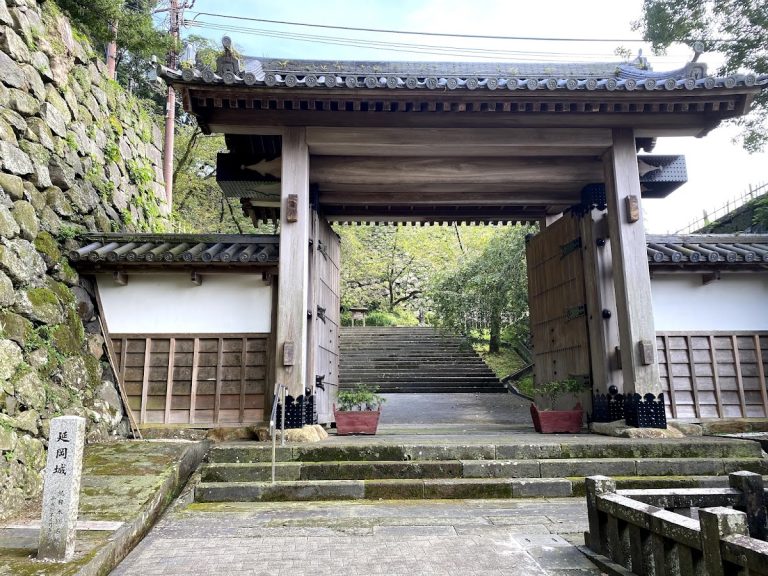
Hyūga Myōkoku-ji Temple is a Buddhist temple of the Nichiren tradition in Hyūga, Japan, overlooking Hososhima Port from Mount Komenoyama. Its origins reach back to an esoteric Buddhist mountain-worship complex, while its transformation into a Nichiren temple began in the fourteenth century. The temple’s principal object of worship is the Great Mandala, a written sacred representation used for devotion.
From mountain worship to a Hokke hall
A hall dedicated to a Myōō, a forceful protective Buddhist deity, stood on the mountain before the site became a Nichiren temple. A tradition preserved by Hon’ei-ji in Takaoka attributes the conversion of this hall, the Amida hall at Chichiya, and the Dainichi hall at Mukabaki into Hokke halls to Nichigō in the late Kamakura period. Nichiren Buddhism, founded in thirteenth-century Japan, centers on devotion to the Lotus Sutra.
The early propagation of the teaching in Hyūga is associated instead with Nichinō, a disciple of Nichiin. Nichinō landed at Hososhima in 1331, marking the first spread of Nichiren Buddhism in Kyūshū. In 1333, the abbot of the Hososhima Myōō hall, known as the Satsuma Hōin, accepted Nichinō’s teaching and converted the hall into a Hokke hall. That same year, he entered the lineage of Nichisen of Hyakukan-bō at Fuji Taiseki-ji.
Fourteenth-century lineages and the temple name
After the Sendai doctrinal debate in 1334, the Satsuma Hōin entered the lineage of Nichidō of Taiseki-ji. Doctrinal differences led him to leave that lineage in 1335. He then became a disciple of Nichigō, took the name Nichiei, and returned to Hyūga. Nichiei visited Nichigō again at Hota Myōhon-ji in 1341. Nichigō commissioned him to preach in western Japan, after which Nichiei returned to Hyūga.
In 1342, Nichiei named the Hososhima Hokke hall Myōtani-ji. From the Edo period, it was commonly called Myōkoku-ji. The mountain name, Kōfukuzan, and the temple name derive from an earlier name associated with Kōson. The mountain was also popularly linked with the idea of a place that brings forth fortune.
Edo-period use and modern affiliations
During the Edo period, Hososhima Port became an important relay point for the alternate-attendance journeys of lords from the domains of southern Kyūshū. The port was also made a territory administered directly by the shogunate. Myōtani-ji served as lodging for shogunal officials, reinforcing the use of the name Myōkoku-ji. In the final years of the Edo period, the Confucian scholar Yasui Sokken visited the temple with his father, Sōshū.
The temple joined the newly established Nichiren school in 1872. After the school divided into Unity and Superiority branches in 1874, it belonged to the Superiority branch. When the Fuji lineage became known as the Nichiren Kōmon branch in 1876, Myōkoku-ji was included in that organization, later renamed the Honmon school.
In 1941, the Honmon school merged with the Nichiren school and the Kempon Hokke school, forming the modern Nichiren school and the Kōtō Hōen Association. Myōkoku-ji became connected with the Nichiren school through this Kōtō lineage. Under its thirty-seventh head priest, Nakabayashi Nisshū, it joined Nichiren Shōshū in 1956, left that school in 1957, and became an independent religious corporation calling itself the Nichiren school Gōmon branch. Under its thirty-eighth head priest, Kuroki Nisshin, it returned to the Nichiren school in 1976 with assistance from the Konishi Hōen, Hōonji lineage.
Religious traditions and protected heritage
Many temple treasures, including mandalas attributed to Nichiren, mandalas by earlier teachers, and old documents, were lost during the disorder of the 1940s and 1950s. Nichigō’s handwritten mandala and Nichiyō’s handwritten mandala remain among the temple’s treasures. Myōkoku-ji is also a sacred place of Bishamonten in the Hyūga Seven Deities of Good Fortune pilgrimage. Bishamonten is a Buddhist guardian deity associated with protection, authority, and good fortune. An annual Twelve Shrine Pilgrimage connected with Nichiyō continues on the fifteenth day of the first month of the former lunar calendar.
Tradition speaks of twelve branch institutions associated with the temple, although the number may have referred conventionally to the twelve zodiac signs rather than to an actual count. Former branch temples included Hon’yō-ji, Nichikō-ji, Honken-ji, Renkō-bō, and Shōju-ji. These temples are no longer extant. Myōkoku-ji’s garden is protected as a nationally designated Place of Scenic Beauty, the paired ginkgo tree on its grounds has a Hyūga City protected-tree designation, and Nichiyō’s tomb is a designated prefectural historic site.
Remains
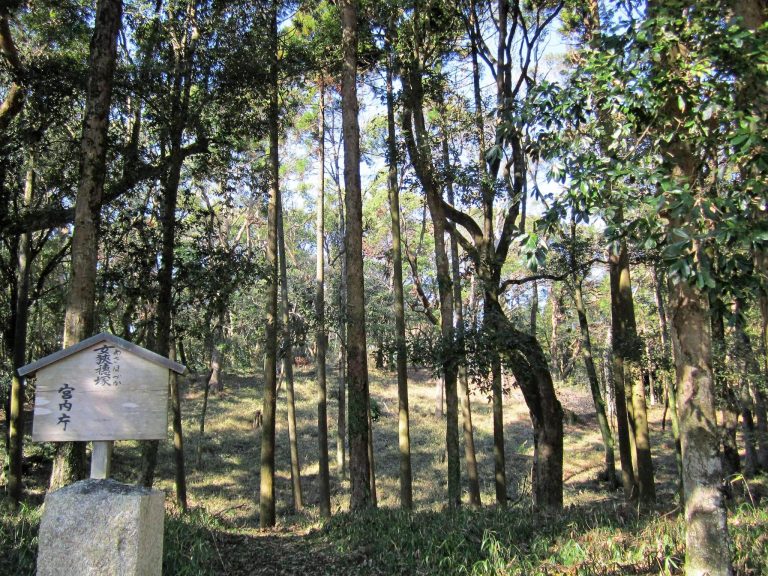
Myōkoku-ji occupies the site of the former mountain-worship complex on Mount Komenoyama, above Hososhima Port. The surviving religious landscape combines the earlier Myōō-hall tradition with the later Nichiren identity of the temple. Its principal object of worship is the Great Mandala, while the grounds preserve a scenic garden, a paired ginkgo tree estimated to be about 300 years old, historic images, handwritten mandalas, and Nichiyō’s tomb.
Remnants of the earlier sacred complex
The former Myōō hall, later converted into the Hososhima Hokke hall, represents the site’s transition from esoteric mountain worship to Nichiren practice. A Fudō Myōō statue thought to date from the Kamakura period and guardian-dog sculptures remain as material reminders of that earlier hall. Fudō Myōō is an immovable protective deity associated with overcoming obstacles. Another Fudō Myōō image is associated with the Itō family; its small size has led to the suggestion that it may originally have served as the family’s personal devotional image.
Garden, tree, and memorial remains
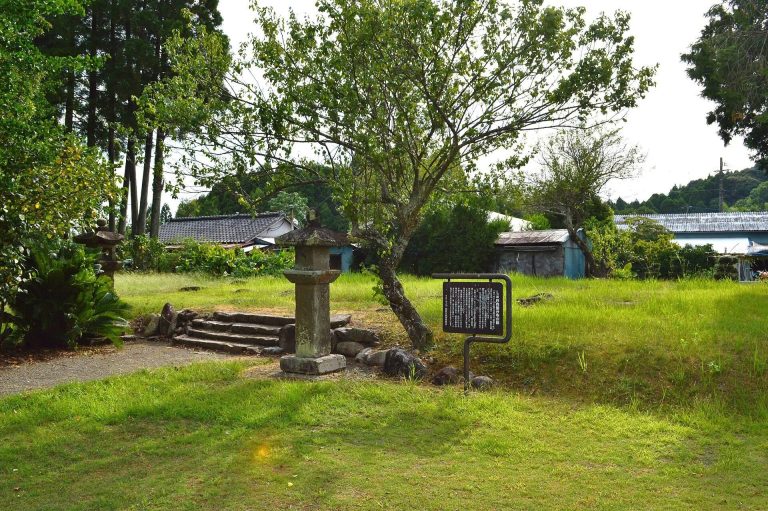
The temple garden forms the principal scenic feature of the grounds and is protected as a Place of Scenic Beauty. A paired ginkgo estimated to be approximately 300 years old also stands within the temple grounds, where it has a separate protected-tree designation from Hyūga City.
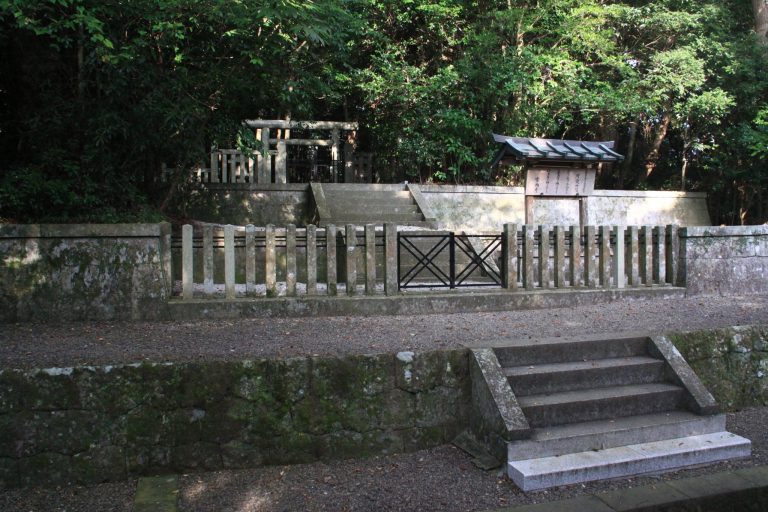
The tomb of Nichiyō is preserved at the temple and carries designation as a prefectural historic site. The site also retains the memory of former branch institutions, including several named temples that no longer survive.
Mandala treasures
Nichigō’s handwritten mandala and Nichiyō’s handwritten mandala remain as temple treasures. In this setting, a mandala is a religious diagram or written sacred representation, and the handwritten form attributes the work to the personal brushwork of the named priest. Together with the Great Mandala, these objects express the temple’s continuing connection with Nichiren Buddhist devotion and its historical lineages.