Sheikh Abd el-Qurna: An Ancient Egyptian Cemetery in the Theban Necropolis
Site at a Glance
- Popularity
- Medium
- Country
- Egypt
- Primary era
- Bronze Age
- Eras represented
- Bronze Age, Iron Age
- Civilizations
- Egyptian
- Site type
- Burial
- Remains
- Necropolis
On this page12 sections
History
Sheikh Abd el-Qurna is an ancient Egyptian cemetery in the Theban necropolis, on the west bank of the Nile at Luxor, Egypt, opposite ancient Thebes. It formed part of the Valley of the Nobles, where high officials and members of the royal court were buried. Most of its tombs date to the New Kingdom, especially the Eighteenth and Nineteenth Dynasties, while others belong to earlier and later dynasties.
Middle Kingdom and New Kingdom burials
Burials assigned to the Eleventh and Twelfth Dynasties place the cemetery’s history in Egypt’s Middle Kingdom. Meketre, a chief steward and chancellor under the Eleventh-Dynasty pharaoh Mentuhotep II, was buried here. Intefiqer, governor of Thebes and vizier, a senior royal administrator, served under Amenemhat I and Senusret I.
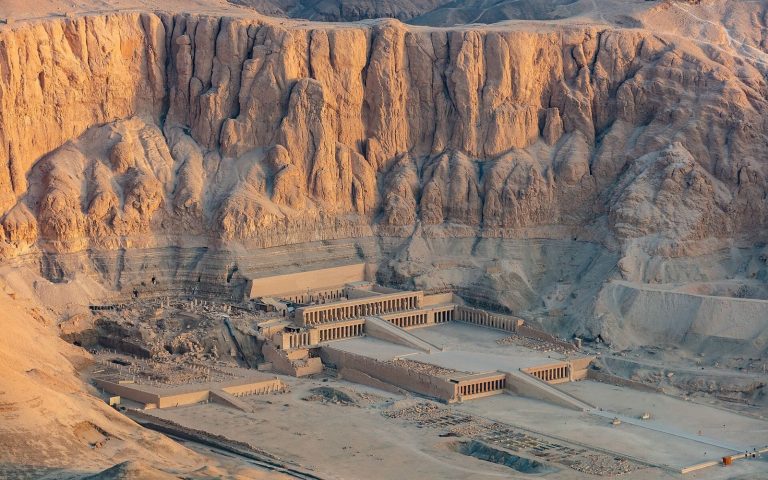
The cemetery’s many New Kingdom burials include officials who served successive Eighteenth-Dynasty rulers. Nakht lived under Thutmose IV, while Menna served under Thutmose IV and possibly Amenhotep III. Sennefer, mayor of Thebes, served under Amenhotep II. Rekhmire was vizier under Thutmose III and later Amenhotep II; Ramose held the same senior office under Amenhotep III and Akhenaten. Ineni, an architect, served from the reign of Amenhotep I through that of Thutmose III. Senenmut, a senior official and architect associated with Hatshepsut’s temple at Deir el-Bahari, was also among the cemetery’s occupants.
Other tombs belong to later periods. Paser was vizier under Ramesses I, Seti I, and Ramesses II. The cemetery also contains burials assigned to the Twentieth and Twenty-first Dynasties, and some to the Twenty-fifth or Twenty-sixth Dynasties.
Modern history
The village that grew over the cemetery had a long association with tomb robbery and antiquities dealing. Residents also worked as guides for archaeological expeditions, and some took part in the discovery and excavation of Tutankhamun’s tomb, KV62. In the late nineteenth century, three brothers of the Abd el-Rasul family became prominent after the royal-mummy cache TT320 at Deir el-Bahari was revealed. High priests of Amun, a major Egyptian deity whose principal cult center was Thebes, had hidden about fifty royal and royal-family mummies there in the early Third Intermediate Period, which followed the New Kingdom. The brothers had secretly removed objects from the tomb for about ten years and sold them on the black market. Authorities learned of their activity in 1881, when the cache’s existence became public. The brothers were also suspected of robbing another cache of high priests’ mummies and other tombs in the area.
The lost tomb of Nebamun was found in 1820 by Yanni, a Greek Egyptologist, who removed painted wall fragments on the orders of Henry Salt, a British consul and Egyptologist. Yanni later died in London without revealing the tomb’s location. It remains lost within the Theban necropolis, with possible locations in Sheikh Abd el-Qurna or Dra Abu el-Naga. The tomb is dated to around 1350 BCE. Nebamun described himself as a scribe and overseer of grain in the granaries of Amun at Karnak; the paintings and their style suggest that he lived under Thutmose IV or Amenhotep III.
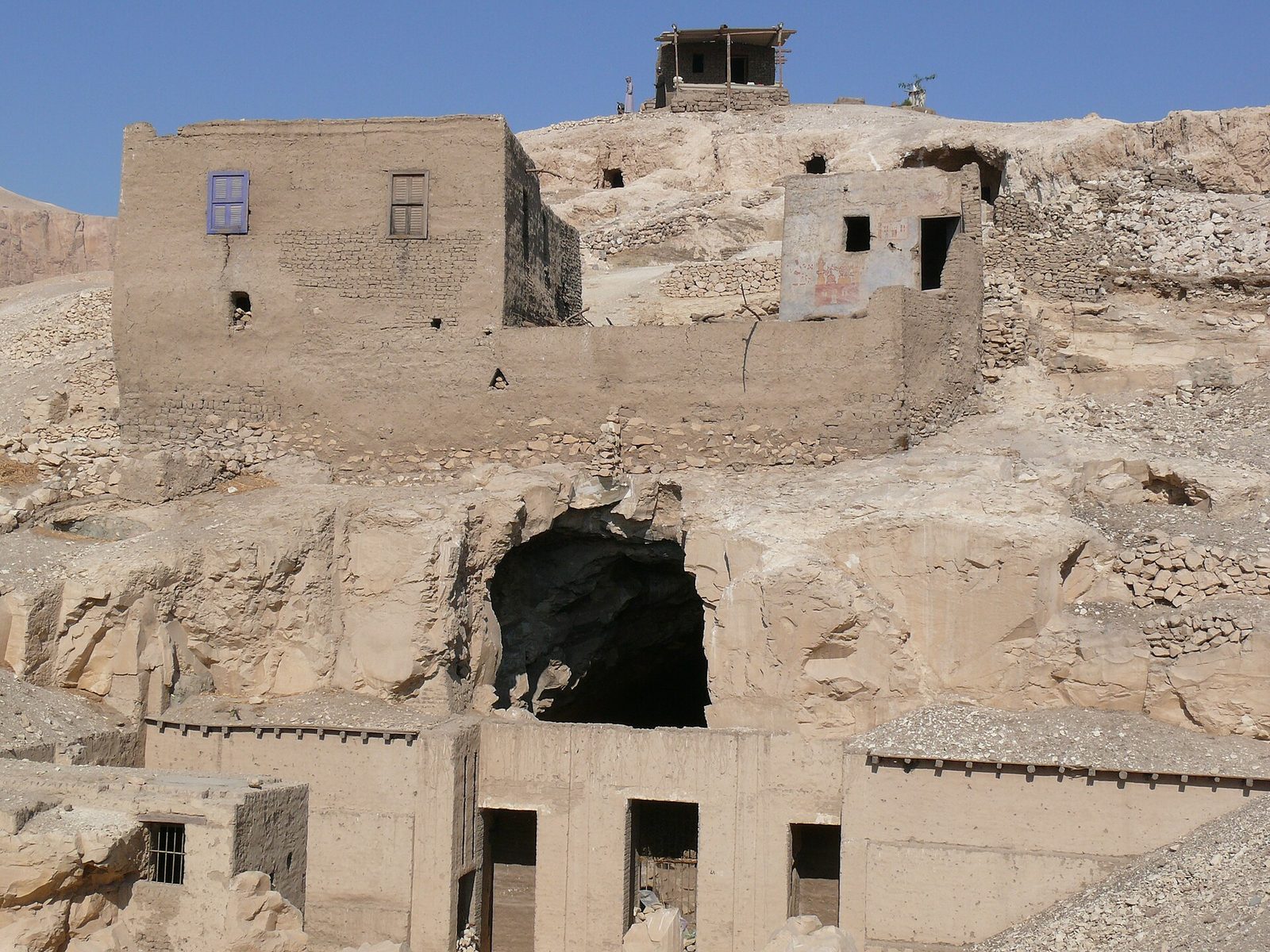
From 2006 to 2010, the Egyptian government required residents of al-Qurna to move to the purpose-built settlement of al-Qurna al-Djadida and demolished the old houses. The stated aims included recovering tombs believed to lie beneath the houses, making public services easier to provide, and protecting tombs from theft and damage. Zahi Hawass, then head of the Supreme Council of Antiquities, said the move would help prevent looters from damaging monuments while removing objects for sale.
Remains
Setting and distribution
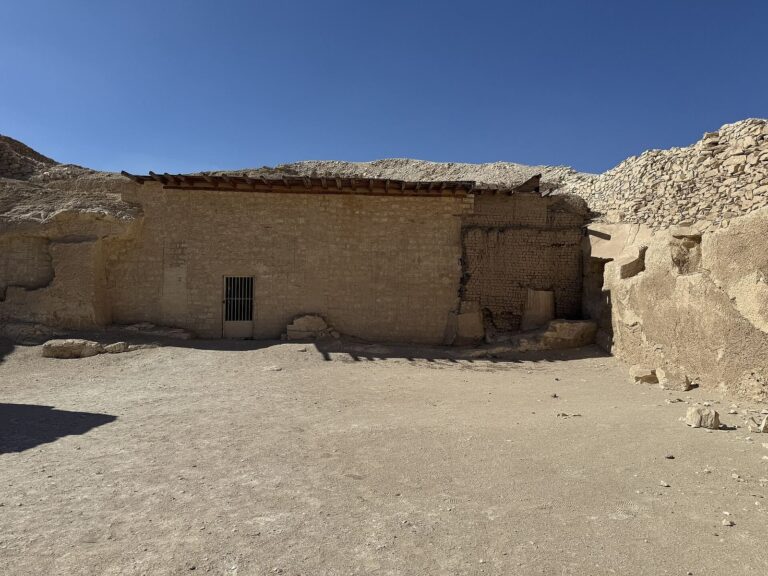
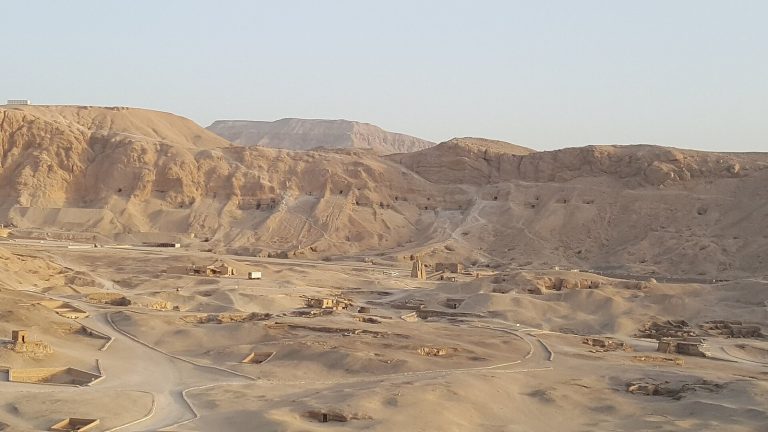
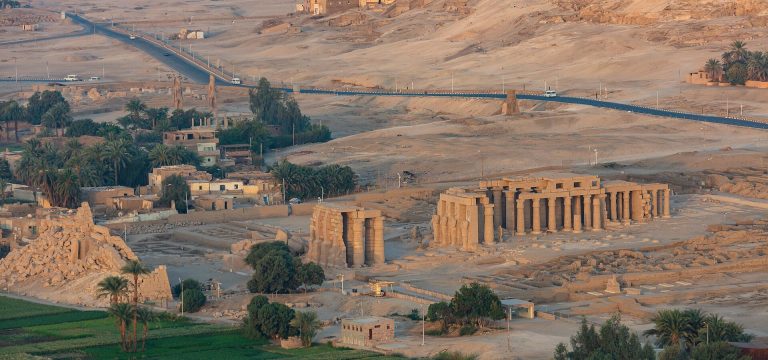
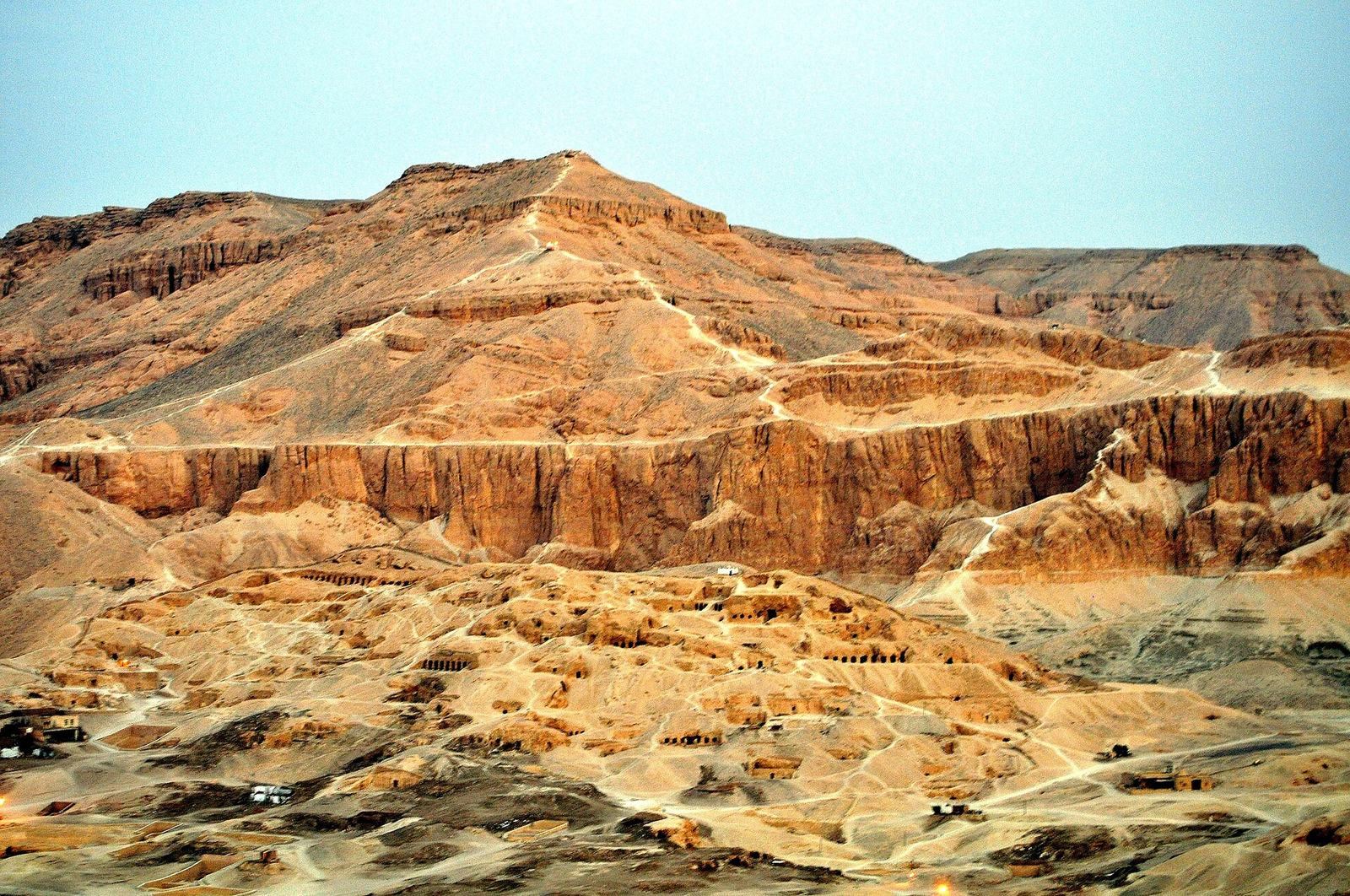
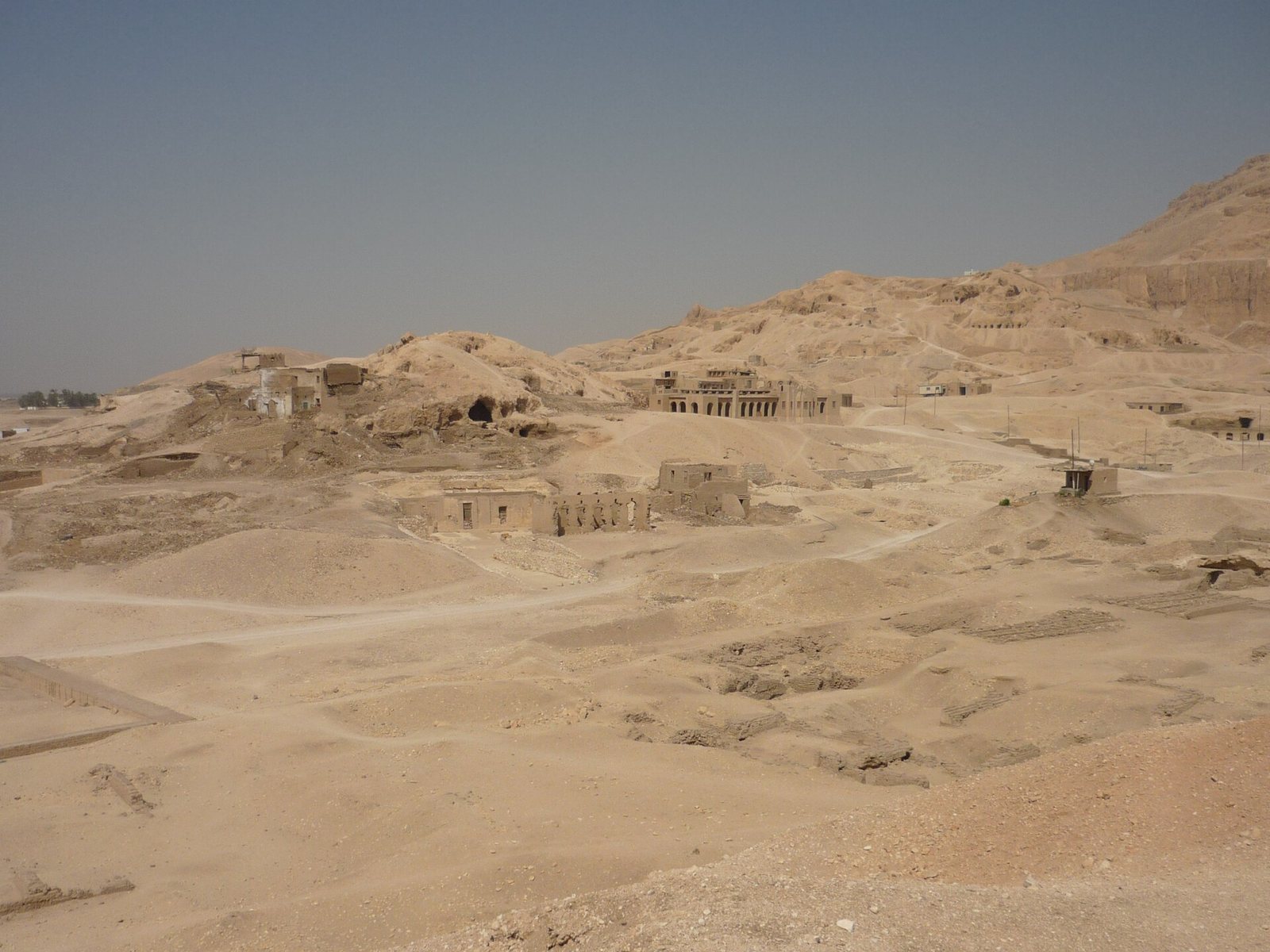
The cemetery’s tombs are spread across the area around al-Qurn peak. Sheikh Abd el-Qurna lies southwest of al-Khokha, north of the Ramesseum, and southeast of the temples of Deir el-Bahari. Its name is associated with the nearby village and probably with al-Qurn, a 482-metre peak; a domed tomb of a local saint is also connected with the name. In the former village, houses stood above tomb passages and corridors.
Tombs and finds
Catalogued tombs
About 150 tombs have been discovered and catalogued. Their labels use the Theban Tomb numbering system, often abbreviated to TT. The catalogue includes tombs with identified owners as well as uncertain or unidentified occupants. Some were reused or usurped, including TT30, TT58, TT65, TT70, TT112, and TT348.
Senenmut’s tombs
Senenmut’s unused tomb, TT71, forms a double tomb with TT353 at Deir el-Bahari.
Meketre’s funerary models
TT280 contained a group of painted wooden funerary models depicting Meketre’s household and estate. The scenes and figures represent his house, workshops, kitchens, stables and livestock, servants, gardens, and boats, including fishing boats.
Princesses’ reburial cache
A cache at Sheikh Abd el-Qurna is identified as a reburial of several Eighteenth-Dynasty princesses.
Finds from TT38
In February 2026, Egypt’s Ministry of Tourism and Antiquities announced the discovery in TT38 of 22 colorful, sealed wooden sarcophagi containing mummies. The coffins were described as belonging to Chanters of Amun. The find also included eight papyri with funerary texts and scenes from the Book of the Dead.
Nebamun’s wall paintings
Fragments cut from Nebamun’s painted tomb walls are held in museums outside Egypt. Eleven large pieces have been at the British Museum since 1821. Smaller fragments are held by the Egyptian Museum in Berlin, the Museum of Fine Arts in Lyon, and the Calvet Museum in Avignon.