Plankenfels Castle: Rebuilt after the German Peasants’ War
Site at a Glance
- Popularity
- Low
- Country
- Germany
- Primary era
- Early Modern
- Eras represented
- Medieval, Early Modern
- Civilizations
- Holy Roman Empire
- Site type
- Domestic
- Remains
- Castle
On this page5 sections
History
Early records and the Lords of Plankenfels
Plankenfels Castle is a medieval castle in the village of Plankenfels, Germany; a castle probably stood on its site by 1255. That year, Konrad von Plankenfels marks the first recorded appearance of the Lords of Plankenfels. The castle is thought to have replaced nearby Castle Plankenstein, probably the family’s earlier seat. By 1260, Plankenstein belonged to the Bishop of Bamberg.
Plankenfels Castle itself enters the record in 1403, when Jörg von Plankenfels held it as a fief from the Burgraves of Nuremberg, territorial governors of the lands associated with Nuremberg. After the Lords of Plankenfels died out around 1486, the castle passed to the Lords of Wichsenstein as a fief; they are recorded as its owners in 1505.
Destruction and rebuilding
The German Peasants’ War, a widespread uprising in German-speaking lands in 1524–1525, almost completely destroyed the castle in 1525. In 1549, Ernst von Wichsenstein sold the surviving buildings to Ernst von Rüssenbach. Reconstruction under the Lords of Rüssenbach was complete by 1554 or 1556.
Later ownership
After the Lords of Rüssenbach died out, Hans Gilg von Laineck held the castle as a male-line fief from 1573, meaning it could pass only through male heirs. The Lords of Lüschwitz of Glashütten owned it from 1629. In 1649, Gerhard Christoph von Lüschwitz sold the lordship, including the castle, which was then described as a manorial estate, a landed property with associated rights of lordship, to the Lords of Schlammersdorf. They formally received the lordship as a fief in 1656.
In 1786, Plankenfels became the Schlammersdorf family’s freehold property, no longer held as a fief. That year, Baroness Johanna Sophia Christine von Egloffstein purchased the estate. Since 1881, the complex has been in private ownership outside the nobility.
Remains
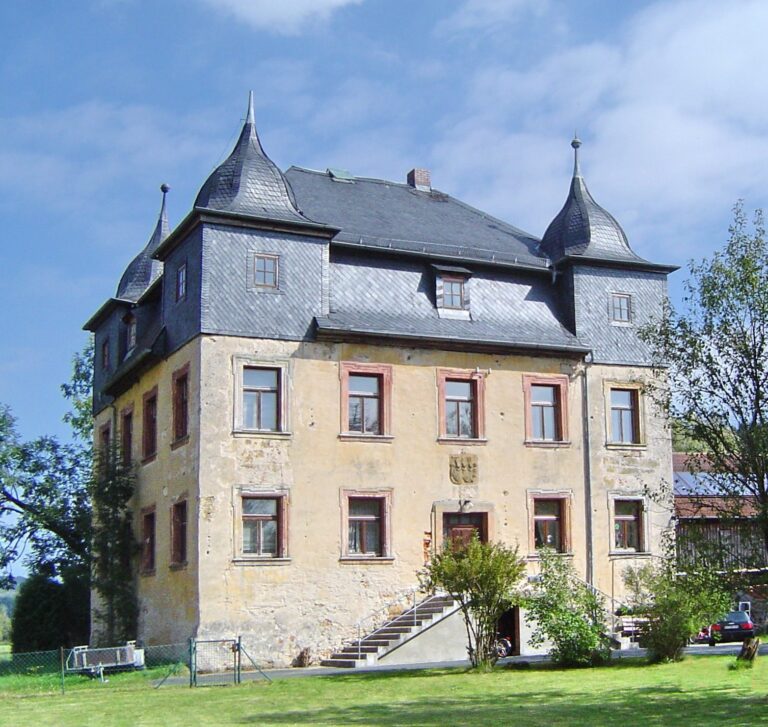
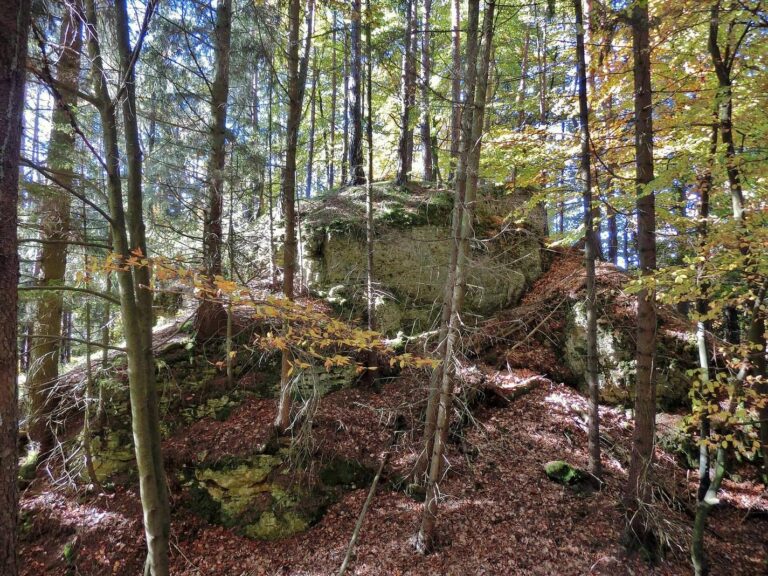
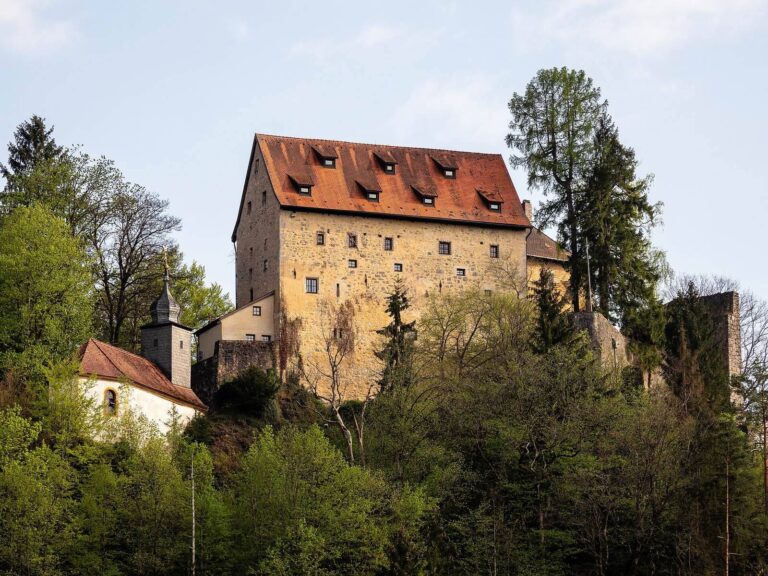
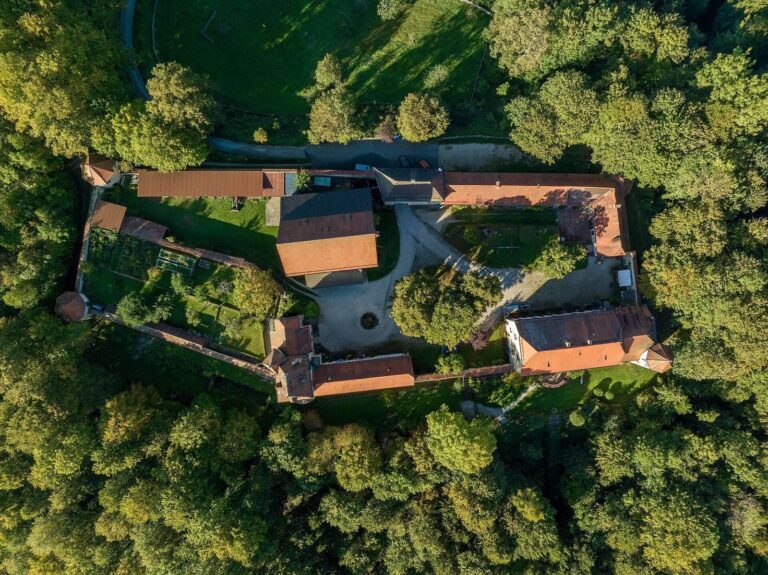
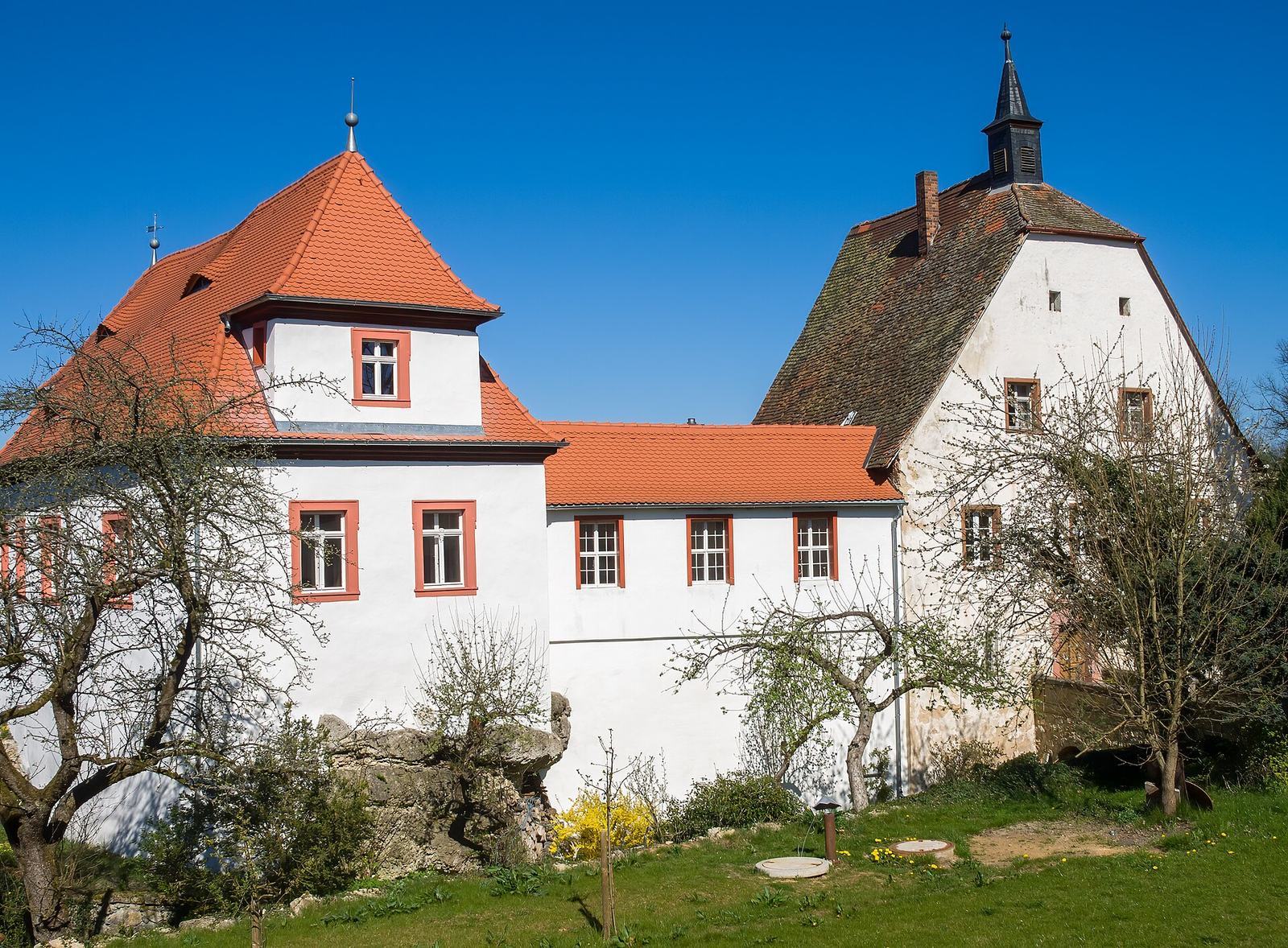
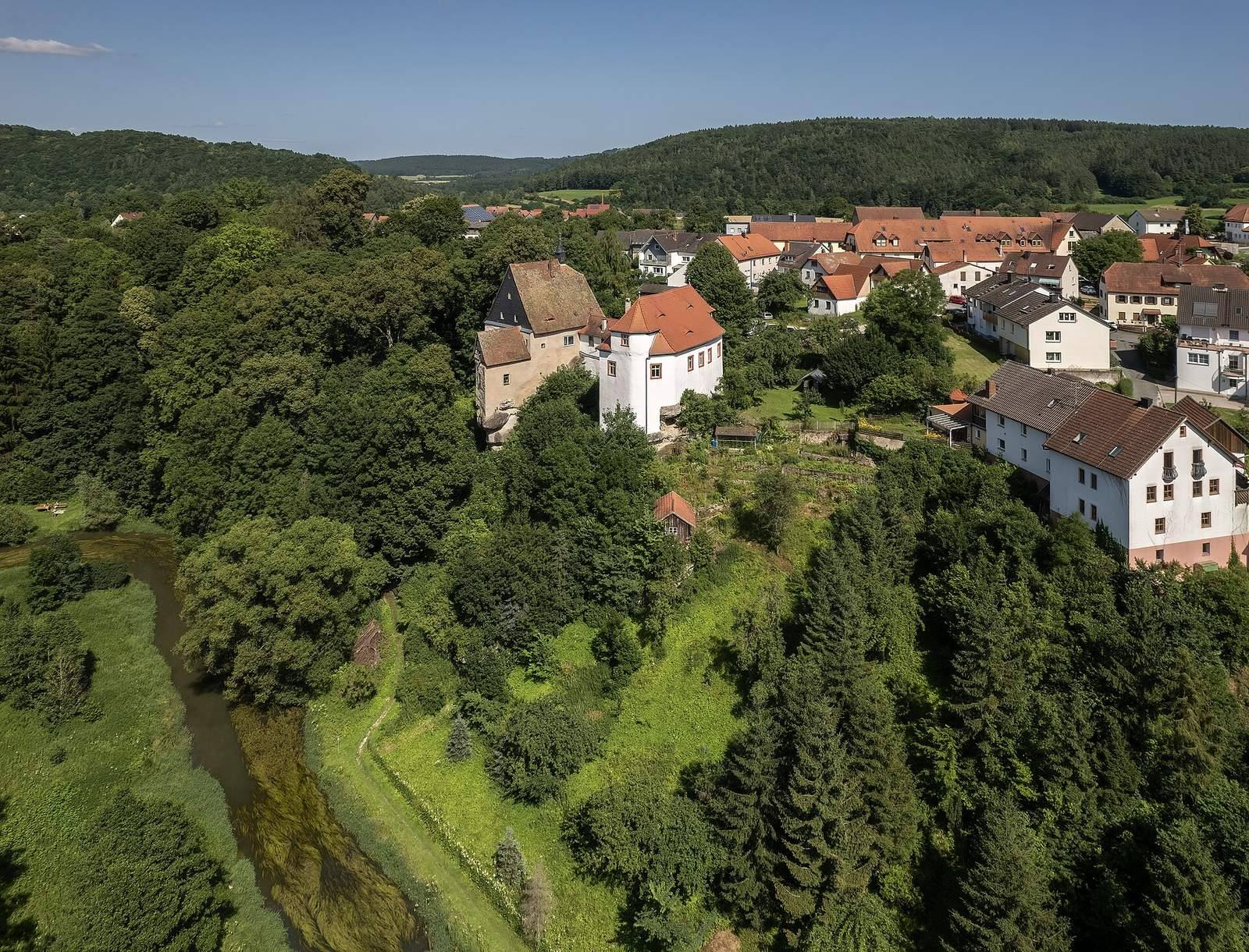
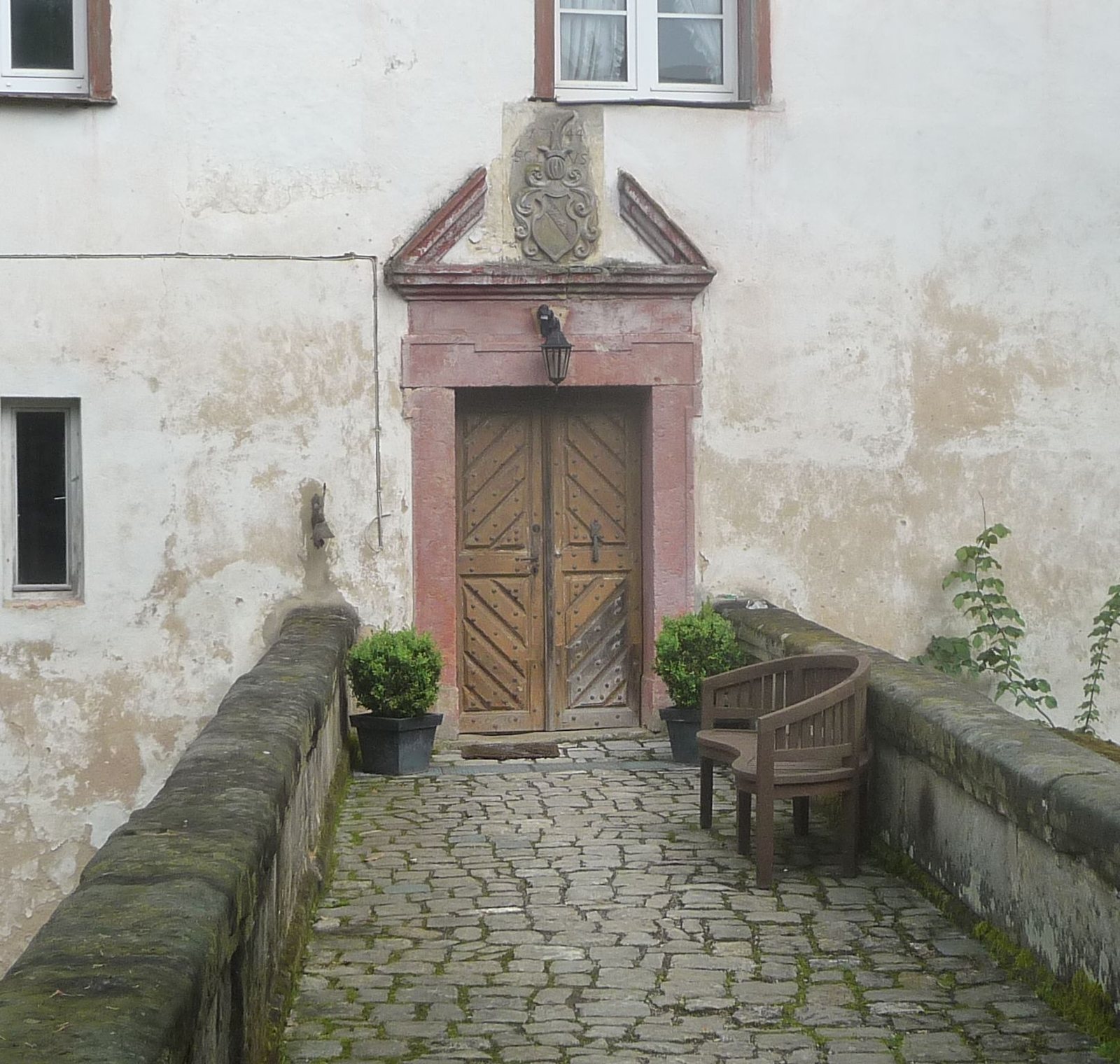
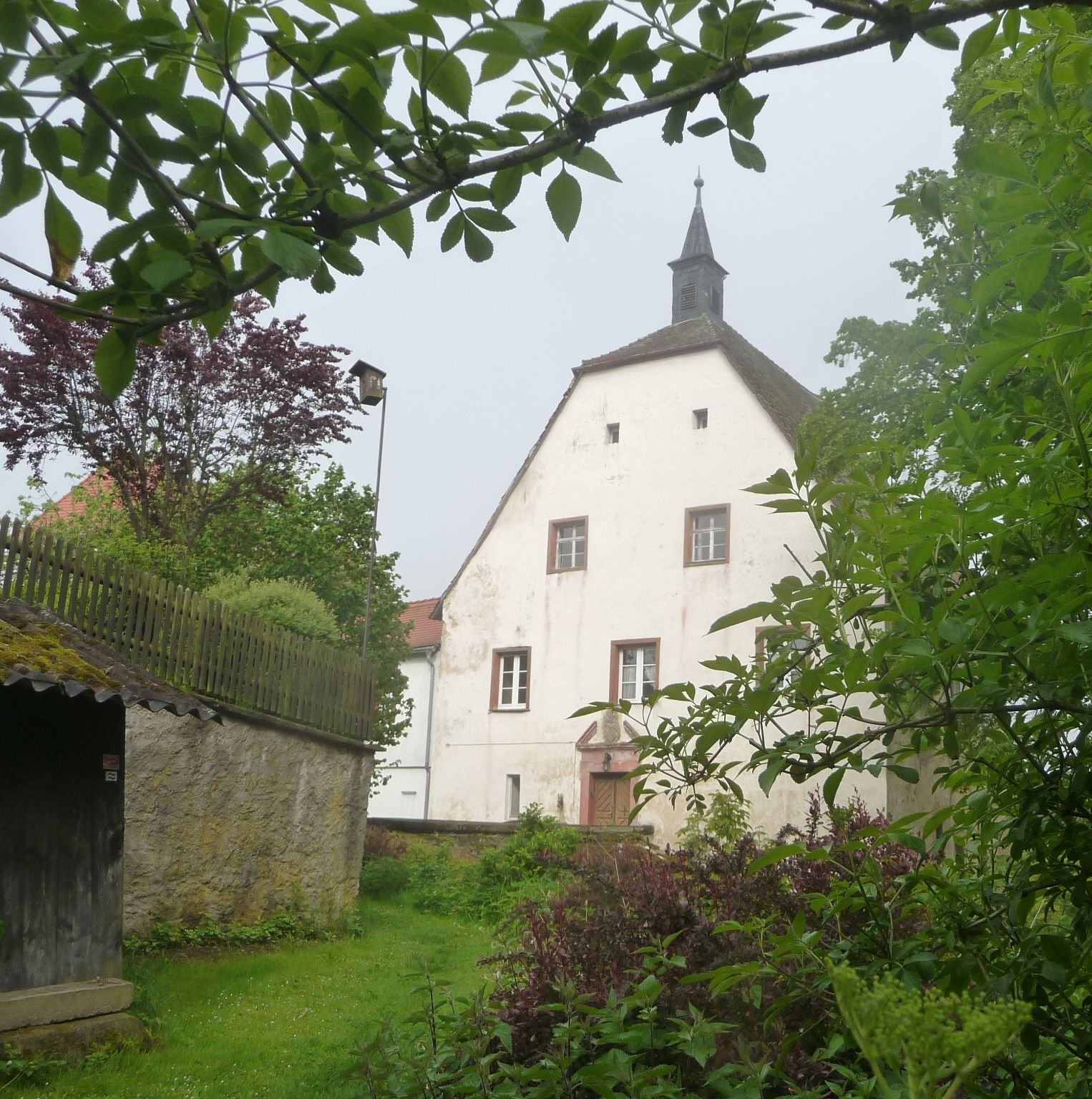
The castle stands on a dolomite outcrop above the left side of the upper Wiesent valley, at the western edge of Plankenfels village. Its east and west wings are joined by an intermediate building with a gable roof. Tree-ring dating places the roof trusses in their present form at about 1553 in the east wing and about 1717 in the west wing.