Wetzdorf Castle: A Baroque and Neoclassical Estate in Austria
Site at a Glance
- Rating
- 5
- Popularity
- Very Low
- Country
- Austria
- Primary era
- Early Modern
- Eras represented
- Medieval, Early Modern, Modern
- Civilizations
- Austrian Empire, Habsburg, Holy Roman Empire
- Site type
- Domestic
- Remains
- Castle
On this page12 sections
History
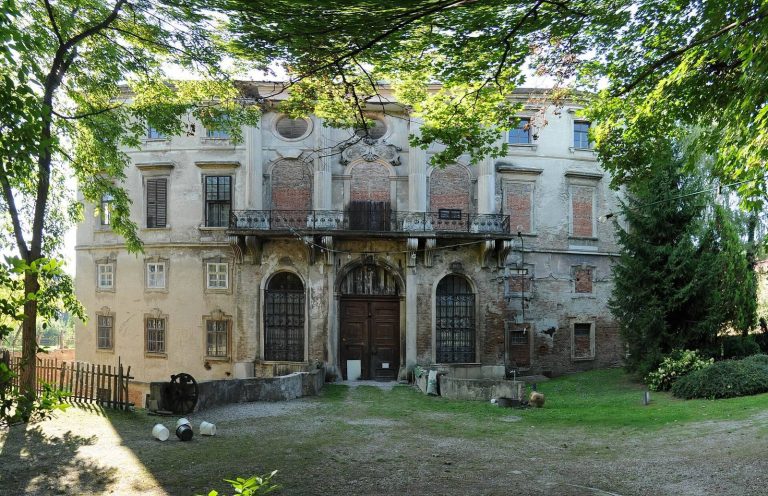
Wetzdorf Castle is an estate at Kleinwetzdorf, Heldenberg, in Lower Austria, Austria. Its history reaches back to the medieval period, while major transformations in the 18th and 19th centuries shaped its later character.
Medieval estate and noble ownership
Eberhard von Wecelendorf appears as a witness in 1190. By the early 14th century, the locality was probably held by the territorial ruler. A fortified farm is thought to have stood there before being converted into a fortified house; records of its owners date from this period. After a succession of changes in ownership, the estate passed to the Barons von Prösing in 1630 as a fief, land held under a lord’s grant. Wolf Sigmund Baron zu Prösing made the lordship freehold property, outside that feudal arrangement.
Baroque remodeling
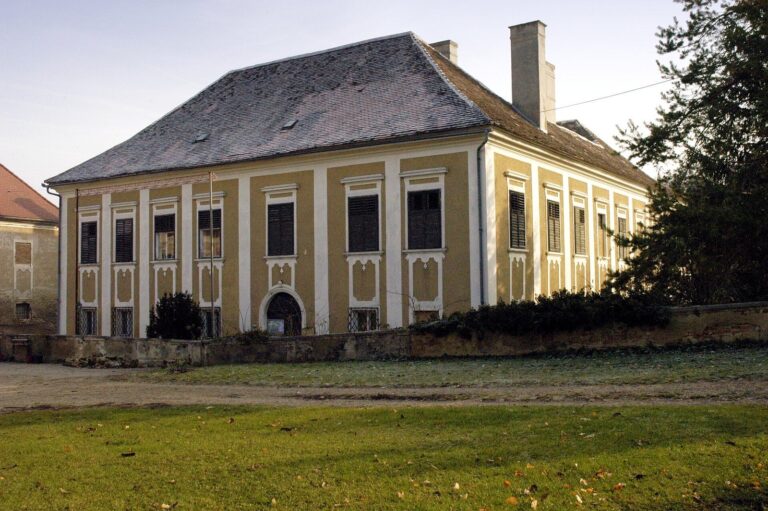
Duchess Magdalena Sophie Eleonora von Schleswig-Holstein acquired the castle in 1714. Her heir, Duke Leopold of Schleswig-Holstein-Sonderburg-Wiesenburg, commissioned extensive remodeling in 1726-1728 in the Baroque style, known for rich ornament and dramatic forms. Leopold’s son-in-law, Prince Karl Thomas zu Löwenstein-Wertheim-Rochefort, continued the expansion.
Neoclassical renovation and the memorial
Joseph Gottfried Pargfrieder acquired the estate in 1832. From 1833 to 1841, he had the castle renovated in the Neoclassical style, which drew on ancient Greek and Roman architecture, and developed the grounds as a landscape garden. In 1849, he established the Heldenberg memorial as a “patriotic mausoleum,” or monumental tomb. Construction of the Vienna-Budweis railway through the area in 1870 separated the castle complex from its landscape park.
Artists and heritage status
In 1902-1903, writer Otto Julius Bierbaum rented several rooms in the castle for a few months. For a short time, the estate became a meeting place for writers and artists in his circle. The grounds are recognized under Austria’s Monument Protection Act as one of the country’s most significant garden-architecture monuments.
Remains
Castle complex
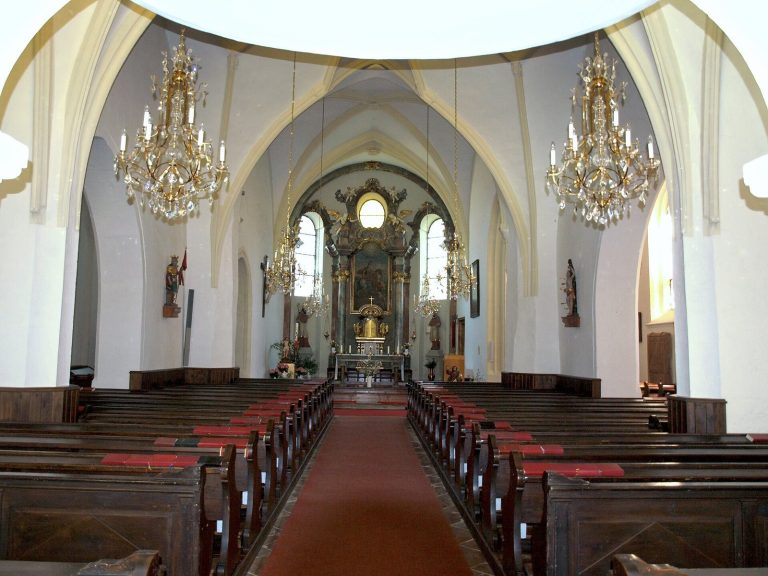
Courtyards and chapel
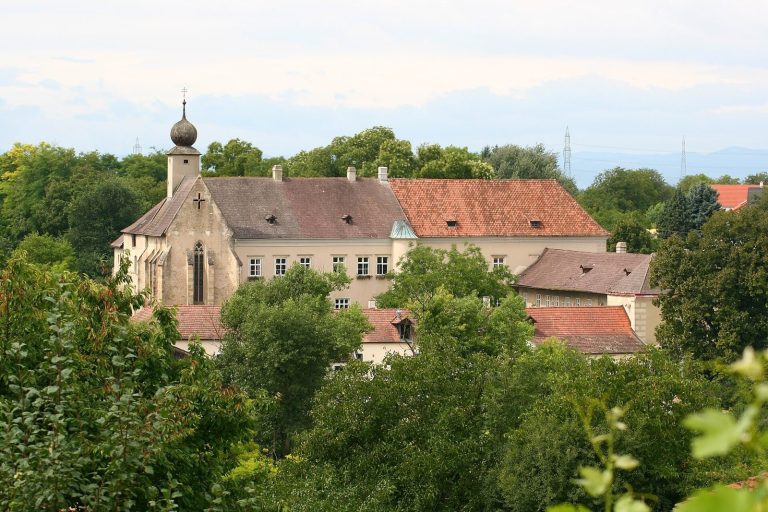
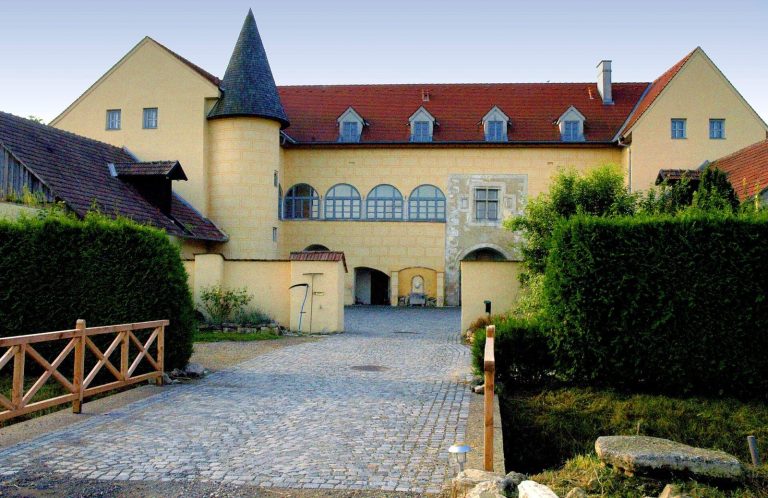
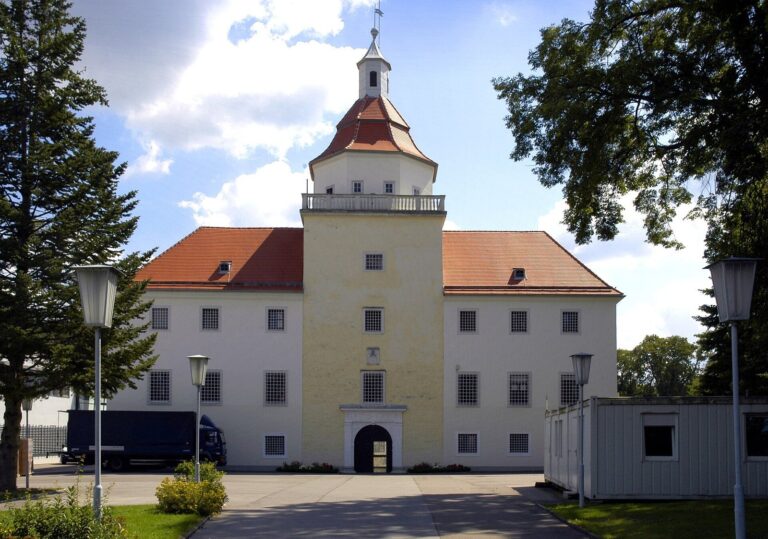
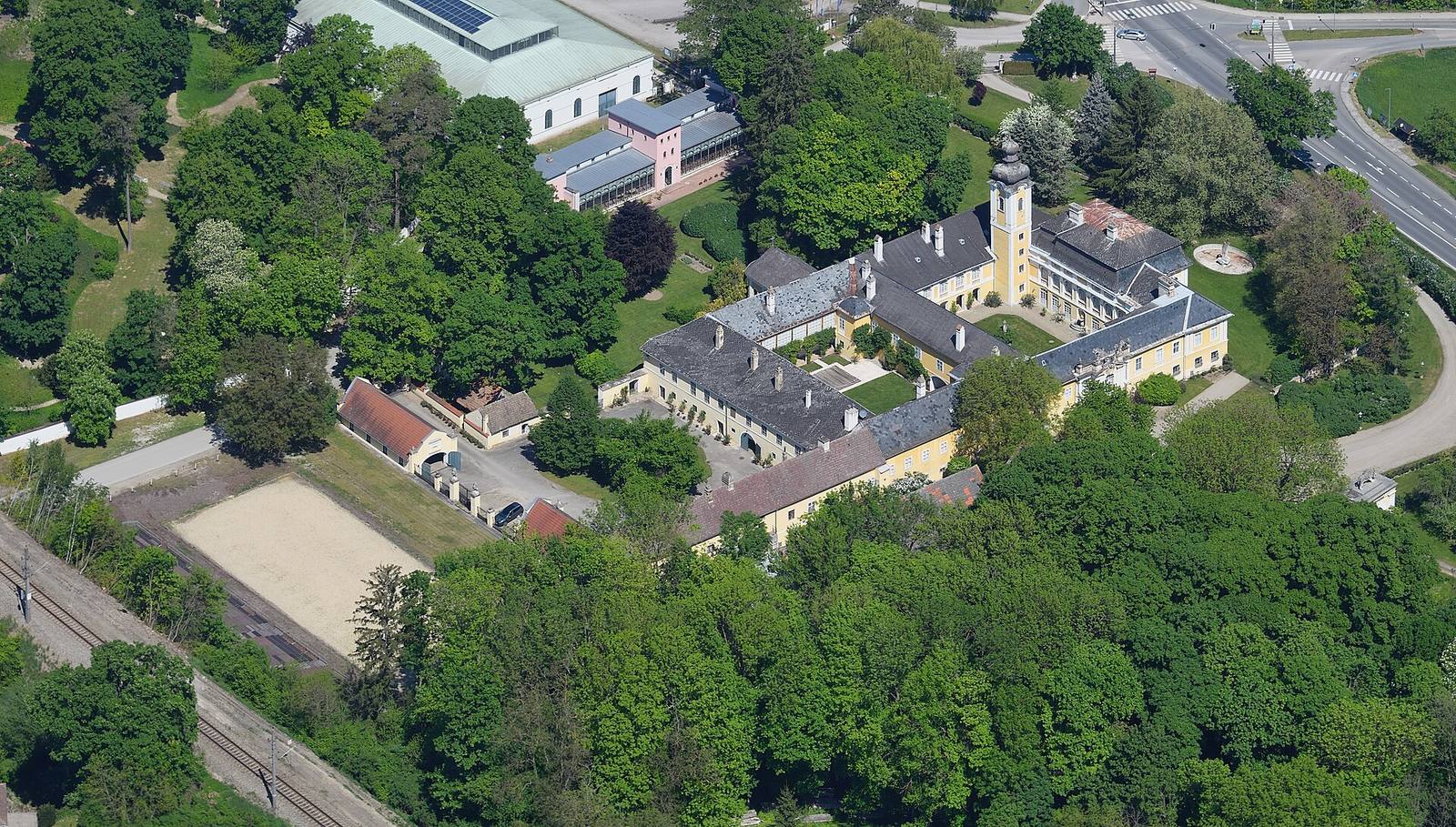
The castle’s layout centers on three courtyards. The third is only partly enclosed, giving the plan an L shape. At the north corner of the first courtyard stands the chapel, crowned by a Baroque onion dome.
Service buildings and entrance
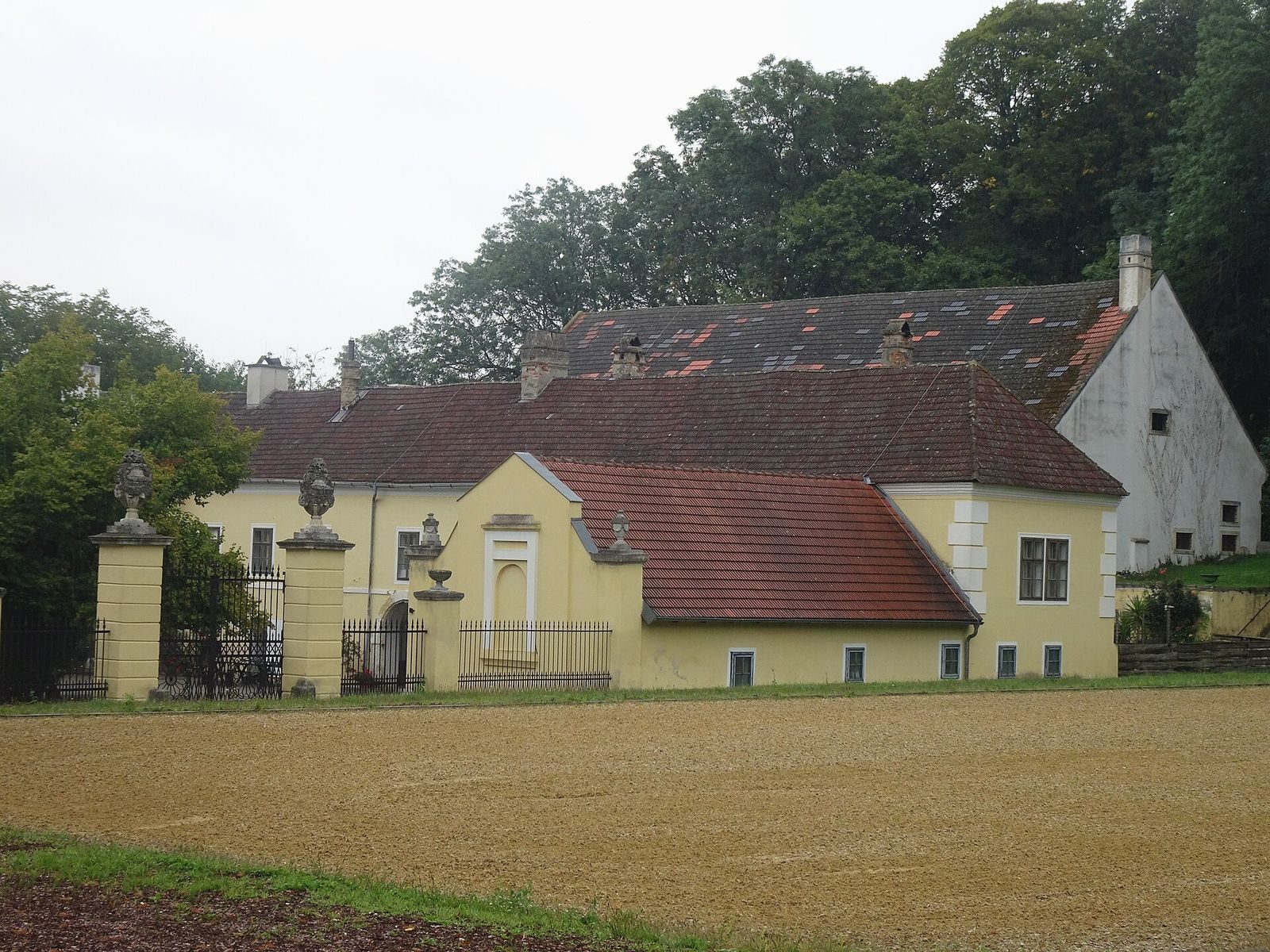
The estate’s outbuildings include a farmyard and an orangery. A gate decorated with lions faces the road.
Gardens and memorial landscape
Garden designs
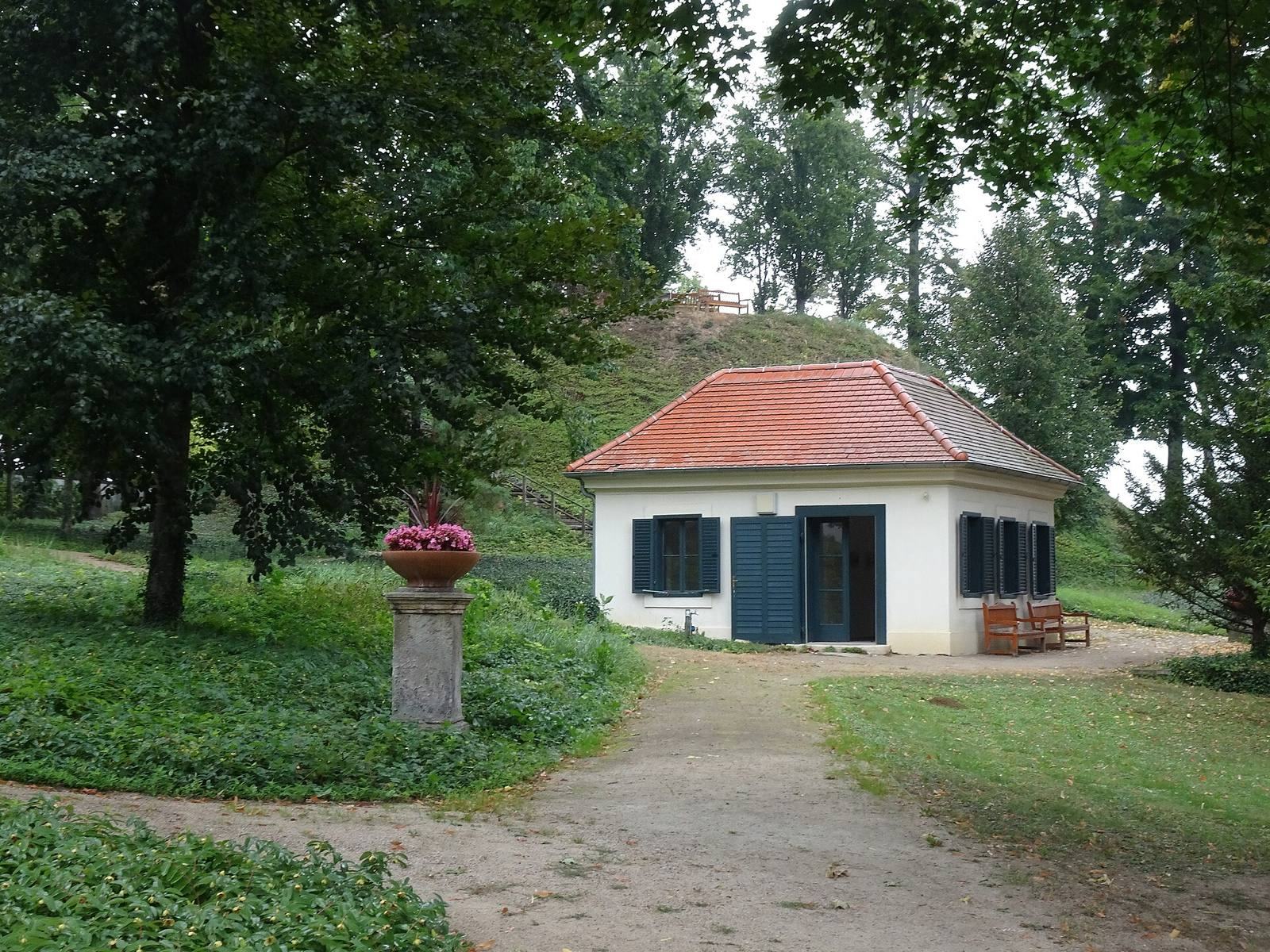
Several gardens around the castle were laid out during the 18th and first half of the 19th centuries in Baroque and Neoclassical styles. Some were ornamental gardens, while others followed the English landscape-garden approach, designed to evoke natural scenery rather than formal, geometric grounds. Later changes and partial overgrowth have left traces of the original designs. The English garden includes an artificial hill called Parnass and a pavilion.
Heldenberg memorial park
West of the castle, an extensive landscape garden rises up Heldenberg hill. The Heldenberg memorial stands at the upper end of the garden area, about 150 metres above the castle.