Fontirou Castle: A Defensive Fortress in France
Site at a Glance
- Rating
- 5
- Popularity
- Very Low
- Country
- France
- Primary era
- Medieval
- Eras represented
- Medieval, Early Modern
- Civilizations
- French
- Site type
- Military
- Remains
- Castle
On this page8 sections
History
Fontirou Castle is a defensive fortress in Castella, France, whose construction began in the thirteenth century and continued into the sixteenth. Its ownership shifted among local noble families, and it became a military stronghold during the French Wars of Religion.
Early lordship and the Cours family
In 1259, the lordship was called Monboira, a form of Monberols, the name used for the parish of Fontirou. It belonged to Armand de Fauguerolles and his brother Gaufred. In 1271, Monberols appeared again in the oath of loyalty sworn by the bailiwick of Penne, an administrative jurisdiction, to the king of France.
A branch of the Cours family, from Cours in the Agenais, a historic region centered on Agen, established itself at Fontirou in the fifteenth century. A 1514 testament identifies Bernard de Cours as lord. The precise transfer of the lordship from the Cours family to the Godailh family is unclear, but by 1526 Robert de Godailh held it. Robert was a tax collector and treasurer for the Agenais domain. His father, Sans, also collected taxes; an inquiry found that he had improperly collected several sums, and the prosecutor general sought the confiscation of his property.
Godailh ownership and religious conflict
Robert married Gillette de Sevin, daughter of the chief judge of the Agenais, in 1526, and became a municipal magistrate, or consul, of Agen in 1538. As Protestantism spread through the region, he probably converted. His cousin Guy de Godailh, whom Robert had previously protected, denounced him to Henry II, king of France. Robert was hanged at Montfaucon, and Guy succeeded him.
Known locally as “Cappolette,” Guy was accused of misappropriating funds, arrested, and freed by the Cardinal of Lorraine, a senior French Catholic churchman and political figure. Guy took refuge at Cuzorn. After the family’s property was seized, Château de Fontirou passed to Diane de Poitiers under an agreement with Robert’s sons, Jehan and Loys, dated 7 February 1555. Diane received the proceeds of the fine. On 14 December 1564, she sold the castle back to Jehan and Loys.
During the French Wars of Religion, the sixteenth-century conflicts between Catholics and Protestants in France, the seneschal of the Agenais, François de Durfort, required Jehan de Godailh to station a garrison at the castle in 1574. Protestant forces captured it on 20 November 1575. Two days later, a Catholic force from Agen, supported by a cannon and commanded by de Vesins, retook it. The Protestant garrison was put to the sword, except for one member of the Godailh family, who was taken to Villeneuve and released two years later.
Latour and Sevin ownership
After his release, the surviving Godailh divided the family property with his brothers. Fontirou passed first to Pons de Godailh, a councillor of Agen’s presidial court, a royal court, and then to Pons’s brother Loys after Pons died without an heir. Loys also served as a councillor of that court. His daughter Marie, from his second marriage to Constance de Durfort, married Pierre de Latour on 5 September 1593, bringing him the lordship.
Pierre and Marie had two sons, Pierre and Gratien. Gratien, a councillor of the court of aids, which handled taxation and royal finances, was killed in 1635 during a revolt against the salt tax. His brother Pierre became lord of Fontirou, married Marie Gabrielle de Sevin, served as consul of Agen in 1671, and died in 1694. In the seventeenth century, the Latour family altered the keep to make it habitable.
Pierre and Marie’s eldest son, also named Pierre, married Marie de Gadès in 1710 and served several times as consul of Agen. His son Géraud died without issue on 10 May 1753, and the castle passed to his sister Marguerite, who was married to Armand de Sevin. The Sevin family retained the property until 1861. The castle was abandoned in the early nineteenth century, although its elements still appeared on the 1820 cadastre. The surviving remains were listed as historic monuments in France on 30 May 1990.
Remains
Fortified layout
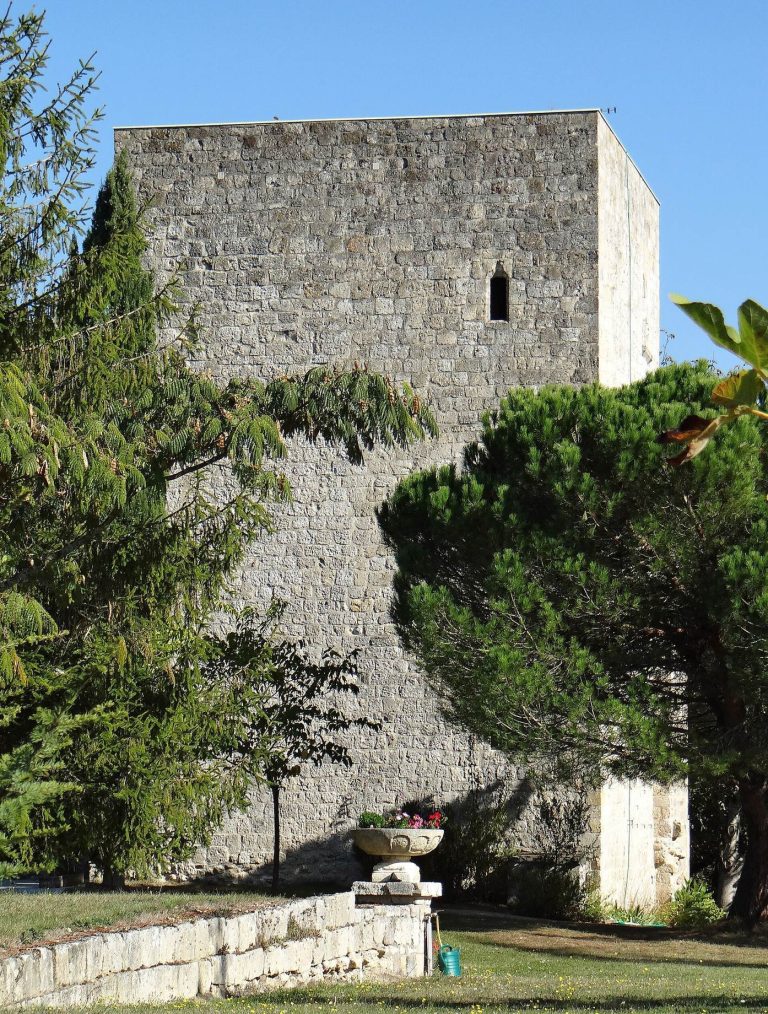
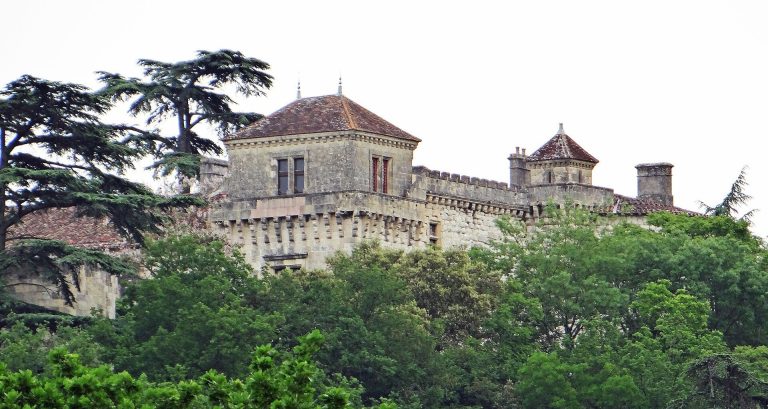
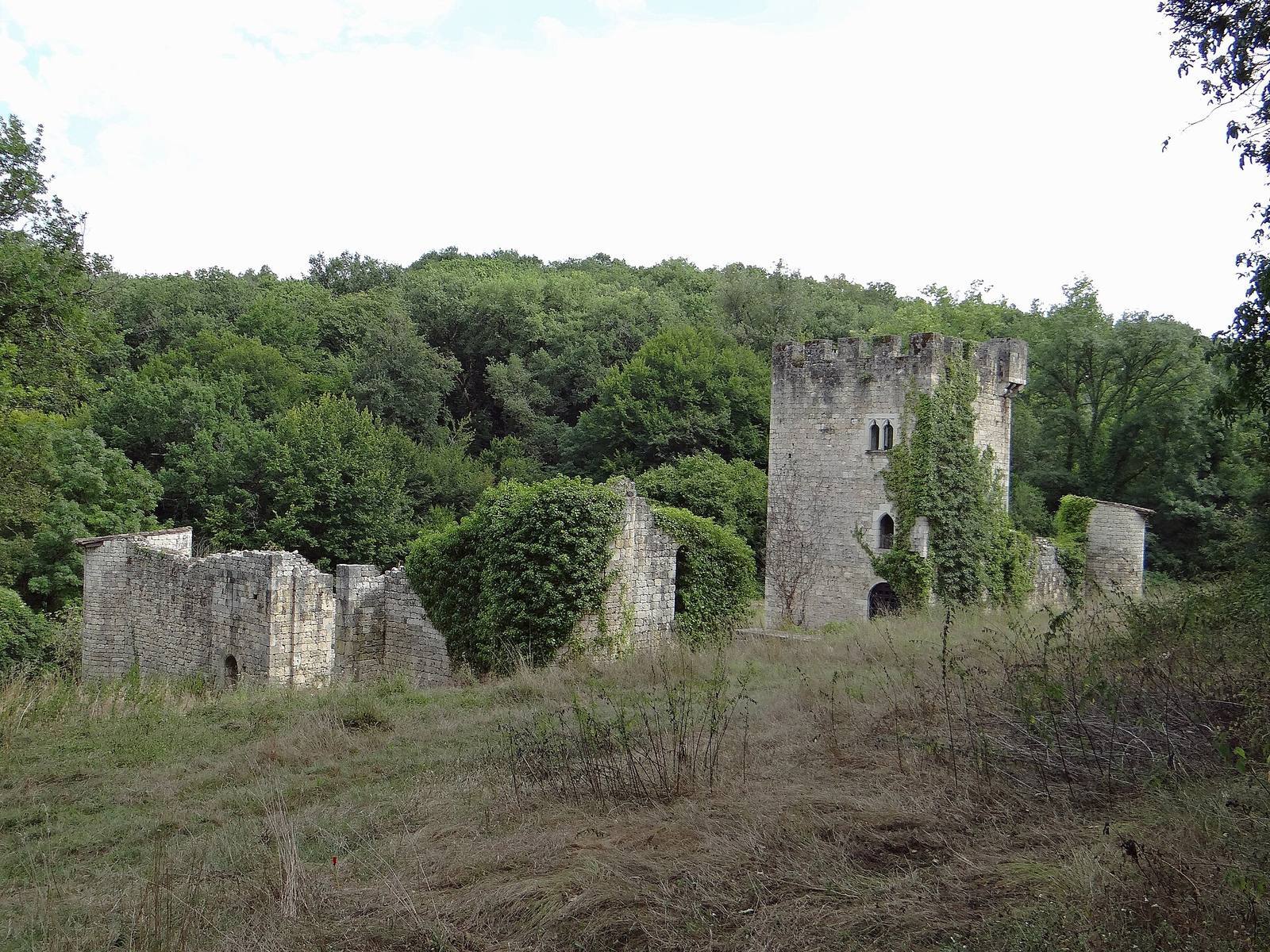
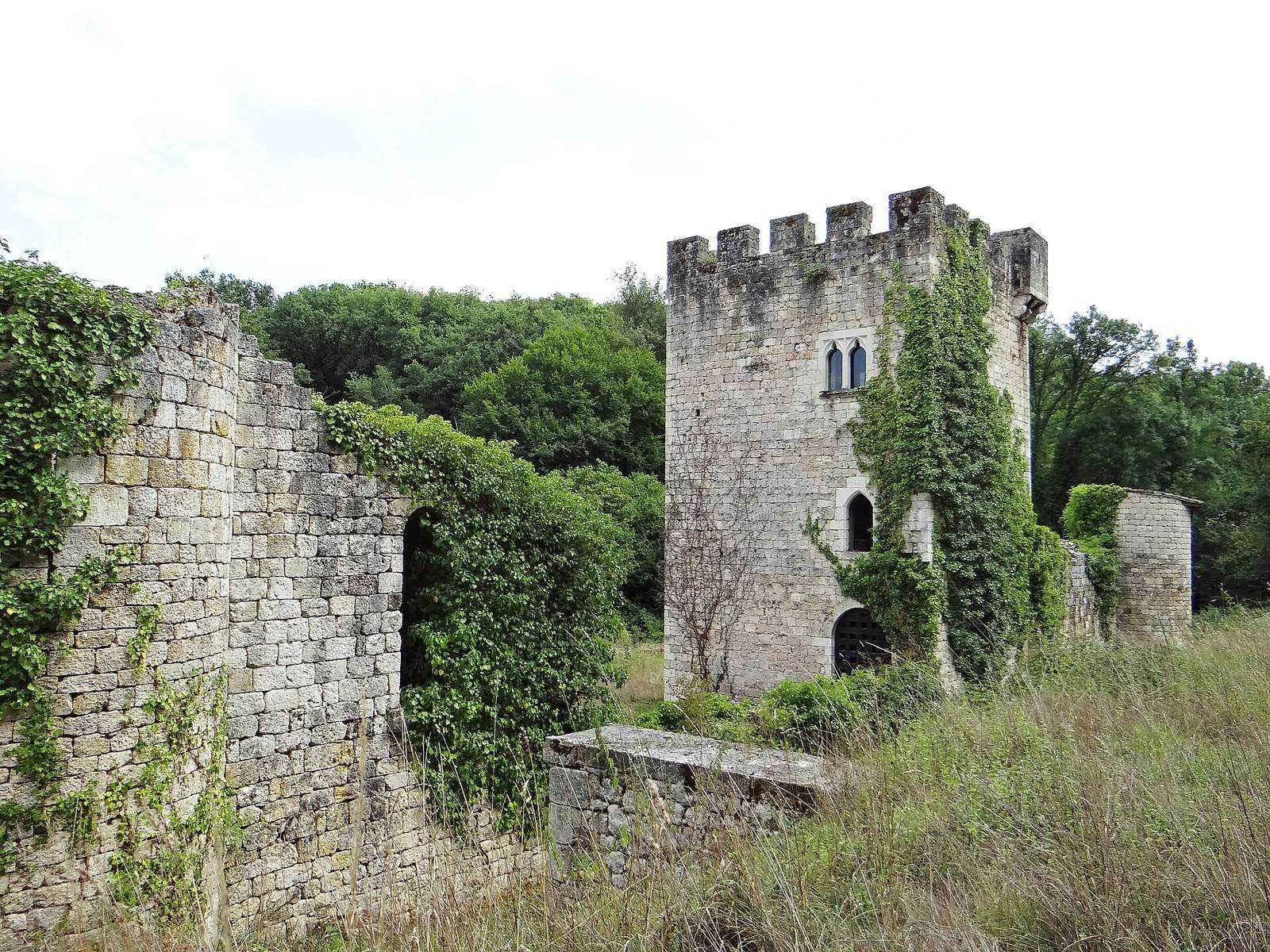
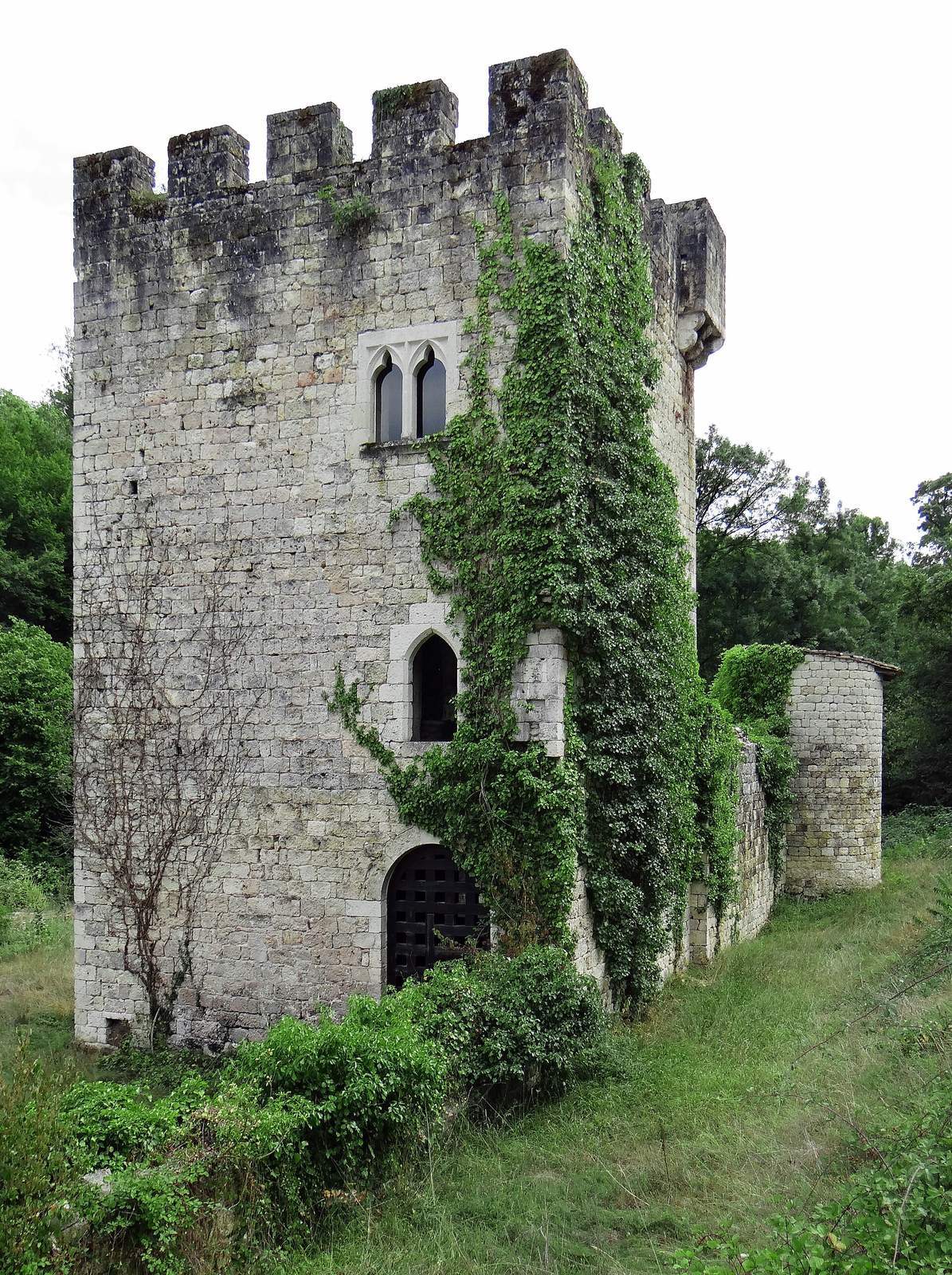
The castle stands at the foot of Truffe hill, in the locality of Fontirou within Castella. Its surviving remains center on the keep, the principal fortified tower, which once stood within an enclosure containing round towers and service buildings.
Enclosure
The enclosure was hastily built during the Wars of Religion around the keep. It included round towers and service buildings, forming the outer defensive complex of the castle.
Keep
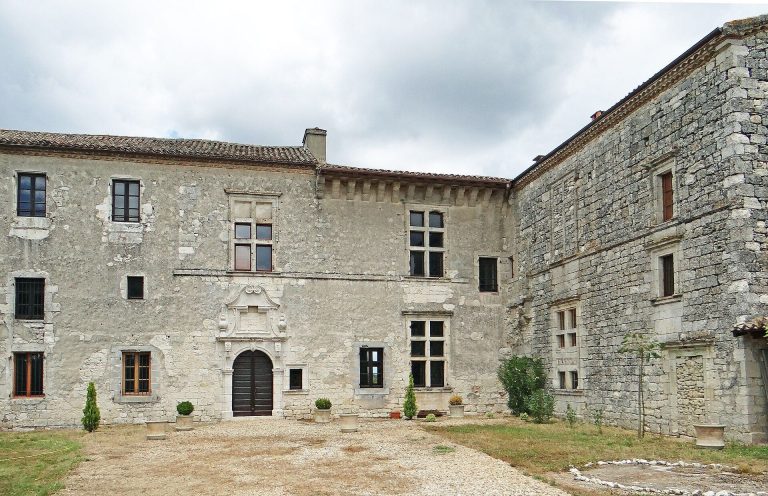
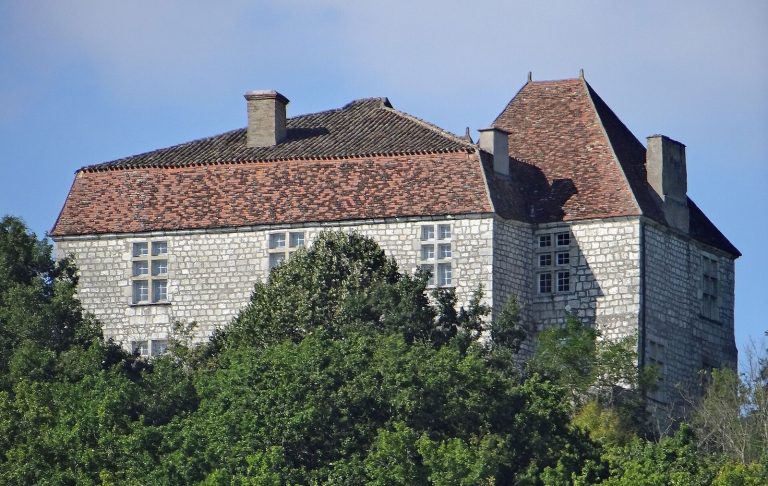
The keep is the principal surviving structure. In the seventeenth century, the Latour family adapted it for habitation by adding large cross-mullioned windows to its south face. Their intersecting bars divided each window into smaller openings. A fireplace was also installed on the first floor.