St. Martin Castle, Graz: A Renaissance Castle and Adult Education Center
Site at a Glance
- Popularity
- Medium
- Country
- Austria
- Primary era
- Early Modern
- Eras represented
- Medieval, Early Modern
- Civilizations
- Duchy of Styria, Habsburg, Holy Roman Empire
- Site type
- Military
- Remains
- Castle
On this page11 sections
History
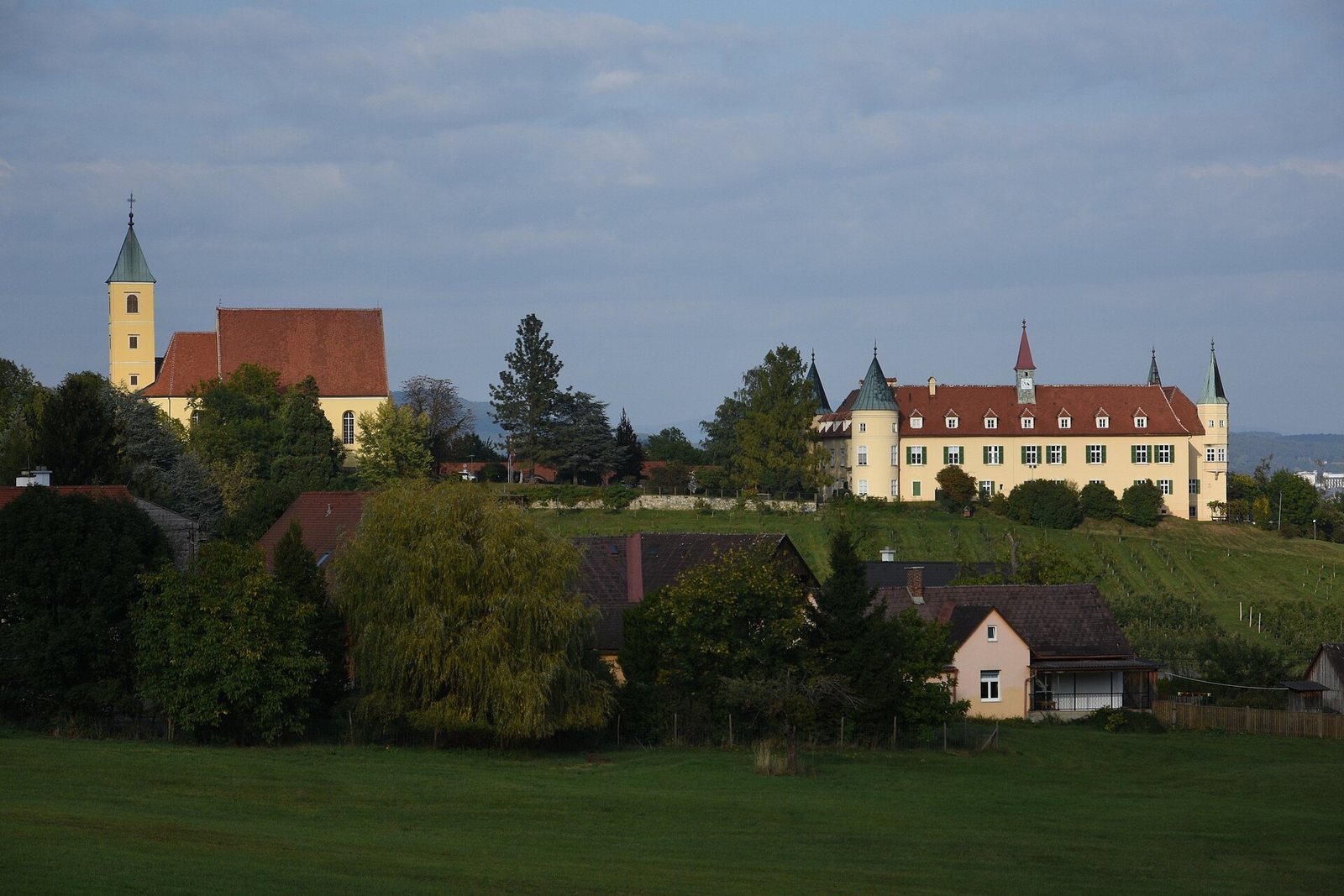
St. Martin Castle is in Graz, Austria, and its history reaches back to the first half of the 11th century. The estate was held by the Aribones, a noble family active in the eastern Alpine region. A major remodeling in 1557 gave the castle its Renaissance style.
Medieval estate
Parts of the estate were donated to Admont Abbey in 1072. Admont, a Benedictine monastery in Styria, had the castle and church as a provostry by 1144. A provostry is an ecclesiastical establishment headed by a provost.
Renaissance and Baroque changes
The castle was remodeled again in 1638 under master builder Peter Fasol. Between 1738 and 1740, furnishings were created for the separately standing castle church. They are among the principal works of Joseph Stammel, an Austrian Baroque sculptor and artist.
The estate and later use
A large park called Bei den Weihern belonged to the castle in the 19th century. Its history is associated with a place named ad Wiarn in 1185.
The castle has housed an adult education center since 1914. Admont Abbey owned it until 1936, when ownership passed to the state of Styria. An air-raid shelter was built in 1943–1944 and later investigated archaeologically.
Remains
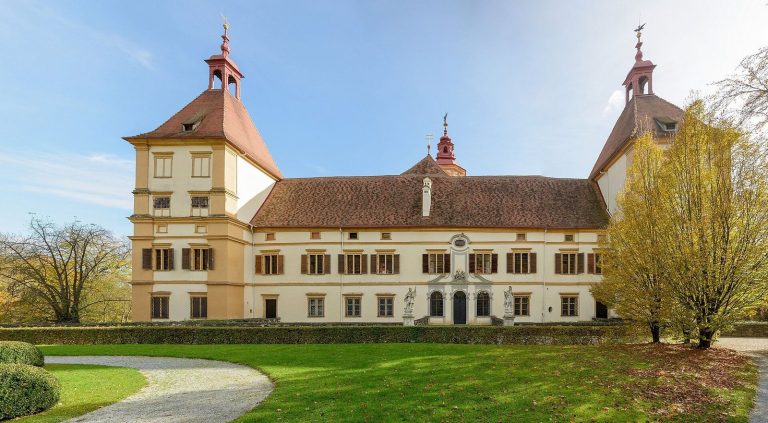
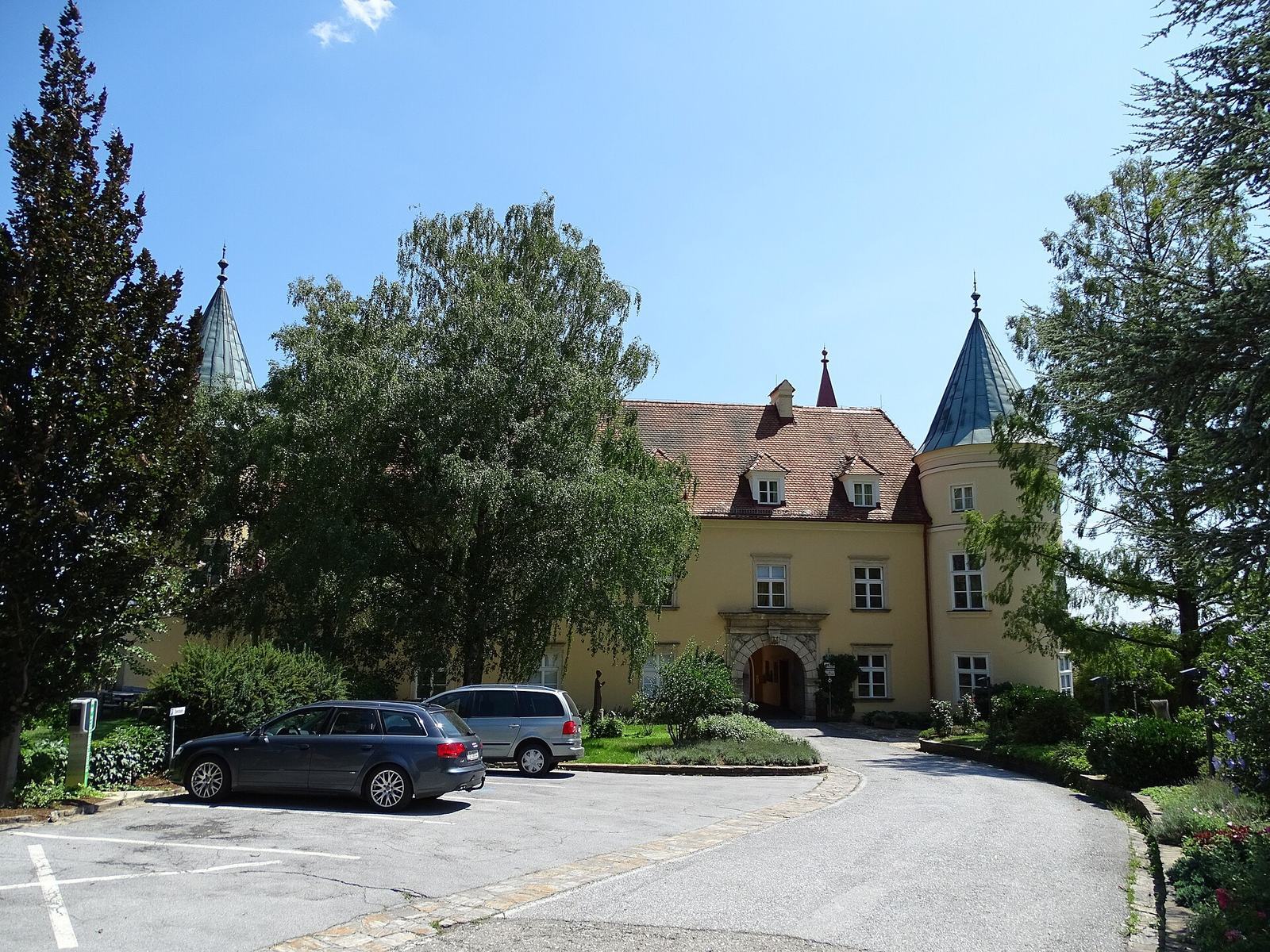
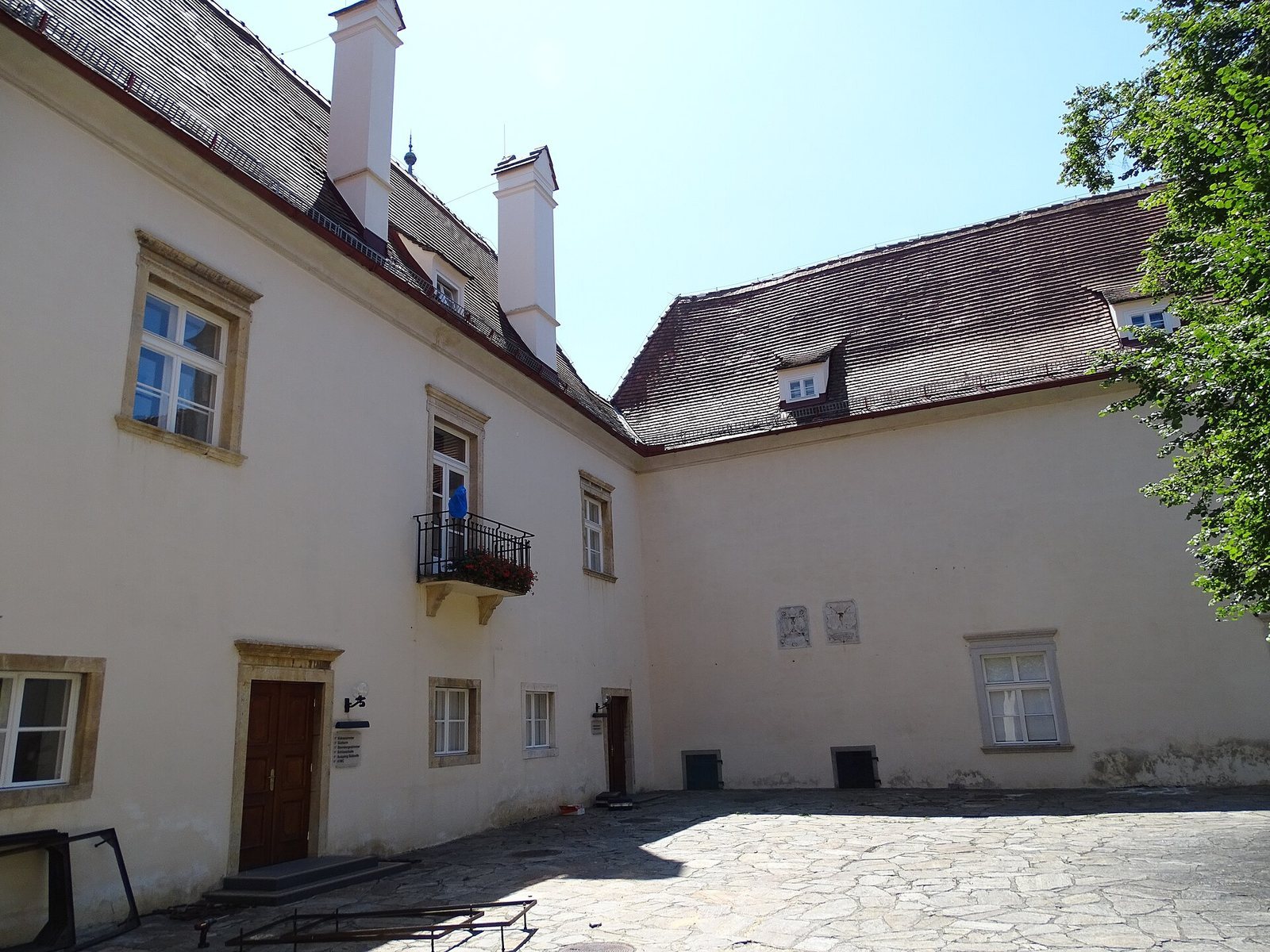
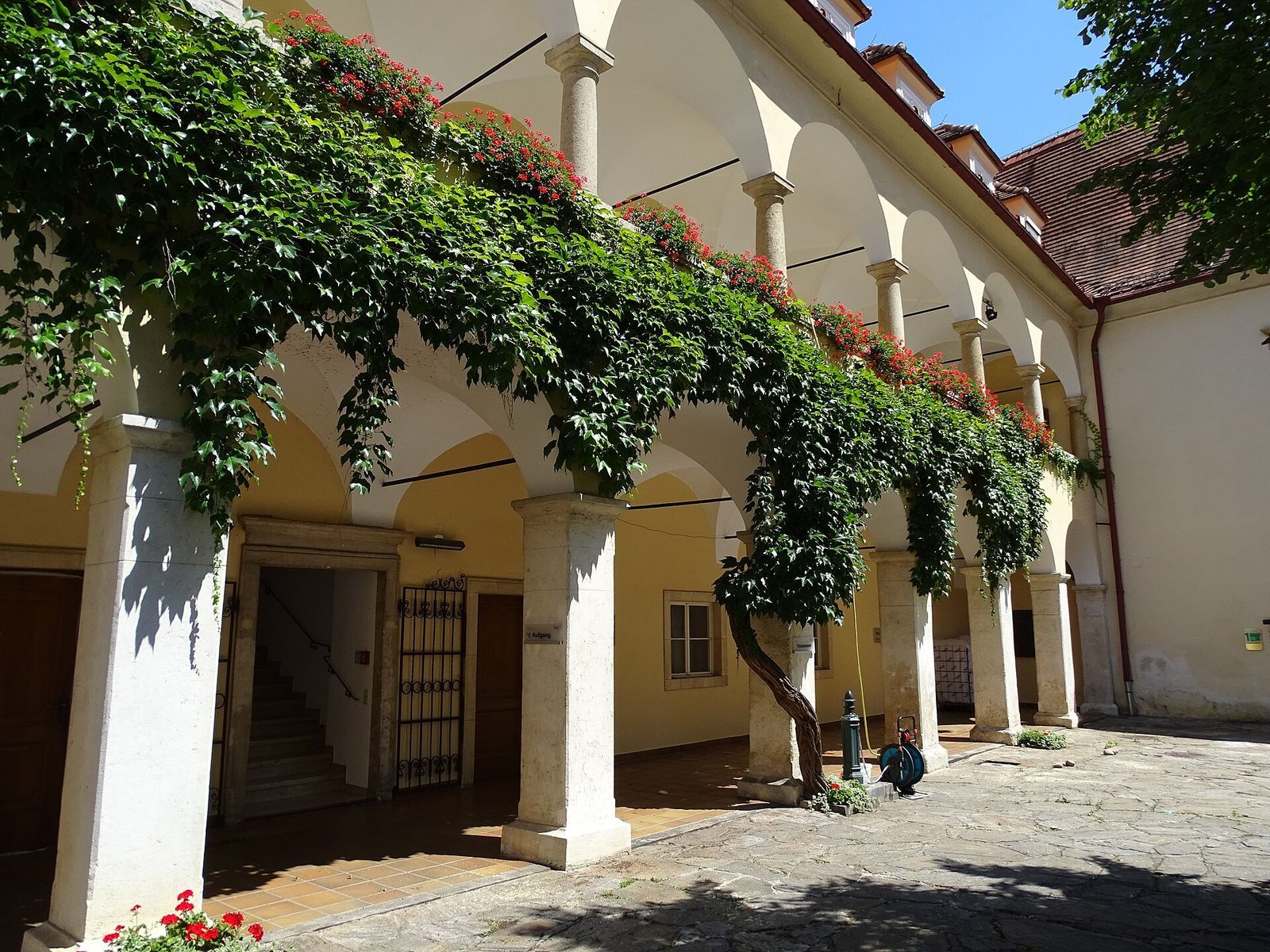
The two-storey castle stands on elevated ground beside its separate church, on the southeastern spur of Buchkogel in Graz’s Straßgang district. Its layout centers on an elongated, slightly trapezoidal courtyard bordered by arches.
Castle complex and grounds
Courtyard and towers
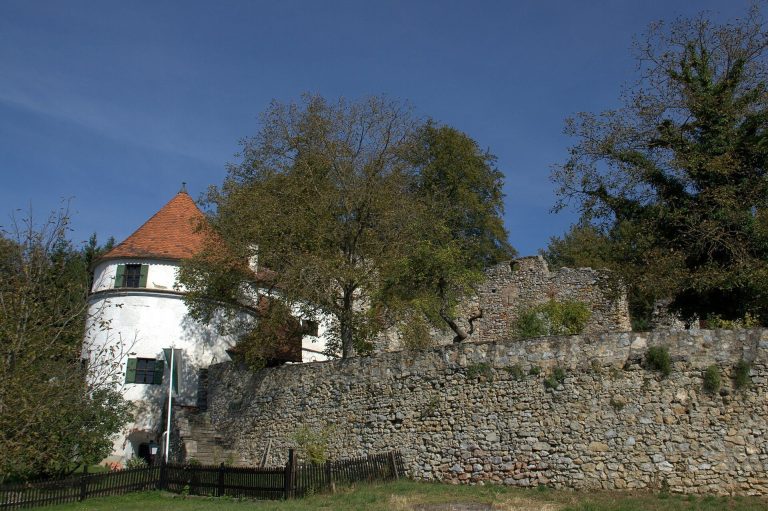
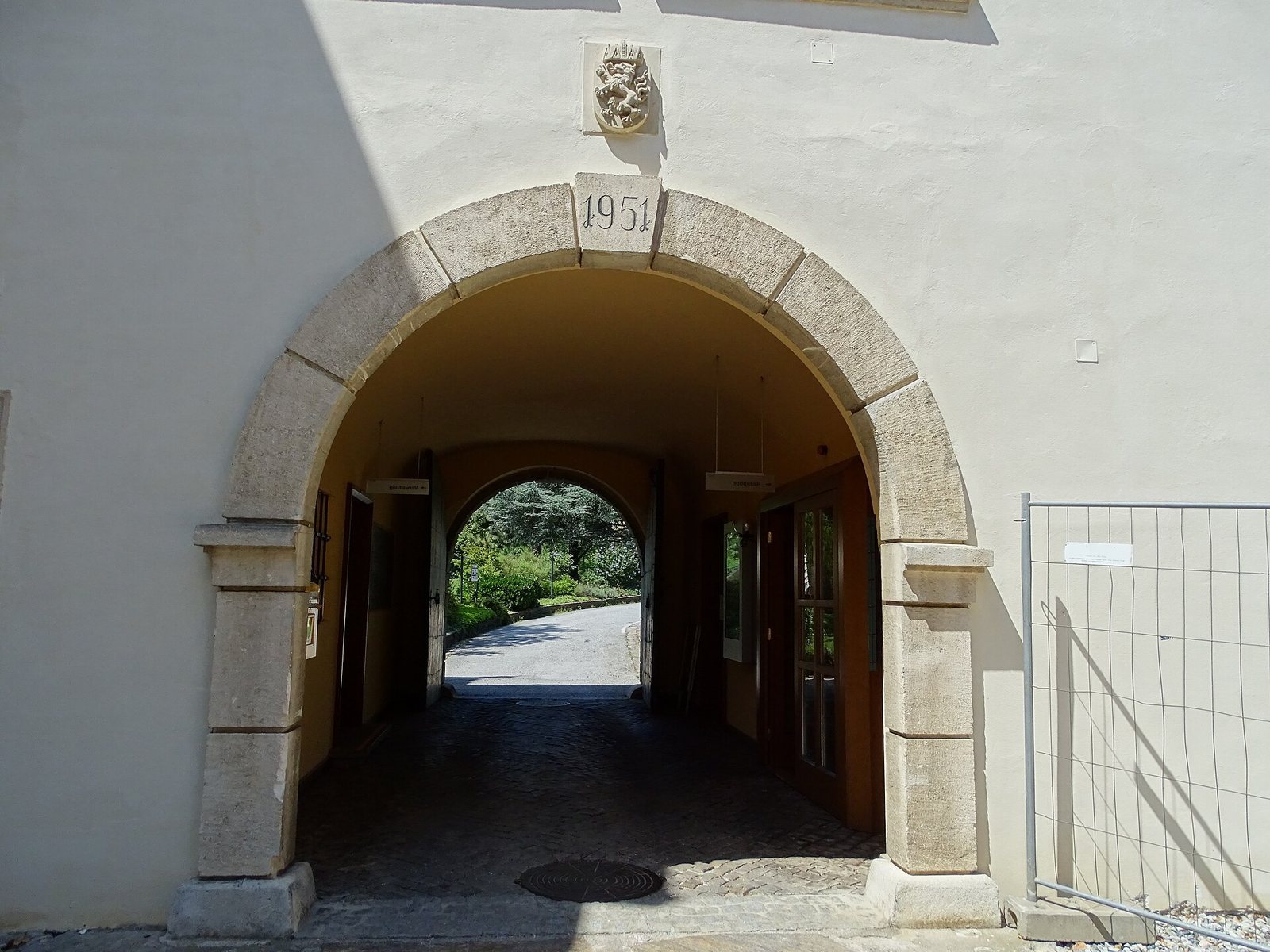
A tower stands at each corner of the castle. The two on the church-facing side, beside the portal arch, are circular in plan; the north and east towers are octagonal. Each of the octagonal towers has two narrow openings for firing weapons on its lower floor.
Bay window and moat
A round bay window projects from the northwest side of the castle. Remnants of the former moat also survive.
Park
The park was laid out around the source of the Bründlbach. Its grounds included ponds, avenues, and grottoes.
Air-raid shelter
The shelter lies roughly north of the castle.
Coal cellar
A coal cellar beneath the courtyard was later used to store oil. It now serves as an art space called KuKo, or Art in the Coal Cellar.